
Sign up to save your podcasts
Or



How is the world of entrepreneurship driving innovation in education? And how can business strategies and creative thinking make learning more accessible for everyone?
On this episode of School’s In, hosts Dan Schwartz and Denise Pope welcome venture capital investor Sergio Monsalve to discuss the skills and dispositions that make great entrepreneurs, and how great ideas can be applied to education to create lasting change. Monsalve covers several topics, including:
Sergio Monsalve is a venture capital investor and a co-founder of the Entrepreneur-in-Residence program at Stanford Graduate School of Education (GSE). He is a founding partner of Roble Ventures, an early-stage technology venture capital fund where he enables entrepreneurs interested in helping people achieve economic mobility.
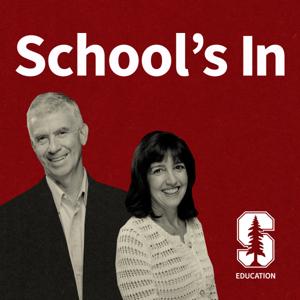
School’s In is your go-to podcast for cutting-edge insights and enlightening conversations in education.
Presented by the GSE, School’s In is hosted by GSE Dean Dan Schwartz and Senior Lecturer Denise Pope.
They invite you to join them as they navigate the complexities of post-pandemic education and discuss the latest research in teaching and learning.
Stanford GSE is a leader in education research and teaching, known for its commitment to pursuing equitable, accessible, and effective learning for all.
To keep up with our research, subscribe to our newsletter and follow us on Instagram, LinkedIn, and Threads.
Mentioned in this episode:
Got 5 minutes? Take our quick listener survey and help us make School's In even better: podpolls.com/school
How does unstable housing affect student success? And how can schools identify students in unstable housing and partner with community organizations to support them?
On this episode of School’s In, hosts Dan Schwartz and Denise Pope welcome Amy Gerstein, executive director of Stanford’s John W. Gardner Center for Youth and Their Communities, to discuss how unstable housing affects educational outcomes and why it’s imperative that schools look to the larger community for help. Gerstein talks about several topics, including:
Amy Gerstein is the executive director of the John W. Gardner Center for Youth and their Communities, which conducts research in partnership with school districts, nonprofits, foundations, and government agencies to advance equity for young people and the people around them. In her role, she provides strategic direction and works with community members across sectors. To learn more about her work, visit her profile.
School’s In is your go-to podcast for cutting-edge insights and enlightening conversations in education.
Presented by the Graduate School of Education (GSE), School’s In is hosted by GSE Dean Dan Schwartz and Senior Lecturer Denise Pope.
They invite you to join them as they navigate the complexities of post-pandemic education and discuss the latest research in teaching and learning.
Stanford GSE is a leader in education research and teaching, known for its commitment to pursuing equitable, accessible, and effective learning for all.
To keep up with our research, subscribe to our newsletter and follow us on Instagram, LinkedIn, and Threads.
Mentioned in this episode:
Got 5 minutes? Take our quick listener survey and help us make School's In even better: podpolls.com/school
How do creativity, tinkering, and hands-on learning support education? And can AI expand the possibilities for cultivating creativity in the classroom?
On this episode of School’s In, hosts Dan Schwartz and Denise Pope welcome Stanford Graduate School of Education (GSE) Senior Lecturer Karin Forssell to discuss AI and how Stanford is helping students navigate the technology through the GSE’s new AI Tinkery, a maker space focused on the use of AI in education. Forssell covers several touch points, including:
Karin Forssell is a senior lecturer and the director of the GSE’s Learning Design and Technology master’s program. She also directs the GSE’s Makery, a Stanford maker space where students and faculty learn to make, and make to learn. In her courses, she teaches students to use research from the learning sciences and learning-centered design processes to create effective digital tools. To learn more about her work, visit her faculty profile.
School’s In is your go-to podcast for cutting-edge insights and enlightening conversations in education.
Presented by the GSE, School’s In is hosted by GSE Dean Dan Schwartz and Senior Lecturer Denise Pope.
They invite you to join them as they navigate the complexities of post-pandemic education and discuss the latest research in teaching and learning.
Stanford GSE is a leader in education research and teaching, known for its commitment to pursuing equitable, accessible, and effective learning for all.
To keep up with our research, subscribe to our newsletter and follow us on Instagram, LinkedIn, and Threads.
Mentioned in this episode:
Got 5 minutes? Take our quick listener survey and help us make School's In even better: podpolls.com/school
How effective are new education tools and technology in the classroom? And how does one get into the business of creating them?
On this episode of School’s In, hosts Dan Schwartz and Denise Pope welcome Stanford Accelerator for Learning Executive Director Isabelle Hau to discuss the efficacy of tech tools in schools, and what can happen when the goals of public good and profit collide. Hau sheds light on several facets of the industry, including:
Isabelle Hau is the executive director of the Stanford Accelerator for Learning, and in her role she works with scholars, students and external collaborators to leverage the latest advances in brain and learning sciences. In addition to spearheading the Accelerator’s university-led initiative to improve educational outcomes for children and adults, she has worked at the intersection of philanthropy, impact investing in education, for more than 20 years. To learn more about her work, visit her website.
School’s In is your go-to podcast for cutting-edge insights and enlightening conversations in education.
Presented by Stanford Graduate School of Education (GSE), School’s In is hosted by GSE Dean Dan Schwartz and Senior Lecturer Denise Pope.
They invite you to join them as they navigate the complexities of post-pandemic education and discuss the latest research in teaching and learning.
Stanford GSE is a leader in education research and teaching, known for its commitment to pursuing equitable, accessible, and effective learning for all.
To keep up with our research, subscribe to our newsletter and follow us on Instagram, LinkedIn, and Threads.
Mentioned in this episode:
Got 5 minutes? Take our quick listener survey and help us make School's In even better: podpolls.com/school
What role will AI tools play in the classroom? And how can the technology be used to support teachers?
On this episode of School’s In, hosts Dan Schwartz and Denise Pope welcome Stanford Graduate School of Education (GSE) Assistant Professor Dora Demszky to discuss using artificial intelligence as a tool for giving feedback to teachers, with the goal of supporting continuous improvement in their practice. Demszky covers several ways in which AI can be used to empower teachers, including:
Dora Demszky is an assistant professor of data science and her research centers on developing natural language processing methods to support equitable and student-centered instruction. She has developed tools to give feedback to teachers on dialogic instructional practices, to analyze representation in textbooks, among others. To learn more about her research, visit her faculty profile.
School’s In is your go-to podcast for cutting-edge insights and enlightening conversations in education.
Presented by Stanford Graduate School of Education (GSE), School’s In is hosted by GSE Dean Dan Schwartz and Senior Lecturer Denise Pope.
They invite you to join them as they navigate the complexities of post-pandemic education and discuss the latest research in teaching and learning.
Stanford GSE is a leader in education research and teaching, known for its commitment to pursuing equitable, accessible, and effective learning for all.
To keep up with our research, subscribe to our newsletter and follow us on Instagram, LinkedIn, and Threads.
Mentioned in this episode:
Got 5 minutes? Take our quick listener survey and help us make School's In even better: podpolls.com/school
What roles do empathy and compassion play in our ability to have healthy relationships? And what does it look like to apply those concepts to oneself?
On this episode of School’s In, hosts Dan Schwartz and Denise Pope welcome Stanford Psychology Professor Jamil Zaki to discuss compassion, empathy, and what our perceptions of the world say about us. Zaki touches on several related matters, including:
Professor Jamil Zaki’s research examines the neuroscience behind decision making, self regulation, social cognition, and perception, among other social and behavioral functions. He is also the principal investigator for the Stanford Social Neuroscience Laboratory, which studies the cognitive bases of social behaviors. To learn more about his research, visit his faculty profile.
If you or someone you know is struggling with their emotional health, the National Institute of Mental Health lists resources on their webpage.
School’s In is your go-to podcast for cutting-edge insights and enlightening conversations in education.
Presented by Stanford Graduate School of Education (GSE), School’s In is hosted by GSE Dean Dan Schwartz and Senior Lecturer Denise Pope.
They invite you to join them as they navigate the complexities of post-pandemic education and discuss the latest research in teaching and learning.
Stanford GSE is a leader in education research and teaching, known for its commitment to pursuing equitable, accessible, and effective learning for all.
To keep up with our research, subscribe to our newsletter and follow us on Instagram, LinkedIn, and Threads.
Mentioned in this episode:
Got 5 minutes? Take our quick listener survey and help us make School's In even better: podpolls.com/school
What are the largest threats to mental health facing modern teens? And how can parents, educators, and other adults help them thrive despite their challenges?
On this episode of School’s In, hosts Dan Schwartz and Denise Pope welcome Assistant Professor Farzana (Saleem) Adjah to discuss racial trauma and stress and the effect that it has on student mental health. Adjah covers several relevant topics, including:
Assistant Professor Farzana Adjah’s research examines the influence of racial stressors and culturally-relevant practices on the psychological health, academic success, and well-being of Black adolescents and other youth of color. Her work focuses on factors in the family, school, and community contexts that can help youth manage the consequences of racial stress and trauma. To learn more about her research, visit her faculty profile.
If you or someone you know is struggling with their emotional health, the National Institute of Mental Health lists resources on their webpage.
School’s In is your go-to podcast for cutting-edge insights and enlightening conversations in education.
Presented by Stanford Graduate School of Education (GSE), School’s In is hosted by GSE Dean Dan Schwartz and Senior Lecturer Denise Pope.
They invite you to join them as they navigate the complexities of post-pandemic education and discuss the latest research in teaching and learning.
Stanford GSE is a leader in education research and teaching, known for its commitment to pursuing equitable, accessible, and effective learning for all.
To keep up with our research, subscribe to our newsletter and follow us on Instagram, LinkedIn, and Threads.
Mentioned in this episode:
Got 5 minutes? Take our quick listener survey and help us make School's In even better: podpolls.com/school
What are some of the most serious mental health challenges facing our young people today? And how can we create the support that they really need?
On this episode of School’s In, hosts Dan Schwartz and Denise Pope welcome Dr. Steven Adelsheim, clinical professor of psychiatry and behavioral sciences at Stanford School of Medicine, as they discuss how the pandemic affected students’ mental health. Steven works on several facets of youth mental health, including:
Clinical Professor Steven Adelsheim is a child/adolescent and adult psychiatrist and the director of the Stanford Center for Youth Mental Health and Wellbeing in the Department of Psychiatry. His work focuses on early mental health intervention for young people, integrated health care models and decreasing stigma surrounding mental health issues. To learn more about his research, visit his faculty profile.
If you or someone you know is struggling with their emotional health, the National Institute of Mental Health lists resources on their webpage.
School’s In is your go-to podcast for cutting-edge insights and enlightening conversations in education.
Presented by Stanford Graduate School of Education (GSE), School’s In is hosted by GSE Dean Dan Schwartz and Senior Lecturer Denise Pope.
They invite you to join them as they navigate the complexities of post-pandemic education and discuss the latest research in teaching and learning.
Stanford GSE is a leader in education research and teaching, known for its commitment to pursuing equitable, accessible, and effective learning for all.
To keep up with our research, subscribe to our newsletter and follow us on Instagram, LinkedIn, and Threads.
Never miss an episode! Subscribe to School’s in on Spotify, Apple Podcasts, or wherever you get your podcasts.
Mentioned in this episode:
Got 5 minutes? Take our quick listener survey and help us make School's In even better: podpolls.com/school
How do we use AI responsibly? And how do we prepare students to navigate a world where AI plays such a central role?
On this episode of School’s In, hosts Dan Schwartz and Denise Pope welcome Associate Professor Victor Lee as they discuss the rise of artificial intelligence (AI) in education and its implications for how we teach and learn. Victor’s research addresses several topics in the future of education, including:
Associate Professor Victor Lee is the faculty lead for the Stanford Accelerator for Learning's initiative on AI and Education. His research focuses on learning experiences and resources for data literacy, K-12 data science education, and artificial intelligence literacy for both students and teachers. To learn more about his research, visit his faculty profile.
School’s In is your go-to podcast for cutting-edge insights and enlightening conversations in education.
Presented by Stanford Graduate School of Education (GSE), GSE Dean Dan Schwartz and Senior Lecturer Denise Pope invite you to join them as they navigate the complexities of post-pandemic education and discuss the latest research in teaching and learning.
Stanford GSE is a leader in education research and teaching, known for its commitment to pursuing equitable, accessible, and effective learning for all.
To keep up with our research, subscribe to our newsletter and follow us on Instagram, LinkedIn, and Threads.
Never miss an episode! Subscribe to School’s In on Spotify, Apple Podcasts, or wherever you get your podcasts.
Mentioned in this episode:
Got 5 minutes? Take our quick listener survey and help us make School's In even better: podpolls.com/school
Who was hardest hit by learning loss due to the COVID-19 pandemic? And what can states, teachers, and parents do to help students recover?
On this episode of School’s In, hosts Dan Schwartz and Denise Pope welcome Professor Sean Reardon as they discuss educational inequalities exacerbated by the pandemic, and what’s needed to chart a path forward. Sean’s research sheds light on key issues, including:
Professor Sean Reardon is the Professor of Poverty and Inequality in Education at Stanford’s Graduate School of Education, Senior Fellow at the Stanford Institute for Economic Policy Research and Professor, by courtesy, of Sociology. His research focuses on the causes, patterns, trends, and consequences of social and educational inequality. To learn more about his research, visit his faculty profile.
School’s In is your go-to podcast for cutting-edge insights and enlightening conversations in education.
Presented by Stanford Graduate School of Education (GSE), GSE Dean Dan Schwartz and Senior Lecturer Denise Pope invite you to join them as they navigate the complexities of post-pandemic education and discuss the latest research in teaching and learning.
Stanford GSE is a leader in education research and teaching, known for its commitment to pursuing equitable, accessible, and effective learning for all.
To keep up with our research, subscribe to our newsletter and follow us on Instagram, LinkedIn, and Threads.
Never miss an episode! Subscribe to School’s In on Spotify, Apple Podcasts, or wherever you get your podcasts.
Mentioned in this episode:
Got 5 minutes? Take our quick listener survey and help us make School's In even better: podpolls.com/school
From the publisher's feed