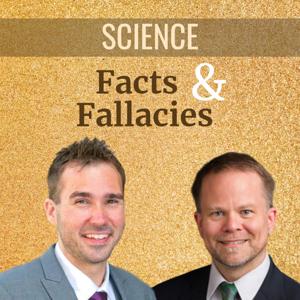
Science Facts & Fallacies

Science Facts & Fallacies

By Cameron EnglishNewsScienceEducation
Download on the App Store

Science Facts & Fallacies episodes

  • GLP Podcast: Artificial sweetener-cancer study debunked; MLB and vaccine mandates; Cholesterol not so bad after all?
    A controversial study recently suggested that artificial sweetener consumption may be linked to elevated cancer risk. Have food-safety regulators overlooked this danger? Canada's lingering vaccine mandate may interfere with the upcoming MLB season. We've all been told high cholesterol boosts our risk of heart disease; evidence gathered in recent years indicates that cholesterol numbers may not mean what we think they mean.


    Join geneticist Kevin Folta and GLP contributor Cameron English on episode 162 of Science Facts and Fallacies as they break down these latest news stories:

    * Do artificial sweeteners fuel cancer? New data reignites the debate

    The evidence has consistently shown that artificial sweeteners, typically used in diet sodas and other low-calorie foods, are safe for human consumption. Every so often, though, a study challenging this consensus hits the headlines. A new paper, published in PLoS Medicine, suggested that artificial sweetener consumption boosted an individual's cancer risk 13 percent, the equivalent of three additional cancer cases per 10,000 people over eight years.

    But even assuming those numbers are valid may be a mistake. Experts were quick to point out serious flaws in the paper, including the fact that higher sweetener consumption was associated with fewer cases of all cancers. Why was there such a major mismatch between the study's results and the news stories they generated?

    * Baseball’s COVID problem: Unvaccinated players won’t be allowed in Canada to play against Toronto Blue Jays

    While most US jurisdictions have dropped their COVID vaccine mandates, Canada continues to require proof of immunization to enter the country. The policy creates a potentially serious roadblock for Major League Baseball teams, because a sizeable minority of players, including some of the league's biggest stars, remain unvaccinated. With opening day just around the corner, it seems likely that some teams won't be at full strength when they travel to Toronto to face the Blue Jays.

    The situation raises some tough questions about Canada's mandate. Since the majority of Americans and Canadians have been vaccinated, are the entry restrictions really necessary? It's clear that "we now have a high degree of background population immunity to SARS-CoV-2, as well as medical countermeasures ... to prevent progression of disease," as
    47 min
  • GLP Podcast: Activists dump grain during food shortage; The mirror lies to you; Anti-GMO study debunked
    Last week, French activist group Extinction Rebellion destroyed 15,000 tons of wheat to prove its anti-GMO bona fides. The grain it targeted wasn't genetically modified—but it was meant to feed people in poor countries. The image you see in the mirror probably doesn't reflect reality, recent research shows. Are GM crops really safe? A new "study of studies" says no, though it's been blasted by independent experts.


    Join geneticist Kevin Folta and GLP contributor Cameron English on episode 162 of Science Facts and Fallacies as they break down these latest news stories:

    * Believing shipment was GMO crops, anti-technology organization ‘Extinction Rebellion’ illegally dumps 15,000 tons of conventional wheat intended to feed poultry in countries hard hit by Ukrainian war

    As the world braces for food shortages, well-fed activists affiliated with Extinction Rebellion are dumping grain destined for countries hardest hit by the effects of war in Ukraine. The environmental group stacked cinder blocks in front of a train carrying 15,000 tons of wheat, then dumped every last ounce of the crop after the locomotive came to an abrupt stop. The kicker: Extinction Rebellion thought they were targeting a shipment of GM corn.

    * Self perception: Most of us have a distorted sense of what we actually look like

    Disappointed by the image you see in the mirror? The problem may not be your physical appearance, psychologists say, but your distorted self-perception that misinterprets sense data you take in from your surroundings. What can this conclusion tell us about our understanding of ourselves? Perhaps a little caution is in order before we rush headlong into conclusions about the world around us.


    Follow the latest news and policy debates on agricultural biotech and biomedicine? Subscribe to our newsletter.


    SIGN UP


    *
    43 min
  • GLP Podcast: Ukraine war spikes food prices; Journalist sheds anti-GMO views; Creationism in schools
    The war in Ukraine could have long-term impacts on global food prices. Can we prevent this dangerous outcome? A Japanese reporter explains why he abandoned his anti-GMO views and embraced crop biotechnology. The battle to get anti-evolution curriculum into public schools is decades old. Where does the campaign stand today?


    Join geneticist Kevin Folta and GLP contributor Cameron English on episode 161 of Science Facts and Fallacies as they break down these latest news stories:

    * With Russian invasion of Ukraine disrupting food supplies, European Union open to importing GMO feed grain to support meat industry

    As the war in Ukraine rages, concern is growing that the conflict will further spike food prices and even cause shortages in some parts of the world. Russia and Ukraine supply as much as 40 percent of the wheat consumed globally. But the intense fighting and economic sanctions designed to punish Russia are preventing both countries from exporting their grain. Several major agricultural producers have capped their exports in response, hoping to shield their own populations from skyrocketing food prices. Just how serious is the situation?

    * Japanese journalist explains why he flipped from anti-GMO campaigner to embracing agricultural biotechnology revolution

    Japanese journalist Masami Kojima was an ardent critic of biotech seeds and the big firms that sell them. But after interacting with growers around the world who benefit from the technology, he changed his mind. Kojima now works to help the public better understand why genetically engineered crops are such an important tool in food production. His story could help other science communicators improve their outreach efforts.


    Follow the latest news and policy debates on agricultural biotech and biomedicine? Subscribe to our newsletter.


    SIGN UP


    * Anti-evolution state legislation has a notorious history – and it continues today

    Although the political campaign to undermine the teaching of evolution in public schools goes back many decades, it hasn't achieved much success. Every piece of legislation designed to get Intelligent Design or Young-Earth Creationism into science classes triggered intense push back from educators and biologists, who didn't want politics dictating what students learned in school. Where do things stand today? Is anybody still trying to sneak creation myths into public schools?

    Kevin M. Folta is a professor, keynote speaker and podcast host.
    41 min
  • GLP Podcast: mRNA flu shot coming soon? Dogs really can’t eat chocolate; Marijuana-like ‘runner’s high’


    mRNA technology gave us COVID-19 vaccines. Could it also yield more effective flu vaccines? Yes—maybe as soon as next year. You've probably heard that chocolate is bad for dogs. Let's examine the science behind why you shouldn't give your pup a candy bar. Runner's high, the euphoric feeling that often follows intense exercise, is real, but what actually causes this physiological response and what purpose does it serve?


    Join geneticist Kevin Folta and GLP contributor Cameron English on episode 159 of Science Facts and Fallacies as they break down these latest news stories:

    * Next generation flu shots could be mRNA technology-based

    It's no secret that seasonal flu vaccines aren't especially effective, offering anywhere from 10-60 percent protection against infection. As a result, lots of us get really sick even if we get vaccinated every fall. Fortunately, the same mRNA technology that gave us COVID-19 shots could soon yield new flu vaccines that are much more effective. This is because scientists can more accurately select the flu strains that circulate during any given season and quickly develop a shot that blunts their ability to infect us.

    * Can chocolate really kill dogs?

    It's true—chocolate can be very toxic to dogs, even deadly depending on how much they eat and how much they weigh. The problem is magnified because dogs enjoy sweet foods, just like we do. The trouble-making compound naturally produced by cocoa plants is called theobromine. Why is this chemical so dangerous to our puppies?


    Follow the latest news and policy debates on agricultural biotech and biomedicine? Subscribe to our newsletter.


    SIGN UP


    * Understanding the ‘runner’s high’: How exercising creates a natural marijuana-like euphoria
    38 min
  • GLP Podcast: Illegal GMOs in India; Anti-aging myths; Can social media ‘brainwash’ us?
    Farmers in India are growing illegal GE eggplant in hopes of overturning the country's ban on the insect-resistant crop. Anti-aging research has made very limited progress in recent years, but that hasn't stopped some companies from marketing products they say can increase "longevity." How does brainwashing actually work? And can the content we consume on social media brainwash us?


    Join geneticist Kevin Folta and GLP contributor Cameron English on episode 159 of Science Facts and Fallacies as they break down these latest news stories:


    * Viewpoint: ‘I live in India and I am launching a civil disobedience movement against the moratorium on GMO insect resistant eggplant.’ Here’s why

    Not only do many farmers in developing countries want to grow biotech crops, they're willing to break the law in order to gain access to the enhanced seeds. In India, grower and political activist Anil Ghanwat is leading a protest movement aimed at forcing the government to overturn its existing moratorium on new genetically engineered crops. Ghanwat and his colleagues have announced plans to plant insect-resistant Bt brinjal (eggplant), which is currently illegal, though it's widely grown across the border in Bangladesh. The protestors say the ban, sustained by lobbying from Greenpeace and other activist groups, makes no scientific sense.


    * Science vs. sales: The antiaging field is booming–with both promise and charlatans

    Can we slow the aging process? Preliminary research suggests that it might one day be possible. Unfortunately, some companies and scientists in the booming anti-aging industry have exaggerated the significance of these early data to sell extreme dieting programs, supplements and even stem cell therapies to customer hoping to boost their longevity. What does the science really tell us? And what explains the unethical behavior in this industry?

    * Viewpoint: From forced confessions to believing that vaccines cause autism, brainwashing has a harsh history

    The shocking history of brainwashing is a case study of just how far governments, cult leaders and other influencers will go to manipulate people's perceptions. With social media becoming such a powerful force in our culture, researchers are beginning to investigate how platforms like Twitter and Facebook may be used to brainwash the public. Can these widely used websites really exert that much influence over how we think, and if so, what can be done about it?

    Kevin M. Folta is a professor, keynote speaker and podcast host. Follow Professor Folta on Twitter @kevinfolta

    Cameron J. English is the director of bio-sciences at the American Council on Science and Health. Visit his website and follow ACSH on Twitter
    36 min
  • GLP Podcast: Biotech fish ‘invade’ Brazil; TikTok GMO-sterility myth debunked; Bad diet and dementia
    A genetically engineered "GloFish" is swimming freely in Brazil's streams. Should we be worried? Despite a popular conspiracy circulating on TikTok, there is no plot to make black people infertile with "GMOs." A nutritious diet will keep you healthy, but there's no evidence as of now that it will stave off dementia.


    Join geneticist Kevin Folta and GLP contributor Cameron English on episode 158 of Science Facts and Fallacies as they break down these latest news stories:

    * Transgenic GloFish escaped into the wild in Brazil

    Illegally sold as pets in South America, glowing, genetically engineered fish have been found in the wild in Brazil. News reports called the GloFish's appearance an "invasion" and speculated about potentially serious ecological consequences. Are experts really worried about this accidental release?

    * TikTok conspiracy claim debunked: No, food cannot be genetically engineered to cause infertility in Black people

    A science-challenged video proliferating across TikTok alleges that food can be engineered to cause infertility in black people. Don't believe the hype. Aside from the obvious gaps in the story (who would do this, and why?), geneticists say there's a dozen insurmountable technical hurdles that would prevent such a scheme from getting off the ground. Genetically engineered food ingredients are safe to consume, no matter the color of your skin.


    Follow the latest news and policy debates on agricultural biotech and biomedicine? Subscribe to our newsletter.


    SIGN UP


    * Dementia and Diet: Avoid These 5 Foods to Stay 'Focused and Sharp'?

    Writing at CNBC recently, a Harvard nutritional psychiatrist suggested that avoiding certain foods may help you reduce your risk of developing dementia. It's possible that diet affects our mental acuity as we age, especially since nutrition clearly impacts our well being in so many ways, but there is, for the time being, little data to suggest that avoiding white bread, chicken wings or others foods can keep you "focused and sharp."

    Kevin M. Folta is a professor, keynote speaker and podcast host. Follow Professor Folta on Twitter @kevinfolta

    Cameron J. English is the director of bio-sciences at the Americ...

    36 min
  • GLP Podcast: Loneliness causes dementia? Parkinson’s-fighting GM tomatoes; ‘Sovietizing’ science
    Loneliness could drastically boost your risk of developing dementia. Genetically engineered tomatoes may be our first line of defense against Parkinson's in the coming years. A growing chorus of academics fears that 'fashionable ideologies' have revived Soviet-era censorship in scientific research.


    Join geneticist Kevin Folta and GLP contributor Cameron English on episode 157 of Science Facts and Fallacies as they break down these latest news stories:

    * Loneliness shown to triple risk of dementia

    Are you lonely? A recent epidemiological study has found that you may be much more likely to develop dementia than someone not afflicted by loneliness. The causal direction of the association is still unclear, loneliness may just be an early symptom of dementia instead of a risk-factor for the disease. And if lonely people do face a heightened dementia risk, we still don't know why. Nonetheless, there seems to be a clear relationship between the two, and we're much closer to figuring out how it works.

    * Let food be thy medicine: How GMO tomatoes could help Parkinson’s patients

    Scientists in the UK have engineered GM tomatoes that produce L-Dopa, a dopamine precursor used to treat the symptoms of Parkinson's Disease (PD). A gene in beets (Beta vulgaris) is know to catalyze the production of L-DOPA, so scientists isolated this segment of DNA and bred it into tomatoes, which are widely consumed around the world. The hope is that these enhanced fruits will serve as effective, low-cost alternatives to current PD therapies. Will these disease-fighting tomatoes ever make it to commercialization?

    * Viewpoint: ‘Sovietizing’ Western science? Conflating STEM research with fashionable ideologies raises Orwellian concerns

    The social justice movement has lots its way, a growing coalition of academics fears. Instead of righting past wrongs, advocates of "decolonizing" science have morphed into champions of censorship who will silence anyone who dares to question their agenda—a hallmark of Stalin's Russia, which sacrificed its own technological advancement to preserve its ideological purity. Are Western countries flirting with the same outcome by restraining what their scientists can say and do?

    Kevin M. Folta is a professor, keynote speaker and podcast host. Follow Professor Folta on Twitter @kevinfolta

    Cameron J. English is the director of bio-sciences at the American Council on Science and Health. Visit his website and follow ACSH on Twitter @ACSHorg

    44 min
  • GLP Podcast: Trauma changes your DNA? Lifelike sex robots; Have we cured leukemia?
    Can traumatic life experiences leave an imprint on our DNA that we pass down to our children? Get ready, because AI-powered sex robots may be available in the near future. Have we finally found a cure for some cancers? Recent success with a novel gene therapy has some physicians crossing their fingers.


    Join geneticist Kevin Folta and GLP contributor Cameron English on episode 152 of Science Facts and Fallacies as they break down these latest news stories:

    * Epigenetics and trauma: How the Rwanda genocide scarred survivors’ yet-to-be-born children

    Do traumatic life experiences trigger epigenetic changes in our DNA that can be passed down to the next generation? Quite possibly. A recent study found that some pregnant women who survived the Rwandan Genocide may have experienced trauma-induced DNA methylation that their children also possess. Pregnant women who were not exposed to the same traumatic experiences and their children did not have the same differentially methylated regions (DMRs).

    The researchers were only able to establish an association between trauma and changes in the epigenomes of women in the study; they did not show that the former caused the latter. Future studies with bigger sample sizes will be needed to further explore this epigenetic phenomenon.

    * Robosexuals: How close are we to the inevitable era of artificial intelligence-driven sex robots?

    The era of AI-powered sex robots—"talking, walking dolls that can carry a conversation, discern what a user wants, and give it to them"—  may be closer than you think. Their rapid develop speaks to our ability to harness technology to fulfill our desires, though it also raises some difficult ethical questions. How will these life-like dolls affect our ability to form romantic relationships? Could they discourage people from getting married and starting families? We may get answers to these questions in real time, as an increasing number of customers enter the market for AI sex robots.


    Follow the latest news and policy debates on agricultural biotech and biomedicine? Subscribe to our newsletter.


    SIGN UP


    *
    48 min
  • GLP Podcast: Don’t ‘cancel’ Joe Rogan?; Psychopaths among us; Green Revolution saved $83 trillion
    The recent campaign to "cancel" comedian Joe Rogan for promoting COVID misinformation highlights a troubling trend in science communication. High-functioning psychopaths live among us. What do we know about them, and what have we gotten wrong about psychopathy? Critics continue to attack the Green Revolution, but mounting evidence confirms that Norman Borlaug's work saved the world many trillions of dollars.


    Join geneticist Kevin Folta and GLP contributor Cameron English on episode 152 of Science Facts and Fallacies as they break down these latest news stories:

    * Viewpoint: Neil Young’s GMO and biotechnology rejection preceding his Joe Rogan-Spotify awakening featured alliance with notorious anti-vaxxers

    Rock 'n' Roll legend Neil Young triggered a new wave of COVID vaccine controversy earlier this month, threatening to remove his music from Spotify unless the company pulled Joe Rogan's podcast from its platform. Rogan has come under fire for interviewing two contrarian physicians who have made dubious claims about the shots. "I am doing this because Spotify is spreading false information about vaccines — potentially causing death to those who believe the disinformation being spread by them," Young wrote in a now-deleted post on his website.

    But there's more to the story. While Rogan has undoubtedly amplified anti-vaccine claims on his show, Young has a long history of spreading misinformation about crop biotechnology, falsely claiming that GMOs cause "terrible diseases," which is why many countries ban them, he says. The musician is also apparently unaware that the COVID shots are products of genetic engineering.

    Spotify recently promised to put a "content advisory" on any future COVID-related episodes of the Joe Rogan Experience and make its platform rules public "in an effort to increase transparency between consumers and creators." The platform has so far refused to remove the podcast, though. Should Spotify cut ties with Rogan, or is there a better way to correct the falsehoods he promotes about vaccines?

    * Many high-functioning psychopaths live among us

    Our culture seems to be fascinated with Psychopaths. It's not uncommon to see them depicted as serial killers or anti-heroes in popular TV shows and films, for example. But despite our widespread interest in their  (usually exaggerated) stories, most of us have a poor understanding of the disorder that afflicts them.

    Psychopathy, it turns out, is relatively common and the chances are good that you've probably met a psychopath without knowing it. That's because many of these individuals do not engage in violent behavior like their on-screen counterparts, and they're often very successful, productive members of society. What else has science revealed about this enigmatic condition?


    34 min
  • GLP Podcast: Genetics of sugar cravings; Male birth control; CRISPR-edited apples coming soon?
    We all crave sugar on occasion, and geneticists say they've found some of the genes that may have driven this evolutionary adaptation. Nanotechnology is bringing new forms of male birth control closer to reality. A new USDA proposal to lift some existing CRISPR-edited crop regulations may give consumers access to a wide variety of longer lasting fruits and vegetables.


    Join geneticist Kevin Folta and GLP contributor Cameron English on episode 152 of Science Facts and Fallacies as they break down these latest news stories:

    * Sugar high? How and why we genetically crave sweetness

    Evidence gathered over many years indicates that our innate desire for sweetness was an evolutionary adaptation that drove our ancestors to seek out energy-dense foods that fueled their hunting and gathering activities. Recent research has bolstered this analysis by identifying two genes, TAS1R2 and TAS1R3, that encode the sugar-detecting receptor protein TAS1R2/3. Many species possess these genes, suggesting that an interest in sweet foods has provided an important survival advantage throughout evolutionary history.

    * Nanocontraception: How heated nanoparticles injected in testicles might be a viable method of male birth control

    Male birth control doesn't go beyond condoms and vasectomies for now, but that could change in the coming years. Researchers are beginning to explore nanotechnology-based treatments, so-called "nanocontraception," that modulate the temperature of testicles, thereby reducing or turning off sperm production entirely. The experimental approach has only undergone preliminary testing in rodents, and important safety concerns have to be addressed before the technology can be used in humans. Then, of course, there's the ultimate question: will men actually utilize birth control?


    Follow the latest news and policy debates on agricultural biotech and biomedicine? Subscribe to our newsletter.


    SIGN UP


    * CRISPR gala apples among numerous gene-edited crops that could be greenlighted

    More flavorful and longer lasting apples, alongside many other fruits and vegetables, may be headed to grocery stores if a new USDA proposal to loosen regulations on CRISPR-edited crops takes effect. Since these enhanced plants only contain targeted deletions in their DNA, they're unlikely to pose a risk to human health or the environment, and thus don't warrant the extensive rules that currently govern their development.

    Kevin M. Folta is a professor, keynote speaker and podcast host. Follow Professor Folta on Twitter
    29 min

About Science Facts & Fallacies

From the publisher's feed

From CRISPR gene-edited embryos to GMO crops, biotechnology is revolutionizing medicine and farming. Scientists are increasingly able to make targeted genetic tweaks to humans, plants and animals to…