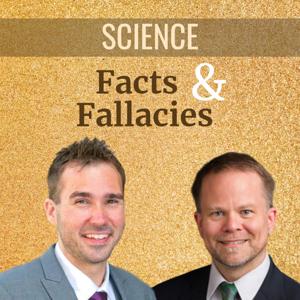
Science Facts & Fallacies

Science Facts & Fallacies

By Cameron EnglishNewsScienceEducation
Download on the App Store

Science Facts & Fallacies episodes

  • Podcast: Facebook vs junk science; ‘Brain-boosting’ supplements; Whole grains really healthy?
    Alternative health champion Mike Adams has been banned from every social media platform but continues to spread his anti-GMO and anti-vaccine content on Facebook. Should the company step up its enforcement actions? Is that even possible? Don't take brain-boosting supplements, a new study says, because there's no way to know what you're taking. Finally, are whole grains everything they've been cracked up to be?


    Join geneticist Kevin Folta and GLP editor Cameron English on this episode of Science Facts and Fallacies as they break down these latest news stories:

    * ‘We have absolutely no idea what the adverse effects of that could be’: What’s the science skinny on ‘brain boosting’ supplements

    Brain-boosting drugs or supplements thought to improve cognitive function, memory and creativity—known as nootropics—have grown increasingly popular in recent years. While there is evidence some of these substances (like caffeine and nicotine) have their intended effect, a new study shows that many such products likely offer no benefit or, worse, contain dangerous combinations of powerful pharmaceuticals. Should consumers be allowed access to these risky drugs absent oversight from the FDA?

    * Conspiracy promoter Mike ‘Health Ranger’ Adams built online disinformation Natural News online empire that subverts science, report finds

    Are social media companies doing enough to suppress disinformation? The question was forced back into the spotlight following the publication of a report documenting how alt-health guru Mike Adams subverted Facebook's effort to ban him from its platform. Adams, who once urged his followers to kill scientists and journalists who defend biotechnology, has evaded censorship by spreading his anti-vaccine, anti-GMO content through hundreds of "masked" domain names and dozens of public Facebook groups. Can this subversive activity be stopped?

    * Viewpoint: Here’s what ‘whole grain’ really means—and it’s not the health claim you’ve been told it is

    A recent survey found that almost 50 percent of consumers couldn't distinguish healthier breads, cereals and crackers from their lower nutrient counterparts, based on labels hyping the whole grain content of each product. On the surface, this raises questions about the honesty of food marketing. But there may be a bigger problem. Are whole grains really as nutritious as we've been led to believe? The answer is no, says science writer Hank Campbell, who argues that claims about the nutritional benefits of whole grains are based largely on questionable epidemiological studies.


    Follow the latest news and policy debates on agricultural biotech and biomedicine? Subscribe to our newsletter.


    Please enable JavaScript in your browser to complete this form.Name *Email *EmailSIGN UP


    33 min
  • Podcast: GM crops don’t change your DNA; Monsanto ‘owns’ global food supply? South American anti-biotech invasion
    Are GM crops unnatural? Can they change your DNA? And does 'Big Ag' own the global food supply? The answer to each question is definitively "no," as even a cursory review of the evidence confirms. But many anti-biotech groups continue to ignore the data and amplify these scandalous claims in developing countries, fueling unwarranted skepticism of genetic engineering and causing severe harm to people who could greatly benefit from the technology. We are watching this very situation unfold in Latin America as local scientists work to counter a well-funded coalition of anti-GMO groups committed to blocking the spread of biotechnology in the region.


    Join geneticist Kevin Folta and GLP editor Cameron English on this episode of Science Facts and Fallacies as they break down these latest news stories:

    * Viewpoint: International anti-GMO groups wage PR war to get gene-edited crops out of Latin America

    Biotech crops are widely cultivated and consumed in the US, and researchers continue to produce innovative products that benefit farmers and the public, especially with newer tools like CRISPR gene editing. Anti-GMO activists haven't given up the fight, however. They've just exported it to other countries.


    Follow the latest news and policy debates on agricultural biotech and biomedicine? Subscribe to our newsletter.


    Please enable JavaScript in your browser to complete this form.Name *Email *MessageSIGN UP


    In Latin America, for instance, these same biotech skeptics have masterfully infiltrated political and cultural institutions in the region by couching their arguments in local concerns about protecting "food sovereignty" from international corporations. Recognizing the threat this poses to consumers and farmers, scientists are pushing back against this activist campaign by communicating the benefits of genetic engineering directly to the public. The future of biotechnology in Latin America could come down to which side wins this PR war.

    * Viewpoint: ‘GMOs change your DNA’ and 7 other anti-biotech myths debunked

    GM crops are natural, they can't change your DNA and biotech companies don't control the global food supply. Surprised by these claims? That's because seemingly trustworthy sources have amplified myths about crop biotechnology for many years. But the facts are the facts, and they often don't support the popular understanding of GM crops, farming and food safety.

    * Viewpoint: GMOs don’t boost crop yields? Yes, they do. Here’s the evidence

    Of all the myths about GM crops, perhaps the most persistent is the claim that they don't increase yields. This again is the likely result of activist groups misleading consumers who have limited knowledge of food production and farming. The confusion typically starts when people overlook a few crucial facts.

    Although the first commercialized GM crops weren't designed to increase yields, there is clear evidence from all over the world that they do. Farmers who grow herbicide-tolerant and insect-resistant crops, for example, produce more because they can better control weeds and other yield-robbing pests.

    31 min
  • Podcast: Monsanto v Percy Schmeiser; Experts spread misinformation, too; Fasting a fad diet?
    Just-released courtroom drama 'Percy' tells the David vs. Goliath story of a Canadian farmer's battle against Monsanto. Did the film get the facts straight? Misinformation proliferates on social media, but sometimes it's scientists themselves who share the fake news. Intermittent fasting (IF) has gained popularity as a weight-loss strategy over the last decade. Now studies are beginning to trickle in, showing that skipping a meal or two may be a better choice than calorie restriction for some people. Is this a fad or a viable treatment for obesity?


    Join geneticist Kevin Folta and GLP editor Cameron English on this episode of Science Facts and Fallacies as they break down these latest news stories:

    * Viewpoint: Anti-Monsanto film ‘Percy’ promotes public confusion about crop biotech

    In 1998, Monsanto sued Canadian farmer Percy Schmeiser for growing it's genetically engineered canola without paying the required technology licensing fee. Schmeiser said the seed somehow landed in his field without his knowledge and fought Monsanto all the way to Canada's Supreme Court. The Court ruled for Monsanto, finding that the farmer couldn't reasonable explain why he had planted more than 1,000 acres of GM canola after discovering the seed on his property.

    Schmeiser nonetheless became a hero to anti-GMO activists as they battled 'Big Ag,' and the new film 'Percy' appears to frame the story in the same light, if the trailer and early reviews are any indication. So, will the film mislead moviegoers about agriculture and biotechnology, as many farmers suspect, or will it faithfully recount the tribulations of an underdog wrongly bullied by a corporate giant?

    * GMO misinformation proliferates on social media. What happens when it’s shared by experts?

    Conspiracy theorists of all flavors eagerly spread disinformation on social media, and their efforts are typically part of a "carefully planned and technically sophisticated deceit process." Scientists rightly call out and correct disinformation, but what happens when it's actually experts who spread the falsehoods? And is there anything we can do about it as critical consumers of media?

    * IF – intermittent fasting: How and why it works

    We've all seen it before. A fad diet explodes in popularity, gaining millions of adherents and ultimately becoming embedded in popular culture—only to be debunked a few years later by scientists carefully piecing together the data. In the case of intermittent fasting, though, it appears that science may have actually validated the fad instead of debunking it.
    30 min
  • Podcast: Greenpeace CRISPR study debunked; Public accepts gene-edited babies? Cancer vaccine progress
    A Greenpeace-funded study alleges that gene-edited crops can be detected and should therefore be regulated as "GMOs." However, experts say the research demonstrates exactly the opposite. Is the public ready for CRISPR babies? A new survey seems to say yes, but critics maintain the study was a "case of spinning results you don’t want," and claim the public is more confused about gene editing than accepting of it. Finally, a cancer vaccine is progressing through clinical trials. How does it work, and when might it be available?


    Join geneticist Kevin Folta and GLP editor Cameron English on this episode of Science Facts and Fallacies as they break down these latest news stories:

    * Can gene-edited crops be ‘detected’? Claims by Greenpeace and anti-biotech activists dismissed by safety officials, scientists

    In an effort to spur tighter regulation of gene-edited crops, anti-GMO groups led by Greenpeace financed a study claiming that conventionally bred plants can be distinguished from those engineered with techniques like CRISPR. The research was panned by independent experts and food safety regulators, who pointed out that the new "detection method" is a simple test biologists have routinely used for years, which cannot determine how a plant's genome was edited, only that it was edited. As a result, the study appears to undermine Greenpeace's conclusion that the testing "method is highly sensitive and specific."


    Follow the latest news and policy debates on agricultural biotech and biomedicine? Subscribe to our newsletter.


    Please enable JavaScript in your browser to complete this form.Name *Email *CommentSIGN UP


    * Viewpoint: Public confused and divided about genetically engineering diseases out of babies

    A new survey suggests the public may be ready to embrace germline editing, a genetic engineering technique that can modify disease-causing genes in embryos. The results are good news for proponents of the technology, but critics say the study was an attempt to manufacture public opinion. Parents, religious believers, women and anyone with a scientific background surveyed—those who are arguably more invested in the outcome of germline editing—were  skeptical of the technology relative to their counterparts. So, is public support for this gene-editing application growing, or are people just confused and divided?

    * Vaccine advances for gastric, pancreatic, esophageal and colon cancer

    Scientists have made important progress on a vacc...
    31 min
  • Podcast: CRISPR-edited weed; opioid addiction vaccine; Africa’s neglected diseases
    An opioid-blocking vaccine could spare many people a lifetime of drug addiction, if and when it's developed. COVID-19 exposed Africa's inability to mitigate a pandemic; the silver lining is that it focused a spotlight on neglected tropical diseases that plague countries on the continent. Researchers in Israel are using CRISPR gene editing to improve cannabis production, helping ensure a stable supply of medical marijuana for patients all over the world.


    Join geneticist Kevin Folta and GLP editor Cameron English on this episode of Science Facts and Fallacies as they break down these latest news stories:

    * Why it will be so difficult to develop a vaccine to prevent opioid addiction

    A vaccine for opioid addiction could spare many people a lifetime of drug decadency, and all the tragic side effects that come with it. Three candidate vaccines are currently undergoing clinical trials, but a new study suggests that such a drug may not be effective when it's most needed, because the body's immune system may counteract the vaccine's effect.

    Drug policy reform advocates have also challenged the ethics of developing an opioid vaccine. Why, they ask, should the federal government invest money in a speculative vaccine when it could fund proven harm-reduction strategies that ultimately reduce drug use? Moreover, could people convicted of drug offenses be required to get an opioid immunization, and who would pay for it?

    * COVID pandemic exposes Africa’s need for long-term solutions to Lassa fever and other neglected tropical diseases

    Plagued by conflict, corrupt governments, poverty and lacking health care infrastructure, Africa was woefully unprepared to combat the coronavirus that rapidly made its way across the globe early in 2020. COVID-19 didn't strike Africa as hard as it did other parts of the world, fortunately enough, but it has highlighted a critical and often overlooked problem in Africa: neglected tropical diseases (NTDs).


    As the name implies, these conditions get little attention from the international medical community, because they primarily afflict people in poor countries. A small contingency of infectious disease experts and philanthropies is committed to helping governments tackle the problem, however Africa ultimately has to reform its political institutions and invest in the health care infrastructure that can prevent and treat NTDs.

    * CRISPR for cannabis: Gene-edited, disease-resistant marijuana poised for 2021 debut

    Researchers are improving all sorts of crops with CRISPR gene editing: everything from wheat, tomatoes and apples—to cannabis. A biotech startup in Israel is utilizing the powerful new breeding technique to develop disease-resistant marijuana that can be easily grown from seed (instead of cloned) under greenhouse conditions, the goal being to produce a more stable supply of medical-grade cannabis for patients all over the world.


    Subscribe to the Science Facts and Fallacies Podcast on iTunes and Spotify.

    Kevin M. Folta is a professor in the Horticultural Sciences Department at the University of Florida.

    28 min
  • Podcast: Neuralink brain chips; Flu vaccines during COVID; US farm system unraveling?
    Elon Musk's company Neuralink recently debuted its brain implant in pigs, pushing us a little closer to integrating humans and computers. As the COVID-19 pandemic continues, getting a flu shot this fall could be the difference between life and death, say some experts. Critics fear America's farming system is about to unravel in the face of climate-change fueled water shortages and unsustainable growing practices that jeopardize soil health. How serious is this threat to our food supply?


    Join geneticist Kevin Folta and GLP editor Cameron English on this episode of Science Facts and Fallacies as they break down these latest news stories:

    * Elon Musk unveils Neuralink brain implant in live pigs that could lead to integrating computers into humans

    Brain implants that read and write neuron signals are one step closer to widespread use after Neuralink demonstrated how the devices work in pigs. The initial goal is to use these tiny computer chips to bypass spinal cord injuries and restore movement for people who are paralyzed, a reasonable goal since similar devices have already been employed.

    More distant applications may include restoring sight to people with eye injuries, minimizing pain and even recording memories. As the technology continues to develop, though, some scientists warn that Neuralink has to carefully consider the risk of serious brain injury, particularly brain bleeding.


    * Getting a flu shot this fall as the pandemic rages could literally save your life

    It's important to get a flu shot every year, but it could be essential in 2020, say some infectious disease experts. With the deadly SARS-COV-2 virus already circulating, a bad flu season may lead to many more illnesses and deaths, the results of an overburdened health care system unable to treat people suffering from one or both infections. Conversely, social distancing measures and masking used to stem COVID-19 transmission have apparently mitigated this year's flu season in the southern hemisphere, and could have the same effect in the US. Whatever the case, the flu vaccine is a wise insurance policy in the face of uncertain risk.

    * Viewpoint: American agriculture could ‘unravel’ without major sustainability changes

    America's agricultural system produces an abundance of affordable food, but  unsustainable practices employed on many conventional farms has locked that system "in a state of slow-motion ecological unraveling," writes Guardian contributor Tom Philpott. As climate change accelerates, the problem can only get worse—unless we right the ship and rethink how we produce food.

    But the question remains: how do we do that? Do we solve this problem with "a direct political challenge to big agribusiness" firms that profit from conventional farming, as Philpott maintains, or a greater reliance on technology that reduces land use while increasing crop yields?


    Subscribe to the Science Facts and Fallacies Podcast on iTunes and Spotify.

    33 min
  • Podcast: ‘Clean’ wine isn’t so clean; FDA blocks hemophilia gene therapy; Universal flu vaccine?
    Actress Cameron Diaz and fashion entrepreneur Katherine Power are marketing a new brand of "clean" wine using long-debunked claims about the benefits of organic farming. The FDA has temporarily halted the approval of a gene therapy for hemophilia A, claiming it needs more data to confirm the drug's efficacy. Seasonal flu vaccines offer short-lived immunity, and a new study may help explain why—bringing us a little closer to a "universal" immunization that works year after year.


    Join geneticist Kevin Folta and GLP editor Cameron English on this episode of Science Facts and Fallacies as they break down these latest news stories:

    * Viewpoint: Cameron Diaz, Katherine Power promote ‘clean wine’ with organic farming myths

    Cameron Diaz, Katherine Power

    Food manufacturers love buzzwords. "Non-GMO," "Certified Organic" and "All Natural" labels adorn thousands of items in US grocery stores, even though such marketing claims don't mean these foods are any safer or more nutritious. Wine hasn't been spared this labeling bonanza, and the latest fad is so-called "clean wine." What is clean wine, exactly? According to organic wine importer Natural Merchants, there is no such thing, legally speaking:
    Certification of Clean Wine

    Nope, not a thing. Clean wine has no legal definition, nor does is carry any sort of certification declaring that the wine is indeed “clean.”
    But that doesn't stop winemakers, including celebrities like Cameron Diaz and Katherine Power, from marketing their "clean" label when in fact they use all sorts of chemical additives found in normal wines. The pair also claim to use organic (and thus pesticide-free grapes), but even this is no guarantee since many organic vineyards have to use fungicides. Because these chemicals can be rather toxic, some vineyards in recent years have even given up their "organic" certification in order to pursue more sustainable growing methods.

    * Gene therapy for hemophilia delayed until 2022 after FDA rejects one-time treatment, shocking doctors and scientists

    Patients suffering from a rare blood clotting-disorder called hemophilia A eagerly expected the FDA to green light a one-time gene therapy for the condition, known as Roctavian, in late August. Clinical trials of Roctavian yielded promising results, but FDA regulators feared the gene therapy wouldn't be the one-and-done treatment everyone anticipated and asked the manufacture for more data before approving the drug. What motivated the FDA's decision, and what does the delay mean for hemophilia A patients?

    * Why flu vaccines don’t work for very long


    We need a new flu vaccine every year, in part because the virus mutates regularly and can't be defeated with the same immunization.
    30 min
  • Podcast: Deadly chemicals everywhere? Stem cell tourism kills; Natural pet food is a scam
    A pair of high-profile studies alleges that the health impact of endocrine-disrupting chemicals has doubled in five years. Should you be worried? Independent clinics around the world are offering untested stem-cell therapies for everything from wrinkles to neurological disorders. These treatments don't treat anything—but they can cause strokes and cancer. Don't buy "natural" pet food, experts say. It does your dogs and cats no good, and it takes a devastating toll on the environment.


    Join geneticist Kevin Folta and GLP editor Cameron English on this episode of Science Facts and Fallacies as they break down these latest news stories:

    * Viewpoint: ‘Health impact of chemicals doubled in last 5 years’? Gullible media misreporting flawed studies mislead the public

    Beginning in the early 1990s, research investigating the health effects of endocrine-disrupting chemicals (EDCs) began to proliferate. These studies posited that substances such as BPA—used in a wide variety of consumer products—were mimicking or blocking the function of the human body's hormones, contributing to reproductive health issues, neurological diseases and even cancer.


    Follow the latest news and policy debates on agricultural biotech and biomedicine? Subscribe to our newsletter.


    Please enable JavaScript in your browser to complete this form.Name *Email *WebsiteSIGN UP


    While it's prudent to monitor the potential risks linked to low-level chemical exposures, two decades of research (including studies conducted by the Food and Drug Administration) indicates that EDCs are unlikely to harm human health in the quantities we're exposed to. Yet the initial concern over EDCs unleashed a "research juggernaut," says epidemiologist Geoffrey Kabat, that continues to produce questionable science and attract widespread media attention.

    * Stem cell tourism: Shady treatments are being offered–even in the United States

    As decades of intense political opposition begins to wane, stem cell therapies for deadly diseases are starting to surface. HIV, sickle cell, Parkinson's and COVID-19 are among the conditions researchers may be able to successfully cure or treat with stem cells, but these groundbreaking therapies have to be developed over many years so their safety and efficacy can be evaluated in properly designed clinical trials.
    31 min
  • Podcast: Covid conspiracies; Cuba embraces GMOs; biotech vs. nature’s ‘mindless dangers’
    A fearful public accepts conspiracy theories because they offer a sense of control in an uncontrollable situation, says a young physician working to educate his patients about COVID-19. Cuba has opened its borders to GM crops after decades of communist rule forbade the use of such 'capitalistic' technologies. And genetically engineered mosquitoes illustrate why we have to let scientists combat nature's 'mindless dangers.'


    Join geneticist Kevin Folta and GLP editor Cameron English on this episode of Science Facts and Fallacies as they break down these latest news stories:

    * COVID-19 conspiracy theories give people the feeling of being in control

    As the COVID-19 pandemic proceeds, many American are embracing coronavirus conspiracy theories to make sense of a chaotic situation over which they have no control. The problem is compounded by the fact that people with conspiratorial leanings already distrust government and believe politicians are weaponizing the virus for ideological reasons. Communicating sound science to a skeptical public under these conditions is a trying task, but newly minted physician Yoo Jung Kim says its doable if people's concerns are validated and their values respected.

    Fidel Castro. Credit: Warren K. Leffler

    * Viewpoint: Cuba needs GMOs to help combat poverty fueled by decades of communism

    Under Fidel Castro's iron rule Cuba expressly outlawed genetically engineered seeds, a technology the deceased dictator viewed as the product of America's corrupt capitalist system. But times have changed on the tiny island nation. Facing food shortages exacerbated by the coronavirus pandemic, Cuba's leadership in July established a commission to encourage farmers, who have long been unable to grow enough food for the country, to embrace biotechnology. The story painfully illustrates what happens when "a nation [scrambles] to make up for the shortcomings of a command-and-control economic system," says New Jersey farmer John Rigolizzo, Jr.


    Follow the latest news and policy debates on agricultural biotech and biomedicine? Subscribe to our newsletter.


    Please enable JavaScript in your browser to complete this form.Name *Email *MessageSIGN UP


    * Viewpoint: GMO mosquitoes illustrate how and why science should confront ‘nature’s mindless dangers’

    Blood-sucking mosquitoes that vector deadly pathogens like Zika, West Nile, dengue and malaria may be the most dangerous animals that have ever existed. In 2018, for example, malaria alone killed more than 400,000 people. Scientists have genetically engineered mosquitoes that can breed with their disease-spreading relatives and crash their populations, preventing all sorts of human suffering as a result. Yet biotech skeptics vehemently oppose the release of GM mosquitoes on the grounds that they'r...
    25 min
  • Podcast: Arguing with vaccine skeptics works; Ban GMO labels? Agroecology keeps Africa poor
    Contrary to popular belief, arguing with anti-science activists on social media helps combat the spread of misinformation. Organic food groups have sued the USDA to block the agency's GMO labeling guidelines. And a new analysis shows that agrecoloogy, or conservation agriculture, traps Africa in poverty—yet the United Nations, aid agencies, churches and NGOs continue to subsidize it.


    Join geneticist Kevin Folta and GLP editor Cameron English on this episode of Science Facts and Fallacies as they break down these latest news stories:

    * Viewpoint: How to constructively engage on social media with those who post anti-GMO and anti-vax conspiracies

    COVID-19 has fueled an explosion of anti-vaccine and anti-GMO misinformation on social media, as activist groups attempt to capitalize on the pandemic to advance their ideological agendas. This rampant spread of conspiracies, bogus coronavirus treatments and just plain old nonsense has prompted science communication experts to reevaluate how they interact with the public on Facebook, Twitter and other platforms.

    A series of new studies on the issue shows that challenging junk science purveyors with facts can indeed influence public perceptions on issues like vaccine safety and genetic engineering, countering the popular belief—known as the "backfire effect"—that arguing with skeptics only solidifies their point of a view. Instead of following a specific formula to win hearts and minds, according to the research, science communicators should adopt whatever style works best for them when battling social media misinformation—even if that style could be called "uncivil."

    * Organic activists sue USDA to nullify and revise bioengineered food labeling standards

    In 2016, Congress tasked the USDA with developing a federal standard for labeling foods containing genetically modified ingredients. Organic food advocates, who previously led campaigns to enact state-level GMO labeling initiatives across the US, consider the National Bioengineered Food Disclosure Standard (NBFDS) "arbitrary and capricious," and are suing the USDA to force the agency to nullify and revise the labeling rule.


    Led by the Center for Food Safety, plaintiffs in the lawsuit argue that the NBFDS misleads consumers by using the term "bioengineered" in place of "GMO" to identify genetically modified food ingredients, and exempts most products from the labeling requirements. Do these arguments stand up to scrutiny?

    * Viewpoint: Agro-ecology agendas are trapping African farmers in poverty

    One country after another has embraced modern farming techniques, including the use of biotech crops, to combat food insecurity and lead its population out of poverty. Anti-GMO groups have attempted to stifle this progress by demonizing these "industrial" agricultural practices and lobbying developing countries to instead adopt organic farming promoted as "agroecology." Charities,
    31 min

About Science Facts & Fallacies

From the publisher's feed

From CRISPR gene-edited embryos to GMO crops, biotechnology is revolutionizing medicine and farming. Scientists are increasingly able to make targeted genetic tweaks to humans, plants and animals to…