Science Moab

Science Moab

By Peggy HodgkinsScience
Download on the App Store

Science Moab episodes

  • Wildfire and Wildlife
    Wildfires often result in increased flooding of an area. We talk with Natalie Gillard, a graduate student in watershed sciences at Utah State University, who is studying how wildfires affect fish and other aquatic wildlife downstream of burnt areas.
    26 min
  • Utah Dinosaurs: Missing links in paleogeography
    Outcrops of Cretaceous Cedar Mountain Formation in Grand County, Utah contain dinosaur fauna found nowhere else in the world. We talk with Dr. James Kirkland, state paleontologist for the Utah Geological Survey about his discoveries of these unique dinosaur species and how the salt tectonics of the area is key to preserving these rare fauna from the Cretaceous time.
    27 min
  • Pathways of Exposure: The legacy of uranium mining within the Navajo Nation
    The Colorado Plateau has a long history of uranium mining. That history is especially apparent within the Navajo Nation, which has hundreds of abandoned uranium mines. Tailings and raw material from these mines can still be found in the open air within the Navajo Nation. Tribal communities have unique exposure pathways to uranium and other heavy metals. Here, we speak with Dr. Tommy Rock about his work to uncover these exposure pathways and the work he does to engage and empower his community.
    29 min
  • Really Big Water: A look at paleoflood hydrology
    The Colorado River Basin has experienced incredibly large flood events in the past. Present-day river deposits can be used to understand the size and timing of floods that have happened within the region. Here, we speak with Dr. Vic Baker who studies what he calls Paleoflood Hydrology. We talk about the ways he and his team determine how big flood events were and how we can understand the possibility of floods into the future.
    29 min
  • Ways of Knowing: Indigenous Knowledge and Western Science
    Traditional ecological knowledge(s) are knowledge systems held by Indigenous peoples. They are long-held sets of knowledge and awarenesses about the world that are passed from one generation to the next. The knowledge is based on observations and information accumulated through time, similar to western science. Here we speak with scholar and activist Daisy Purdy about traditional ecological knowledge and its relationship with western science.
    29 min
  • Riparian Birds
    Birds rely on riparian areas of SE Utah and the Colorado Plateau and as the ecosystems change along the banks of these rivers, there is real impact on bird populations and species. Sean Mahoney, PhD candidate at Northern Arizona University, speaks with us about his work with birds that inhabit and migrate through the rivers of the Colorado Plateau. We talk about how they are being affected as climate, water levels, and invasive species make their mark on the banks of these rivers.

    28 min
  • The Science Behind Dark Skies and Life
    Natural shifts in light and dark are critical to all forms of life. We talk with naturalist and dark skies advocate Cris White about what darkness means to ecosystems and people. We also talk about the different ways that dark skies are being threatened and what is being done to protect them.
    26 min
  • Dynamic Desert Ecosystems
    Changes are happening in plant communities in deserts of the Colorado Plateau and around the world. We speak with Dr. Steve Archer from the University of Arizona about the shifts in ecosystems primarily made up of grasses to those of woody plants and shrubs. The effects of this shift are wide reaching and have large effects for desert systems that we know.
    25 min
  • Archaeology and Desert Springs
    Natural springs have long been centers of biodiversity and cultural significance. We speak with David Sabata who recently completed his masters degree from Northern Arizona University where he studied springs within the Grand Staircase Escalante Monument. We talk about his studies and how springs can be used to understand human settlement across the landscape.
    26 min
  • Paleoecology and Climate Change
    We speak with Allison Stegner who is a post-doctoral researcher at Stanford University. She studies small mammals as a way to understand present and past environments. Here, we talk with Allison about her work and how studying small mammal abundance and distribution on the landscape can give us a better understanding of environmental change through time.
    27 min

About Science Moab

From the publisher's feed

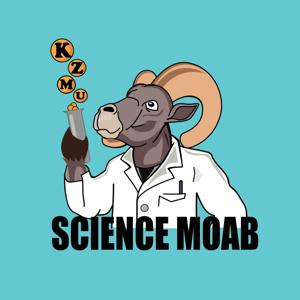
A podcast exploring the science and learning about the scientists from southeast Utah and the Colorado Plateau. Produced by Science Moab and KZMU.

More shows like Science Moab

Radiolab by WNYC Studios

Radiolab

43,827 Listeners

Fresh Air by NPR

Fresh Air

38,012 Listeners

Wait Wait... Don't Tell Me! by NPR

Wait Wait... Don't Tell Me!

38,702 Listeners

Science Friday by Science Friday and WNYC Studios

Science Friday

6,432 Listeners

The Landscape by Center for Western Priorities

The Landscape

77 Listeners

The Daily by The New York Times

The Daily

111,865 Listeners

Journal of the Southwest Radio by Southwest Center

Journal of the Southwest Radio

5 Listeners

Alan Watts Being in the Way by Be Here Now Network / Love Serve Remember Foundation

Alan Watts Being in the Way

799 Listeners

90 Miles from Needles: the Desert Protection Podcast by Chris Clarke

90 Miles from Needles: the Desert Protection Podcast

49 Listeners