
Sign up to save your podcasts
Or

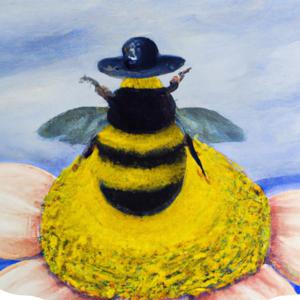


Did bumblebees really live alongside woolly mammoths? During the Ice Age, wild bumblebees buzzed across the same frozen mammoth steppe where woolly mammoths grazed — and the science behind how they survived the cold is stranger than the movies.
The Ice Age wasn't the empty white waste you're picturing. The mammoth steppe was one of the most productive flowering grasslands the planet has ever grown, full of the cold-hardy blooms that only a bumblebee could work. We follow three trails of evidence — ancient plant DNA, the bumblebee family tree, and the bumblebee's own cold-defying biology — to reconstruct a meeting no fossil captured but the science makes almost impossible to avoid.
www.secretpollinators.com
KEY SOURCES & DOIs
Mammoth steppe vegetation — flowering forbs, ancient DNA:
Bumblebee age, cold adaptation, and Holarctic distribution:
Bumblebee thermoregulation (shivering / pre-flight warm-up / fur insulation):
#SecretPollinators #Bumblebees #WildBees #NativeBees #IceAge #WoollyMammoth #MammothSteppe #Pollinators #BeeScience #Bombus #Pleistocene #NaturePodcast #SciencePodcast #Entomology #BumbleBee #ColdAdapted #AncientDNA #Paleontology #WatchTheBees #PollinatorScience #IceAge #Ancient
Everyone knows the honeybee isn't native to North America, and it arrived on colonial ships around the 1620s. Except a single fossil, pulled from paper shale in west-central Nevada and described in 2009, quietly rewrites that story. Meet Apis nearctica: a honeybee that lived on this continent 14 million years ago, long before any human walked the Earth. In this episode, I unpack what the fossil actually proves, why it echoes the strange saga of the North American horse, and the honest mystery at its heart — nobody knows when the native honeybee vanished, or why. It almost certainly wasn't the Ice Age that took them. Beyond that, the rock isn't telling. A story about deep time, a returning bee, and the power of a single silence in the fossil record.
www.secretpollinators.com
REFERENCES
Engel, M. S., Hinojosa-Díaz, I. A., & Rasnitsyn, A. P. (2009). A honey bee from the Miocene of Nevada and the biogeography of Apis (Hymenoptera: Apidae: Apini). Proceedings of the California Academy of Sciences, 60(3), 23–38.
Milius, S. (2009, August 15). Fossil shows first all-American honeybee. Science News, 176(4). University of California Agriculture & Natural Resources — Bug Squad blog, "First Native American Honey Bee" (Kathy Keatley Garvey).
#SecretPollinators #ApisNearctica #NativeBees #HoneyBees #FossilBees #Paleontology #HoneyBeeHistory #DeepTime #PollinatorPodcast #Nevada #NorthAmericanBees #Wildbees #Ancienthistory #Miocene #Fossils #IceAge #AmericanHistory #WildBees
Hover flies hang in the air at eye level, hold perfectly still, and dart off the second you move — then come right back. If your garden's been "invaded" by little hovering insects this season, you're not being watched by tiny drones. You're watching hover flies.
This episode is a short, close look at one of the world's most underappreciated pollinators: the fly that wears a bee costume. Why they hover exactly where they do, how they hold that impossible mid-air stillness, why one is parked right next to you — and the strange double life that makes them quietly valuable in any garden. No equipment, no field trip. Just you, standing still for a minute, learning to see what's already there.
www.secretpollinators.com
KEY SOURCES
Hovering, territoriality & flight control
Male/female hovering function (plain-language corroboration)
Pollination importance
#SecretPollinators #HoverFlies #Syrphidae #Pollinators #FlowerFlies #NativePollinators #GardenWildlife #Diptera #Mimicry #Entomology #WildBees #PollinatorGarden #NatureObservation #BackyardNature #Aphids #Hover
Why living alone beats living together for most of the native, wild bee world. This episode is about those bees — the quiet majority. How a hundred solitary females can nest side by side and still not be a colony. Why even the bumblebee, one of our few truly social native bees, starts and ends every year as a single bee alone underground. Why solitary doesn't mean being lonely, because it's actually the winning strategy for native, wild bees.
KEY SOURCES & DOIs
Proportion solitary / solitary life history
Nesting aggregations vs. communal nesting
Bumblebee annual colony cycle
Social polymorphism in sweat bees
Evolution of eusociality / reversals
#SecretPollinators #WildBees #NativeBees #SolitaryBees #Bumblebees #SweatBees #Pollinators #BeeScience #Halictidae #Entomology #NatureLovers #BeeFacts #singleliving #alone #livealone #learnaboutbees #lonely #livingsingle
You step outside on the hottest day of the year and the flowers are still there, but the bees have vanished. So where did they go? The good news: they didn't die, and they didn't leave. This episode follows North America's native bees into their heat-wave hiding places and unpacks the five strategies they use to survive extreme heat. Kelly explains why bees shift their foraging to the cool bookends of the day, the hidden temperature ceiling — the critical thermal maximum — that's different for every species, the mid-flight "radiator" trick bumblebees use to dump excess heat, and why the underground tunnels of solitary mining bees are one of nature's best passive air conditioners. Plus a genuinely surprising twist: for at least one desert bee, the thing that ends its flying day isn't the heat at all — it's running out of water. It's not a crisis story. It's a story about how astonishingly well-built these bees already are.
www.secretpollinators.com
KEY SOURCES & DOIs
Behavioral thermoregulation & activity timing
Critical thermal maximum & species variation
Bumblebee heat exchange (thorax/abdomen)
Underground nest microclimate
Water loss as the activity limit
#SecretPollinators #NativeBees #WildBees #Pollinators #Bumblebees #GroundNestingBees #CarpenterBees #MiningBees #HeatWave #BeeBehavior #Thermoregulation #Entomology #NaturePodcast #ScienceCommunication #Bees #PollinatorProtection #WildlifeScience #InsectScience #HeatDomes
Most native bees don't live in hives — they live alone, underground, in tunnels a single female digs herself. This episode is about what those ground-nesting bees need from a patch of bare earth: the right soil texture, a bit of slope, sun, and above all the right dampness held steady across the ten or eleven months they spend below the surface. It's also about what disappears when that ground gets covered — by any large development, and increasingly by the data centers going up fast across the country. The honest catch: nobody has studied the bee side of that build-out yet. Studies take time. The mechanism is clear; the measurements aren't there.
www.secretpollinators.com
KEY SOURCES
Proportion of ground-nesting bees
Soil texture and species specificity
Nest-site characteristics (bare ground, temperature, hardness, moisture)
Nesting depth and bare-soil requirement
Data center land/water footprint (context only — none of these address bees)
Lincoln Institute of Land Policy, "Data Drain," 2026; UGA CAES field report on data centers and groundwater, 2026
#SecretPollinators #NativeBees #WildBees #GroundNestingBees #MiningBees #Pollinators #BeeScience #DataCenters #Pollination #SoilHealth #NaturePodcast #SciencePodcast #Entomology #PollinatorHabitat #BeeFacts
Do bees actually fight? Yes, and it's more brutal than most people imagine. In this episode: a desert bee whose large-headed males duel underground in fights that always end in death, an Australian burrowing bee whose males wrestle violently on open ground while birds pick them off, and two stingless bee species that wage genuine warfare with thousands of casualties and hostile nest takeovers. Plus the quieter, constant conflict at solitary bee nest entrances, and an honest look at where the “bee fight club” comparison holds up and where it falls apart. Wonder-first, science-grounded, and no honey bees required.
www.secretpollinators.com
Key SourcesMacrotera / Perdita portalis — dimorphic males and lethal nest fightingGloag, R. et al. Nest defence in a stingless bee: what causes fighting swarms in Trigona carbonaria? (Meliponini).
#SecretPollinators #NativeBees #WildBees #BeeBehavior #Pollinators #Entomology #StinglessBees #SolitaryBees #BeeScience #NatureIsMetal #PollinatorPodcast #SciencePodcast #MMA #Fight #BeeBehavior #FightClub
That snap from the bug zapper on the patio? It's usually killing a night pollinator and almost never a mosquito. When researchers counted every insect six zappers killed over a full summer, only two-tenths of one percent were biting flies — the rest were harmless aquatic insects, natural pest-controllers, and the night-flying moths that pollinate in the dark while we sleep. This episode unpacks why the device is aimed at the wrong target from the start (mosquitoes don't hunt by light — they hunt by the CO₂ and heat your body gives off), what's really dying in that electric grid, and the simpler, cheaper things that actually keep the biters off you. A short, clear look at a familiar summer sound — and the quiet cost of that glowing purple lamp.
www.secretpollinators.com
KEY SOURCES & DOIs
The primary study — non-target kill counts
Mosquito host-seeking cues (CO₂, heat, skin chemistry)
Nocturnal moth pollination
#SecretPollinators #NativeBees #WildBees #Pollinators #Moths #NocturnalPollinators #Mosquitoes #BugZapper #BackyardEcology #NatureFacts #Entomology #PollinatorConservation #ScienceForEveryone #HawkMoth #NightPollinators #MothPollinators
There's a bee that makes polyester. Not metaphorically — an actual transparent, waterproof, antimicrobial film that she paints onto the walls of her underground brood cells with a forked tongue.
Chemists have identified the compounds. Industry wants the material for biodegradable packaging. Nobody has been able to reproduce it.
This week: the cellophane bees of the genus Colletes, the Dufour's gland secretions they polymerize into natural cling wrap, how to spot a nesting aggregation, and why the low cloud of bees hovering over a bare patch of lawn in early spring is one of the most misunderstood sights in North American nature.
www.secretpollinators.com
#SecretPollinators #CellophaneBees #Colletes #NativeBees #WildBees #GroundNestingBees #PollinatorPodcast #NativePollinators #BeeScience #PlasterBees #PolyesterBees #SolitaryBees #NaturePodcast #Entomology #PollinatorHabitat
Say "wool" and you picture a sheep — so what do you do with a bee that shears wool off a living plant? Meet the wool carder bee: a thumbnail-sized native that scrapes the soft fuzz from fuzzy-leaved plants like lamb's ear, rolls it into little cotton balls, and felts them into a row of downy capsules where her young grow up. We get into how she "cards" plant wool the way spinners comb it for yarn, why a leaf's fuzz is really the plant's armor turned into a baby blanket, and the surprisingly fierce males who body-slam bumble bees to guard a patch of flowers. There are more than 160 kinds of wool carder bees in the world, and around 29 of them live right here in North America. Plus, the wool carder on your garden lamb's ear is probably a European transplant — but the West has natives of its own. Come find one.
www.secretpollinators.com
KEY SOURCES
Carding behavior, nest construction & materials
Native vs. introduced species
Territorial males
Behavioral accounts (Gonzalez & Griswold, 2013; popular summary "Fibers, forage, and fighting," Honey Bee Suite, 2023): males are larger than females; defend flower patches; chase and physically wrestle intruders, including bees far larger than themselves; use a resource-defense mating strategy.
#SecretPollinators #NativeBees #WildBees #Pollinators #WoolCarderBee #Anthidium #NativePollinators #BeeFacts #PollinatorGarden #LambsEar #SolitaryBees #WonderInTheGrass #Bees #iNaturalist #beeresearch #CarderBee #NorthAmericanBees #LambsEar #Nativeplants
From the publisher's feed