
Sign up to save your podcasts
Or

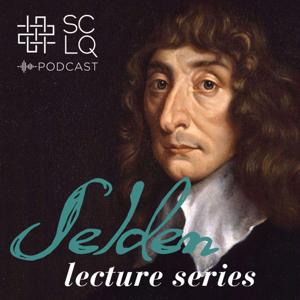


George Rogers Harding (1838–1895) was the 5th Judge of the Supreme Court of Queensland and is regarded as one of Queensland’s finest civil lawyers, whose rigorous analytical approach helped to establish the reputation of the Supreme Court. He is also known as one of Queensland’s most influential bibliophiles and was instrumental in developing a fine collection for the Supreme Court Library. After his death, his extensive personal library provided the foundation for what became the State Library of Queensland.
This Selden Society lecture examines Harding’s personal and professional life and legacy within the context of Queensland’s developing legal community.
About the speaker
Mr John McKenna KC is a long-standing member of the Selden Society, who has a particular interest in the development of the Queensland courts and legal profession in the 19th century. He is the author of Supreme Court of Queensland: A Concise History (2012).
View the lecture.
Support the show
Many consider Lord Denning (1899–1999) to be the most important English judge of the 20th century. His witty and trenchant judgments are read by law students and cited by legal texts and lawyers in the United Kingdom as well as Australia, Canada and beyond. The Honourable James Douglas uses this lecture to examine Lord Denning’s life and judicial philosophy, as well as Denning’s willingness to reconsider precedent and reform legal principles.
About the speaker
The Honourable James Douglas QC was educated at The University of Queensland, graduating Bachelor of Arts (1971) and Bachelor of Laws (1973) and awarded the Comparative Law Prize in that year. He served as an associate to his father, the Honourable James Archibald Douglas (1972), and to Sir Harry Gibbs on the High Court of Australia (1973–74). He was admitted to the Bar in 1973 and undertook study at Emmanuel College Cambridge, graduating Bachelor of Laws (1976) and Diploma in Legal Studies (1979). He was appointed a Judge of the Supreme Court of Queensland in 2003 and retired in 2020.
Read the speaker notes
Watch the lecture
Support the show
Support the show
Sir Frederick Jordan served as Chief Justice of New South Wales from 1934–1949. His vigorous defence of the rule of law during World War II sometimes put him at odds with the governments of the day and the High Court of Australia, but his fiercely written judgments remain relevant and continue to be cited even into this new century.
Although Sir Frederick declined an appointment to the High Court offered by Prime Minister Robert Menzies at the urging of Sir Owen Dixon, his law school teaching, publications and the lasting impact of his judgments give him a serious claim as Australia’s most influential jurist.
Sir Frederick’s extra-judicial writings reveal his fluency in six languages and expansive and opinionated scholarship in art, literature, religion and popular culture.
About the speaker
The Hon Keith Mason AC KC was Solicitor-General and President of the Court of Appeal of New South Wales. He is now an adjunct professor at the University of New South Wales. He’s explored biographical aspects of Australia’s rich legal history in his two legal miscellanies (Lawyers Then and Now; Old Law, New Law) and his biography of Sir Frederick Jordan, Fire Under the Frost.
Read the speaker notes.
Watch the lecture.
Support the show
In our latest episode, Dr Andrew Stumer and Professor Emeritus Kay Saunders AO examine two Queensland criminal cases from the late 19th century.
With the rapid expansion of sugar production in Queensland in the second half of the 19th century, new sources of labour were sought. In 1871, the Supreme Court of Queensland upheld the conviction of Captain Coath of the schooner Jason for kidnapping nine South Sea Islanders to force them into servitude. Supporters of Captain Coath insisted the conviction was obtained through lies told by disgruntled crew members and a Government Inspector. Opponents of South Sea Islander labour pointed to the case as a symptom of widespread abuse.
In 1884, the crew of the Burns Philp vessel Hopeful was charged with the murder and kidnapping of South Sea Islanders. An enormous public outcry ensued when the captain and mate were found guilty and sentenced to death. The following year, Premier Samuel Griffith, a loudly outspoken critic of the plantation system, established the Royal Commission to Enquire into Kidnapping in New Guinea Waters. It revealed the widespread extent of assault, kidnapping and deception by crews of ships participating in the labour trade.
View the lecture recording.
About the speakers
Dr Andrew Stumer is a barrister in practice in Brisbane, Queensland. He is the author of The Presumption of Innocence: Evidential and Human Rights Perspectives (Hart Publishing, 2010).
View Andrew's paper.
Emeritus Professor Kay Saunders AO FASSA FRSA FRHS (London) has published widely on global indentured labour systems and slavery. Her most recent project, conducted with Dr Denver Beanland AM, concerns a re-appraisal of Sir Samuel Griffith's political career.
View Kay's speaking notes.
Support the show
Sir Ross Cranston will draw on themes in his recent book, Making commercial law through practice 1830–1970 (Cambridge UP, 2021), emphasising the Australian dimension. He will examine three areas: markets, agency and sales, to show that although the common law provided the backdrop to commercial activity, it was in practice a flexible tool to achieve what the parties wanted.
About the speaker
Sir Ross Cranston is professor of law at the London School of Economics, where he was previously Cassel professor of commercial law. After graduating from the University of Queensland with university medals in history and political science and law, he undertook post-graduate work at Harvard and Oxford. He has been an MP, Solicitor General for England and Wales and a High Court judge for England and Wales.
Watch the lecture.
Support the show
TJ Ryan, as leader of Queensland’s first Labor government to have a majority in the lower house of state parliament, implemented wide‑ranging political, economic and social reforms in the face of opposition from the upper house and resistance from the Supreme Court of Queensland.
After his untimely death in 1922, Ryan’s successors launched sustained attacks on the Legislative Council and the Supreme Court of Queensland. In this lecture, Justice Keane AC considers the extent to which the attacks on these institutions of government should be regarded as part of Ryan’s legacy.
About the speaker
The Hon Justice Patrick Keane AC was appointed to the High Court in March 2013. At the time of his appointment he was Chief Justice of the Federal Court of Australia. He served as a judge of the Court of Appeal, Supreme Court of Queensland from 2005–10 before being appointed to the Federal Court. Justice Keane AC was appointed a Companion in the General Division of the Order of Australia in 2015.
View the lecture
Download the paper
Support the show
During John Marshall’s long tenure as Chief Justice (1801-1835) a decision of particular importance was Marbury v Madison 5 US 137 (1803), in which Marshall CJ delivered the opinion of the court. The judgment established the key role of the Supreme Court in determining the constitutional validity of federal legislation. The decision would become highly influential in the development of the doctrine of judicial review in Australian constitutional law.
We hope you enjoy listening to speaker the Hon Justice John Bond explore the life, career and legacy of Chief Justice John Marshall (1755-1835).
About the speaker
The Honourable Justice Bond worked first as a solicitor and as an Associate to the Hon Sir Gerard Brennan at the High Court of Australia, before being admitted to the Bar in 1987. Justice Bond was appointed to the Supreme Court of Queensland in March 2015 and the Queensland Court of Appeal in April 2021.
Read the paper.
View the lecture.
Support the show
Sir Samuel Griffith’s Brisbane home was a grand riverfront estate in the Brisbane suburb of New Farm. It was lavishly furnished with Chippendale furniture and Italian objets d’art and even included a high-ceilinged ballroom at its centre in which Sir Samuel and Lady Julia Griffith held their many official and social engagements.
Brisbane architect Richard Kirk explores Griffith’s life through the lens of his New Farm home, and tells Merthyr House’s story—emblematic of the evolution of Brisbane, from colonial outpost to its emergence today as a future Olympic city.
Richard Kirk is an architect and masterplanner, born in 1967 in Roma, Queensland. He founded his practice Kirk architects in 1995, which has since grown to multiple studios across Australia and South-East Asia. His practice primarily works within the institutional and community sector, focusing on advancing sustainable design through each project.
Watch the lecture.
Support the show
After her ‘brilliant boy’ drowned in an unfenced trench in 1937, Mrs Chester took legal action against the local council. Although her claim would ultimately be unsuccessful, the dissenting and empathic judgment of Justice Evatt would mark a critical moment in Australian law and its approach to psychological trauma. In our latest podcast author Gideon Haigh and Associate Professor Kylie Burns examine Justice Evatt’s judgment and discuss how inconsolable psychological trauma is viewed by our legal system today.
Gideon Haigh is a well know Australian author and journalist, who has written several books on a wide variety of subjects.
Associate Professor Kylie Burns is a national recognised torts and personal injury researcher and educator. She is a co-author of the leading text Torts: Cases and Commentary.
This lecture is brought to you by the Australian Academy of Law (academyoflaw.org.au/) and the Selden Society (Australia) (legalheritage.sclqld.org.au/selden-society).
Support the show
Listen to a panel discussion between the Hon Justice Peter Applegarth AM, author Gideon Haigh and Associate Professor Kylie Burns that took place after the lecture 'Mrs Chester’s lost child: inconsolable psychological injury and Justice Evatt’s finest judgment'.
This lecture was brought to you by Australian Academy of Law (academyoflaw.org.au/) and the Selden Society (Australia) (legalheritage.sclqld.org.au/selden-society).
Support the show
From the publisher's feed
Join a variety of judicial officers, legal professionals and academics for this informative and provocative series of legal history lectures. Each episode presents a single story uncovering a…
27 Listeners

124 Listeners

15,743 Listeners

3,041 Listeners

2,460 Listeners

22 Listeners

22 Listeners
245 Listeners