
Sign up to save your podcasts
Or



The appointment of Thomas William McCawley to the Supreme Court of Queensland in 1917 was a decision destined to provoke controversy. The challenge to his appointment was based on what were called 'purely legal and constitutional grounds', but personal motives, partisan manoeuvring and ideological goals were never far from the surface.
The case was heard by the Supreme Court, the High Court of Australia and ultimately the Privy Council of the United Kingdom, and involved several layers of constitutional controversy.
McCawley ultimately won the case and was soon after appointed Chief Justice. Sadly, he did not live long to enjoy it—he died three years later while rushing to catch a train at Roma Street Station.
https://legalheritage.sclqld.org.au/2018-lecture-five
Support the show
In this episode of the podcast, the Hon Margaret McMurdo AC pays tribute to the life and work of Sandra Day O’Connor, the first woman to be appointed a Justice of the Supreme Court of the United States.
Throughout her long and distinguished legal career, Justice O’Connor bore witness to changing attitudes and opportunities for women in the law.
She became one of the most influential members of the Supreme Court, and her moderate and more narrowly expressed approach regularly proved to be decisive of the outcome.
Listen as Justice McMurdo, the first woman to be appointed as presiding judge of an Australian appellate court, explores O’Connor’s influence on generations of women lawyers and judicial officers in the US and Australia.
Support the show
Lord Thomas Bingham of Cornhill was described in his obituary as the greatest English judge since the Second World War. He was the first modern judge to hold all of the positions of Master of the Rolls, Lord Chief Justice, and Senior Law Lord.
In this lecture, the Honourable Justice James Edelman pays tribute to the life and legacy of Lord Thomas Bingham. His Honour considers the elements of style, intelligence, patience, humility and respect that combined to make Lord Bingham one of the greatest judges of the modern era.
For more information on this lecture and on the Selden Society, visit the Supreme Court Library Queensland website https://legalheritage.sclqld.org.au/lecture-seven-lord-bingham
Support the show
What role does history play in the law, and how are claims about history proved? This lecture explores this question through a series of case studies, with a particular focus on constitutional cases. Claims about law and claims about history are interwoven in the common law. With its apparent neutrality and certainty, history holds a particular appeal for lawyers as an interpretative source. This lecture considers the challenges that come with using and proving historical facts and narratives in constitutional cases, and considers the role that history plays in constitutional texts and adjudication.
Support the show
Oliver Wendell Holmes Jr (1841–1935) was a scholar and jurist of indisputable brilliance, widely regarded as one of the greatest and most influential judges in the English speaking world.
Of all of his opinions, nothing defines his life’s work better than his famous approach to the First Amendment. Although no right seems more fundamental to American public life than freedom of speech, the Supreme Court did not strike down any law on First Amendment grounds until the mid-twentieth century. In fact, the court repeatedly affirmed imprisonment for dissidents who were merely speaking out against government policies. Modern First Amendment law can be traced directly to a series of eloquent dissents by Holmes in subversive advocacy cases in the aftermath of the First World War.
In the centenary year of his most famous dissent, this lecture examines a man of complexity and apparent contradictions through the prism of his approach to freedom of speech cases and seeks to identify what contemporary lawyers can learn from Holmes’ life experience, philosophy and eloquent contributions to the law.
https://legalheritage.sclqld.org.au/selden-society
Support the show
In Victorian England the work of the courts was a subject of immense public interest, with the leading barristers of the day enjoying celebrity status. In this era there was no litigation more closely followed than the trials of Oscar Wilde. This fascinating lecture, presented by The Honourable Alan Wilson AC, charts the course of libel and criminal trials that ultimately led to Wilde’s conviction of gross indecency. November marks the anniversary of Oscar Wilde’s death in 1900 at the age of 46.
Support the show
This month we have a special edition of the podcast featuring a panel discussion on the relationships between art, aesthetics and justice.
The event was a part of the recent Next Witness exhibition in the library featuring the works of contemporary Australian artist Julie Fragar. Inspired by her experiences as an observer in the Queensland Supreme Court, Fragar’s large, layered paintings reveal the human factors in the judicial process.
Joining the artist in discussion were the Honourable Justice Thomas Bradley, Dr Karen Crawley and Professor Kieran Tranter. The panel was chaired by Angela Goddard, Director of the Griffith University Art Museum.
https://legalheritage.sclqld.org.au/exhibitions/next-witness
Support the show
One of the world’s leading art prizes, The Archibald Prize, has been the battleground for debates and disputes about the definition of portraiture since its inception in 1921. It was established in 1919, pursuant to the will of Mr J F Archibald (a former editor of The Bulletin). Its annual exhibitions at the Art Gallery of NSW have reflected the evolving tastes and trends of Australia’s visual arts culture and offered public exposure to new interpretations of the portraiture genre. The legal case brought against the 1943 Archibald Prize winner, William Dobell (then a relatively unknown artist), forms part of a long history of art-world litigation built around questions of taste and changing definitions of art itself. Dobell’s prize winning portrait used distortion and exaggeration to capture the essence and character of his friend and colleague Joshua Smith; the artist sought to create an image, not merely copy one. The final, convention-breaking painting created huge public interest and stimulated debate about the definition of portraiture.
The resulting court case, brought by two disaffected Archibald Prize entrants against Dobell and the Gallery’s trustees, saw two of the greatest advocates of the day—Garfield Barwick KC (for the plaintiffs) and Frank Kitto KC (for the Art Gallery of NSW)—contest the differences between caricature and portraiture over a four-day trial. In the result, the decision of the trustees was upheld: Attorney-General v Trustees of the Art Gallery of NSW (1944) 62 WN (NSW) 212. However, the case took its toll on Dobell and the other participants in this extraordinary dispute.
This September marks 75 years since the case.
Support the show
In this lecture, Professor Paul Brand looks at the different rhetorics of legislation enacted during the thirteenth and early fourteenth centuries, a period when the initiative in legislation still clearly lay with the King and his advisers (rather than with the Commons in parliament) and also a period which saw the enactment of legislation with a major and continuing impact and importance.
Visit the Supreme Court Library Queensland website for more: https://legalheritage.sclqld.org.au/2019-lecture-one
Support the show
Lord Atkin's first encounter with a doctor was in 1867, when Dr Kevin O'Doherty attended his birth in Brisbane. Twenty years earlier O'Doherty had been transported to Tasmania for his advocacy of Irish nationalism. By 1867 he was a leading surgeon in Brisbane, and, like his friend Robert Atkin, an advocate of liberal democracy. He was one of the first presidents of the Queensland Medical Society and carried out extensive honorary work at Catholic hospitals. As an MP he introduced Queensland's first Public Health Act, championed the improvement of public health and as an opponent of the traffic in Kanakas sponsored the bill to stop their recruitment. He was a member of Queensland's Parliament until 1886 when he returned to Ireland and was elected to the House of Commons in that country. Soon after that, political differences in Dublin led him to return to Brisbane.
Learn more about this lecture on the Supreme Court Library Queensland website, https://legalheritage.sclqld.org.au/2018-lecture-three
Support the show
From the publisher's feed
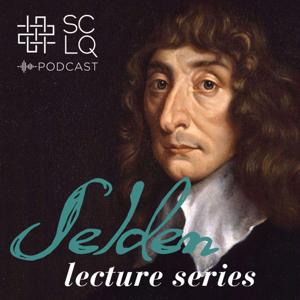
Join a variety of judicial officers, legal professionals and academics for this informative and provocative series of legal history lectures. Each episode presents a single story uncovering a…
27 Listeners

124 Listeners
15,743 Listeners

3,041 Listeners

2,460 Listeners

22 Listeners

22 Listeners
245 Listeners