
Sign up to save your podcasts
Or



Read the free book on the topic at https://simony.info.
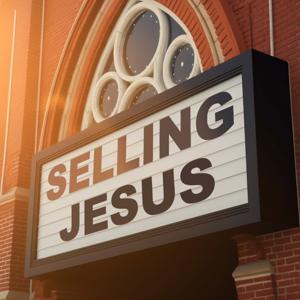
In this debate, Conley Owens defends the proposition that the sale of biblical instruction is simony, the sin named after Simon Magus’s attempt to purchase spiritual power in Acts 8. Tanner challenges that conclusion, arguing that payment for a teacher’s finite labor does not necessarily constitute the sale of God’s gifts.
Both affirm that ministers should receive financial support and that spiritual blessings must not be sold. Their disagreement concerns where that boundary lies and how Scripture teaches us to identify it.
This was the pre-conference event from Doreancon 2026. Learn more at https://doreancon.org.
CHAPTERS
0:00 Welcome & introduction
3:36 Affirmative opening – Conley Owens
12:09 Cross-examination of the affirmative
18:52 Negative opening – Tanner Cartwright
27:36 Cross-examination of the negative
33:43 Affirmative rebuttal – Conley Owens
39:25 Negative rebuttal & closing – Tanner Cartwright
45:48 Affirmative closing – Conley Owens
50:17 Audience Q&A
51:14 Q&A: How do you interpret Romans 15:27 and its language of debt and reciprocity?
53:01 Q&A: If sharing the gospel is just planting a seed, why is selling the gospel forbidden?
59:06 Q&A: Philippians 1:15–18: why does motive matter, as long as Christ is proclaimed?
59:56 Q&A: Tim Keller's church sold his sermons online. Was that sinful?
1:02:54 Q&A: If selling at cost is simony, who should cover the costs?
1:07:23 Q&A: In 1 Corinthians 9:11–12, why assume Paul's rhetorical questions expect “no”?
1:08:44 Q&A: If the answer is “yes, it is too much,” doesn't that undercut your case?
1:13:55 Q&A: What is the difference between reciprocity and co-labor?
1:18:04 Q&A: Does prayer take labor? Would it be wrong to charge for prayer?
1:24:18 Q&A: If a 25¢ counseling e-book isn't a holy thing, what am I buying?
1:25:57 Q&A: Is it simony to sell Bibles at different prices for nicer editions?
1:26:37 Q&A: Is it simony to sell gospel tracts to Christians who give them away for free?
1:30:32 Q&A: You've never charged an unbeliever for a tract, correct?
1:31:03 Q&A: Isn't requiring attribution sometimes useful, e.g. to catch outdated copies of a translation?
1:33:56 Q&A: What does Numbers 18:21–31 teach about the Levites' tithe?
1:37:44 Q&A: What is 2 Corinthians 2:17 (“peddlers of God's word”) commanding us?
1:40:17 Q&A: Is a $25 book different from the same book at $100?
1:43:01 Q&A: Am I duty bound to drop out of seminary? What if my church is paying for it?
1:44:25 Q&A: How is “redeeming the vexation” any different in practice?
1:44:43 Q&A: How do book profits actually let someone like Joel Beeke do more ministry?
1:46:20 Q&A: How should those profits be used?
1:47:50 Q&A: Is a $100 book still simony if the author gets no royalty?
1:48:22 Q&A: If copyright is fake, is the content really being sold?
1:49:28 Q&A: Should Christians just copy the books they already own?
1:52:41 Q&A: If planting is God's means of growth, isn't selling the means selling the Spirit's work?
1:56:42 Q&A: So simony depends on obligation, not on what's sold: face to face no, online yes?
2:00:16 Q&A: So the question is whether I'd neglect an obligation for money?
2:01:52 Q&A: What are real, modern examples of simony?
2:04:56 Q&A: Is teaching theology at a tuition-charging school simony?
2:05:44 Q&A: Between your 17 children, whose bedtime Bible stories are free?
2:06:54 Q&A: Why is a believer obligated to the person on the street, but not to a website visitor?
2:08:46 Q&A: Isn't publishing a book online an implicit request to share the gospel?
2:10:26 Q&A: Is a paid Alistair Begg cruise simony, and is buying a ticket simony too?
2:18:12 Q&A: Is giving the Lord's Supper before baptism simony?
2:19:24 Q&A: Would you call these practices something other than “the sin of Simon”?
A chapter from God's Word Is Not Bound.
Read the text.
Get the free book.
In this episode, we examine the idea that Christian organizations are immune to temptations common to man.Drawing on decades of firsthand testimony and documented scandals, we examine the darker side of Christian publishing, from ruthless business practices and corporate profiteering to ghostwriting, manufactured celebrity, fake bestseller campaigns, and the commodification of the Church. We consider how the desire for money, influence, and a seat at the table keeps many silent, while the presence of genuinely godly people lends credibility to institutions whose practices contradict the teachings of Christ. Can good intentions or charitable donations justify dishonest and exploitative methods? And why have we entrusted the exclusive control of God's Word to an industry plagued by these very problems? Ultimately, we confront the ancient sin of simony in its modern forms and call the Church to reject institutional idolatry, expose corruption, and recover the biblical command to freely give what God has freely given.
The same institutional corruption has profound implications for Bible translation, where publishers and translation organizations claim exclusive control over Scripture through copyright, licensing restrictions, and commercial distribution. When God's Word becomes an institutional asset to be protected, monetized, and controlled, the Church must ask whether these organizations are worthy of this sacred trust.
Read or download this chapter or the whole work: God's Word Is Not Bound.
Is copyright really a form of property, and is copying actually theft? In this chapter of God’s Word Is Not Bound, I examine copyright through Scripture and natural law and argue that intellectual property turns justice on its head. Biblical property rights exist to prevent conflict over tangible things: if someone takes your sheep, land, or money, you no longer possess what was taken. But ideas and words work differently. They can be copied and shared without depriving anyone of them. The chapter argues that Scripture nowhere treats copying words or ideas as theft and even presents the copying of God’s Word as something to be encouraged. When copyright is applied to Scripture, the problem becomes especially serious: human beings use state power to restrict the copying, translation, recording, and distribution of revelation that ultimately belongs to God. Rather than accepting copyright simply because it is legal or customary, Christians are challenged to ask whether the state has any God-given authority to manufacture ownership rights over information in the first place, and whether placing “all rights reserved” over God’s Word is really stewardship or a perversion of justice.
Read the text.
Get the free book.
As Paul sits in a Roman prison cell, he writes, “Remember Jesus Christ, risen from the dead, the offspring of David, as preached in my gospel, for which I am suffering, bound in chains as a criminal. But God’s Word is not bound” (2 Tim 2:8-9). Even though he may be imprisoned, God’s Word cannot be. Put all the preachers in chains, but the message of Christ remains free. Unshackled.
Little did Paul know that the schemes of the Enemy would one day shift from binding the hands and feet of Christians to binding the Word—with legal fetters. Evil emperors who cast saints into dungeons would be replaced centuries later by Christians who imprison the Word behind bars of jurisprudence. And no matter the stated reason for this imprisonment of Scripture, the outcome remains the same: the Word does not run freely.
The Church can no longer declare with Paul, “God’s Word is not bound!” Instead, followers of Christ cower before copyright claims, subservient to man’s restrictions on what God himself authored. It may be God-breathed, but men have arrogated it, threatening anyone who might want to unbind it and let it fill the earth as the waters cover the sea. Preachers call it “God’s Word,” but mere humans insinuate that it is theirs with the phrase “all rights reserved.”
In our modern Church, Paul might have said the opposite of what he wrote so long ago. Looking around at the Bible publishing landscape, he may have written, “Remember Jesus Christ, as I preached in my gospel, which I am free to proclaim. But God’s Word is bound in chains as a criminal.”
In a 2008 podcast, John Piper discusses whether it is appropriate to sell the Bible for profit and explains the role copyright can play in protecting Bible translations. In this video, Conley Owens responds by presenting the case that Scripture can—and should—be freely distributed without copyright restrictions, offering a thoughtful perspective on the relationship between Bible translation, stewardship, and free access to God's Word.
Source: https://www.desiringgod.org/interviews/is-it-wrong-to-copyright-and-sell-the-bible0:00 Introduction00:46 Piper: The Word of God vs. paper and ink01:21 Response: Copyright covers content, not paper and ink01:57 Piper: It comes down to profit02:14 Response: Profit was never the biblical issue04:08 Piper: A publisher covering costs05:00 Response: Translation is a different thing08:53 Piper: Giving Bibles away09:14 Response: Paper can be sold, the content cannot09:58 Piper: Copyright as protection from distortion10:46 Response: Copyright blocks good modifications 13:35 Piper: Copyright is protection14:12 Response: Copyright vs. trademark15:56 Final pleaLEARN MOREhttps://sellingjesus.orghttps://thedoreanprinciple.orghttps://copy.church
Read the book for free.
This episode provides an overview of an anonymous work from 1700 called The Anatomy of Simon Magus. It's an examination of simony, defining it as the corrupt practice of buying or selling spiritual things or church offices. The author offers a "surgical exposure" of how corruption manifests through bribery, social favors, and self-interested service, warning that such actions invalidate the spiritual authority of the clergy. By dissecting both the historical context of the 1700s and modern analogs, the work serves as a moral autopsy intended to preserve the purity of the Church. It cautions that those who enter the ministry through financial or deceptive means are usurpers rather than true servants of Christ.
Generated by NotebookLM, curated by Andrew Case.
sellingjesus.org | thedoreanprinciple.org | copy.church
Read here.
Does the application to freely give include restrictions to teachings behind a paywall? In a world full of commercialized teachings, this article presents a personal story and a biblical response to how we should freely give despite the modern restriction of paywalls.
sellingjesus.org | thedoreanprinciple.org | copy.church
Read here.
Balaam is considered the prototypical false teacher by the New Testament authors. This article dives into the characteristics of Balaam and how we can use this example to identify a biblical description of a false teacher.
sellingjesus.org | thedoreanprinciple.org | copy.church
Read Here.
Who owns the Hebrew Old Testament and Greek New Testament? This article reading goes through a survey of the manuscripts, digitizations, and critical texts and answers who truly is the owner?
sellingjesus.org | thedoreanprinciple.org | copy.church
Read the article.
Does the prohibition to sell the Word of God apply to adaptations? Adaptations include translations, bible study apps, or musical arrangements. This article looks into such adaptations and how they are directly connected to scripture and thus, should not be sold.
sellingjesus.org | thedoreanprinciple.org | copy.church
From the publisher's feed