
Sign up to save your podcasts
Or



Based on Podcast App listening data
Reading crime fiction from the early twentieth century is a really popular activity at Christmas. It's nice to curl up with a good whodunnit by the fire, but if we stop and think about it, reading about complicated ways for people to die is not exactly the most festive thing to do. So why is it that we love crime at Christmas?
Contributors:
—Cecily Gayford, senior commissioning editor at Profile
—Anna Leszkiewicz, deputy culture editor at the New Statesman. Read her article about cosy murder mysteries here.
Books and stories mentioned in order of appearance:
—The Nine Tailors by Dorothy L. Sayers
—Hercule Poirot's Christmas by Agatha Christie
—Murder in the Snow: a Cotswold Christmas Mystery by Gladys Mitchell
—The Santa Klaus Murder by Mavis Doriel Hay
—Portrait of a Murderer: A Christmas Crime Story by Anne Meredith
—A Very Murderous Christmas edited by Cecily Gayford
—The Adventure of the Christmas Pudding and a Selection of Entrées by Agatha Christie
—Hangman's Holiday by Dorothy L. Sayers (includes 'The Necklace of Pearls')
Find a full transcript of this episode at shedunnitshow.com/crimeatchristmastranscript
NB: Links to Blackwell’s are affiliate links, meaning that the podcast receives a small commission when you purchase a book there (the price remains the same for you). Blackwell’s is a UK independent bookselling chain that ships internationally at no extra charge.
Learn more about your ad choices. Visit megaphone.fm/adchoices
When Agatha Christie disappeared in 1926, nobody could find her.
Books mentioned in order of appearance
—The Mysterious Affair at Styles by Agatha Christie
—The Secret Adversary by Agatha Christie
—The Murder of Roger Ackroyd by Agatha Christie
—An Autobiography by Agatha Christie
—The Man in the Brown Suit by Agatha Christie
—Unnatural Death by Dorothy L Sayers
—Agatha Christie: A Biography by Janet Morgan
—Agatha by Kathleen Tynan
—Agatha Christie and the Missing Eleven Days by Jared Code
—Agatha Christie: The Finished Portrait by Andrew Norman
—A Talent for Murder by Andrew Wilson
—The Big Four by Agatha Christie
—The Mystery of the Blue Train by Agatha Christie
—The Seven Dials Mystery by Agatha Christie
—The Murder at the Vicarage by Agatha Christie
—Giant's Bread by Mary Westmacott
Sources:
—The Golden Age of Murder by Martin Edwards
—The Complete Christie: An Agatha Christie Encyclopaedia by Matthew Bunson
—The British Newspaper Archive
Find a full transcript of this episode at shedunnitshow.com/theladyvanishestranscript.
NB: Links to Blackwell’s are affiliate links, meaning that the podcast receives a small commission when you purchase a book there (the price remains the same for you). Blackwell’s is a UK independent bookselling chain that ships internationally at no extra charge.
Learn more about your ad choices. Visit megaphone.fm/adchoices
The detective stories of the 1920s and 30s aren't exactly well known for being at the vanguard of the struggle for gay rights. But there are queer clues everywhere in these books, if you only know where to look for them.
Contributors:
—JC Bernthal, academic and author of Queering Agatha Christie
—Moira Redmond, journalist and blogger at clothesinbooks.blogspot.com
Books referenced in order of appearance
—Queering Agatha Christie by JC Bernthal
—The Mousetrap by Agatha Christie
—A Murder is Announced by Agatha Christie
—Unnatural Death by Dorothy L Sayers
—Murder in the Closet edited by Curtis Evans and with essays by multiple authors, including Moira Redmond
—Miss Pym Disposes by Josephine Tey
—Murder is Easy by Agatha Christie
—Hallowe'en Party by Agatha Christie
Find a full transcript of this episode at shedunnitshow.com/queercluestranscript.
NB: Links to Blackwell’s are affiliate links, meaning that the podcast receives a small commission when you purchase a book there (the price remains the same for you). Blackwell’s is a UK bookselling chain that ships internationally at no extra charge.
Learn more about your ad choices. Visit megaphone.fm/adchoices
The detective writers of the 1920s and 1930s weren't working a vacuum. They took a keen interest in the crimes of their time, often weaving elements from actual murder cases into their plots or referencing them directly. And there was one case, a murder both infamous and domestic, that interested the likes of Agatha Christie, Dorothy L. Sayers and Anthony Berkeley more than any other.
This real life murder mystery has everything: a body hidden in the cellar, adultery, a transatlantic steamship pursuit, cross dressing, and a pleasingly ambiguous ending. It was referenced in novels more than any other by the detective writers of the golden age, and did a great deal to shape the genre as we know it today.
This is the story of Dr Crippen.
Books referenced in order of appearance:
—Walter Dew: The Man Who Caught Crippen by Nicholas Connell
—Three Act Tragedy by Agatha Christie
—The Wychford Poisoning Case by Anthony Berkeley
—Mrs McGinty's Dead by Agatha Christie
—Malice Aforethought by Frances Iles (aka Anthony Berkeley)
—The Golden Age of Murder by Martin Edwards
—"The Lernean Hydra" in The Labours of Hercules by Agatha Christie
—The Case with Nine Solutions by J. J. Connington
—The House That Berry Built by Dornford Yates
—Henbane by Catherine Meadows
—Dancing for the Hangman by Martin Edwards
You can find a full transcript of this episode at shedunnitshow.com/crippentranscript.
NB: Links to Blackwell’s are affiliate links, meaning that the podcast receives a small commission when you purchase a book there (the price remains the same for you). Blackwell’s is a UK bookselling chain that ships internationally at no extra charge.
Learn more about your ad choices. Visit megaphone.fm/adchoices
Why are spinsters always solving mysteries?
Contributors:
—Rosemary Cresswell, senior lecturer in global history at the University of Hull. Follow her on Twitter @RosieCresswell.
—Camilla Nelson, associate professor of writing at the University of Notre Dame Australia.
—Helen Parkinson
Further reading:
—A field guide to spinsters in English fiction
—'Surplus women': a legacy of World War One?
—Singled Out: How Two Million Women Survived Without Men After the First World War by Virginia Nicholson.
—The Shadow of Marriage by Katherine Holden
—Unnatural Death by Dorothy L Sayers
NB: Links to Blackwell’s are affiliate links, meaning that the podcast receives a small commission when you purchase a book there (the price remains the same for you). Blackwell’s is a UK bookselling chain that ships internationally at no extra charge.
You can find a full transcript of this episode at shedunnitshow.com/surpluswomentranscript.
Learn more about your ad choices. Visit megaphone.fm/adchoices
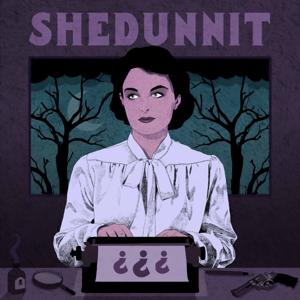
For a couple of decades between the first and second world wars, something mysterious happened. A golden age of detective fiction dawned, and people around the world are still devouring books from this time by Agatha Christie, Dorothy L Sayers, Margery Allingham, Anthony Berkeley, Gladys Mitchell, Ngaio Marsh, Josephine Tey and more.
In this podcast, Caroline Crampton will be unravelling the mysteries behind such classic detective stories, looking at the social, literary and political context in which these writers worked. If you've ever stayed up late reading under the covers to find out whodunnit, then this podcast is for you.
Find the show at shedunnitshow.com, on Twitter, Facebook, Tumblr and Instagram as @ShedunnitShow, and in all major podcast apps. Make sure you're subscribed so you don't miss the first episode. Click here to do that now in your app of choice.
You can find a full transcript of this mini episode at shedunnitshow.com/whodunnittranscript.
Learn more about your ad choices. Visit megaphone.fm/adchoices