
Sign up to save your podcasts
Or

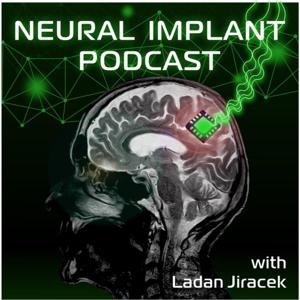

Dr. Shelley Fried is an associate professor at Massachusetts General Hospital, the teaching hospital to Harvard Medical School. His work involves retinal prostheses and using electromagnetic fields to stimulate neurons. In this episode, he discusses these fields of research, as well as goals and challenges with each of them.
Top three takeaways:
[0:00] Ladan introduces the episode and the guest, Dr. Shelley Fried
[2:15] Fried discusses his background and how he came to study retinal prostheses
[5:00] Visual prostheses work by mirroring the visual pathway; in diseases involving retinal damage, the prostheses target downstream bipolar cells
[8:20] A major challenge with stimulating visual neurons is that since they are packed into such a small space, being able to manufacture electrodes small enough to fit into the retina and accurately implant them is difficult
[11:45] The retinal prosthesis has the advantage of not involving direct surgical procedures with the brain
[15:30] The main goal now is to get the electrodes closer together to activate a narrower region of the retina in order to improve visual acuity
[18:30] There are a number of barriers to getting these visual prostheses on the market, namely that the vision it provides cannot be meaningfully used due to the visual acuity being so poor
[21:30] By properly activating ON cells without simultaneously activating OFF cells in the retina, the goal is to be able to recreate natural signaling to the retina
[25:30] There are a lot of issues that arise with electrodes, such as charge density limitations, foreign body response, and stability
[28:00] Non-contact magnetic stimulation evades these concerns, and the coils used can safely activate neurons in the cortex
[31:00] With electric stimulation, cells far from the stimulation site can be stimulated, but with magnetic stimulation, the stimulation is much more specific and confined more to the stimulation site
[34:30] Current is not being deposited directly into tissue, but is passing through the coiled wire where it generates the magnetic field for stimulation
[38:00] After successfully conducting surgical tests for these coils, the goal is to clinically test the devices in a number of blind patients and observe the resulting visual acuity
[42:00] Changing stimulation location and parameters is easier with these coils, and the interaction between the induced fields from multiple coils is being looked into
[44:00] Ladan gives further thoughts on the discussion with Dr. Fried
 View all episodes
 By Ladan Jiracek

4.8
1717 ratings
Dr. Shelley Fried is an associate professor at Massachusetts General Hospital, the teaching hospital to Harvard Medical School. His work involves retinal prostheses and using electromagnetic fields to stimulate neurons. In this episode, he discusses these fields of research, as well as goals and challenges with each of them.
Top three takeaways:
[0:00] Ladan introduces the episode and the guest, Dr. Shelley Fried
[2:15] Fried discusses his background and how he came to study retinal prostheses
[5:00] Visual prostheses work by mirroring the visual pathway; in diseases involving retinal damage, the prostheses target downstream bipolar cells
[8:20] A major challenge with stimulating visual neurons is that since they are packed into such a small space, being able to manufacture electrodes small enough to fit into the retina and accurately implant them is difficult
[11:45] The retinal prosthesis has the advantage of not involving direct surgical procedures with the brain
[15:30] The main goal now is to get the electrodes closer together to activate a narrower region of the retina in order to improve visual acuity
[18:30] There are a number of barriers to getting these visual prostheses on the market, namely that the vision it provides cannot be meaningfully used due to the visual acuity being so poor
[21:30] By properly activating ON cells without simultaneously activating OFF cells in the retina, the goal is to be able to recreate natural signaling to the retina
[25:30] There are a lot of issues that arise with electrodes, such as charge density limitations, foreign body response, and stability
[28:00] Non-contact magnetic stimulation evades these concerns, and the coils used can safely activate neurons in the cortex
[31:00] With electric stimulation, cells far from the stimulation site can be stimulated, but with magnetic stimulation, the stimulation is much more specific and confined more to the stimulation site
[34:30] Current is not being deposited directly into tissue, but is passing through the coiled wire where it generates the magnetic field for stimulation
[38:00] After successfully conducting surgical tests for these coils, the goal is to clinically test the devices in a number of blind patients and observe the resulting visual acuity
[42:00] Changing stimulation location and parameters is easier with these coils, and the interaction between the induced fields from multiple coils is being looked into
[44:00] Ladan gives further thoughts on the discussion with Dr. Fried

4,997 Listeners

4,164 Listeners

10,581 Listeners

136 Listeners
760 Listeners

532 Listeners

112,360 Listeners

15,333 Listeners

1,087 Listeners

29,220 Listeners

10,786 Listeners
28 Listeners