
Sign up to save your podcasts
Or



Send us Fan Mail
Today Shelley shares an interview from 1995 with Ezekwa Abdullah. Ezekwa argues that Blacks still repress themselves and suffer a form of psychological slavery in the collective subconscious psyche because attitudes of repression have been preserved and passed from one generation to the next. The ghost of the plantation exists today because not enough has been done to condemn this point of view.
Support the show
Follow us and continue the conversation on Facebook, Instagram, and LinkedIn.
Send us Fan Mail
Today, Shelley replays an interview from the Free By Choice program, which brought inmates from Alabama prisons on the air to speak openly about their crimes and the decisions which led to them. These Free By Choice inmates had a strong desire to share their stories so their suffering could serve to help others avoid making the same mistakes.
Support the show
Follow us and continue the conversation on Facebook, Instagram, and LinkedIn.
Send us Fan Mail
Today, Shelley reaches back into his archive to an interview with Mariam McClendon. They discuss colorism, that is, the differences in perception between light- and dark-complected blacks and the challenges darker-complected blacks encounter – even from members of their own race. Even though the interview is from 1991, the problem of colorism still exists today, hindering relationships and opportunities among blacks.
Support the show
Follow us and continue the conversation on Facebook, Instagram, and LinkedIn.
Send us Fan Mail
Today’s episode of Shelley’s Plumbline features an interview from 1989 with Orlando Jones, a one-time track star at the University of Alabama. Orlando shares his story of how he went from running on a track as an All-American scholarship athlete to running drugs across the border in Mexico, eventually getting caught and landing in prison.
He shares his message in the hope that others might avoid his fate.
Support the show
Follow us and continue the conversation on Facebook, Instagram, and LinkedIn.
Send us Fan Mail
Today’s episode features a 1993 interview with Julius Davis, a man who had just spent 19 years in prison. At 21 years of age, he had been handed two life sentences for his involvement in two separate murders. Julius discusses how prior to his crimes, he was involved as a positive influence in his community and how two bad decisions led him to prison.
While in prison, however, Julius did not fall victim to negative influences. He created a circle of constructive people who kept their spirits in a positive place and made the best of the prison experience. Listen and hear how he continued his positive influence on the community after his release.
Support the show
Follow us and continue the conversation on Facebook, Instagram, and LinkedIn.
Send us Fan Mail
In this episode, Shelley reflects on an interview from 1991 that covers the topic of racial identity. Which is the correct terminology? Black? African-American, People of Color? The interview also discusses class differences among Blacks.
Be advised that this episode contains frank discussions about race and uses the n-word. Listener discretion is advised.
Support the show
Follow us and continue the conversation on Facebook, Instagram, and LinkedIn.
Send us Fan Mail
Today we continue our exploration of the Evolution of Black Media and the role Black radio stations played during the Civil Rights movement of the 60s.
We explore how the Black population began to look to popular disc jockeys such as Jack Gibson, Gertrude Cooper, Georgie Woods, Martha Jean “the Queen,” and the Plumbline’s very own Shelley “The Playboy” Stewart to hear coded messages regarding protests and demonstrations.
Black Radio stations gave a voice to Dr. King and other prominent members of the Movement and became the medium of choice for disseminating urgent messages and direction.
Support the show
Follow us and continue the conversation on Facebook, Instagram, and LinkedIn.
Send us Fan Mail
This week we kick off the first of a two-part series on the Evolution of Black Media. In this episode, Shelley tells us about the early days of Black Media and how much of the entertainment for black audiences was produced by whites. Amos N Andy, for example, a well-known radio sitcom, was produced and performed by two white actors.
Shelley recalls how the first black man in radio, Jack Cooper, blazed a trail in 1929, and by the time Shelley created his Playboy persona, he wasn’t interested in entertaining just blacks; he used the power of music to bring people together.
Support the show
Follow us and continue the conversation on Facebook, Instagram, and LinkedIn.
Send us Fan Mail
Today we continue telling the story of Shelley’s life in the world of music as he reflects on his days traveling the south on what was known as the Chitlin' Circuit.
As a talent agent for Shelby Singleton Productions, Shelley traveled the Chitlin Circuit searching for talent that played in small towns throughout the South. He would then take the talent to big cities to cut records and get exposure.
He discovered Clarence Junior Lewis, who went by the stage name “CL Blast”
Shelley discovered Willie Hightower and Johnny Adams. He managed The Dynamic Soul Machine and helped launch the career of JV Jenkins, who performed a moving rendition of Peace in the Valley at the inauguration of Birmingham’s first black mayor, Richard Arrington.
Listen in as Shelley shares music, insights, and inside stories about his life on the “Chitlin' Circuit.”
Support the show
Follow us and continue the conversation on Facebook, Instagram, and LinkedIn.
Send us Fan Mail
Shelley's Life in Music
Today we’ll begin an exploration of Shelley’s fascinating life in the music world. Over the course of his career, Shelley worked with many major names in music, such as Jackie Wilson, Aretha Franklin, Wilson Pickett, and The Temptations. And he became fast friends with musical giants such as Bobby "Blue" Bland, Otis Redding, and Isaac Hayes.
Today we’ll hear a clip of his interview with Eddie Kendricks, a lead singer with The Temptations. The interview traces the evolution of The Temptations, and discusses the surprising strategies of Barry Gordy and Motown Records and how they would manage the careers of groups, giving hit songs to certain groups to increase their popularity and accelerate their careers.
Eddie also talks about his youth on the streets of Birmingham, Alabama, and how his life very nearly went in another, darker direction.
Support the show
Follow us and continue the conversation on Facebook, Instagram, and LinkedIn.
From the publisher's feed
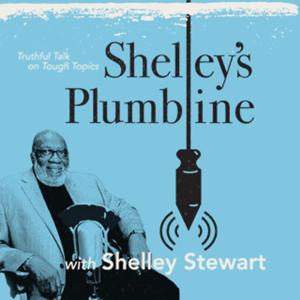
In construction, a plumbline is a weight suspended from a string used as a tool to find the true reference line. A plumbline will always find the vertical axis pointing to the center of gravity,…
Pulling from a library of more than 3,000 shows from his storied career in broadcasting, Shelley's Plumbline leads us in a search for the truth, opening the channels of communication and understanding on tough social topics that are as relevant today as they were 40 years ago.
Join us as we explore the past, compare it to today, and craft a better future.