
Sign up to save your podcasts
Or



What if better sexual intimacy has less to do with sex and more to do with how safe, seen, and connected you feel with your partner?
Randy is back with me for a conversation we knew we needed to have after recording our last episode on intimacy.
This time, we're going deeper into sexual intimacy and the things couples often don't talk about: expectations, pressure, desire, boundaries, communication, receiving, and the ways we may abandon ourselves to maintain connection.
We also introduce one of my favorite relationship practices: the conscious date.
I first learned about conscious dates from my friend and former coach Nick, and when Randy and I started dating, it was something I couldn't wait to bring into our relationship.
A conscious date creates intentional space outside of emotionally or sexually charged moments to talk about how you're actually doing, what you appreciate about each other, where your relationship is growing, what has been difficult, what you're dreaming about together, and yes, sex.
In this episode, I share how something as simple as Randy telling me he wanted me later could create pressure in my body, even though his intention was to make me feel desired. Having the safety to tell him that allowed him to understand my internal experience without making either of us wrong.
This isn't a conversation about how often couples "should" have sex.
It's about creating a relationship where neither person has to abandon themselves to stay connected to the other.
Because great sexual intimacy doesn't begin in the bedroom.
It begins with how you treat each other everywhere else.
In This Episode, We Talk About:
Download my free guide with the 7 powerful questions to go deeper with your partner and get past the surface level intimacy.
When you hear the word intimacy, what do you think of?
For a lot of us, the answer is sex.
I thought that way for a long time too.
But what Randy and I have learned through our relationship and our own healing is that physical intimacy is actually an expression of something much deeper.
Real intimacy starts with safety.
It grows when you feel safe enough to tell the truth, let someone see the parts of you that aren't polished or perfect, and trust that you'll be met with curiosity, compassion, and presence instead of judgment, defensiveness, or someone trying to fix you.
In this episode of The Shift with Beth Podcast, Randy is back with me to talk about what intimacy actually looks like beyond sex and the layers that create deep, meaningful connection in a relationship.
We walk through a framework that starts with emotional safety, moves into being seen and received, and ultimately creates the connection so many of us are actually craving.
Randy shares how he had to learn to sit with his own emotions so he could stop immediately trying to fix mine. We also share a recent experience where our roles were completely reversed, and I realized I was trying to solve his difficult day instead of simply letting him have it.
We talk about what it means to let your partner into your internal world, why conflict can actually create deeper intimacy when you know how to repair, and how receiving love requires a level of trust that giving doesn't always ask of us.
And yes, we talk about physical intimacy too, but probably not in the way you're expecting.
Because sometimes intimacy is holding hands.
It's sustained eye contact.
It's lying in bed having a deep conversation.
It's being held without wondering what your partner expects in return.
It's being weird together.
It's sharing your fears.
It's feeling completely known without having to perform for love.
In This Episode, We Talk About:
If this episode resonated, follow and subscribe so you don’t miss what’s next.
What changes in a relationship when you finally feel safe enough to be fully in?
In this episode of The Shift with Beth Podcast, Randy is back for the first time since we got engaged, and we’re sitting down in my new podcast studio to share what life has looked like over the past few months.
We talk about our engagement, the deeper trust that made saying yes possible for me, and the small moments of vulnerability that helped us build that trust over time.
Because trust wasn’t something we simply decided to have.
It was built every time one of us brought an emotion, fear, trigger, or vulnerable part of ourselves into the relationship and the other person responded differently than our past had taught us to expect.
We also talk about receiving.
I share why being triggered can make it difficult for me to receive love and support, especially when a part of me believes I need to be “good” or perfect to deserve it, and how Randy has learned to recognize those moments without taking them personally.
Randy opens up about his own growth too, including expanding his business, joining a men’s group, allowing himself to be witnessed by other men in his fears and insecurities, and discovering the difference between performing courage and actually experiencing it.
We also share what has been changing for both of us individually: my work around visibility and allowing myself to be seen, Randy stepping more deeply into his masculinity and coaching, and the freedom we’ve found in supporting each other without losing ourselves.
This episode is a glimpse into what conscious partnership looks like for us.
It isn’t perfect.
We still get triggered. Fear still comes in. Old patterns still surface.
In This Episode, We Talk About:If something in this conversation resonates with you, share this episode with someone you love and subscribe to The Shift with Beth Podcast for more conversations about healing, relationships, self-trust, and coming home to yourself.
What does it actually mean to love yourself?
We hear about self-love all the time, but it can easily get reduced to flowers, baths, affirmations, and doing nice things for yourself. And while those things can absolutely be part of it, real self-love goes much deeper.
In this solo episode of The Shift with Beth Podcast, I’m sharing what self-love has actually looked like in my own healing journey and why it took me until 2023 to understand what it meant to truly love myself.
I take you behind the scenes of a challenge I gave myself to show up online every day in August and why something as simple as posting consistently has brought up a much deeper fear of being seen. Through my somatic experiencing work, I’ve been connecting that fear to younger parts of myself who learned that hiding was how we stayed loved, worthy, and accepted.
We also get practical.
I’m sharing some of the self-love practices that helped change my relationship with myself, including mirror work, internal validation, changing your inner voice, listening to your body, and learning to give yourself compassion when you’re struggling.
But we’re also talking about the harder side of self-love.
Choosing yourself.
Saying no.
Trusting your intuition.
Resting before everything is finished.
Stopping the constant pattern of leaving yourself to keep everyone else comfortable.
Because real self-love isn’t about doing everything perfectly.
It’s about noticing when you’ve abandoned yourself and choosing to come back.
Again and again.
In This Episode, I Talk About:About Beth:
Beth is a somatic coach, breathwork facilitator, and speaker who helps women and leaders move from survival mode into safety, self-trust, and authentic expression. She bridges nervous system science and spirituality in a grounded, practical way so healing happens beyond mindset.
Connect with Beth:
Facebook
Instagram
Website
Learn more at shiftwithbeth.com
Amy Wood shares her inspiring journey of self-discovery, navigating multiple marriages, career growth, and embracing change as she moves to Chicago. Her story is a testament to resilience, self-awareness, and the power of transformation. The conversation delves into the journey of self-discovery, unexpected proposals, blending families, hyper-independence, surrender, coping mechanisms, rebuilding identity and self-value, and the power of love and surrender.
Takeaways
Chapters
Aimee Wood is an executive leader, certified life coach, mother, and passionate advocate for living with greater authenticity and self-awareness. Over the course of her 20+ year career, Aimee helped grow a startup from eight employees into the nation’s largest utility management and billing company and currently serves as an Executive Vice President.
Her path has also taken her through divorce, single motherhood, blended family life, career transitions, and the deeper work of separating her identity and self-worth from achievement. Today, Aimee is passionate about helping others recognize the patterns that shape their lives, reconnect with who they are beyond the roles they play, and create relationships and lives that feel more aligned and authentic.
Connect with Aimee:Instagram
Website
Beth is a somatic coach, breathwork facilitator, and speaker who helps women and leaders move from survival mode into safety, self-trust, and authentic expression. She bridges nervous system science and spirituality in a grounded, practical way so healing happens beyond mindset.
Connect with Beth:Facebook
Instagram
Website
Learn more at shiftwithbeth.com
Amy Wood shares her inspiring journey of self-discovery, navigating multiple marriages, career growth, and embracing change as she moves to Chicago. Her story is a testament to resilience, self-awareness, and the power of transformation. The conversation delves into the journey of self-discovery, unexpected proposals, blending families, hyper-independence, surrender, coping mechanisms, rebuilding identity and self-value, and the power of love and surrender.
Takeaways
Chapters
Aimee Wood is an executive leader, certified life coach, mother, and passionate advocate for living with greater authenticity and self-awareness. Over the course of her 20+ year career, Aimee helped grow a startup from eight employees into the nation’s largest utility management and billing company and currently serves as an Executive Vice President.
Her path has also taken her through divorce, single motherhood, blended family life, career transitions, and the deeper work of separating her identity and self-worth from achievement. Today, Aimee is passionate about helping others recognize the patterns that shape their lives, reconnect with who they are beyond the roles they play, and create relationships and lives that feel more aligned and authentic.
Connect with Aimee:Instagram
Website
Beth is a somatic coach, breathwork facilitator, and speaker who helps women and leaders move from survival mode into safety, self-trust, and authentic expression. She bridges nervous system science and spirituality in a grounded, practical way so healing happens beyond mindset.
Connect with Beth:Facebook
Instagram
Website
Learn more at shiftwithbeth.com
What happens when the identity you’ve spent decades building suddenly gets stripped away?
In this episode of The Shift with Beth Podcast, I’m sitting down with one of my very best friends, Aimee Wood, for an honest conversation about identity, self-worth, relationships, hyper-independence, career success, motherhood, and learning to come home to yourself.
Aimee has spent more than 20 years building an extraordinary career, helping grow a company from eight employees into the largest utility management and billing company in the country. She worked her way into executive leadership without a college degree, all while navigating marriage, divorce, single motherhood, financial responsibility, and eventually building a blended family with her husband, Ben.
But underneath everything she had accomplished was a deeper question:
Who am I if I’m not my title, my career, the provider, the mother, or the person who holds everything together?
Aimee shares what happened when she made the terrifying decision to leave the company she had helped build for nearly two decades and how stepping away forced her to confront how deeply her identity and self-worth had become tied to achievement.
We also talk about hyper-independence, control, conscious relationships, blended families, triggers, friendship, motherhood, and what it means to recognize that the patterns running your life aren’t necessarily who you are.
One of the most powerful parts of Aimee’s story is that she eventually returned to the same company she had left—but she came back as a different version of herself.
She no longer needed her title to tell her what she was worth.
And that changed everything.
For so many of us, identity gets built around what we do for other people.
The successful one.
The provider.
The mother.
The wife.
The executive.
The strong one.
The person who can handle everything.
Those roles can become so familiar that losing one can feel like losing ourselves.
But maybe the invitation isn’t to become someone new.
Maybe it’s to peel back the layers of who we thought we needed to be and rediscover the person who has been underneath them all along.
If this conversation resonates with you, share it with someone who may need it too, and subscribe to The Shift with Beth Podcast for more conversations about healing, self-worth, relationships, identity, and coming home to yourself.
Aimee Wood is an executive leader, certified life coach, mother, and passionate advocate for living with greater authenticity and self-awareness. Over the course of her 20+ year career, Aimee helped grow a startup from eight employees into the nation’s largest utility management and billing company and currently serves as an Executive Vice President.
Her path has also taken her through divorce, single motherhood, blended family life, career transitions, and the deeper work of separating her identity and self-worth from achievement. Today, Aimee is passionate about helping others recognize the patterns that shape their lives, reconnect with who they are beyond the roles they play, and create relationships and lives that feel more aligned and authentic.
Instagram
Website
Beth is a somatic coach, breathwork facilitator, and speaker who helps women and leaders move from survival mode into safety, self-trust, and authentic expression. She bridges nervous system science and spirituality in a grounded, practical way so healing happens beyond mindset.
Facebook
Instagram
Website
Learn more at shiftwithbeth.com
What does it actually mean to be a strong man?
For generations, many boys have received messages about masculinity long before they were old enough to question them.
Don't cry.
Be strong.
Handle it yourself.
Don't be afraid.
Don't show weakness.
Those messages can become so deeply embedded that eventually they stop feeling like beliefs at all. They simply feel like who you are.
But what if some of what we've been taught about masculinity isn't authentic masculinity at all?
In this episode of The Shift with Beth Podcast, I sat down with my dear friend Ben Wood for a conversation about masculinity, emotional safety, vulnerability, relationships, and what happens when men begin looking underneath the identities they've learned to perform.
Ben is currently writing The Mask of Masculinity, a book inspired by his own journey of understanding the difference between the man he learned to present to the world and the person underneath that performance.
And this conversation isn't coming from someone claiming to have everything figured out.
That's actually what makes it so powerful.
It's about a man willing to look inward, get curious about his patterns, and continue doing the work.
One of the most important parts of our conversation was Ben's experience with emotion.
Like so many boys, he learned early that certain feelings were more acceptable than others.
Sadness could feel weak.
Crying could invite judgment.
Vulnerability could feel unsafe.
When a child repeatedly receives those messages, consciously or unconsciously, the emotion itself can eventually become connected to shame.
The child doesn't necessarily stop experiencing sadness. He learns to hide it.
And if he becomes good enough at hiding it, he may eventually struggle to access it at all.
Ben talked openly about how difficult reconnecting with those emotions has been as an adult. Even after years of inner work, he still notices the part of himself that can interpret visible emotion as weakness.
That awareness matters.
Because healing doesn't mean a pattern never appears again.
It means you can begin noticing it rather than automatically letting it run you.
There is no shortage of opinions about what masculinity should look like.
But Ben offered a perspective that stood out to me.
For him, healthy masculine energy is connected to serving, protecting, providing, creating safety, and taking action.
Not controlling.
Not dominating.
Not suppressing every emotion.
And not performing an image of strength while chaos is happening underneath.
This is where the idea behind...
Many of us have been taught that putting ourselves first is selfish.
We learn to prioritize everyone else's needs before our own. We become experts at anticipating how others feel, solving problems before they're spoken aloud, and making sure everyone around us is comfortable—even when it comes at the expense of ourselves.
Over time, this pattern becomes so familiar that we stop questioning it.
We simply call it responsibility.
In this heartfelt solo episode of The Shift with Beth Podcast, Beth shares a deeply personal reflection on what happened when she realized her own body was asking for something she'd been resisting: space.
Not because she wanted to escape her life.
But because she needed to reconnect with herself.
Beth begins by sharing several meaningful life updates.
She's recently become engaged.
Her oldest daughter has also become engaged.
Her blended family is growing closer together while navigating new experiences and transitions.
At the same time, she's continued her own healing work with a somatic experiencing practitioner.
Although life was filled with beautiful moments, Beth noticed something important.
She was becoming more reactive.
More emotionally depleted.
More overwhelmed.
Instead of ignoring those signals, she became curious about them.
Rather than asking, "What's wrong with me?" she asked a different question:
"What is my body trying to tell me?"
That question changed everything.
Beth decided to spend a few days alone in Sedona.
Before leaving, something surprising happened.
She felt guilty.
Even though her fiancé fully supported her.
Even though no one asked her to justify the trip.
Even though she knew it was exactly what she needed.
The guilt still appeared.
This is something many people experience.
The guilt isn't necessarily coming from the people around us.
Often, it's coming from old beliefs we've carried for years.
Beliefs that say:
"If I take care of myself, I'm letting someone else down."
"If I rest, I'm being selfish."
"If I choose myself, someone else loses."
These beliefs are rarely facts.
They're patterns.
And patterns can change.
While spending time alone, Beth attended yoga and meditation classes, sat quietly beside the creek, reflected, and simply allowed herself to be present.
Without...
There comes a point in many healing journeys where changing your circumstances is no longer enough.
You can move to a new city. Leave the job that's draining you. Build healthier habits. Surround yourself with supportive people.
And yet, old patterns can still follow you.
In Part 2 of The Shift with Beth Podcast, Beth continues her heartfelt conversation with Nicole Miranda as they explore what happened after Nicole left her corporate career behind and moved to Hawaii. While her surroundings had completely changed, the deeper work of healing was only beginning.
Their conversation offers a powerful reminder that true transformation isn't about escaping your old life. It's about gently uncovering the beliefs, patterns, and wounds that have been quietly shaping your life all along.
After years of living in chronic stress, Nicole made one life-changing decision: she moved to Hawaii.
The change immediately brought her a sense of peace she had never experienced before. She felt more connected to nature, surrounded by people who valued presence over productivity, and inspired to create a completely different lifestyle.
One of her first decisions was to stop drinking alcohol.
Not because someone told her to.
Not because she felt pressured.
But because she realized she wanted to build her new life intentionally.
Sobriety became more than giving something up—it became part of creating a new identity rooted in health, clarity, and authenticity.
It's a beautiful reminder that healing often begins with small but meaningful choices that align with who we're becoming.
Although Hawaii brought peace into Nicole's life, she quickly realized that simply changing locations didn't erase the habits she'd carried for years.
She still struggled with overworking.
She still relied on prescription medication.
She still filled every moment with activity.
Even after leaving a demanding career, she found herself constantly planning hikes, adventures, social gatherings, and activities.
Beth gently points out something many of us experience:
We often believe the external situation is the problem.
Sometimes it is.
But healing also asks us to look inward.
Nicole realized she wasn't only addicted to achievement—she had also become uncomfortable with stillness itself.
That awareness became one of the biggest turning points in her journey.
Eventually, Nicole traveled to Bali to complete her yoga teacher training.
At first, it wasn't the peaceful retreat she imagined.
She struggled with discomfort.
She questioned why she had come.
Meditation felt almost unbearable.
Sitting quietly with...
From the publisher's feed
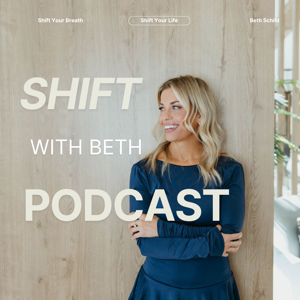
Change is inevitable, but a "shift" is intentional. Welcome to Shift with Beth, a podcast dedicated to helping you navigate life’s transitions with clarity and confidence. Whether you’re looking to…