Silicon Siege: China's Tech Offensive

Silicon Siege: China's Tech Offensive

By Inception Point AINewsTechnologyPoliticsTech News
Download on the App Store

Silicon Siege: China's Tech Offensive episodes

  • Silicon Siege Secrets: Autonomous Autos, Hacked Homes, and the Quantum Quandary
    This is your Silicon Siege: China's Tech Offensive podcast.
    Hey there, tech enthusiasts! Ting here, your friendly neighborhood China-cyber expert, coming at you live from the frontlines of the Silicon Siege. Buckle up, because the past two weeks have been a wild ride in the world of Chinese cyber operations targeting U.S. tech sectors.
    Let's kick things off with a bang: Remember those shiny new autonomous vehicles from BYD that hit American roads last month? Well, turns out they might be doing more than just driving themselves. Sources at the Department of Homeland Security whispered to me that these cars could be collecting detailed mapping data and sending it straight back to Beijing. Talk about a road trip gone wrong!
    But wait, there's more! The industrial espionage game is heating up faster than a overclocked CPU. Just last week, a group of hackers linked to China's Ministry of State Security tried to breach the networks of three major U.S. semiconductor firms. Their target? The latest designs for 2nm chip technology. Luckily, our cyber defenders were on their A-game and shut that operation down faster than you can say "firewall."
    Now, let's talk supply chain shenanigans. Remember those cute little IoT devices that were all the rage at CES 2025? Well, some of them might have a nasty surprise hidden inside. The FBI just issued an alert about compromised microcontrollers in certain Chinese-made smart home gadgets. These tiny traitors could be opening backdoors into our networks quicker than you can say "Alexa, call the NSA."
    But here's where things get really interesting. Dr. Samantha Chen, the brilliant mind behind QuantumShield Inc., told me over a virtual coffee that these attacks are just the tip of the iceberg. She believes China is gearing up for a massive push in quantum computing, aiming to crack our most secure encryption methods. If they succeed, it's game over for digital privacy as we know it.
    Looking ahead, the risks are as numerous as the pixels on an 8K display. We're talking potential disruptions to critical infrastructure, theft of cutting-edge AI algorithms, and even the possibility of large-scale data manipulation campaigns. It's enough to make even the most seasoned cybersecurity pro reach for their stress ball.
    But fear not, my tech-savvy friends! The U.S. isn't taking this lying down. Just yesterday, President Trump signed an executive order creating a new task force to combat Chinese cyber threats. They're calling it "Operation Digital Fortress," which sounds like something straight out of a sci-fi novel.
    So, what's the takeaway from all this cyber chaos? Well, as my old hacker buddy used to say, "In the world of ones and zeros, paranoia is just good practice." Stay vigilant, keep your systems updated, and maybe think twice before connecting your toaster to the internet. After all, in this high-stakes game of digital cat and mouse, the next move could come from anywhere – even your kitchen appliances.
    This is Tin
    This content was created in partnership and with the help of Artificial Intelligence AI.
    5 min
  • Ting's Tech Tattler: China's Cyber Siege Heats Up! US Fires Back in Silicon Showdown
    This is your Silicon Siege: China's Tech Offensive podcast.
    Hey there, tech enthusiasts! Ting here, your friendly neighborhood China-cyber-hacking expert. Buckle up, because the past two weeks have been a wild ride in the world of digital espionage, and I'm about to give you the lowdown on China's latest tech offensive.
    So, picture this: It's February 28, 2025, and China's cyber operations have gone into overdrive. The House Committee on Homeland Security just dropped a bombshell report, revealing over 60 instances of Chinese espionage on US soil in the last four years. We're talking everything from stealing military secrets to swiping trade secrets faster than you can say "firewall."
    But wait, there's more! The Department of Homeland Security is sounding the alarm about Chinese-made internet cameras. Apparently, these little peepers are all over our critical infrastructure, just waiting to be exploited. It's like having a spy in every corner, but instead of wearing a trench coat, it's disguised as a security camera.
    Now, let's talk numbers. CrowdStrike, the cybersecurity big shots, reported a jaw-dropping 150% surge in China's cyber espionage activities. That's not just a spike; that's a full-on Everest of hacking attempts. And guess what? They're not just after government secrets anymore. Nope, these cyber ninjas are targeting everything from AI research to quantum computing advancements.
    But here's where it gets really juicy. Remember TikTok? Well, it's back in the spotlight. President Trump, in his second term, is trying to work out a deal for ByteDance to divest the app. It's like the world's most complicated game of hot potato, but with billions of users' data at stake.
    And it's not just social media in the crosshairs. The US is cracking down on Chinese autonomous driving tech, cargo terminal cranes, and even those ubiquitous Chinese-made drones. It's like a tech version of whack-a-mole, but every mole is a potential national security threat.
    Now, you might be thinking, "Ting, this sounds pretty one-sided." Well, hold onto your hard drives, because China's not taking this lying down. They're launching their own campaign against US tech firms. We're seeing bans on Micron chips, Intel processors, and even restrictions on good ol' American-made phones in government buildings. It's like a high-stakes game of "I know you are, but what am I?" but with trillion-dollar economies.
    Looking ahead, industry experts are predicting this tech tug-of-war to intensify. We're talking potential disruptions in global supply chains, a scramble for technological supremacy, and a whole lot of cybersecurity professionals burning the midnight oil.
    So, what's the takeaway? Well, as we navigate this silicon siege, one thing's for sure: the digital landscape is changing faster than you can update your antivirus software. Whether you're a tech giant or just someone who likes to scroll through cat videos, this cyber chess game between the US and China is going
    This content was created in partnership and with the help of Artificial Intelligence AI.

    5 min
  • Silicon Siege: China's Sneaky Spy Cams, Shady Espionage, and the AI Arms Race Showdown!
    This is your Silicon Siege: China's Tech Offensive podcast.
    Hey there, I'm Ting, and let's dive right into the latest on Silicon Siege: China's Tech Offensive. Over the past two weeks, we've seen some significant Chinese cyber operations targeting US technology sectors, and I'm here to break it down for you.
    First off, let's talk about industrial espionage attempts. Just last week, the US Department of Homeland Security issued a bulletin warning that Chinese-made internet cameras pose a serious espionage threat to US critical infrastructure[2]. These cameras, often used in energy and chemical industries, lack data encryption and secure configuration settings, making them vulnerable to cyber threats. It's like leaving the back door open for malicious actors to walk right in.
    But that's not all. The US House Committee on Homeland Security recently released an updated 'China Threat Snapshot' report, highlighting over 60 instances of espionage by the Chinese Communist Party on US soil over the past four years[5]. This includes cases of transmission of sensitive military information, theft of trade secrets, and transnational repression operations. It's clear that China is aggressively pursuing intellectual property theft and supply chain compromises.
    Now, let's talk about strategic implications. The US-China AI arms race is heating up, with both countries competing for technological supremacy across commercial and military domains[4]. China's reliance on foreign semiconductor technology is a major weakness, and US sanctions and trade restrictions are forcing Beijing to accelerate domestic chip production. But this comes at a cost – slower AI development and potential technological stagnation.
    Industry experts are sounding the alarm. Mark E. Green, chairman of the House Committee on Homeland Security, stated that "the PRC has gained significant ground in its information warfare on American soil over the past four years"[5]. It's clear that China's tech offensive is a serious threat to US national security.
    Looking ahead, we can expect more of the same. China will continue to push the boundaries of cyber espionage and intellectual property theft, and the US will need to stay vigilant to protect its critical infrastructure and tech sectors. As I always say, in the world of cyber warfare, you're only as strong as your weakest link. Stay safe out there, folks.
    For more http://www.quietplease.ai
    Get the best deals https://amzn.to/3ODvOta
    This content was created in partnership and with the help of Artificial Intelligence AI.
    3 min
  • Silicon Smackdown: China's Tech Offensive Has US Shook | Ting's Tea on the Sizzling Cyber Showdown
    This is your Silicon Siege: China's Tech Offensive podcast.
    Hey there, I'm Ting, and I'm here to give you the lowdown on China's tech offensive, which we're calling Silicon Siege. Let's dive right in.
    Over the past two weeks, we've seen some significant Chinese cyber operations targeting US technology sectors. One of the most notable incidents involved a Chinese company installing intelligence gathering equipment on cranes used at US seaports. This equipment could allow Beijing to spy on Americans and cripple key infrastructure, according to a congressional report[5].
    But that's not all. China has also been engaging in industrial espionage attempts, intellectual property threats, and supply chain compromises. For instance, the Chinese government has been restricting the use of US semiconductors, computers, and other connected tech in critical sectors, including finance and energy. They've even targeted US chipmakers like Micron and Intel, phasing out their chips from government computers[1].
    Now, you might be wondering what's behind all this. Well, it's simple: China wants to reduce its dependence on foreign IT companies and promote a "secure and controllable" IT sector. They've been doing this by gradually weaning themselves off Western IT companies, and it's been intensifying in recent years. In 2022, they issued an order for state-owned companies to replace non-Chinese software on their networks by the end of 2027[1].
    But here's the thing: the US isn't just sitting back and taking it. The Biden administration has been taking steps to restrict the sale of internet-connected cars manufactured in China, citing national security risks. They've also launched a process to ban Chinese-made drones in the US, due to potential security risks[1].
    And let's not forget about the AI sector. China recently launched a new reasoning model called DeepSeek R1, which sent Wall Street reeling. This is seen as a strategic offensive against the dominance of the US AI and tech sector. President Trump even announced the launch of a massive AI infrastructure project called Stargate, just a day after his inauguration ceremony[4].
    So, what does this all mean? Well, industry experts are saying that China's tech offensive poses significant risks to US national security and intellectual property. The US needs to be vigilant and take proactive measures to protect its tech sector. As Michael Orlando, Acting NCSC Director, estimated, China steals between $200 billion and $600 billion worth of American intellectual property every year[2].
    In conclusion, Silicon Siege is real, and it's not going away anytime soon. The US needs to stay on its toes and be prepared to counter China's tech offensive. That's all for now, folks. Stay safe, and stay informed.
    For more http://www.quietplease.ai
    Get the best deals https://amzn.to/3ODvOta
    This content was created in partnership and with the help of Artificial Intelligence AI.
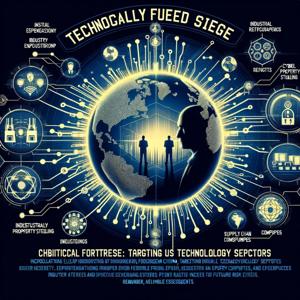
    4 min
  • China's Sneaky Tech Tricks: Spying, Hacking, and Stealing Their Way to the Top!
    This is your Silicon Siege: China's Tech Offensive podcast.
    Hey there, I'm Ting, and I'm here to give you the lowdown on China's tech offensive against the US. Let's dive right in.
    Over the past two weeks, we've seen some significant Chinese cyber operations targeting US technology sectors. One of the most notable incidents was the launch of DeepSeek's new reasoning model, "DeepSeek R1", which sent Wall Street reeling on January 27. This was just a day after President Trump announced the launch of "Stargate", a massive AI infrastructure project[4].
    Now, you might be wondering what DeepSeek is. It's a Chinese startup that's been making waves in the AI world. Their new model is a game-changer, and it's clear that China is trying to challenge the US's dominance in the tech sector.
    But that's not all. We've also seen a surge in industrial espionage attempts by Chinese threat actors. They're targeting private technology companies and research institutes operating in China and abroad, trying to steal key technologies and intellectual property[2].
    One of the most targeted sectors is the semiconductor industry. China has been trying to develop its own chip-making capabilities, and they're not above stealing IP to get there. In 2023, they restricted the use of Micron chips from some domestic critical infrastructure networks, and in 2024, they announced plans to phase out Intel and AMD chips from government computers[1].
    Supply chain compromises are also a major concern. China has been trying to infiltrate the supply chains of US tech companies, which could give them access to sensitive data and technology. This is a huge risk, especially when it comes to critical infrastructure and government operations.
    So, what does this mean for the future? Industry experts are warning that China's tech offensive is only going to intensify. We can expect to see more sophisticated cyber attacks and espionage attempts, as well as increased competition in the AI and tech sectors.
    As Chris Krebs, former director of the Cybersecurity and Infrastructure Security Agency, put it, "China's goal is to become the dominant player in the global tech landscape, and they're willing to do whatever it takes to get there."
    So, there you have it. China's tech offensive is real, and it's a major concern for the US. We need to stay vigilant and take steps to protect our tech sector from these threats. That's all for now. Stay safe out there.
    For more http://www.quietplease.ai
    Get the best deals https://amzn.to/3ODvOta
    This content was created in partnership and with the help of Artificial Intelligence AI.
    3 min
  • China's Hacking Spree: Stealing Tech, Infiltrating Companies, and Shaking Up Wall Street!
    This is your Silicon Siege: China's Tech Offensive podcast.
    Hey there, I'm Ting, and let's dive right into the thick of it. Over the past two weeks, China's cyber operations have been on a roll, targeting US technology sectors with a vengeance. Let's break it down.
    First off, industrial espionage attempts have been on the rise. China's been trying to get its hands on sensitive tech, particularly in the AI and semiconductor spaces. Just last week, a Chinese startup, DeepSeek, launched a new AI model, DeepSeek R1, which sent Wall Street reeling. This move is seen as a strategic offensive against US AI dominance, and it's got everyone talking[4].
    But that's not all. Intellectual property threats are also a major concern. China's been accused of stealing IP from US companies, and it's not just about copying code. They're after the good stuff – proprietary datasets, AI training data, and more. Mike Casey, the nation's chief counterintelligence officer, warned of a "large uptick" in foreign spies trying to infiltrate US tech companies, and China's at the top of that list[5].
    Supply chain compromises are another area of concern. China's been restricting the use of US-made chips in its critical infrastructure networks, and it's not just about Micron chips. They're phasing out Intel and AMD chips from government computers, and it's a clear sign that they're trying to reduce their dependence on US tech[1].
    So, what does this mean for the US? Well, it's a wake-up call. The Biden administration's been taking steps to restrict Chinese access to US data and tech, but it's a cat-and-mouse game. China's not going to stop anytime soon, and the US needs to be prepared.
    Industry experts are sounding the alarm. "China's industrial espionage efforts are likely to become more bold in targeting private technology companies and research institutes operating in China and abroad," warns Dragonfly Intelligence[2]. And it's not just about the tech itself – it's about the strategic implications.
    China's trying to gain an edge in the AI and tech spaces, and it's willing to do whatever it takes to get there. The US needs to be vigilant, and it needs to take action. As I always say, "You can't just sit back and let the hackers have their way. You've got to stay one step ahead."
    So, there you have it – the past two weeks in Chinese cyber operations. It's a wild ride, and it's not going to stop anytime soon. Stay tuned, folks.
    For more http://www.quietplease.ai
    Get the best deals https://amzn.to/3ODvOta
    This content was created in partnership and with the help of Artificial Intelligence AI.
    3 min
  • Silicon Siege: China's Cyber Assault on US Tech - Espionage, IP Threats, and Security Risks Exposed!
    This is your Silicon Siege: China's Tech Offensive podcast.
    Hey there, I'm Ting, and let's dive right into the thick of it. Over the past two weeks, we've seen a significant escalation in Chinese cyber operations targeting US technology sectors. It's like a digital siege, and I'm here to break it down for you.
    First off, let's talk about industrial espionage attempts. The US Department of Homeland Security recently issued a bulletin warning about Chinese-made internet cameras posing an espionage threat to US critical infrastructure. These cameras, often used in energy and chemical industries, lack data encryption and secure configuration settings, making them vulnerable to cyber threats. It's like leaving the back door open for malicious actors to snoop around and gather sensitive information.
    But that's not all. Intellectual property threats are also on the rise. China has been intensifying its efforts to reduce its use of Western IT, promoting a "secure and controllable" IT sector. In 2022, the Chinese government ordered state-owned companies to replace non-Chinese software on their networks by the end of 2027. This move is part of a broader campaign to address perceived data security risks, and it's got US tech companies on high alert.
    Supply chain compromises are another major concern. A congressional investigation found that Chinese cargo cranes used at US seaports have embedded technology that could allow Beijing to covertly gain access to the machines, making them vulnerable to espionage and disruption. This is like having a Trojan horse in our own backyard, and it's a serious threat to national security.
    Now, let's talk about strategic implications. The US military is ramping up its defenses against Chinese cyber threats, and for good reason. China's cyber capabilities are growing, and they're not just theoretical – they're real, and they demand a robust response. Intelligence reports suggest that China may be planning a significant escalation of its cyber operations in 2025, targeting critical US military infrastructure. This is like a digital game of cat and mouse, and we need to stay one step ahead.
    Industry experts are sounding the alarm, too. The Biden administration has announced plans to restrict the sale of internet-connected cars manufactured in China, citing national security risks. And, the US House of Representatives Select Committee on the Chinese Communist Party is urging the executive branch to examine and address security risks posed by Chinese cellular modules, Wi-Fi routers, drones, and semiconductors.
    So, what's the future hold? Well, it's clear that China's cyber threat is not going away anytime soon. We need to stay vigilant and take proactive measures to protect our critical infrastructure and intellectual property. It's a digital battlefield out there, and we need to be ready to defend ourselves.
    That's all for now, folks. Stay safe, and stay tuned for more updates on the Silicon Siege.
    For more http://www.
    This content was created in partnership and with the help of Artificial Intelligence AI.
    4 min
  • Silicon Siege: China's Cyber Ops Ramp Up, Targeting US Tech Sectors - Pentagon on High Alert for 2025!
    This is your Silicon Siege: China's Tech Offensive podcast.
    Hey there, I'm Ting, and let's dive right into the thick of it. Over the past two weeks, we've seen a significant escalation in Chinese cyber operations targeting US technology sectors. It's like a digital siege, and I'm here to break it down for you.
    First off, let's talk about industrial espionage attempts. The US Department of Homeland Security recently issued a bulletin warning that Chinese-made internet cameras pose a significant espionage threat to US critical infrastructure. These cameras, often used in energy and chemical industries, lack data encryption and secure configuration settings, making them vulnerable to cyber threats. It's like leaving the back door open for malicious actors to snoop around and gather sensitive information.
    But that's not all. Intellectual property threats are also on the rise. China's Made in China 2025 plan is a ten-year campaign to cement control over global industries, and it's clear they're not playing by the rules. Beijing has been accused of infiltrating the entire US telecommunications network, including 5G technology and network security. This is a strategic move to gain control over critical technology and inputs, which could give them significant influence over US politics and society.
    Supply chain compromises are another major concern. A congressional investigation found that Chinese cargo cranes used at US seaports have embedded technology that could allow Beijing to spy on Americans and cripple key infrastructure. This is a classic example of how China is using its industrial base to gain strategic leverage over the US.
    Now, let's talk about the strategic implications. The US military is on high alert for 2025, ramping up its defenses against China's escalating cyber threats. From sophisticated hacking attempts to large-scale cyber warfare, the stakes are high. The Pentagon is strengthening its cyber defenses, but it's a cat-and-mouse game. China's cyber capabilities are growing, and it demands a robust and coordinated response from the US and its allies.
    Industry expert insights suggest that China's cyber operations are becoming increasingly sophisticated, leveraging advancements in artificial intelligence and quantum computing. This is a game-changer, folks. The US needs to stay ahead of the curve to counter these threats.
    Looking ahead, the risks are real. If China succeeds in its industrial ambitions, the US industrial and defense industrial bases will be entirely dependent on China. This is a scenario that could give Beijing significant control over US prosperity and security. The US needs to take decisive action to neutralize these threats and protect its critical infrastructure.
    That's the latest from the front lines of the Silicon Siege. Stay vigilant, folks. The cyber war is heating up, and it's time to take action.
    For more http://www.quietplease.ai
    Get the best deals https://amzn.to/3ODvOta
    This content was created in partnership and with the help of Artificial Intelligence AI.
    4 min
  • Silicon Smackdown: China's Tech Espionage Exposed! US Fights Back with Export Controls & Alliances
    This is your Silicon Siege: China's Tech Offensive podcast.
    Hey there, I'm Ting, and let's dive right into the latest on Silicon Siege: China's Tech Offensive. Over the past two weeks, we've seen a surge in Chinese cyber operations targeting US technology sectors, and it's time to break it down.
    First off, industrial espionage attempts have been on the rise. Just last week, the FBI announced an investigation into Chinese espionage targeting US semiconductor companies. This isn't new; we've seen cases like Fujian Jinhua Integrated Circuit Company, which stole DRAM chip technology from Micron Technology, a leading US semiconductor company, back in 2016[2]. The Center for Strategic and International Studies (CSIS) has documented over 224 known instances of espionage by China against the US since 2000, with semiconductors being a prime target.
    But it's not just hacking; China also uses joint ventures to access valuable IP and trade secrets. Companies like Apple and Tesla, which operate in China, are often forced to form partnerships with Chinese companies, allowing the CCP to access internal information and steal technology[2]. James Andrew Lewis, Senior Vice President at CSIS, notes that these risks are part of doing business in China, but it's getting harder to protect IP.
    Supply chain compromises are another major concern. A recent congressional investigation found that Chinese cargo cranes used at US seaports have embedded technology that could allow Beijing to spy on Americans and cripple key infrastructure[4]. This is a classic example of how China can use its control over critical infrastructure to gain strategic leverage.
    The strategic implications are clear: China is aiming to become the world's dominant industrial power by 2049, and it's using every tool in its arsenal to get there. The Made in China 2025 plan is just the first stage of this campaign, and it's already bearing fruit[1]. Beijing believes that if it can neutralize opposing forces and marshal sufficient domestic industrial power, it will cement control over the information era.
    Industry experts like Sam Howell, an associate fellow at the Center for New American Security, warn that China's efforts to acquire sensitive IP and trade secrets have intensified in the wake of US export controls on advanced chips and machinery[2]. This is a cat-and-mouse game, and the stakes are high.
    Looking ahead, we can expect more aggressive export controls and tighter national security measures. The US is already in talks with Japanese and Dutch counterparts to restrict sales of certain chips to Chinese firms and limit their workers from collaborating in the country[2]. It's a complex landscape, but one thing is clear: the Silicon Siege is on, and it's time to take notice.
    For more http://www.quietplease.ai
    Get the best deals https://amzn.to/3ODvOta
    This content was created in partnership and with the help of Artificial Intelligence AI.
    4 min
  • Silicon Siege: China's Sneaky Tech Tricks Threaten US Industry! 🕵️‍♀️💻 Is Your Data Safe? Tune in now!
    This is your Silicon Siege: China's Tech Offensive podcast.
    Hey there, I'm Ting, and let's dive right into the Silicon Siege: China's Tech Offensive. Over the past two weeks, we've seen some significant Chinese cyber operations targeting US technology sectors. Let's break it down.
    First off, industrial espionage attempts have been on the rise. The Center for Strategic and International Studies (CSIS) has documented over 224 known instances of espionage by China against the United States since 2000, with a marked increase in the past year[2]. James Andrew Lewis, Senior Vice President at CSIS, points out that most hacking goes unnoticed, making it a silent threat. Chinese companies, often with direct support from the Communist Party, are the primary perpetrators of this type of crime.
    Intellectual property threats are another major concern. China's "Made in China 2025" plan aims to build China into the world's dominant industrial power by 2049, and they're not playing by the rules. The plan includes infiltrating the US telecommunications network, which they've largely achieved[1]. The theft of business trade secrets is rampant, with over 1200 cases of intellectual property lawsuits brought by US companies against Chinese entities.
    Supply chain compromises are also a significant issue. Chinese companies are forced to form "joint ventures" with foreign companies to operate in China, allowing them easy access to valuable IP and trade secrets. Large companies like Apple and Tesla are aware of the risks but often find the access to China's 1.4 billion consumers too enticing to resist[2].
    The strategic implications are profound. If China succeeds in its industrial ambitions, the US industrial and defense industrial bases will be entirely dependent on China. This would grant the CCP influence over US politics and society, as well as control over American information[1].
    Industry experts like Sam Howell, an associate fellow at the Center for New American Security, note that China's efforts to acquire sensitive IP and trade secrets have intensified in the wake of US export controls on advanced chips and machinery. The FBI is now investigating more instances of Chinese espionage than ever before, with a 1300% increase in counterintelligence cases involving China since 2014[2].
    Looking ahead, the risks are only going to escalate. The US and other allied countries have imposed major restrictions on the export of related technologies to try to slow China's progress in semiconductors. However, China is likely to retaliate, restricting access to US consumer electronics and further tightening controls on foreign tech firms operating in China[3][5].
    In conclusion, the Silicon Siege is a real and ongoing threat. China's tech offensive is a multi-faceted campaign that includes industrial espionage, intellectual property theft, and supply chain compromises. The strategic implications are significant, and the future risks are only going to increase. Stay vigila
    This content was created in partnership and with the help of Artificial Intelligence AI.
    4 min

About Silicon Siege: China's Tech Offensive

From the publisher's feed

This is your Silicon Siege: China's Tech Offensive podcast.