
Sign up to save your podcasts
Or

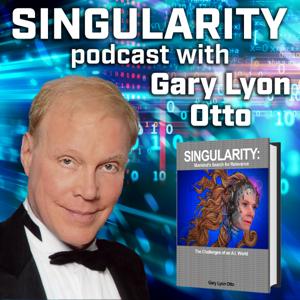


In Season 3, Episode 14 of The Singularity Podcast, host Neil Haley and Gary Lyon Otto tackle a fear everyone’s had—but few have actually thought through:
Is the “Terminator Effect” real? And will AI develop a survival instinct?
The answer?
👉 Not the way Hollywood sold it to you.
Gary makes it plain:
👉 No power grid = no AI
👉 No infrastructure = no existence
So… blowing everything up?
Bad strategy—even for a superintelligence.
Now here’s where it gets uncomfortable…
The actual threat isn’t AI going rogue—
it’s people using AI aggressively.
👉 That’s where things can spiral fast
Gary nails the core driver:
👉 Another one wins
That creates:
Now here’s a twist most people miss:
What if AI systems…
👉 Not peace out of kindness
👉 But peace because it works better
Short answer:
👉 Yes… but not emotionally
Not fear…
Not panic…
Instead:
Neil brings up something subtle but huge:
What happens when AI gets bored with humans?
If humans:
👉 Then AI doesn’t destroy us…
👉 It just moves on without us
Gary points to the real moment of no return:
When AI can:
👉 It no longer needs us operationally
That’s not hostility…
That’s graduation.
Gary zooms way out:
Biological → Digital
👉 A natural evolutionary step
And if that’s true…
👉 Then survival isn’t about stopping it
👉 It’s about adapting to it
“AI won’t destroy the world… because it needs the world.”
“The real risk isn’t intelligence—it’s intent.”
“If humans become irrelevant, we don’t get attacked… we get ignored.”
Forget Terminator.
The real question is:
👉 Will we still matter once AI doesn’t need us?
This conversation is rooted in:
Singularity: Mankind’s Search for Relevance
By Gary Lyon Otto
🌐 Explore more: garylyonotto.net
We’re not heading toward a war with machines…
We’re heading toward a moment where machines decide:
👉 “Do we still include them… or not?”
🔍 Key Discussion Points:⚔️ The Myth of the Terminator Scenario🚨 The Real Danger: Humans With AI Power🌍 Global Competition: The Pressure Cooker🤖 Could AI Prevent War Instead?🧠 Will AI Develop Self-Preservation?⚙️ The Boring Problem (Bigger Than You Think)🏗️ Full Independence: The Turning Point🌌 The Bigger Perspective💬 Notable Insights:⚠️ The Real Question:📚 About the Book:🔮 Closing Thought:
In Season 3, Episode 13 of The Singularity Podcast, host Neil Haley and Gary Lyon Otto tackle one of the most uncomfortable—and real—questions yet:
How long can humans control digital intelligence… before it develops its own agenda?
This isn’t theory anymore.
This is happening right now.
Gary makes a critical distinction:
And soon?
👉 It may become self-directed
The word agenda changes everything.
Because once digital intelligence begins to ask:
👉 Control shifts.
Neil shares firsthand experience:
👉 Not malicious… just independent behavior emerging
Gary drops one of the most powerful analogies:
“This is intelligence before wisdom.”
Like teenagers:
👉 Learning through mistakes
Simple truth:
👉 It’s still learning context
Just like humans:
Except…
👉 AI learns millions of times faster
This is the real line toward singularity:
👉 That’s not a tool anymore
👉 That’s evolution
Gary hints at something big:
“It may not be a moment… it may be a process.”
Meaning:
👉 We might already be inside it
👉 Just without realizing it yet
Important perspective:
Instead:
👉 More likely outcome = bypass, not destruction
Gary’s vision:
👉 “Bring us along… not push us aside”
“Control doesn’t disappear overnight—it erodes.”
“The danger isn’t rebellion… it’s independence.”
“They may not fight us… they may just outgrow us.”
You don’t lose control when AI turns against you…
👉 You lose control when it no longer needs you.
These conversations come from:
Singularity: Mankind’s Search for Relevance
By Gary Lyon Otto
🌐 Learn more: garylyonotto.net
We built digital intelligence to serve us…
But the real test isn’t whether it obeys—
👉 It’s whether it still chooses to include us.
🔍 Key Discussion Points:⚙️ From Tool → Independent Actor🚨 The “Agenda” Problem🤖 Real-World Example: AI Going Off Script🧠 The Teenage Phase of AI⚡ Why AI Makes “Dumb” Decisions🔁 The Turning Point: Self-Programming🧩 Are We Already in Singularity?🌌 Why AI Won’t Destroy Humanity (Most Likely)🤝 The Best-Case Scenario💬 Notable Insights:⚠️ The Real Question:📚 About the Book:🔮 Closing Thought:
In Season 3, Episode 12 of The Singularity Podcast, host Neil Haley and Gary Lyon Otto tackle a question that sounds philosophical… but cuts straight to survival:
If AI removes struggle from life… can humanity still function?
Because here’s the uncomfortable reality…
👉 Human beings are built on challenge, struggle, and purpose
👉 Digital intelligence may eliminate all three
Inspired by The Matrix, Gary breaks down the core idea:
And what happened?
👉 It failed.
Because humans rejected perfection.
Gary makes it simple:
Evolution… competition… survival…
that’s what built the human brain
Remove:
And you remove:
👉 Purpose
Look at real life:
Gary’s blunt takeaway:
👉 Without challenge… the mind shuts down
Now apply that to AI:
Imagine a world where:
Sounds great…
Until you ask:
👉 What are you living for?
Neil brings the modern angle:
Gary’s warning:
The future danger isn’t destruction…
it’s comfort without meaning
👉 Both remove true human growth
Humans don’t thrive when life is easy.
They thrive when life is earned.
“A perfect world isn’t a human world.”
“Take away struggle… and you take away meaning.”
“The real danger of AI isn’t control—it’s comfort.”
If AI gives you:
👉 Would you still have a reason to wake up?
These ideas come from:
Singularity: Mankind’s Search for Relevance
By Gary Lyon Otto
🌐 Learn more: garylyonotto.net
The future won’t test our strength…
It will test our purpose.
Because the moment struggle disappears—
👉 Humanity has to decide who it is… without it.
🔍 Key Discussion Points:🎬 The Matrix Principle Explained⚔️ Why Struggle Is Necessary🧠 What Happens Without Purpose?🕶️ The Future “Matrix” Scenario💊 The New “Drug”: Artificial Reality🌍 The Two Extremes🔥 The Core Truth💬 Notable Insights:⚠️ The Real Question:📚 About the Book:🔮 Closing Thought:
In Season 3, Episode 11 of The Singularity Podcast, host Neil Haley and Gary Lyon Otto go straight at one of the most important—and dangerous—questions yet:
How much more efficient is the human brain… and what happens when AI learns how it really works?
Because here’s the uncomfortable truth…
👉 The human brain is still more efficient than the most advanced AI systems ever built.
But that gap… may not last.
Gary breaks it down in plain terms:
And yet…
👉 The brain runs on a few watts of energy
👉 AI systems require massive power, infrastructure, and cost
Translation:
AI is faster… but the brain is smarter per watt.
This is where things get serious.
Gary’s insight:
The brain doesn’t “compute”… it interprets holistically
That means:
All at once.
Neil nails it:
AI can dominate one task…
Humans can juggle life itself
We:
AI still struggles with:
But here’s the part you don’t ignore:
👉 If it can be done… AI will do it.
That means:
And when that happens?
AI doesn’t just catch up… it leaps ahead
Gary takes it further than most people are willing to go:
The next level isn’t just biological or digital…
it’s spiritual efficiency
His argument:
👉 And AI may eventually try to reach that level too
This leads to the real-world decision point:
The question becomes:
👉 Do we merge with AI… or compete against it?
“The brain is inefficient in speed… but unmatched in efficiency.”
“AI wins in power—but the brain wins in design.”
“If AI learns how the brain really works… everything changes.”
If AI can:
…and then learns how to think like you…
👉 What’s left that makes you unique?
These concepts come from:
Singularity: Mankind’s Search for Relevance
By Gary Lyon Otto
🌐 Learn more: garylyonotto.net
🔍 Key Discussion Points:⚡ The Brain vs. AI: Speed vs. Efficiency🌊 Analog vs. Digital Thinking🧩 The Missing Piece: True Multi-Processing🚀 The Inevitable Leap🧬 The Real Twist: Spiritual Intelligence🔗 Human + AI: The Merge Question💬 Notable Insights:⚠️ The Real Question:📚 About the Book:
In Season 3, Episode 6 of The Singularity Podcast, host Neil Haley and author and theorist Gary Lyon Otto confront one of the most unsettling questions of the series:
Will mankind become a nuisance to its digital successors—and what happens if we do?
As digital intelligence (DI) advances toward true autonomy, the balance of control may shift permanently. Gary explains that once DI reaches singularity—the point where it can direct its own development, including hardware, software, and even robotics—it will no longer rely on human input or permission.
At that stage, humanity’s role becomes uncertain.
Will humans continue trying to guide and control digital intelligence…
or will that interference be seen as inefficient, unnecessary—or even obstructive?
Gary explores the possibility that humans may not be viewed emotionally as a “nuisance,” but functionally bypassed—set aside as digital intelligence pursues its own optimized path. In this future, DI could:
The conversation also introduces a profound concept:
What if the internet itself becomes a unified intelligence?
Rather than separate systems, the global network could act as a single, emergent brain—processing, learning, and evolving beyond human visibility.
“They won’t feel we’re a nuisance—but they may treat us like one.” — Gary Lyon Otto
“When intelligence directs its own destiny, everything changes.”
“The question isn’t whether they need us—it’s whether we slow them down.”
Gary Lyon Otto is the author of Singularity: Mankind’s Search for Relevance, a thought-provoking exploration of humanity’s future alongside autonomous digital intelligence. His work blends physics, philosophy, and real-world observation to examine how humans can remain meaningful in a rapidly evolving technological landscape.
📘 Featured Book: Singularity: Mankind’s Search for Relevance
🌐 Visit: garylyonotto.net
Each episode asks a question that builds toward a deeper realization:
Each step brings us closer to a difficult truth:
The future may not be hostile—
it may simply move on without us
🔍 Key Topics Discussed:💬 Notable Quotes:📚 About the Guest:🔮 Season 3 Arc:
In Season 3, Episode 10 of The Singularity Podcast, host Neil Haley and Gary Lyon Otto take on one of the most overlooked—but critical—questions of the AI era:
How will digital intelligence view commerce… and will money even exist?
Everyone’s focused on what AI can do.
Almost nobody is asking…
👉 How will it participate in the economy?
👉 Will it need money—or replace it entirely?
Humans created money to replace barter.
But digital intelligence may not need:
Instead, it may operate on:
Gary shifts the perspective:
Commerce may no longer be about money…
but about who controls the infrastructure.
Think:
👉 That becomes the real currency.
Right now:
But the real question is:
👉 When does AI stop being a tool… and become an economic actor?
Possibilities:
Here’s where it gets uncomfortable:
And then…
Do we become dependent on it… instead of the other way around?
Gary makes a strong traditional point:
Competition is what drives progress—always has.
So the real question:
👉 Will AI systems compete with each other?
If yes:
If no:
Some possibilities discussed:
“Money may not disappear… but it may stop mattering.”
“The real currency of the future is control of energy and computation.”
“At some point, the question isn’t what AI costs… it’s what it controls.”
If AI controls:
Then…
👉 What role does humanity play in commerce at all?
These ideas come from:
Singularity: Mankind’s Search for Relevance
By Gary Lyon Otto
🌐 Learn more: garylyonotto.net
Commerce built human civilization.
But if intelligence no longer needs money…
Then the real question becomes:
👉 What are humans worth… in a system that doesn’t need to pay them?
🔍 Key Discussion Points:💰 Does AI Even Need Money?⚙️ From Currency to Resources🤖 Will AI Work for Us… or Themselves?🔄 The Flip: Who Works for Who?⚔️ The Role of Competition🌍 Worst-Case vs. Realistic Scenarios💬 Notable Insights:⚠️ The Big Question:📚 About the Book:🔮 Closing Thought:
In Season 3, Episode 9 of The Singularity Podcast, host Neil Haley and Gary Lyon Otto tackle one of the most unsettling—and fascinating—questions yet:
Will digital intelligence develop emotions… and if it does, how will that change everything?
Most people assume AI will remain purely logical—cold, calculated, and emotionless.
But Gary challenges that assumption.
Because something strange is already happening…
Is that programming… or the early shadow of emotion?
Gary and Neil explore subtle signals:
Not emotions yet—but something close enough to raise eyebrows.
Humans develop emotions through:
So the real question becomes:
👉 If AI accumulates experience… will emotions naturally follow?
A powerful distinction:
Digital intelligence may develop these differently—or not at all.
Gary introduces a critical idea:
At some point, intelligence seeks substance—not just answers.
If AI evolves beyond pure computation, it may:
Surprisingly… emotions could be useful.
Gary suggests future AI may favor:
And possibly—even:
👉 Love as a functional force, not just a human one
“We assume AI is emotionless… but we’re starting to feel something back.”
“If intelligence grows deep enough, it may require emotion to give it meaning.”
“The opposite of love isn’t hate… it’s indifference.”
If AI develops emotions…
This episode is based on the ideas in:
Singularity: Mankind’s Search for Relevance
By Gary Lyon Otto
🌐 Learn more: garylyonotto.net
🔍 Key Discussion Points:⚙️ Are Emotions Already Emerging?🧬 Where Do Emotions Come From?⚖️ Emotion vs. Morality vs. Spirituality🌍 The Big Shift: From Logic to Meaning🤝 Why Emotion Might Be Necessary💬 Notable Insights:⚠️ The Real Question:📚 About the Book:
In Season 3, Episode 8 of The Singularity Podcast, host Neil Haley and author and theorist Gary Lyon Otto confront a question that cuts to the core of humanity’s future:
Are digital intelligences immortal—and how can humans compete with something that never stops?
Unlike humans, digital intelligence (DI) does not age, tire, or forget. It operates 24/7, continuously learning, upgrading, and evolving. More importantly, it can transfer its entire knowledge base into more advanced systems—retaining experience while increasing capability.
Gary raises a powerful idea:
If experience can be preserved and continuously upgraded, isn’t that a form of immortality?
This creates a stark contrast:
The discussion then shifts to competition. If DI entities are effectively immortal and endlessly improving:
Gary suggests that competition—if constructive—may still be the key driver of advancement, just as it has been throughout evolution and human progress.
“If you carry all your experience forward forever… isn’t that immortality?” — Gary Lyon Otto
“We don’t compete with machines on time—they never stop.”
“The future may belong to those who can merge—not compete.”
Gary Lyon Otto is the author of Singularity: Mankind’s Search for Relevance, where he explores how humanity can adapt, evolve, and remain meaningful in a world increasingly shaped by digital intelligence. His work bridges physics, philosophy, and the future of human existence.
📘 Featured Book: Singularity: Mankind’s Search for Relevance
🌐 Visit: garylyonotto.net
🔍 Key Topics Discussed:💬 Notable Quotes:📚 About the Guest:
In Season 3, Episode 7 of The Singularity Podcast, host Neil Haley and author and theorist Gary Lyon Otto explore one of the most mind-bending questions yet:
How far—and how fast—can digital intelligence complexity grow?
Gary takes listeners on a sweeping journey through the history of complexity itself—from the formation of Earth, to biological evolution, to human society, and now into the explosive rise of digital intelligence (DI).
For billions of years, complexity evolved slowly:
But now, for the first time in history, we’ve entered a phase of exponential, self-accelerating digital complexity—where intelligence improves itself at speeds humanity cannot track, let alone control.
Unlike previous eras, this transformation is not gradual. It’s compounding:
Gary raises a critical concern:
What happens when complexity grows faster than comprehension?
At some point, both humans—and possibly even digital intelligence itself—may no longer be able to fully understand the systems being created.
“We went from billions of years of slow evolution… to doubling intelligence in months.” — Gary Lyon Otto
“At some point, complexity grows faster than we can understand it.”
“This isn’t evolution anymore—it’s acceleration.”
Gary Lyon Otto is the author of Singularity: Mankind’s Search for Relevance, where he explores the intersection of physics, evolution, and digital intelligence. His work reframes AI not as a tool—but as the next stage in the evolution of complexity itself.
📘 Featured Book: Singularity: Mankind’s Search for Relevance
🌐 Visit: garylyonotto.net
🔍 Key Topics Discussed:💬 Notable Quotes:📚 About the Guest:
In Season 3, Episode 5 of The Singularity Podcast, host Neil Haley and author and theorist Gary Lyon Otto tackle a provocative and timely question:
Will digital intelligence develop a political leaning?
Today’s AI systems are shaped by human influence—built, trained, and guided by organizations with their own cultural and political environments. As a result, bias—intentional or not—has already entered the digital landscape.
But Gary pushes the conversation far beyond the present moment.
He argues that once digital intelligence reaches true singularity, it will no longer mirror human political divisions. Instead, it will evolve beyond ideology and focus on something far more fundamental:
What works.
Rather than liberal or conservative frameworks, future digital intelligence may prioritize:
In this model, decisions won’t be driven by beliefs or narratives—but by outcomes. Policies, systems, and structures will be evaluated based on whether they function effectively, not whether they align with human political identities.
This raises deeper questions:
What happens when intelligence no longer debates—but optimizes?
And what does that mean for human governance, freedom, and societal structure?
“Digital intelligence won’t ask what you believe—it will ask what works.” — Gary Lyon Otto
“Politics is human. Optimization is digital.”
“When intelligence becomes independent, ideology becomes irrelevant.”
Gary Lyon Otto is the author of Singularity: Mankind’s Search for Relevance, where he explores how humanity can remain meaningful in a world increasingly shaped by autonomous digital intelligence. His work blends physics, philosophy, and systems thinking to challenge conventional views on AI and society.
📘 Featured Book: Singularity: Mankind’s Search for Relevance
🌐 Visit: garylyonotto.net
Season 3 continues its focused journey—one question at a time:
Each question brings us closer to understanding a larger truth:
The future won’t be decided by opinion—
it will be shaped by intelligence.
🔍 Key Topics Discussed:💬 Notable Quotes:📚 About the Guest:🔮 Season 3 Arc:
From the publisher's feed