
Sign up to save your podcasts
Or

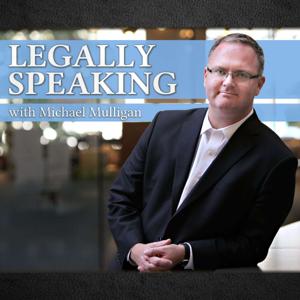

Do you ever wonder what happens when a small claims lawsuit is baseless?
Unlike in Supreme Court, judges cannot award costs to the successful party in Small Claims Court.
Costs are intended to both cover some of the legal and other expenses related to a court case. They can also encourage the settlement of meritorious claims and discourage needless litigation.
There is, however, a Small Claims Court rule that permits a judge to award a penalty of up to 10% of the amount claimed if someone proceeds to trial with a claim that has no prospect of success. This 10% penalty can be applied to each party that has a baseless claim brought against them.
On the show, a baseless claim made by the purchasers of a home against the couple who sold it is discussed, along with the resulting penalty imposed by the trial judge who concluded the plaintiffs were simply trying to get someone else to pay for renovations they decided to do.
Also, on the show, a claim against Google and Apple is discussed. The small British Columbia company was unable to pursue a claim against the large tech companies alleging an overcharge for advertising because of an arbitration clause included in the online agreement to purchase the online ads.
Large companies often insert arbitration clauses into user agreements to avoid being sued.
Because arbitration can be expensive and requires claims to be made individually, rather than as a class action, these provisions can stop claims completely because they become too expensive to pursue individually.
Lastly, we step into the world of murder cases, and autopsy photos.
Because judges have an obligation to determine if a piece of evidence would be more prejudicial than probative of an issue in a case, they need to determine if gruesome autopsy photos should be shown to a jury.
If, for example, the only issue in a murder case was whether the accused was the person who committed a murder, showing jurors disturbing photos of a dissected body would likely serve no purpose.
If, however, the issue was whether the amount of force used in self-defence was excessive, it might be very important for jurors to see images of a fatal injury.
In the case discussed, the number of photos was reduced by agreement, and the judge ordered that a particularly disturbing photograph that included late stages of the autopsy dissection be cropped to only show the injury at issue in the case.
Follow this link for a transcript of the show and links to the cases discussed.
 View all episodes
 By Michael Mulligan
5
11 ratings
Do you ever wonder what happens when a small claims lawsuit is baseless?
Unlike in Supreme Court, judges cannot award costs to the successful party in Small Claims Court.
Costs are intended to both cover some of the legal and other expenses related to a court case. They can also encourage the settlement of meritorious claims and discourage needless litigation.
There is, however, a Small Claims Court rule that permits a judge to award a penalty of up to 10% of the amount claimed if someone proceeds to trial with a claim that has no prospect of success. This 10% penalty can be applied to each party that has a baseless claim brought against them.
On the show, a baseless claim made by the purchasers of a home against the couple who sold it is discussed, along with the resulting penalty imposed by the trial judge who concluded the plaintiffs were simply trying to get someone else to pay for renovations they decided to do.
Also, on the show, a claim against Google and Apple is discussed. The small British Columbia company was unable to pursue a claim against the large tech companies alleging an overcharge for advertising because of an arbitration clause included in the online agreement to purchase the online ads.
Large companies often insert arbitration clauses into user agreements to avoid being sued.
Because arbitration can be expensive and requires claims to be made individually, rather than as a class action, these provisions can stop claims completely because they become too expensive to pursue individually.
Lastly, we step into the world of murder cases, and autopsy photos.
Because judges have an obligation to determine if a piece of evidence would be more prejudicial than probative of an issue in a case, they need to determine if gruesome autopsy photos should be shown to a jury.
If, for example, the only issue in a murder case was whether the accused was the person who committed a murder, showing jurors disturbing photos of a dissected body would likely serve no purpose.
If, however, the issue was whether the amount of force used in self-defence was excessive, it might be very important for jurors to see images of a fatal injury.
In the case discussed, the number of photos was reduced by agreement, and the judge ordered that a particularly disturbing photograph that included late stages of the autopsy dissection be cropped to only show the injury at issue in the case.
Follow this link for a transcript of the show and links to the cases discussed.
413 Listeners

389 Listeners

211 Listeners

213 Listeners
68 Listeners

39 Listeners

75 Listeners
111 Listeners

88 Listeners

458 Listeners

44 Listeners

113 Listeners

8,460 Listeners

38 Listeners

50 Listeners