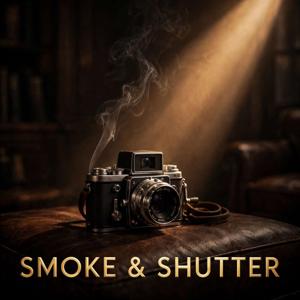
One lamp, one face and the edge of the light. This week covers how to light a portrait with one source, then gets into new instant film gear, a repair bench closing and sad news from the cigar world.
One-light portraits: putting the light about 45 degrees to the side and above the eyes, using distance to set the mood, feathering, broad vs. short lighting, bounce cards and catchlights.
Fujifilm's instax SQUARE 2 replaces the 2020 SQ1. It went on sale Oct. 28 and has a new warm/cool "Mood Filter." PetaPixel reports a US price of $119.95.
New instax SQUARE "SOFT HAZE" film has lower saturation and contrast and is reported to work in existing Square cameras.
Harman Photo accessories: 35mm and 120 film cases at £12.99 each, a £3.49 keychain lens cloth and an A6 notebook. US pricing isn't set yet.
Pierro Pozella of PPP Cameras, known from BBC's The Repair Shop, has stopped taking camera repairs.
Background: Kodak's Ektacolor Pro (160/400/800) and Ektapan (100/400/3200) and why they're compared to Portra and T-Max.
Marvin R. Shanken, who founded Cigar Aficionado in 1992 and published Wine Spectator, has died at 83.
Judge Amit Mehta's April 15 ruling that the FDA's Deeming Rule doesn't apply to premium cigars, and what that definition covers.
Fujifilm: instax SQUARE 2 and SOFT HAZE film announcement
PetaPixel: Fujifilm's instax Square lineup gets a moodier new camera
Kosmo Foto: October 2026 news
Kosmo Foto: PPP Cameras' Pierro Pozella stops camera repairs
Camera Jabber: Harman Photo film cases, lens cloth and notebook
PetaPixel: Kodak revives the Ektapan name
Digital Camera World: Kodak's film name changes explained
Cigar Aficionado: Marvin R. Shanken dies at 83
Wine Spectator: Marvin R. Shanken, visionary publisher, dies
Cigar Aficionado: D.C. judge rules for premium cigars again
halfwheel: Tatuaje announces new run of Boris Karloff
halfwheel: Pages Cigars debuting in November
halfwheel: La Flor Dominicana Chapter III announced as TAA exclusive
halfwheel: Aged Brick House Ciento Por Ciento selected for TAA 2026
timeanddate: Minnesota daylight saving time change 2026
US Naval Observatory: Minneapolis sun and moon data, Nov. 3
US Naval Observatory: Minneapolis sun and moon data, Nov. 9Subscribe to Smoke & Shutter: https://feeds.transistor.fm/smoke-shutter
Kai Reyes: There's a lamp in the corner of my room with a shade gone the color of weak tea. Tonight it's the only light on. One bulb, one face across the table, and smoke drifting up through the edge of the beam, so you can see exactly where the light stops. Right there... that edge. That's the whole episode.
Kai Reyes: We've got one light and one face, and that's enough. People think a good portrait needs a studio full of stands and umbrellas, and it doesn't. Some of the most honest pictures ever made came from one window, or one lamp, or one bare bulb, and a photographer who understood where the shadows were going to fall.
Kai Reyes: So let's actually learn it. Okay, start with placement. Put your light roughly forty-five degrees off to one side of your subject and a little above their eye line. Not straight on. Straight on flattens a face like a passport photo. Off to the side and slightly high, the nose starts throwing a shadow down toward the far cheek. If you move the light just right, you get a small triangle of light sitting under the eye on the shadow side. Painters figured that triangle out centuries ago. It still works.
Kai Reyes: Now the part most people skip... distance. Light falls off fast. Move the lamp closer and the shadows get deep and the background drops toward black. Pull it back and everything evens out, flatter and softer, and the room starts showing up behind them. So distance isn't only about brightness. It's about mood. Close is a confession. Far is a conversation.
Kai Reyes: Then feathering. Don't aim the center of the light at the face. Turn it slightly, so the face catches the edge of the beam instead of the hot middle. The edge is softer and more forgiving, and it wraps. With a window it's the same idea. Sit your subject a little forward of the glass, not dead center in it, and let the light rake across them.
Kai Reyes: Which side do you light? If the face is turned a bit, you can light the side turned toward the camera. That's broad lighting, and it opens a face up. Or you light the side turned away, short lighting, and the face narrows, the cheekbone shows up, and things get moodier. Try both. You'll know which one is the person in front of you.
Kai Reyes: And if the shadows get too heavy, you still don't need a second light. Grab a white card, a pillowcase, a sheet of foam board, anything pale, and hold it on the shadow side. It bounces a little of your one light back in. That isn't a second light. It's the same light, coming home.
Kai Reyes: Last thing, the eyes. Look for the catchlight, that little reflection of your lamp or window sitting in the iris. Without it, eyes go dead. With it... somebody's in there.
Kai Reyes: Metering. If you're shooting color negative, take your reading off the face and then be generous with it. Negative film loves a little extra light and hates being starved. Lose the shadows on negative stock and they come back muddy. With black and white, I meter for the shadow side I care about and let the highlights land where they land. On medium format, at portrait distance, wide open, your depth of field gets razor thin, so focus on the near eye. Every time. I've lost good frames to the ear being sharp.
Kai Reyes: Okay. Materials. A few real things moved this fall.
Kai Reyes: Fujifilm put out the instax SQUARE 2. It was announced October f...