
Sign up to save your podcasts
Or

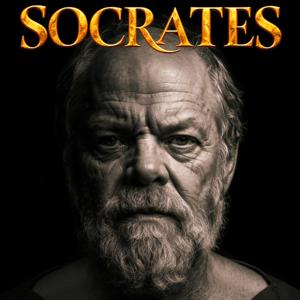


Twelve years after Socrates’ death, Plato returns to Athens after years of travel and reflection. Determined to preserve the spirit of inquiry that shaped his life, he begins building an institution whose influence will endure for centuries.
Socrates spends his final hours surrounded by the friends who have shared so much of his life. As evening approaches, the philosopher who spent a lifetime examining how one ought to live must face death on his own terms.
The sacred ship has returned from Delos, bringing Socrates’ final reprieve to an end. Xanthippe and their sons come to the prison for one last visit and a farewell none of them is prepared to make.
Socrates turns to the accusation of impiety and challenges Meletus to explain how a man accused of believing in divine things can simultaneously believe in no gods at all. With the arguments finished, five hundred and one citizens must decide his fate.
Socrates turns to the accusation of impiety, challenging Meletus to explain the contradictions in his claims about the gods. As his defence reaches its conclusion, Socrates confronts the charges that have placed his life in jeopardy and refuses to abandon the principles by which he has lived.
Socrates turns directly to Meletus and begins examining the charge that he corrupted the youth of Athens. Under questioning, the certainty of the prosecution’s case begins to reveal contradictions of its own.
Socrates confronts the resentment his examinations have created and addresses his associations with some of Athens’ most notorious men. He asks the jury to judge his principles by the life he actually lived rather than by the reputations of those who once listened to him.
Socrates finally answers his accusers. Beginning with the Oracle of Delphi, he explains how a mysterious declaration about his wisdom led him to spend decades questioning politicians, poets, craftsmen, and anyone who claimed knowledge they could not defend.
Anytus brings the weight of Athens’ recent history into the courtroom. The actions of Critias and Alcibiades become evidence against the man they once listened to, forcing the jury to consider whether Socrates bears responsibility for what his former companions became.
The prosecution expands its case, portraying Socrates as a corrupting influence upon Athens and its traditions. The philosopher listens as decades of public controversy are assembled into an argument against his character.