
Sign up to save your podcasts
Or

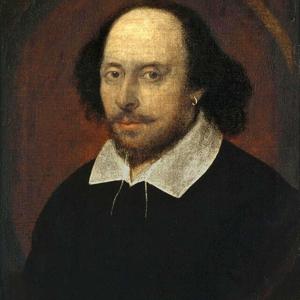


This is talk with James Shapiro of Columbia University on his recent book, ‘Shakespeare in a Divided America’. This conversation covers highlights of Shapiro’s book on the influence of Shakespeare in American thought and on the minds of such American leaders as John Quincy Adams, Ulysses S. Grant, Abraham Lincoln, and Henry Cabot Lodge. The book also examines how Shakespeare appears in American history and how Shakespearean material weighs in on such matters as race, immigration, and gender. From the Astor Place riots in the 19th century to the hullabaloo over the portrayal of a Trump look alike at the Delacorte theatre, this book also shows how Shakespearean performance exposes a range of divisive conflicts in the American consciousness. This talk also cover Shapiro’s prior work on Shakespeare’s life, antisemitism in Shakespeare, and the question of Shakespearean authorship.
00:00:00 - Intro
00:02:47 - Overview of ‘Shakespeare in a Divided America’
00:06:57 - John Quincy Adams, Ulysses S. Grant, and ‘Othello’
00:11:08 - Why Shakespeare in America?
00:13:56 - Astor Place Riots, Shakespeare competition, unruly behavior
00:21:30 - Shakespeare in prison
00:26:39 - Henry Cabot Lodge, ‘The Tempest’, and immigration
00:32:47 - Kiss Me Kate, post war American and marriage
00:34:59 - LGBTQ and ‘Shakespeare in Love’
00:38:39 - Joel Coen’s ‘Macbeth’, using film in pedagogy
00:40:23 - Trump as Caesar at the Delacorte
00:43:33 - James Shapiro’s history as a Shakespearean, theatre goer
00:46:22 - The transformation experience of theatre going
00:48:30 - The Shakespearean authorship question and the Supreme Court
00:54:58 - Following one’s own path in Shakespeare studies
00:56:58 - Future research, African-American Shylock, multicultural Shakespeare
01:01:25 - Theatre in Ireland
01:04:49 - Closing remarks
Thomas Dabbs speaks with John Wall about the completion of the Virtual St Paul's Cathedral Project. This project is a digital reconstruction of St Pauls Cathedral before Christopher Wren and during the time of John Donne and Shakespeare. It provides architectural and acoustic models for Christian worship in the early decades of the Church of England and also a view of the nave and and bookshops of Paul's Cross Churchyard, where Londoners came to hear the news and to shop.
[LINKS]
Virtual John Donne Project: https://virtualdonne.chass.ncsu.edu
Virtual St Paul's Cathedral Project: https://vpcathedral.chass.ncsu.edu
Virtual Paul's Cross Project: https://vpcross.chass.ncsu.edu
[SEGMENTS]
00:00:00 - Intro
00:03:04 - Panoramic views of St Paul’s
00:06:38 - Virtual St Pauls, architecture
00:13:44 - John Donne and cathedral spaces
00:18:38 - Cross-disciplinary team, visual/acoustic models
00:25:50 - Materializing the ephemeral, the people, project history
00:30:09 - Seeing and hearing cathedral worship
00:34:05 - John Schofield’s contribution as architectural historian
00:39:03 - Paul’s Cross churchyard, transatlantic connections
00:47:50 - Paul’s Cross sermons, Donne, Gunpowder Plot, Old Pronunciation
00:53:00 - Auditory technology, the churchyard from bone to book
01:01:03 - Literacy and hearing
01:04:00 - Sounds of worship, the anechoic chamber, the choir and recording
01:15:55 - The nave of the cathedral, space and noise
01:27:18 - The ‘Book of Common Prayer’ - daily and Easter service
01:39:27 - Trinity Chapel and John Donne
01:45:00 - Closing remarks, ‘Is there sand enough in the glass?’
Thomas Dabbs speaks with Sonia Massai about her recent book, 'Shakespeare's Accents', and about her work as an expert in early modern drama editing and in the theatre arts.
00:00:00 - Intro
00:02:19 - Shakespeare’s Accents
00:09:38 - Mary Hope Baldwin, Studies in Diversity, accent and dialect
00:18:05 - Acoustic diversity
00:20:37 - Wartime Shakespeare
00:34:40 - Textual transmission and reception, Thomas Berger
00:38:50 - ‘Shakespeare and the Rise of the Editor’
00:31:45 - Mentorship in the profession
00:46:45 - Diversifying textual studies and Shakespearean editing
00:54:22 - Paratexts and digital development, bibliography
01:06:40 - Ivo van Hove and avant garde theatre
01:19:00 - ’Tis Pity She’s a Whore
01:34:30 - Closing
TOPICS:
#shakespeare
#shakespeareantheatre
#shakespeareanperformance
#shakespearescontemporaries
#editingshakespeare
#renaissancedrama
#earlymoderndrama
#digitalhumanities
#teachingshakespeare
[See SEGMENTS below]. Audio podcast at: https://speakingofshakespeare.buzzsprout.com.
Thomas Dabbs speaks with Emma Smith of Hertford College, Oxford, speaks about her book, 'This is Shakespeare', and her work as a scholar and theatre consultant.
00:00:00 - Intro
00:01:20 - Emma’s book: ‘This is Shakespeare’
00:13:06 - The humanities and public outreach
00:15:34 - Why the humanities?
00:19:35 - Upcoming projects: Nashe, Merry Wives, Books as Portable Magic
00:27:05 - Book history and the future of the book.
00:31:09 - The Elizabethan Top Ten
00:34:00 - First Folio of Shakespeare
00:43:22 - Approaching Shakespeare: Outreach and RSC theatre work
00:47:28 - Christopher Marlowe
00:52:45 - ‘Twelfth Night’
00:57:36 - Background: love of literature vs professional literary studies
01:02:32 - Closing remarks
This a talk by Andy Kesson about bearbaiting in Shakespeare's London. This talk was given to students and scholars primarily in Japan and hosted by the English Literary Society of Aoyama Gakuin University, Tokyo.
Also available on YouTube at: https://www.youtube.com/c/SpeakingofShakespeare.
[See SEGMENTS below] Thomas Dabbs speaks with Shoichiro Kawai of the University of Tokyo about his role as a director, playwright, translator, and scholar. Professor Kawai directs The Kawai Project, a multi-volume series that has staged productions of 'Much Ado about Nothing,' 'The Comedy of Errors,' and other Shakespearean plays and adaptations. Kawai has also adapted Samuel Beckett's 'Waiting for Godot' for the Japanese stage and has produced a Beckett-esque drama drawing from Shakespeare and echoing Beckett entitled 'Waiting for Will.'
LINKS:
Kawai Project (in Japanese): https://www.kawaiproject.com
SEGMENTS:
00:00:00 - Intro
00:02:08 - The Holy Trinity of being a Shakespearean
00:02:40 - Kawai Project: Waiting for Will and Samuel Beckett, Jean Jean Theatre
00:11:45 - Kawai Project: Translating ‘Waiting for Godot’ and ‘Waiting for Will’
00:14:13 - Kawai Project: Much Ado about Nothing’: Immersive theatre
00:15:05 - Kawai Project: Comedy of Errors’ and ‘As You Like It’
00:17:35 - Translating and writing plays in Japanese
00:18:45 - Kawai’s and translation theory: ‘To Be or Not To Be’
00:35:20 - Shakespeare: ‘Master of the Theatre of Life’
00:40:30 - Cultural adaptation: Bunraku and (mostly) Kyōgen
00:49:20 - Critical theory vs doing and mimicry
00:52:16 - Coming work: Maugham, Poe, The Tempest, Henry IV
00:56:40 - The need for more Shakespearean drama
00:59:30 - Other Shakespearean activities in Japan, King Lear (again)
01:01:03 - Young Kawai and turning to theatre and Shakespeare
01:13:10 - Closing remarks, Hamlet is Fat
Also available on YouTube at: https://www.youtube.com/c/SpeakingofShakespeare.
[See SEGMENTS below] Thomas Dabbs speaks with Roze Hentschell of Colorado State University about her recent book: 'St Paul's Cathedral Precinct in Early Modern Literature and Culture: Spatial Practices'.
LINKS:
The Virtual St Pauls Cathedral Project: https://vpcathedral.chass.ncsu.edu.
The Virtual Pauls Cross Project: https://vpcp.chass.ncsu.edu.
SEGMENTS:
00:00:00 - Intro
00:02:20 - St Paul’s Precinct in the Early Modern Period
00:09:52 - Virtual St Paul’s Project
00:16:22 - Relationships between pulpits, stages, and bookshops
00:17:09 - Going low with sermons and secular writing
00:19:38 - Non-discreet space within and without
00:22:33 - Going low with commercial aspects of the Cathedral
00:25:15 - Shopping bookshops, public responses, anxiety
00:30:55 - Masculinity and vice, in place out of place
00:39:00 - Shakespeare, more vice, and St Paul’s
00:43:37 - Roze’s book, Virtual St Paul’s, spawning more research
00:45:14 - Cloth and tapestry
00:50:15 - Roze’s work in administration: disciplinary boundaries
00:59:58 - Roze, motherhood, exercise, good habits
01:00:05 - The Mexican connection, educational background
01:02:12 - Return to the cathedral and changing spaces
01:05:00 - Paul’s Cross churchyard, bones and bookshops
01:11:35 - Roze’s future work, grounds for further research
01:17:30 - Closing remarks, Old St Paul’s and Culture
Thomas Dabbs speaks with Andy Kesson of the University of Roehampton. Featured in this talk is new research into Bear Baiting and also a shout out to Andy's new program, 'A Bit Lit.' Andy's research covers a host of topics on theatre history and particularly the under-studied but rich period of English drama in the decades before Shakespeare.
LINKS:
A Bit Lit: https://abitlit.co
Box Office Bears: https://boxofficebears.com
More Box Office Bears: https://beforeshakespeare.com/2020/08/03/box-office-bears-a-new-research-project-on-animal-baiting/
Box Office Bears on YouTube: https://youtu.be/vZsYjhzaD8s
Before Shakespeare: https://beforeshakespeare.com
Bears: Lyle Lovett: https://youtu.be/_T4SaNuxZO8
SEGMENTS:
00:00:00 - Intro
00:02:18 - A Bit Lit
00:05:45 - Andy’s research,
00:11:10 - Before Shakespeare, Trans Theatre, Gallathea,
00:18:45 - Elizabethan Top Ten
00:24:56 - Box Office Bears
00:38:53 - Theatre Before Shakespeare: 1560-1590
00:49:32 - Digital Humanities
00:55:30 - Andy’s educational background and future
01:05:00 - Bears in the future
01:10:31 - Closing remarks
This podcast is also available on YouTube at 'Speaking of Shakespeare'. This is a conversation with Professor Bryan Reynolds of the University of California, Irvine. In this talk Bryan covers his personal background to show his path from truant student and motocross aficionado to the study of Shakespeare and critical theory at Berkeley and Harvard. Bryan now travels to conflict zones across the globe to direct plays that he composes and even acts in.
Thomas Dabbs speaks with Tiffany Stern of the Shakespeare Institute, University of Birmingham. The Shakespeare Institute is located in Stratford-upon-Avon and has become a beacon of scholarship in studies of Shakespearean performance and texts. In this talk, Professor Stern's work on Shakespearean performance and documents are discussed along with how Shakespearean drama related to the common person in Elizabethan London and in England during Shakespeare's time. Stern also talks about her forthcoming work on fairgrounds during the Shakespearean period and on broadside ballads and how popular songs appear throughout Shakespeare's plays. Stern also describes her work as a general editor of plays in the Arden Shakespeare series.
SEGMENTS:
0:00:00 - Intro and greetings
0:02:54 - Summary of Tiffany Stern's research
0:14:23 - The Shakespeare Institute
0:19:06 - Fairgrounds and Shakespeare
0:30:50 - Broadside Ballads
0:36:54 - The art of insult, the 4th wall audience response
0:45:25 - Shakespeare beyond Performance
0:54:58 - Textual Editing, Arden, Hard Copy vs Digital
1:04:29 - Shakespearean adaption: Novels, Manga, Anime
1:07:12 - Beyond performance. beyond text, clowns
1:13:50 - Closing remarks, recent scholarship, chronology
TOPICS:
#shakespeare
#shakespeareantheatre
#shakespeareanperformance
#shakespearescontemporaries
#editingshakespeare
#renaissancedrama
#earlymoderndrama
#digitalhumanities
#teachingshakespeare
From the publisher's feed
Conversations about things Shakespearean, including new developments in Shakespeare studies and Shakespearean performance and education across the globe. These talks are also available on YouTube…