
Sign up to save your podcasts
Or

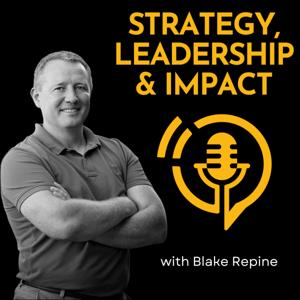


Delegation isn’t just about getting tasks off your plate—it’s about multiplying your impact as a leader. In this episode of Strategy, Leadership, and Impact, Blake Repine explores why effective delegation is essential for leadership success, how to delegate without micromanaging, and the critical difference between delegating authority and keeping responsibility.
You’ll discover practical tips on:
How to delegate with clarity and confidence
The common barriers that hold leaders back
Why trust and accountability must go hand in hand
How to empower your team without abdicating your role as leader
Whether you’re a CEO, manager, or aspiring leader, this episode will help you master the art of delegation so you can lead at a higher level, develop your team, and create lasting impact.
What can today’s leaders learn from the courage, resilience, and adaptability of history’s greatest adventurers?
In this episode of Strategy, Leadership and Impact, I dive into the leadership lessons of Ernest Shackleton, Sir Edmund Hillary, Tenzing Norgay, Douglas Mawson, and others who braved the most extreme conditions on Earth.
From surviving nearly two years trapped in Antarctic ice to summiting the world’s highest peaks, these leaders faced uncertainty, scarcity, and danger—but still inspired trust, unity, and extraordinary achievement.
You’ll learn:
✅ How to lead when the plan collapses
✅ Why purpose is the fuel that sustains teams under pressure
✅ The critical role of emotional intelligence in high-stakes situations
✅ How adaptability turns crisis into opportunity
✅ Timeless lessons that apply from the polar ice to the boardroom
Whether you’re leading a business, a project team, or your own life through change, this episode will equip you with proven strategies to lead with vision, resilience, and heart.
#Leadership #Shackleton #Hillary #Exploration #LeadershipDevelopment #Strategy #Teamwork #Resilience
What if chasing profit is actually costing you performance?
In this episode, we'll break down a fundamental truth:
👉 Money is the by-product of great leadership—not the mission.
Too often, leaders focus on revenue, growth, and KPIs while overlooking the real drivers of sustainable success—clarity, culture, trust, and purpose.
We unpack:
Why leading with profit in mind can backfire
The 5 behaviours that define truly effective leadership
How purpose-led leadership isn’t just “nice”—it’s strategic
Whether you're running a business, leading a council, managing a team, or building something new, this episode will challenge you to think differently about success.
💡 Profit is the applause. Leadership is the performance.
🎧 Tune in now—and if it resonates, share it with someone who leads.
#Leadership #Strategy #Podcast #BlakeRepine #Culture #Trust #LeadWithPurpose #LeadershipDevelopment #StrategicLeadership
In this episode of Strategy, Leadership and Impact, Blake Repine unpacks the increasingly popular, but often misunderstood, concept of psychosocial safety in the workplace.
You’ll learn:
What psychosocial safety really means (beyond the buzzwords)
How it can be misused to avoid accountability or suppress healthy conflict
The difference between safety and comfort, and why discomfort can be essential for growth
How effective leaders strike the right balance between trust, honesty, and performance
Blake shares practical insights, real-world examples, and five principles leaders can apply to build cultures that are both psychologically safe and high-performing.
If you're serious about leading with integrity, creating resilient teams, and making a lasting impact, this episode is for you.
📌 Subscribe for more weekly episodes on leadership, culture, and strategy.
💬 Share your thoughts or takeaways on LinkedIn and tag @BlakeRepine.
#Leadership #PsychologicalSafety #Culture #WorkplaceWellbeing #Strategy #BlakeRepine #LeadershipPodcast
In this episode, we discuss the profound impact of generosity on personal growth and leadership. We define generosity as the willingness to give more than expected and emphasise its role in building trust, creating psychological safety, and fostering a culture of collaboration. Through personal anecdotes and reflections, we illustrate how acts of generosity can inspire others and create a lasting impact in communities. I challenge you to embrace generosity as a leadership imperative, one that requires courage and a commitment to giving without expecting anything in return.Takeaways- Generosity is the willingness to give more than expected.- It operates from a place of abundance, not scarcity.- Generosity builds trust and psychological safety.- Companies with generous cultures often outperform their peers.- Generosity is contagious and inspires others to give.- Acts of generosity can change lives and communities.- Generosity requires courage to give without controlling outcomes.- Investing in people can yield long-term benefits.- Reflect on who has been generous to you and how it impacted you.- Choose one act of generosity to practice this week.
Toxic behaviour can quietly destroy a team’s morale, trust, and performance — and as a leader, ignoring it isn’t an option.In this episode of Strategy, Leadership and Impact, Blake Repine dives deep into how to recognise, address, and lead through toxic dynamics in the workplace. You’ll learn:✅ The hidden cost of toxic behaviour✅ The most common types of toxic personalities✅ How to address issues early — without fear or drama✅ The leader’s role in protecting team culture✅ Why psychological safety doesn’t mean avoiding accountabilityWhether you’re leading a small team or an entire organisation, this episode gives you practical tools to confront difficult behaviours while reinforcing trust and performance.📌 Subscribe for more leadership insights, strategy tools, and practical impact#Leadership #ToxicWorkplace #PsychologicalSafety #Accountability #LeadershipDevelopment #TeamCulture #StrategyLeadershipImpact
In this motivating episode, we break down the essential steps to achieve your goals and stay focused along the way. Discover how clarity, consistency, and small daily actions build unstoppable momentum toward your biggest dreams. Whether you’re chasing a personal milestone or a professional target, this episode will remind you that progress comes from persistence, not perfection.
Tune in, get inspired, and start turning your vision into reality today.
In this compelling episode of the Strategy, Leadership & Impact podcast, Blake Repine sits down with adventurer, author, and motivational speaker Luke Richmond, the force behind OLOC Adventures (https://www.olocadventures.com/). From surviving addiction to rowing oceans, climbing the world's highest peaks, and crossing the Gobi Desert, Luke shares the mindset, grit, and strategy it takes to push beyond physical and mental limits.
Blake and Luke explore how extreme adventure shapes resilience, decision-making, and personal leadership. They discuss the parallels between leading in high-risk environments—whether in the boardroom or on a mountain—and how embracing discomfort can unlock purpose and performance. Luke also reflects on his military background, the importance of discipline, and how his philosophy of “One Life, One Chance” guides everything he does.
Whether you're leading a team, transforming an organisation, or facing a personal challenge, this episode offers raw insights and practical lessons on courage, clarity, and commitment.
Tune in to discover:
How to reframe fear and failure
The power of lived experience in leadership
Why adventure and adversity can be your best teachers
Find out more about Luke, his adventures, books and speaking at https://www.olocadventures.com/
Strategic thinking is a learned discipline, not just a trait some are born with. To get better at it, leaders need to intentionally sharpen their mindset, skills, and habits. Here's a practical breakdown of how to do that:
1. Shift from Operator to ArchitectOperational work focuses on the day-to-day, while strategic thinking focuses on shaping the future. You need to deliberately shift how you allocate time and mental energy.
Tip: Use the 70-20-10 rule—spend 70% on strategic priorities, 20% on enabling others, and 10% on firefighting.
Practice: Audit your calendar monthly. Are you spending time on what's important, or just what’s urgent?
2. Practice Systems ThinkingStrategic thinkers look beyond symptoms and see the systems at play.
Action: Map out cause-effect relationships when analysing challenges (e.g. using causal loop diagrams or fishbone diagrams).
Question to ask: What patterns or structures are influencing these outcomes?
3. Read Broadly and Cross-FunctionallyLeaders who think strategically draw insights from multiple disciplines—economics, psychology, technology, sustainability, etc.
Tip: Read one book or listen to one podcast a month that is outside your domain.
Challenge: Attend events or forums in industries different from your own.
4. Build Time for Strategic ThinkingYou can't think strategically in 5-minute gaps between meetings. Strategic thinking requires space for deep, uninterrupted thought.
Tip: Block “strategic thinking time” each week—treat it as a non-negotiable.
Tool: Use reflection questions like:
What are the three biggest external forces that could disrupt us?
If we had to start this company again today, what would we do differently?
5. Develop Strategic CuriosityCultivate the habit of questioning assumptions and exploring alternatives.
Practice: When someone proposes a solution, ask: What else could work? What would the opposite approach look like?
Tool: Use Edward de Bono’s Six Thinking Hats technique to consider issues from multiple angles.
6. Engage with Diverse ThinkersStrategic insight often comes from conversation, not isolation.
Action: Surround yourself with people who challenge your thinking—mentors, peers, advisors, even skeptics.
Tip: Create a personal “strategic advisory board” (formal or informal) to test your ideas.
7. Use Strategic Frameworks OftenFamiliarity with proven tools helps you think more clearly and consistently.
Examples:
Porter’s Five Forces – industry competition
Blue Ocean Strategy – innovation and differentiation
Balanced Scorecard – aligning strategy to performance
Scenario Planning – exploring future possibilities
8. Reflect on Strategic DecisionsLearn from the past to improve future choices.
Action: After major decisions, conduct a strategic review. What worked? What didn’t? What blind spots emerged?
Tool: Use pre-mortems and post-mortems for key initiatives.
Getting better at strategic thinking is a journey—it’s not about having the perfect answer, but consistently applying the discipline to see farther, think deeper, and lead with intent.
Balancing leadership and technical expertise is crucial for effective management, especially in roles where both strategic vision and deep subject matter knowledge are essential. Here's a breakdown of how to strike that balance:
1. Define Your Role's Priorities
Tip: Delegate technical tasks to trusted experts and focus on decision-making, problem-solving, and empowering the team.
2. Maintain Technical Competence
Tip: Show curiosity about technical work to demonstrate your commitment without overshadowing your leadership focus.
3. Leverage Your Team's Strengths
Tip: Acknowledge team contributions and recognise when their technical knowledge surpasses your own. This builds credibility and respect.
4. Communicate Effectively
Tip: Practice active listening to understand both technical and non-technical perspectives fully.
5. Avoid Technical Micromanagement
Tip: Focus on outcomes rather than methods, allowing the team to find solutions independently.
6. Develop Emotional Intelligence
Tip: Regularly seek feedback on how you balance leadership and technical involvement to refine your approach.
7. Focus on Long-Term Impact
Balancing leadership and technical expertise is an ongoing process. By fostering collaboration, staying informed, and focusing on the bigger picture, you can effectively lead while ensuring technical excellence within your organisation.
From the publisher's feed