
Sign up to save your podcasts
Or

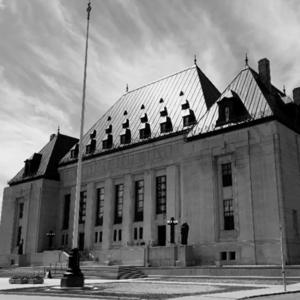


In 2015, the appellant was charged with the second degree murder of his spouse. Before his trial, a Quebec Superior Court judge allowed his motion for the trial to take place before a judge alone, in accordance with s. 473(1) of the Criminal Code, R.S.C. 1985, c. C-46, despite the absence of consent from the respondent prosecutor. The judge was of the opinion that a prosecutor’s decision to consent to a trial before a judge alone does not fall within the core of prosecutorial discretion but is instead a tactical decision subject to a court’s authority to control its own processes. Considering the particularities of the case, the judge was of the view that the accused had discharged his burden of demonstrating that the prosecutor’s decision was unreasonable or unfair in the circumstances. After a trial without jury, the accused was acquitted of second degree murder, but he was convicted of manslaughter.
The Court of Appeal allowed the respondent prosecutor’s appeal and ordered, among other things, that a new trial be held before a jury on the charge of second degree murder. The court was of the opinion that the trial judge had erred by applying the unreasonableness standard in her review of the prosecutor’s refusal to consent despite the fact that the accused had to prove that this refusal constituted an abuse of process. The Court of Appeal found that the accused had failed to prove this and that the impugned judgment was therefore vitiated by an error of law that had the effect of granting the Superior Court jurisdiction that it did not have. The accused’s trial was therefore a nullity.
Argued Date
2024-12-06
Keywords
Criminal law — Courts — Jurisdiction — Procedure — Trial — Trial without jury — Trial judge allowing appellant’s motion for trial without jury despite absence of consent of prosecutor — Discretion of prosecutor to consent to trial without jury — Whether Quebec Court of Appeal erred in finding that trial judge had held appellant’s trial “without jurisdiction” — Whether prosecutor’s appeal of order made by trial judge was governed by s. 676(1)(a) of Criminal Code — If trial was held without jurisdiction, whether Quebec Court of Appeal erred in finding that irregularity could not be corrected through application of s. 686(4) of Criminal Code while denying stay of proceedings pursuant to s. 686(8) — Criminal Code, R.S.C. 1985, c. C-46, ss. 473, 686(4), (8).
Notes
(Quebec) (Criminal) (By Leave)
Language
Floor Audio
Disclaimers
This podcast is created as a public service to promote public access and awareness of the workings of Canada's highest court. It is not affiliated with or endorsed by the Court. The original version of this hearing may be found on the Supreme Court of Canada's website. The above case summary was prepared by the Office of the Registrar of the Supreme Court of Canada (Law Branch).
Section 63(2) of the Immigration and Refugee Protection Act (“IRPA”) provides foreign nationals who hold a permanent resident visa with the right to appeal to the Immigration Appeal Division (“IAD”) against a decision to make a removal order against them made under s. 44(2) or made at an admissibility hearing.
In March 2018, the appellant, Dorinela Pepa, came to Canada while in possession of a permanent resident visa as an accompanying dependent child of her father. However, before she came to Canada, Ms. Pepa married. On her arrival in Canada, she advised the point of entry officer of her marriage. Because of the change in her circumstances, Ms. Pepa was admitted for further examination and was not landed. The further examination occurred in the next month, followed by two reports under s. 44 of the IRPA. An admissibility hearing before the Immigration Division (“ID”) of the Immigration and Refugee Board commenced in September 2018. Her visa had expired earlier that month. At the conclusion of the hearing, the ID issued an exclusion order against her. She appealed the decision to the IAD, but the IAD concluded that she had no right to appeal under s. 63(2) because, when the removal order was issued, her visa had expired and so was no longer valid. Ms. Pepa’s application to the Federal Court and appeal to the Federal Court of Appeal were dismissed, with those courts concluding that the IAD’s decision was reasonable.
Argued Date
2024-12-04
Keywords
Administrative law — Boards and Tribunals — Jurisdiction — Immigration and Refugee Board, Immigration Appeal Division – Permanent resident visa expiring after its holder arrived in Canada without being landed but before removal order issued — Visa holder appealing to Immigration Appeal Division — Immigration Appeal Division interpreting statutory provision at issue as not conferring it jurisdiction — Application for judicial review to Federal Court and appeal to Federal Court of Appeal dismissed on basis that interpretation by Immigration Appeal Division was reasonable — What is the appropriate standard of review to the decision of the Immigration Appeal Division regarding the statutory right of appeal under statutory provision at issue? — Whether the Immigration Appeal Division erred in construing statutory provision at issue by determining that the appellant lost her right of appeal because the validity date of her permanent resident visa had passed prior to the issuance of the exclusion order — Immigration and Refugee Protection Act, S.C. 2001, c. 27, s. 63(2).
Notes
(Federal) (Civil) (By Leave)
Language
Floor Audio
Disclaimers
This podcast is created as a public service to promote public access and awareness of the workings of Canada's highest court. It is not affiliated with or endorsed by the Court. The original version of this hearing may be found on the Supreme Court of Canada's website. The above case summary was prepared by the Office of the Registrar of the Supreme Court of Canada (Law Branch).
Two people robbed a restaurant with their faces completely covered. The incident was captured on security cameras. The crime remained unsolved for several years until an unsavoury third-party witness implicated the appellant as one of the robbers. The appellant was charged with robbery and disguise with intent to commit an indictable offence under the Criminal Code. The appellant elected to be tried by a provincial court judge.
The sole issue at trial was the appellant’s identity, and the Crown’s evidence on that element was limited to evidence of the unsavoury witness. The trial judge determined that the witness was able to provide recognition evidence. The witness then testified to multiple ways he was able to identify the appellant in the video despite his face being covered. The trial judge accepted the witness’s evidence and concluded that some of the evidence at trial corroborated his testimony. The trial judge convicted the appellant of robbery and having his face masked while committing an indictable offence.
The Court of Appeal dismissed the appellant’s appeal from his conviction and affirmed the conviction. A majority of the Court of Appeal held that there was no error in the trial judge’s application of Vetrovec. The trial judge recognized the dangers of relying on the unsavoury witness’s evidence and provided reasons that explained how those challenges were resolved. The dissenting justice would have allowed the appeal and ordered a new trial. She concluded that the trial judge had erred in the treatment of the evidence of the Crown’s unsavoury witness. The trial judge’s Vetrovec errors were errors of law that warranted appellate intervention.
Argued Date
2024-11-08
Keywords
Criminal Law — Evidence — Assessment —Unsavoury Crown witnesses — Sufficiency of Vetrovec scrutiny — Whether the Court of Appeal erred in law by affirming the trial judge’s reliance on the identification evidence of the Crown’s unsavoury witness — Whether the Court of Appeal erred in law by affirming the trial judge’s application of the principles set out in Vetrovec v. The Queen, [1982] 1 S.C.R. 811.
Notes
(Saskatchewan) (Criminal) (As of Right)
Language
Floor Audio
Disclaimers
This podcast is created as a public service to promote public access and awareness of the workings of Canada's highest court. It is not affiliated with or endorsed by the Court. The original version of this hearing may be found on the Supreme Court of Canada's website. The above case summary was prepared by the Office of the Registrar of the Supreme Court of Canada (Law Branch).
The appellants, Duncan and Michelle Sinclair, and their son were on a European holiday and were injured in an accident in Venice, Italy. They were passengers on a water taxi that crashed into a wooden structure. The appellants were both injured.
The appellants had arranged their travels through Amex Canada Inc., operating under the name Centurion Travel Service which engages third-party travel suppliers for the provision of travel services such as car services, flights and hotel accommodations, at the request and on behalf of Centurion Card members. The day before flying to Venice, Mr. Sinclair booked transportation from the airport in Venice to their hotel, which included a water taxi ride. The water taxi was dispatched by the respondent, Venizia Turismo, and owned by the respondent, Venice Limousine S.R.L.
After returning to Canada, the appellants commenced an action seeking damages arising out of the accident. The respondents moved to dismiss or stay the action against them for want of jurisdiction. The motion judge dismissed the motion. The respondents appealed to the Ontario Court of Appeal. A majority of the court found that there was no Ontario contract connecting the dispute to Ontario and allowed the appeal, staying the appellants’ action.
Argued Date
2024-11-07
Keywords
Private international law — Jurisdiction — Presumptive connecting factors — Whether the court below failed to identify the operative contracts — Was the majority right to overturn the motion judge’s finding of a connection with an Ontario contract — Was the Court of Appeal right to rule that the connection was rebutted?
Notes
(Ontario) (Civil) (By Leave)
Language
Floor Audio
Disclaimers
This podcast is created as a public service to promote public access and awareness of the workings of Canada's highest court. It is not affiliated with or endorsed by the Court. The original version of this hearing may be found on the Supreme Court of Canada's website. The above case summary was prepared by the Office of the Registrar of the Supreme Court of Canada (Law Branch).
The respondents, Métis Nation – Saskatchewan, and Métis Nation – Saskatchewan Secretariate Inc. (collectively, “the Métis respondents” or “MNS”), have long claimed Aboriginal title and rights (including commercial rights) to large areas of the Province of Saskatchewan. The appellant, Government of Saskatchewan, has consistently opposed the existence or recognition of such rights.
In 1994, MNS (along with other plaintiffs) brought an action against Saskatchewan and Canada, seeking declarations that the Métis respondents have existing title and rights within the claimed land area, including use of resources for commercial purposes (the “1994 Action”). In 2005, Justice Koch stayed the 1994 Action, in response to a dispute between the parties with respect to the disclosure of certain documents, but granted permission to the MNS to apply for leave to lift the stay in future; to date, MNS has not applied to have the stay lifted.
In 2020, MNS commenced a second action against Saskatchewan, challenging a 2010 policy document issued by the Province which had reiterated that claims to Aboriginal title and commercial rights would not be “accepted” by the provincial government, and would not be subject to the Crown’s duty to consult (the “2020 Action”). This action remains ongoing.
In March 2021, a resource company (NexGen Energy Ltd.) applied to the Government of Saskatchewan for permits to complete a field mineral exploration program on certain lands that fell within the MNS claim area. In May 2021 and during the early summer of 2021, Saskatchewan met with MNS to consult the Métis about the NexGen permit applications. In July 2021, the Government of Saskatchewan issued three uranium exploration permits to NexGen. In August 2021, MNS filed an originating application for judicial review of the decision of the Minister of Environment to grant the permits. In December 2021, Saskatchewan filed a notice of application for an order to strike portions of MNS’s originating application for judicial review, relying on Rules 1-4(3) and 7-9(2)(b) of The Queen’s Bench Rules, and arguing that certain paragraphs of the originating application should be struck as vexatious or an abuse of process, given that they addressed matters already covered by the 1994 Action and the 2020 Action. The chambers judge granted the application. The Court of Appeal unanimously allowed the Métis respondents’ appeal, reinstating the impugned paragraphs in MNS’s originating application.
Argued Date
2024-11-06
Keywords
Aboriginal law — Aboriginal rights — Aboriginal title — Crown’s duty to consult — Civil procedure — Abuse of process — Aboriginal group bringing application for judicial review of provincial government decision to issue mining permits to resource company — Aboriginal group alleging failure to fulfill duty to consult — Provincial government moving to strike portions of originating application in light of two other ongoing actions involving same Aboriginal rights and title claims — Chambers judge striking portions of originating application, based on abuse of process doctrine — Court of Appeal setting aside chambers judge’s decision — Whether it is an abuse of process for a claimant to bring multiple actions against the Crown raising the same legal issue in relation to the duty to consult — Whether Haida Nation decision allows claimants to bring duty to consult claims against the Crown based on asserted rights without pursuing the proof of those rights — Queen’s Bench Rules (Saskatchewan), rr. 1-4, 7-9.
Notes
(Saskatchewan) (Civil) (By Leave)
Language
Floor Audio
Disclaimers
This podcast is created as a public service to promote public access and awareness of the workings of Canada's highest court. It is not affiliated with or endorsed by the Court. The original version of this hearing may be found on the Supreme Court of Canada's website. The above case summary was prepared by the Office of the Registrar of the Supreme Court of Canada (Law Branch).
Between September 1987 and October 1994, the appellant, Izabela Piekut, obtained a series of student loans through a federal government program. She graduated in 1994 and obtained her teaching diploma the following year. The appellant received two further student loans in 2002 and 2003, when she earned a master’s degree. In 2008, the appellant enrolled in part-time studies, earning her second master’s degree in 2009. That time, she funded her studies herself, with no student loan. In October 2013, the appellant made a consumer proposal under the Bankruptcy and Insolvency Act, R.S.C. 1985, c. B-3. A certificate of full performance of that proposal was granted. In June 2019, the appellant applied to the court for a declaration that, by operation of law, she had been released from all debt and interest associated with her government student loans. Her application was dismissed. Her subsequent appeal was also dismissed.
Argued Date
2024-11-05
Keywords
Bankruptcy and Insolvency — Procedure — Appellant seeking to have student loan debt released through the proposal process — What is the correct interplay between the phrase “date on which the bankrupt ceased to be a full- or part-time student” under BIA s. 178(1)(g)(i) and the scheme of the regulations under the CSLA and/or the CSFAA specifically noting that under those regulations it is specifically contemplated that a student may cease to be full- or part-time numerous times throughout studies, or afterward, and then apply to be reinstated to that status — Whether, or when she may have been reinstated to that status, or when she again ceased to have that status never to be reinstated to it, the courts below lacked a basis in fact on which to fix a date under s. 178(1)(g)(i) for purposes of determining whether BIA s. 178(1)(g) applied to her consumer proposal or not — Whether a creditor has the onus to prove by evidence that a person who has had a consumer proposal approved by her creditor and the court is by BIA s. 66.28 nevertheless subject to s. 178(1)(g).
Notes
(British Columbia) (Civil) (By Leave)
Language
Floor Audio
Disclaimers
This podcast is created as a public service to promote public access and awareness of the workings of Canada's highest court. It is not affiliated with or endorsed by the Court. The original version of this hearing may be found on the Supreme Court of Canada's website. The above case summary was prepared by the Office of the Registrar of the Supreme Court of Canada (Law Branch).
(PUBLICATION BAN IN CASE) (CERTAIN INFORMATION NOT AVAILABLE TO THE PUBLIC)
The appellant participated in a planned robbery with intent to steal a firearm from a seventeen year old youth. He and his co-assailants attacked the victim outside his residence. They beat him and stabbed him. Their victim died from his wounds. The appellant and his co-assailants then entered the victim’s home, pistol-whipped the victim’s mother, and searched the home for firearms. The appellant was charged with first degree murder. He was seventeen years old at the time of the offence and was tried before a jury in Youth Justice Court. He conceded at trial that he was guilty of manslaughter because he willingly participated in a planned robbery. The jury convicted the appellant of first degree murder. The Crown applied to have the appellant sentenced as an adult. The sentencing judge granted the application and sentenced the appellant to life imprisonment without eligibility for parole for 10 years. The Court of Appeal dismissed an appeal from the sentencing decision.
Argued Date
2024-10-15
Keywords
Criminal law — Sentencing — Young person sentenced as adult — Whether the Court of Appeal erred in sentencing a young person as an adult on the basis that Crown counsel rebutted the presumption of diminished moral blameworthiness under s. 72(1) of the Youth Criminal Justice Act, S.C. 2002, c. 1?
Notes
(Ontario) (Criminal) (By Leave) (Publication ban in case) (Certain information not available to the public)
Language
Floor Audio
Disclaimers
This podcast is created as a public service to promote public access and awareness of the workings of Canada's highest court. It is not affiliated with or endorsed by the Court. The original version of this hearing may be found on the Supreme Court of Canada's website. The above case summary was prepared by the Office of the Registrar of the Supreme Court of Canada (Law Branch).
Armed men entered the home of Jennifer Pan and her parents. They shot and killed Mrs. Pan. They shot and seriously injured Mr. Pan. Jennifer Pan, Mr. Wong, Mr. Crawford, Mr. Mylvaganam and Mr. Carty were charged with first degree murder and attempted murder. They were tried before a jury. Mid-trial, proceedings against Mr. Carty were severed. The jury convicted Jennifer Pan, Mr. Wong, Mr. Crawford and Mr. Mylvaganam on both counts. They appealed from their convictions. The Court of Appeal dismissed the appeals from the convictions for the attempted murder of Mr. Pan. It allowed the appeals from the convictions for the first degree murder of Mrs. Pan and ordered a new trial in relation to her death.
Argued Date
2024-10-17
Keywords
Criminal law — Charge to jury — Offences — Evidence — Remitting counts for retrial — Jurors — What is the test for placing alternative theories of liability for a homicide to a jury, what deference is due to trial judge’s determination of whether an alternative has an air of reality, and whether the curative proviso ought to have been applied to decision not to put alternatives to the jury — Whether appellate courts should remit associated counts for retrial where doing otherwise risks inconsistent trial verdicts, whether the tainting doctrine is part of the test for remittance or for application of curative proviso, and which party bears the onus for establishing tainting and remittance — Scope of the trial judge’s duty in a multi-person complex prosecution to tailor to an accused instructions to the jury on use of evidence of a co-accused’s propensity for violence — Whether trial judge failed to properly assess evidence in considering reasonable apprehension of bias or appearance of unfairness arising from juror interference, sufficiency of inquiry into juror issues and deference due to trial judge’s decisions on juror issues — Admissibility and use of presentations summarizing evidence, what rules and procedural requirements apply to determine admissibility and use by a jury of aids summarizing evidence supporting Crown counsel’s case, and whether PowerPoint presentation supporting Crown counsel’s case was improperly allowed to go into jury room?
Notes
(Ontario) (Criminal) (By Leave)
Language
Floor Audio
Disclaimers
This podcast is created as a public service to promote public access and awareness of the workings of Canada's highest court. It is not affiliated with or endorsed by the Court. The original version of this hearing may be found on the Supreme Court of Canada's website. The above case summary was prepared by the Office of the Registrar of the Supreme Court of Canada (Law Branch).
In February 2019, the Canadian Radio-television and Telecommunications Commission (“CRTC” or “Commission”), issued Telecom Notice of Consultation 2019-57 for the purpose of initiating a broad review of mobile wireless services and their associated regulatory framework. The Commission indicated that the review would focus on three key areas, including the future of mobile wireless services in Canada, with a focus on reducing barriers to infrastructure deployment. In inviting comments on the matter, an access issue arose which asked whether the CRTC’s jurisdiction over access to municipal infrastructure extended to the installation of 5G small cells. This required the Commission to interpret the term “transmission line” in s. 43 of the Telecommunications Act, S.C. 1993, c. 38. The term “transmission line” is found in the Act’s access regime. The access regime authorizes carriers like the appellants to go onto public property to construct, maintain, or operate “transmission lines” with the consent of municipalities. Where terms of access cannot be agreed upon, s. 43(5) accords the CRTC the essentially adjudicative role of considering applications from, and providing redress to, public service providers who cannot gain access to the supporting structure of a transmission line on terms acceptable to them. In the CRTC’s view, “transmission line” could not include small cells or any technologies that transmit telecommunications wirelessly such that it did not have jurisdiction to resolve disputes in this area by way of the access regime. The Federal Court of Appeal confirmed this interpretation, and dismissed the appeal brought by Telus Communications Inc.
Argued Date
2024-10-16
Keywords
Administrative law — Appeals — Boards and tribunals — Regulatory boards — Jurisdiction — Wireless services — Deployment of 5G network — Access regime to public and other property — Transmission lines — CRTC determining that it lacks jurisdiction over carriers’ access to municipal infrastructure for the installation of 5G small cells — Application of access regime to 5G small cells turning on interpretation of “transmission line” under Act — Does wireless transmission infrastructure (e.g., 5G small cells) constitute, or is it an integral part of, a “transmission line” within the meaning of s. 43 of the Telecommunications Act, SC 1993, c. 38?
Notes
(Federal) (Civil) (By Leave)
Language
Floor Audio
Disclaimers
This podcast is created as a public service to promote public access and awareness of the workings of Canada's highest court. It is not affiliated with or endorsed by the Court. The original version of this hearing may be found on the Supreme Court of Canada's website. The above case summary was prepared by the Office of the Registrar of the Supreme Court of Canada (Law Branch).
During a search incident to arrest, a man told police that he had a firearm in his backpack. The officers subsequently seized a loaded prohibited firearm. The Crown ultimately stayed the charges from the initial arrest and proceeded to trial on firearms offences only.
In a voir dire, the trial judge concluded that the police had breached the man’s ss. 8 and 9 Charter rights and that his arrest and the subsequent search were unlawful. However, under s. 24(2), she found that the officers would have had a legal basis to detain the man for investigative purposes and that the firearm would have been discoverable during a search incident to such a detention. The discoverability of the firearm mitigated the seriousness of the breaches. She admitted the firearm into evidence and the man was convicted.
A majority of the Court of Appeal for Saskatchewan held that the trial judge erred in concluding that there was a reasonable suspicion that would justify an investigative detention, which is a question of law reviewable on a standard of correctness. That error undermined the trial judge’s s. 24(2) analysis. The majority conducted the s. 24(2) analysis afresh, excluded the firearm from evidence and substituted an acquittal. In dissent, Tholl J.A. would have dismissed the appeal and would have held that there was no error in the trial judge’s conclusions with respect to a reasonable suspicion for investigative detention.
Argued Date
2024-10-11
Keywords
Criminal Law – Charter of Rights – Arrest – Investigative detention – Search and Seizure – Whether arresting officers had reasonable suspicion to detain for investigative purposes – Whether concealed firearm was discoverable – Whether evidence of the firearm seized incident to arrest should have been excluded under s. 24(2) of the Charter – Whether the Court of Appeal afforded the correct degree of deference to the trial judge’s conclusions – Charter of Rights and Freedoms, ss. 8, 9, 24(2).
Notes
(Saskatchewan) (Criminal) (As of Right)
Language
Floor Audio
Disclaimers
This podcast is created as a public service to promote public access and awareness of the workings of Canada's highest court. It is not affiliated with or endorsed by the Court. The original version of this hearing may be found on the Supreme Court of Canada's website. The above case summary was prepared by the Office of the Registrar of the Supreme Court of Canada (Law Branch).
From the publisher's feed
0 Listeners