
Sign up to save your podcasts
Or

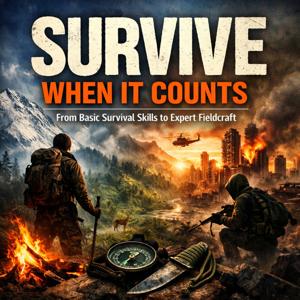


When people hear the phrase basic survival skills, they often picture dramatic moments: a storm rolling in, a broken trail, a night spent in the woods with no plan. But survival usually starts much earlier than that. It begins with calm thinking, simple habits, and the ability to make good decisions before stress takes over. In this episode, we’re focusing on the core skills that matter most when conditions turn uncertain: the fundamentals that keep you safe, steady, and prepared.
The first and most important skill is mindset. Before you worry about gear, fire, or shelter, you need to slow down and assess the situation. Panic wastes energy and clouds judgment. A survivor’s advantage is not superhuman toughness; it’s the ability to pause, breathe, and ask the right questions. What is my immediate danger? What do I need first? What resources do I already have? That calm, deliberate approach is the foundation of every other survival decision. Whether you’re lost on a trail or dealing with an emergency at home, clear thinking buys you time.
Next comes the survival priority that often gets overlooked until it’s too late: water. You can go much longer without food than without water, and even mild dehydration can affect your focus, strength, and decision-making. Basic survival skills include knowing how to identify safe water sources, how to carry and ration water wisely, and how to treat water when necessary. Just as important is understanding when to stop moving, rest, and conserve what you have. In survival situations, energy management matters as much as supply management.
After water, shelter and fire become the next layer of protection. A good shelter doesn’t have to be complicated, but it does need to keep you dry, reduce wind exposure, and help preserve body heat. Fire, when conditions allow, can provide warmth, comfort, light, and a psychological boost that helps people stay focused and hopeful. But fire is only useful if you can build it safely and maintain it responsibly. Learning how to choose a site, gather dry material, and protect your fire from weather is one of the most practical basic survival skills you can develop.
The final piece is movement and communication. If you’re outdoors, navigation helps you avoid getting more lost, while signaling increases your chances of being found. Even simple skills like recognizing landmarks, staying oriented, and using a whistle or reflective signal can make a major difference. And in any environment, from the backcountry to a power outage at home, preparation matters. A small emergency kit, proper clothing, and a basic plan can turn a stressful situation into a manageable one. Survival is not about luck. It’s about reducing risk before risk becomes a crisis.
So if you’re just starting out, focus on the basics. Learn to stay calm. Understand water, shelter, fire, and signaling. Build confidence through repetition, not guesswork. The more comfortable you become with these basic survival skills, the better prepared you’ll be when the unexpected happens. And that preparation doesn’t just help you survive—it helps you think clearly, move smartly, and stay in control when it matters most.
If you’ve ever wanted a clear, practical path into preparedness, this survival skills course is built for exactly that. Instead of throwing you into extreme scenarios right away, it starts with the basics that matter most: staying calm, making good decisions, and understanding what keeps you alive when plans fall apart. From there, it builds step by step into real-world fieldcraft, so you can gain confidence without feeling overwhelmed.
The first lesson in any survival skills course is mindset. Panic burns energy, clouds judgment, and leads to bad choices. That’s why the foundation begins with calm decision-making, situational awareness, and learning how to assess risk before acting. Once that mindset is in place, the essentials come next: water, fire, shelter, clothing, navigation, and emergency signalling. These are the core survival priorities because they solve the most immediate problems. Water prevents dehydration. Fire provides warmth, light, morale, and the ability to purify water. Shelter and proper clothing protect you from exposure. Navigation helps you avoid getting more lost. Signalling gives rescuers a chance to find you.
From there, the course moves into practical outdoor competence. This is where survival stops being theory and starts becoming skill. You learn campcraft, basic hygiene, first aid, weather reading, foraging, and how to handle the first night alone. These are the details that separate a rough outing from a dangerous one. A well-built camp keeps you organized and efficient. Good hygiene helps prevent illness and infection. First aid gives you the confidence to deal with injuries quickly. Reading the weather helps you prepare before conditions turn. And the first night alone is often a major psychological test, so learning how to manage fear and conserve energy is just as important as any technical skill.
As the survival skills course progresses, it expands into harsher environments and more demanding conditions. Cold weather survival requires an understanding of heat loss, insulation, and staying dry. Hot environments demand shade, hydration, and smart pacing. Mountains, jungle, coastline, night movement, and river crossings each bring their own hazards and decision points. This stage teaches you that survival is never one-size-fits-all. The environment changes the rules, and the more you understand those rules, the better your chances of moving safely and efficiently.
The course also covers wider survival realities that matter beyond the wilderness. Urban emergencies, home preparedness, vehicle kits, bugging in versus bugging out, and building a reliable 72-hour plan all play a major role in real preparedness. Not every emergency requires escape, and not every situation is better solved by leaving. Sometimes the smartest move is to stay put, conserve resources, and wait for conditions to improve. That’s why planning matters. A strong 72-hour plan gives you food, water, light, communication, and a clear decision framework when normal systems are disrupted.
In the final stages, the course brings everything together with advanced navigation, tracking, concealment, risk assessment, leadership, survival psychology, escape and evasion, and long-term camp planning. These are the skills that turn knowledge into capability. They help you think ahead, stay organized under pressure, and adapt when the situation becomes complex. By the end, you’re not just learning isolated techniques. You’re building a complete survival mindset and a structured set of habits that can help you stay alive when conditions turn hostile.
That’s the value of a well-designed survival skills course: it takes you from beginner basics to advanced fieldcraft in a logical, usable way. Whether you’re new to the outdoors or serious about preparedness, the goal is the same—think clearly, move smartly, and be ready when it matters most.
If you’re new to the outdoors, the phrase “survival skills for beginners” can sound intimidating. But survival is not about turning into a superhero overnight. It’s about learning a few simple, reliable habits that help you stay calm, make smart decisions, and keep yourself safe when things don’t go as planned. In this episode, we’re starting at the beginning: the mindset, the basics, and the practical skills that matter most when conditions turn uncertain.
The first and most important survival skill is mindset. Before you worry about gear, shelters, or fire-making, you need to learn how to slow down and think clearly. Panic wastes energy and leads to bad choices. A beginner who can pause, breathe, assess the situation, and decide what matters most is already ahead. Ask yourself: Am I safe right now? Do I need water, shelter, or help? What is the biggest immediate risk? That calm, step-by-step approach is the foundation of every other survival skill.
Next comes the classic survival priorities: water, shelter, and fire. Water is the first physical need, because dehydration can quickly affect your judgment and energy. A beginner should understand how to find, carry, and purify water whenever possible. Shelter protects you from wind, rain, cold, and heat, even if it’s just a simple tarp, emergency blanket, or natural cover. Fire can provide warmth, morale, light, and a way to purify water or signal for help, but only if conditions allow it and you know how to use it safely. These are not advanced tricks; they are the core basics that keep you functioning.
Another essential area is navigation and awareness. You do not need to be a master map reader on day one, but you should know how to orient yourself, identify landmarks, and avoid wandering in circles. In a survival situation, moving with purpose is better than moving fast. It also helps to pay attention to weather, terrain, and daylight. Many beginners get into trouble not because they lack strength, but because they underestimate how quickly conditions can change. Learning to read the environment is a survival skill in itself.
Finally, a beginner should build confidence through simple practice. Pack a basic emergency kit. Learn how to tie a few useful knots. Practice setting up a shelter. Try making a fire in safe conditions. Carry a map and compass on short hikes and actually use them. The goal is not perfection; it’s familiarity. The more comfortable you become with these basics, the less likely you are to freeze when you need to act. Survival is built through repetition, not guesswork.
So if you’re just getting started, focus on the essentials: stay calm, protect yourself from the elements, find water, and know where you are. Those survival skills for beginners may seem simple, but they are the difference between confusion and control. Build them one at a time, practice them often, and you’ll develop the confidence to handle the outdoors with a much clearer head. That’s where real survival begins.
When people think about survival, they often picture the first night, the emergency fire, or the scramble to find water. But once the immediate danger passes, a different challenge begins: how do you stay functional, safe, and steady for days, weeks, or even longer? That is where the idea of a long term camp comes in. It is not just a place to sleep. It is a system that supports survival, protects energy, and gives you the best chance of thinking clearly when conditions are rough.
The first priority in any long term camp is location. A good site does more than look comfortable. It needs access to water, some natural shelter from wind and weather, and enough distance from hazards like flood zones, deadfall, loose rock, or obvious animal paths. You also want a place that is easy to defend, easy to leave if necessary, and not so exposed that every movement can be seen from far away. In a real survival situation, the best camp is often the one that balances safety, concealment, and practicality instead of chasing perfection.
Once the site is chosen, the camp layout matters. A long term camp should be organized so that daily tasks are simple and efficient. Sleeping areas, cooking areas, water collection, waste disposal, and gear storage should all have their own place. That reduces confusion and keeps contamination risks lower. It also saves time and energy, which are two of your most valuable resources in the field. A messy camp wears people down fast. A structured camp helps you stay calm, keep track of supplies, and build a routine that supports morale.
Resource management becomes the backbone of long term living outdoors. Water has to be collected, treated, and stored. Firewood needs to be gathered before it is urgently needed. Food may come from carried supplies, trapping, fishing, foraging, or a combination of all three. Clothing and bedding need to stay dry. Tools need maintenance. Even small problems can become serious if they are ignored. In a long term camp, survival is less about dramatic moments and more about steady habits: checking gear, conserving fuel, rotating supplies, and planning ahead for changing weather.
Just as important as the physical setup is the mental side of camp life. Long term survival can create boredom, frustration, and fatigue, and those can be just as dangerous as cold or hunger. A good routine gives structure to the day and helps prevent mistakes. Simple jobs like fire tending, perimeter checks, water runs, and cleanup can keep everyone focused and useful. Leadership matters here too. Clear communication, shared responsibilities, and realistic expectations can turn a stressful camp into a workable one. The goal is not comfort in the modern sense. The goal is stability, discipline, and resilience.
A strong long term camp is built on smart choices, not luck. It starts with a good site, grows through careful organization, and survives through disciplined habits. When you can create a camp that supports water, shelter, food, sanitation, and morale over time, you are no longer just reacting to the environment. You are adapting to it. And that is the real turning point in survival: moving from simply enduring to living with purpose, even when conditions are harsh.
When people hear the phrase concealment tactics , they often think of camouflage clothing, hiding in the trees, or trying to disappear into the background. But real concealment is much broader than that. In survival situations, concealment is about reducing your visibility, limiting your signature, and making smart choices that help you avoid detection, conserve energy, and stay in control of your environment. Whether you’re moving through rough terrain, trying to protect a campsite, or simply avoiding unnecessary attention, concealment is a skill that can make a major difference.
The first thing to understand is that concealment starts with awareness, not gear. Before you worry about how to hide, you need to think about what gives you away. Movement, noise, light, silhouette, and even smell can all reveal your position. A person standing still in the open is easier to spot than someone who knows how to use terrain, shadows, and cover. The best concealment tactics begin with observation: where is the light coming from, where are the likely sight lines, and what features of the landscape naturally break up your outline? Once you understand what stands out, you can start blending in with purpose instead of guessing.
Next comes the practical side of movement and placement. Good concealment is rarely about burying yourself in one spot and hoping for the best. It’s about choosing positions that work with the environment. Dense vegetation, folds in the ground, tree lines, rocks, and uneven terrain all provide opportunities to stay out of view. But concealment is not the same as total invisibility. In many cases, the goal is to be hard to notice, not impossible to find. That means minimizing unnecessary movement, avoiding skylines, and taking the time to plan your route so you are not constantly crossing exposed ground. If you must travel, move with intent and stop only where you have a reason to stop.
Another important part of concealment tactics is managing your signature. In the field, people are often detected by things other than sight. A campfire glow, the sound of gear clinking, the smell of food, or even a flashlight used carelessly can all give away your location. Keeping a low profile means thinking about the full picture. Use light sparingly, secure loose equipment, and be conscious of noise when you move or set up camp. If you’re trying to remain unnoticed, discipline matters. Small habits, repeated consistently, are what separate effective concealment from wishful thinking.
Finally, concealment should always be tied to risk assessment. There is no point in hiding so well that you lose your ability to navigate, communicate, or respond to changing conditions. The smartest concealment tactics balance security with practicality. You still need to know where you are, where you’re going, and how to react if the situation changes. In some cases, concealment is about staying hidden from people. In others, it’s about reducing stress on yourself by creating a sense of order and control. Either way, the principle is the same: use your environment wisely, keep your profile low, and make every choice with purpose.
At the end of the day, concealment is not just a survival trick. It’s a mindset. It’s the ability to slow down, assess what matters, and move in a way that gives you more options and fewer problems. Mastering concealment tactics won’t make you invisible, but it will make you more deliberate, more difficult to detect, and far better prepared when conditions demand patience and good judgment.
When most people think about survival, they picture fire, shelter, water, and maybe a map in hand. But in the field, one of the most valuable skills is often the quietest one: reading the ground, the brush, and the tiny disturbances that tell a story. That is what tracking signs is all about. It is not just for hunters or experts in the wilderness. It is a practical survival skill that can help you find people, avoid danger, move more efficiently, and understand what has happened in an area before you arrived.
The first thing to understand about tracking signs is that they are everywhere if you know how to look. A bent blade of grass, a scuffed rock, a broken twig, or a patch of disturbed soil can reveal movement. Fresh signs usually stand out because they contrast with the natural order around them. Look for edges that seem too sharp, surfaces that are newly exposed, and patterns that do not match the surrounding area. A single clue may not mean much on its own, but several together can tell a clear story. The key is to slow down, scan carefully, and trust what the environment is showing you.
Another important part of tracking signs is learning to identify direction and behavior. Tracks are not just footprints; they are evidence of intent. Are the signs showing a person moving quickly, cautiously, or stopping often? Is an animal traveling along a ridge, cutting across open ground, or using cover? Are branches pushed aside at shoulder height, suggesting a person passed through, or are the marks low and scattered, suggesting wildlife? Directional clues can help you determine where someone came from and where they are headed. In a survival situation, that can make the difference between finding help, avoiding a threat, or wasting precious energy on the wrong route.
Weather and terrain also matter. Rain can soften tracks and preserve them, while wind, sunlight, and dry ground can erase them fast. Mud, sand, snow, and ash each hold signs differently, so the same movement may leave a bold trail in one place and almost nothing in another. That means a good tracker does not just look at the sign itself; they read the conditions around it. If the ground is hard, look for dust on leaves, disturbed spider webs, or marks on bark. If the area is wet, check for fresh edges in the mud and the way water has pooled around the impression. Understanding the environment helps you separate useful evidence from noise.
Finally, tracking signs is about discipline and patience. It is easy to get excited and rush ahead, but that is when mistakes happen. Good tracking means confirming each clue before moving on, keeping your bearings, and staying aware of your own surroundings. In a survival context, this skill can support search and rescue, route finding, perimeter awareness, and even personal safety when moving through unfamiliar terrain. The more you practice, the more you begin to notice what others miss. And once you can read the signs under your feet, you are no longer just moving through the landscape. You are understanding it.
Tracking signs is one of those skills that turns uncertainty into information. It sharpens your awareness, improves your judgment, and gives you a deeper connection to the environment around you. Whether you are out on a trail, dealing with an emergency, or building a stronger survival foundation, learning to track is learning to think clearly under pressure. And in the field, that clarity can save time, energy, and lives.
When people talk about survival, they often jump straight to fire, shelter, or navigation. But before any of that, there’s a quieter skill that can save your life: risk assessment. It’s the ability to look at a situation, understand what could go wrong, and make a smart decision before pressure, panic, or pride take over. In the field, risk assessment is what keeps small problems from becoming life-threatening ones.
The first step is learning to slow down and read the situation honestly. That means asking simple questions: What do I know for sure? What am I guessing? What are the immediate threats? A steep slope, rising water, fading daylight, or a storm moving in can all change the picture fast. Good risk assessment isn’t about being fearless. It’s about being clear-eyed. The person who pauses to think may feel slower in the moment, but they are usually the one who arrives safely.
Next, you need to compare the risk against the reward. Not every challenge is worth taking on right away. Crossing a river might save time, but if the current is strong and the water is cold, the danger may outweigh the benefit. Climbing a ridge for a better view might help with navigation, but if the footing is loose and the weather is closing in, it may be smarter to stay low. Strong survival judgment comes from understanding that every action has a cost. Risk assessment helps you decide whether that cost is manageable or reckless.
Another important part of risk assessment is knowing your own limits. A lot of bad decisions in the outdoors come from overconfidence, fatigue, hunger, or the urge to prove something. You may be capable of a difficult task on a good day, but survival conditions are rarely good days. Cold drains energy. Heat clouds judgment. Darkness hides hazards. If you are tired, injured, or already stressed, your margin for error shrinks. Part of staying alive is being honest about your physical and mental condition, then adjusting your choices accordingly.
Finally, good risk assessment includes having a backup plan. It’s not enough to decide what you’ll do if everything goes right. You also need to think through what happens if it doesn’t. If your route is blocked, where is your alternate path? If your fire won’t light, what is your next option for warmth? If the weather turns, where can you shelter? Planning for failure is not pessimism. It’s discipline. In survival, the people who think ahead usually waste less energy and recover faster when conditions change.
At its core, risk assessment is the habit of making calm, informed choices under pressure. It helps you move with purpose instead of impulse, and it turns survival from guesswork into judgment. Whether you’re heading into the backcountry, preparing for an emergency, or simply learning how to think more clearly in difficult situations, this skill matters. Because in the real world, staying alive is often less about doing more and more about deciding well.
When people think about survival, they usually picture fire, shelter, water, or a knife in hand. But in real situations, the thing that often decides the outcome is not gear. It is leadership. Survival leadership is the ability to stay calm, make sound decisions, and guide others when stress is high and conditions are getting worse. It is about creating order where panic wants to take over.
The first part of survival leadership is mindset. In an emergency, fear spreads fast. A strong leader does not pretend everything is fine, but they also do not feed chaos. They slow the situation down, take stock, and focus on the next right move. That might mean checking injuries, identifying shelter, or deciding whether to stay put or move. The goal is not to solve everything at once. The goal is to restore control, one decision at a time. In survival, clear thinking is a form of protection.
The second key is communication. Good leadership in the field is simple, direct, and calm. People under stress do not need speeches. They need clear instructions, repeated if necessary. “Stay here.” “Collect dry wood.” “Watch the water level.” “Keep the group together.” Those short commands reduce confusion and help everyone work toward the same objective. Just as important, a good leader listens. Sometimes the quietest person in the group notices the most important detail, and survival leadership means paying attention before problems grow.
The third element is role assignment. A group that tries to do everything together often wastes energy and makes mistakes. A leader should quickly match tasks to strengths. One person may be better at navigation, another at fire building, another at first aid or gathering materials. Even in a small group, assigning roles creates momentum and reduces friction. It also gives people a sense of purpose, which matters more than most realize. When people feel useful, they stay engaged. When they stay engaged, they cope better.
The final part of survival leadership is judgment under pressure. Not every situation calls for bold action. Sometimes the smartest move is to wait, observe, and conserve energy. Other times, the best choice is to move early before weather, darkness, or injury makes things worse. A leader has to weigh risk honestly and avoid ego-driven decisions. That means knowing when to push, when to pause, and when to change course. In the field, stubbornness can be dangerous. Flexibility saves lives.
Survival leadership is not about being the loudest or the toughest person in the group. It is about being the one who brings clarity when everything feels uncertain. It is calm under pressure, practical communication, smart tasking, and disciplined judgment. Those skills do not just help a group survive. They help people trust each other, stay focused, and keep moving forward when the situation demands the best they have. And in survival, that kind of leadership can make all the difference.
When people talk about getting prepared, the conversation often jumps straight to extreme scenarios. But the smartest place to start is much simpler: a reliable three day kit. A solid three day kit is not about fear or fantasy. It is about giving yourself the ability to handle the first 72 hours of an unexpected problem with calm, structure, and confidence. Whether you are dealing with a power outage, getting stranded on the road, facing severe weather, or needing to leave home quickly, this kit buys you time. And time is one of the most valuable survival tools you can carry.
The first priority in any three day kit is the basics that keep you alive and functional. That means water, food, warmth, and light. Water should always come first, because dehydration affects judgment fast. A few bottles are a start, but a better setup includes a compact water filter or purification tablets in case your supply runs out. For food, choose items that are lightweight, calorie-dense, and easy to eat without cooking. Energy bars, nuts, dried fruit, and ready-to-eat meals work well. Add a headlamp or flashlight with spare batteries, plus a fire-starting method if your environment allows it. If you can stay warm and see clearly, you make better decisions from the very beginning.
The second major part of a three day kit is shelter and clothing. People often underestimate how quickly exposure can become a problem. A simple emergency blanket, poncho, tarp, or bivy sack can make a huge difference if you are stuck outdoors or your home becomes unsafe. Clothing should be chosen with layers in mind. A dry base layer, insulating mid-layer, and weather-resistant outer layer give you flexibility across changing conditions. If you live in a cold climate, gloves, a hat, and spare socks deserve a place in the kit. If you are in a hot region, focus on sun protection, breathable fabrics, and extra water. The goal is not to pack for every possible scenario. The goal is to reduce the chance that weather becomes your biggest enemy.
The third area is communication, navigation, and first aid. A three day kit should help you get help, find your way, and deal with minor injuries before they become major problems. A phone power bank, charging cable, whistle, and small signal mirror all belong here. If you may need to move on foot, include a map of your area and a compass, not just a GPS device that can fail or lose battery. A compact first aid kit should cover cuts, blisters, burns, pain relief, bandages, antiseptic wipes, and any personal medications you need regularly. This is where many kits fall short: they look prepared, but they are missing the items that solve the most common real-world problems.
Finally, a three day kit only works if it is built around your actual life. A family kit looks different from a commuter kit. A vehicle kit looks different from a bug-out bag. The best approach is to think in layers: one kit for home, one for your car, and one for leaving quickly if you have to. Keep it simple enough that you know exactly where everything is, and check it often so batteries, medications, and food are still usable. A three day kit is not meant to make you invincible. It is meant to make you ready enough to think clearly, act early, and avoid panic when things go wrong.
If you build it well, your three day kit becomes more than a bag of supplies. It becomes a plan you can carry. And in survival, that kind of preparation can make all the difference.
When people hear the phrase evacuation planning , they often picture a worst-case scenario: smoke on the horizon, a storm bearing down, or an emergency that forces everyone to leave in a hurry. But good evacuation planning is not about panic. It is about preparation, speed, and making smart decisions before the pressure is on. In this episode, we are looking at how to build an evacuation plan that is practical, flexible, and ready to use when life takes a hard turn.
The first step is understanding your triggers. In other words, what has to happen before you decide to leave? That might be an approaching wildfire, flood warnings, civil unrest, a chemical spill, or even a family emergency that requires immediate travel. If you wait until the moment is already chaotic, you lose time and clarity. A solid evacuation plan starts with knowing your likely threats, setting clear decision points, and agreeing in advance on when to stay and when to go. That simple structure removes hesitation and helps you act with confidence.
Next, think about routes and destinations. Evacuation planning is not just about getting out; it is about knowing where you are going and how you will get there. Primary routes are important, but they are only one part of the picture. Roads can be blocked, crowded, or unsafe. That means every plan should include alternates, and ideally a third option as well. You also need a destination that makes sense for the situation: a relative’s home, a friend’s property, a hotel, a shelter, or a pre-identified safe zone. If you have a family, make sure everyone knows the meeting point, the backup meeting point, and how you will communicate if phones fail.
Then there is the gear side of the plan. A good evacuation kit should be ready before an emergency begins. Keep it simple and focused on what you truly need for the first 72 hours: water, food, basic first aid, medications, spare clothing, documents, cash, chargers, flashlights, and copies of critical information. For families, include items for children, pets, and anyone with specific medical needs. The goal is not to pack your entire life into a bag. It is to gather the essentials that buy you time, reduce stress, and keep you functioning while you relocate or wait for conditions to improve.
Finally, practice matters. Evacuation planning only works if people can actually use it under pressure. Walk through the plan with your household. Check how long it takes to gather bags, leave the building, and reach your exit route. Review how you will communicate if you are separated. If you live in an area with seasonal risk, revisit the plan regularly and adjust it as your home, work, and family situation changes. The best evacuation plan is the one that stays current and usable, not the one that sits forgotten in a drawer.
In the end, evacuation planning is really about reducing chaos before chaos arrives. It gives you options, saves time, and helps you move with purpose when every minute counts. Whether you are preparing for natural disasters, urban emergencies, or simply wanting a stronger family safety system, the principle is the same: decide early, pack smart, know your routes, and rehearse the plan. That is how you turn a dangerous unknown into a manageable response.