
Sign up to save your podcasts
Or



After giving your best energy to work, ministry, parenting, responsibilities, and everyone who needs something from you, what remains for your spouse?
In this episode of Surviving the Winter Season, Marty and Stephanie discuss how couples can unintentionally give each other the leftovers of their time, attention, patience, and affection. This pattern rarely begins with a deliberate choice to neglect a marriage. It develops gradually as exhaustion, busy schedules, distractions, and competing priorities take over.
Being in the same room does not necessarily mean a couple is connected. Spouses can spend hours together while scrolling on their phones, discussing schedules, managing responsibilities, or barely speaking. Quantity of time cannot replace the intentional conversations and undivided attention that build emotional connection.
Marty and Stephanie examine why people sometimes offer greater patience and kindness to coworkers, friends, and strangers than to those they love most. They discuss setting healthy boundaries, communicating exhaustion without becoming unkind, creating meaningful moments without expensive dates, and giving a marriage attention before it reaches a crisis.
They also introduce a seven-day challenge: give your spouse 15 minutes of undivided attention each day—without phones or television. Ask how they are really doing, listen without trying to fix everything, and share something you appreciate about them.
Your spouse should receive more than what remains after everyone else has received your best.
What does commitment look like after the wedding day—especially when marriage no longer feels easy or romantic?
In this episode of Surviving the Winter Season, Marty and Stephanie discuss the meaning of “for better or for worse” after more than 30 years of marriage. Feelings can change from day to day and season to season, but commitment is a covenant continually lived out through ordinary choices.
They reflect on seasons involving depression, grief, emotional distance, parenting, changing responsibilities, and other pressures that tested their relationship. During the hardest moments, prayer, Scripture, forgiveness, and their relationships with God helped them continue choosing one another—even when they didn’t feel especially close.
Marty and Stephanie also discuss removing divorce threats from disagreements, rebuilding trust through honesty, continuing to date and pursue one another, protecting friendship, and seeking counseling or coaching before small problems become overwhelming.
Biblical commitment includes truth, faithfulness, love, grace, and perseverance. However, commitment never requires someone to remain in an abusive, threatening, or dangerous situation. Safety and qualified outside help matter.
Marriage will move through changing seasons. Commitment means continuing to show up, pursue one another, seek God together, and say through both words and actions, “I still choose you.”
Have you ever started with a small disagreement and ended up in a major argument—without even remembering how it began?
In this episode of Surviving the Winter Season, Marty and Stephanie discuss the difference between solving a problem and trying to win an argument. They honestly examine their own conflict habits, including becoming defensive, interrupting, raising their voices, shutting down, revisiting old issues, and listening only long enough to prepare a response.
Many arguments aren’t really about the issue on the surface. Underneath them may be feelings of being unheard, unappreciated, rejected, unimportant, or disconnected. When spouses treat each other like opposing attorneys, they can lose sight of an essential truth: your spouse is not the problem. The problem is the problem, and you are supposed to face it together.
Marty and Stephanie share practical ways to disagree more constructively, including taking a healthy timeout, returning to unfinished conversations, listening before responding, apologizing without adding a defense, and asking whether the issue will still matter next week, next month, or next year.
They also introduce a simple two-minute exercise that gives each spouse uninterrupted time to explain what they feel and need. The goal is not necessarily agreement—it is understanding.
You don’t have to win against the person you’re supposed to be winning with.
Every person enters marriage with expectations—some clearly understood and others hidden beneath the surface. We develop ideas about affection, money, conflict, family traditions, responsibilities, and what a husband or wife should be by watching the relationships around us. Problems arise when those unspoken expectations become tests our spouses don’t even know they’re taking.
In this episode of Surviving the Winter Season, Marty and Stephanie explore how different family backgrounds and communication styles shaped their expectations of marriage. They discuss the frustration behind the phrase “You should have known” and why even couples who have been together for decades cannot expect one another to read minds.
They also examine the pressure created when we expect a spouse to provide all our happiness, security, value, and fulfillment. Our spouses can love us deeply, but they cannot take the place that belongs to God.
Through honest conversation, biblical encouragement, and plenty of laughter, Marty and Stephanie explain how to replace accusations with invitations, communicate needs clearly, listen without immediately hearing criticism, and offer grace while continuing to grow.
Unmet expectations do not have to become resentment. Healthy marriages are built when couples replace assumptions with honest conversations and continue choosing grace, growth, and one another.
Psalm 62:5 — Wait quietly before God, because our hope ultimately comes from Him.
Talking and communicating are not always the same thing.
In this episode of Surviving the Winter Season, Marty and Stephanie explore what happens when marriage becomes all business. Couples may spend the entire day discussing children, schedules, work, bills, appointments, and responsibilities—yet never genuinely connect with each other.
They discuss the difference between hearing and listening, why a spouse may need understanding instead of a solution, and how responding to someone’s pain by defending your intentions can leave them feeling dismissed. They also examine how phones, television, work, ministry, and even parenting can consume the attention that a marriage needs.
With honesty, biblical encouragement, and plenty of humor, Marty and Stephanie share practical ways to make conversations safer and more meaningful. They encourage couples to consider their timing, tone, and choice of words; listen to understand instead of preparing a defense; and remember that winning an argument is never worth losing connection with your spouse.
This week’s challenge is simple: set aside 15 distraction-free minutes, ask your spouse, “How are you really doing?”—and listen without interrupting, defending, or trying to fix everything.
One honest conversation can become a new beginning.
Small frustrations don’t always stay small. When hurt is ignored, conversations are avoided, and offenses are quietly collected, minor irritations can gradually become resentment and emotional distance.
In this episode of Surviving the Winter Season, Marty and Stephanie discuss how unresolved issues affect the way spouses see and respond to one another. Using the picture of a pebble in your shoe, they explain that the original problem may not grow—but the irritation surrounding it can.
They also share a personal story about grief, misplaced anger, and the resentment that affected their marriage for years. Through honesty, biblical encouragement, and their usual humor, Marty and Stephanie offer practical ways to address hurt before it becomes a deeper wound: talk about it early, create a safe space for conversation, listen without becoming defensive, take responsibility, and apologize without making excuses.
They also remind couples that accumulation can work in a positive direction. Small expressions of kindness, attention, prayer, gratitude, and affection can steadily rebuild connection.
Don’t let little hurts become big wounds—and never underestimate the power of small acts of love.
Welcome to the first episode of Surviving the Winter Season.
Marty and Stephanie Parker introduce themselves, share how their relationship began, and reflect on more than 30 years of marriage. Through honest stories, playful disagreements, and plenty of laughter, they discuss how their relationship has changed through dating, marriage, parenting five children, and the unexpected challenges of life.
They also introduce the central message of the podcast: every marriage experiences different seasons. Some bring growth, closeness, and new beginnings, while others bring conflict, financial pressure, parenting stress, loss, disconnection, or unmet expectations. A winter season may feel lifeless, but it does not have to be the end of the story.
Grounded in their faith in Jesus, Marty and Stephanie explain how grace, forgiveness, friendship, and continuing to choose one another helped them survive their hardest seasons. Their marriage is not perfect, but it is still growing—and they want other couples to know that hope remains.
Winter seasons don’t last forever.
Marriage, Christian faith, relationships, parenting, communication, forgiveness, difficult seasons, emotional connection, hope, and humor.
From the publisher's feed
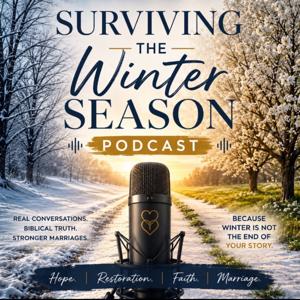
Every marriage moves through seasons. Some are filled with growth, connection, and joy. Others bring conflict, financial pressure, parenting challenges, loss, unmet expectations, or painful distance. But a difficult season does not have to become the end of your story.
Surviving the Winter Season is a Christian marriage podcast hosted by Marty and Stephanie Parker. Drawing from more than 30 years of marriage, they share honest conversations, personal stories, biblical truth, practical encouragement, and plenty of laughter.
This isn’t a podcast about having a perfect marriage. It’s about navigating real life together—learning to communicate, forgive, rebuild trust, remain friends, and keep choosing one another when marriage feels difficult.
Whether your relationship is flourishing or you’re walking through a winter season, Marty and Stephanie want you to know there is hope. With faith in Jesus as their foundation, they remind couples that God can still be working beneath the surface, even when everything feels lifeless.
Winter seasons don’t last forever.