
Sign up to save your podcasts
Or

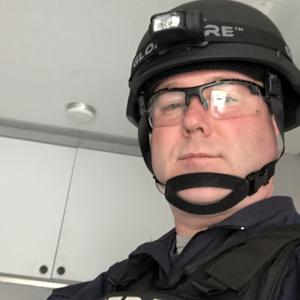


This episode focuses on tactical care of rescue and recovery dive teams
In this episode we focus on managing injuries to our K9 Colleagues.
In this episode we talk about the top tech and gadgets for the tactical setting.
We look at injury patterns and medical examiner data of deaths due to officer down.
In this quick hitter we look at some tricks of the trade for successful tactical operations.
In this episode, I talk about the tools and tricks of the trade for managing pain in care under fire.
In this episode of Tac Medic Whiskey, Dr. Stephen P. Wood dives deep into one of the most urgent—and controversial—topics in trauma care: the use of prehospital whole blood. Drawing on military data, civilian trials, and boots-on-the-ground experience, this episode explores why whole blood saves lives, why component therapy may fall short in the field, and what’s holding back broader implementation.
Dr. Wood tackles everything from hemorrhagic shock and logistics of field transfusion to walking blood banks, cold-stored platelets, and freeze-dried plasma, all while challenging the institutional inertia that puts patients at risk. He also shines a light on the equity gap—why elite teams get whole blood while underserved urban communities often go without.
Eastridge BJ, et al. Death on the battlefield (2001–2011): implications for the future of combat casualty care. J Trauma Acute Care Surg. 2012.
Sperry JL, et al. Prehospital Plasma during Air Medical Transport in Trauma Patients at Risk for Hemorrhagic Shock. N Engl J Med. 2018.
Yazer MH, et al. Safety of low‐titer group O whole blood in trauma patients: a retrospective cohort study. Transfusion. 2018.
Seheult JN, et al. Platelet storage conditions and transfusion outcomes: cold vs. room temperature. Shock. 2020.
Strandenes G, et al. Cold-stored platelets: physiology and emerging data. Transfusion. 2021.
In this episode, a live podcast from the FDNY SRFM conference in NYC for a discussion on eye pro, helmets and tactical gear. We discuss the minimum standards, vest levels and the rounds they protect you from, as well as the importance of training in that gear.
From the publisher's feed

1,867 Listeners
890 Listeners
212 Listeners