
Sign up to save your podcasts
Or

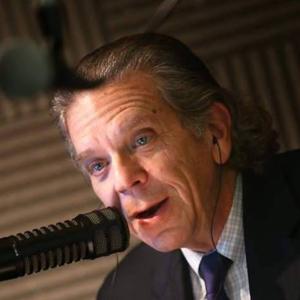


With China's rising global influence amid America's shifting position worldwide, understanding China's complex history has never been more critical. New York Times diplomatic correspondent Edward Wong offers unparalleled insight in his book "At the Edge of Empire: A Family's Reckoning with China." Through his family's personal story and decades of reporting from Beijing, Wong reveals how China's imperial past continues to shape its modern aspirations and growing tensions with the West.
This post is FREE for everyone. Please spread it far and wide. And please consider becoming a paid subscriber to TalkCocktail. It’s $8 a month or just $80 for the entire year.
For nearly a decade, we've waited for the "smoking gun" that would expose the Trump-Putin relationship. But what if the scandal isn't hidden at all?
On this recent WhoWhatWhy podcast I spoke with Craig Unger, bestselling author of House of Trump, House of Putin and American Kompromat. He has spent years documenting what he argues is a 40-year intelligence operation in plain sight. From Russian money laundering through Trump Tower to Jeffrey Epstein's shadowy network, Unger traces connections that others have ignored — and reveals what they spell for Western democracy itself.
Privacy expert Heidi Boghosian argues that America's democratic survival hinges on developing sophisticated digital literacy skills to combat surveillance capitalism and algorithmic manipulation. She connects declining civics education with rising technological dependence, advocating for enhanced cyber hygiene and citizen activism against corporate data collection. While her concerns about digital privacy and educational gaps merit attention, her solutions lean heavily toward regulatory interventions and activist resistance rather than embracing market-driven innovation and empowering individual technological choices.
When we stop thinking, we enable harm. In this reprise of my WhoWhatWhy podcast with Elizabeth Minnich, she warns us that systemic evils don’t need monsters — “it takes all of us” through everyday compliance.
I talk with moral philosopher Elizabeth Minnich, who delivers a timely warning about collective thoughtlessness. Building directly on her experience as Hannah Arendt’s long-time teaching assistant, Minnich reverses Arendt’s famous “banality of evil” thesis.
Where Arendt observed how unremarkable Nazi bureaucrat Adolf Eichmann appeared during his trial — a conventional man simply “doing his job” — Minnich argues the true danger lies in the “evil of banality”: the way unthinking adherence to clichés, career preservation, and social conformity creates the conditions for extensive harm.
On my latest California Sun podcast, Jim Newton joins me to discuss “Here Beside the Rising Tide,” exploring how Jerry Garcia and the Grateful Dead emerged from 1960s California to become unlikely architects of America’s counterculture. Newton reveals Garcia as a reluctant icon who feared leadership yet created a multigenerational community that thrives decades after his death. We explore the Dead’s anti-commercial ethos, their role as cultural catalysts rather than political activists, and how their California values of freedom and authenticity continue to influence everything from music to tech culture.
In a week when two Al Jazeera journalists were killed in Gaza, we’re reminded that foreign reporting isn’t just dangerous—it’s occasionally fatal. In this WhoWhatWhy podcast, I talk with three veteran correspondents—William Dowell, Greg Dobbs, and James Dorsey—they swap stories from Vietnam to Beirut, Iran to South Africa. They trade notes on the life-threatening scrapes they barely walked away from, how the job has changed, and why, even with an average age north of 75, they still can’t resist the fight.
Discover the hidden force shaping every aspect of your community—from housing costs to racial inequality to environmental sustainability. Architect and attorney Sara Bronin, author of Key to the City, reveals how zoning, one of the most powerful yet misunderstood tools in local government, dictates where we live, work, and play. Learn why this "invisible" regulation holds the key to building more equitable, livable cities for our future.
This post is FREE for everyone. Please spread it far and wide. And please consider becoming a paid subscriber to TalkCocktail. It’s $8 a month or just $80 for the entire year.
My 2024 conversation with Rachel Bergstein explores the lasting political influence of Judy Blume, whose writing shaped a progressive worldview now under siege from conservative forces. As one of America's most frequently banned authors in the 1980s, Blume became an early champion against censorship—a fight that endures today.
Discussing Bergstein’s new book, The Genius of Judy: How Judy Blume Rewrote Childhood for All of Us, we examine how Blume’s candid treatment of adolescence, puberty, sexuality, and divorce transformed children's literature in the 1970s.
Bergstein argues that Blume’s impact reaches beyond literature, inspiring a generation of progressives and fortifying the ongoing movement for intellectual freedom and the right to read.
I’m joined by Gene Seroka, executive director of the Port of Los Angeles. The port handles 20% of America’s incoming cargo. In this California Sun conversation, he reveals how the 7,500-acre complex serves as an economic bellwether, highlighting trends months before consumers feel them. From automation debates to tariff-induced cargo swings, Seroka explains how what happens at the port ripples through the economy and shapes global trade.
This post is FREE for everyone. Please spread it far and wide. And please consider becoming a paid subscriber to TalkCocktail. It’s $8 a month or just $80 for the entire year!
In 1951, a 25-year-old oil heir with an unplaceable accent declared war on Yale University — and modern American conservatism was born.
On this WhoWhatWhy podcast, Sam Tanenhaus, former editor of The New York Times Book Review and the author of Buckley: The Life and the Revolution That Changed America, talks to me about his monumental 1,000+ page biography of Buckley, a project 30 years in the making.
We constantly ask how did we get here? How did the Republican Party transform into MAGA? The answer lies with Buckley — he was the engine that drove this evolution.
William F. Buckley Jr. understood what few politicians grasped: Politics was becoming theater, and ideological battles would be won on cultural battlefields.
Through meticulous research, including previously unknown family archives, Tanenhaus reveals how Buckley became the original conservative-coalition builder — simultaneously maintaining elite respectability while appealing to grassroots activists.
From the publisher's feed