Talk Cocktail

Talk Cocktail

By Jeff SchechtmanNews
Download on the App Store

Talk Cocktail episodes

  • The Legacy of Tahrir Square...Four years later
    Revolutions are hard AND exciting. They combine courage and new ideas and the excitement of once in a generation change. However what’s even harder, is what comes next. The way in which the apogee of a moment of revolutionary fervor sticks and is translated into changes in government and in bureaucratic institutions. And perhaps most importantly, the way in which the multilateral ideas of the divergent revolutionaries come together to shape it, accommodate and compromise.
    We know from our own American revolution how difficult that can be. Think about it. We are still impacted by mistakes or compromises made by our founders over a 139 years ago.
    Four years ago this month, the revolution in Tahrir Square began a tectonic shift. In Egypt and in the Middle East. How it happened, how it’s played out and the acts of individual action, courage and diversity lie at the heart of Thanassis Cambanis' new book Once Upon A Revolution: An Egyptian Story
    My conversation with Thanassia Cambanis:

    Get full access to Talk Cocktail Podcast at jeffschechtman.substack.com/subscribe
    23 min
  • Personality and temperament determine everything!
    F. Scott Fitzgerald, in The Great Gatsby, defines personality as “an unbroken series of successful gestures.”  Certainly that is the outer manifestation.  But science, brain research and  cutting edge psychology tells us that it's all part of a much more complex overall system.  A system that shapes our lives, our identities and our emotions.  It's a system that determines that the way in which we understand ourselves and our own personalities, shapes how we view and interact with others.
    This is the work of John D. Mayer  the renowned psychologist who co-developed the groundbreaking theory of emotional intelligence, and now looks even deeper into personality in Personal Intelligence: The Power of Personality and How It Shapes Our Lives.
    My conversation with John D. Mayer:

    Get full access to Talk Cocktail Podcast at jeffschechtman.substack.com/subscribe
    23 min
  • Congress then and now....Lyndon Johnson and the Battle for the Great Socieity
    American political history is a complex and dynamic process.  In that process, there have been periods of entropy and period of great progress and imagination.  Both have been a function of a political system designed by our founders. 
    But also, the temper and tenor of the times and the degree to which individual leaders have known how to work those levers of power has also shaped our political destiny.
    The period of the Johnson Presidency, post 1964, is one of those period.  The Great Society, The Civil Rights Act, the Voting Rights Act, medicare and medicare, are all just a part of an agenda that reshaped America
    Today as we face congressional gridlock, as we mark the 50th anniversary of the apogee of the civil right movement, and as the president goes before Congress tonight. As we reassess our politics and institutions, its well worth the time to look at that unique and politically bountiful period of the Johnson Presidency.
    That is what historian Julian Zelizer does in his new book The Fierce Urgency of Now: Lyndon Johnson, Congress, and the Battle for the Great Society.
    My conversation with Julian Zelizer:

    Get full access to Talk Cocktail Podcast at jeffschechtman.substack.com/subscribe
    25 min
  • The media history that must be the context for the Net Neutrality debate
    So many of the weaknesses of our media today are blamed on the digital revolution.  Certainly the transition to digital has rendered change.  But to a large extent those changes only magnify some of the fundamental flaws that afflicted American media as it evolved in the 20th century
    The weakening of regulation, the increased power of the free market to shape coverage of news and the increasing conflating of news and entertainment ALL added to the mix.  Today, those forces, combined with the impact of technology has, for better or worse, created a landscape that some would argue, is antithetical to even the minimal requirements of a democratic society.
    This is the landscape that Professor Victor Pickard explores in America's Battle for Media Democracy: The Triumph of Corporate Libertarianism and the Future of Media Reform.
    My conversation with Victor Pickard:

    Get full access to Talk Cocktail Podcast at jeffschechtman.substack.com/subscribe
    20 min
  • The Bush Dynasty, America's Invisible Government, and the Hidden History of the Last Fifty Years
    Our nation was founded in opposition to dynasty.  
    From the push back to George III, to our concerns about another Bush/Clinton Presidential race, Americans have always been suspicious of the dynastic impulse.
    Yet today, we seem to be smothered in a dynasty of the elites.  Even while the politics of the fringes gets all the media attention, the centers of power in both political parties seem fixed to support candidates and policies that further the social and economic interest of the "one percent."
    Sitting astride this tendency for over fifty years has been the Bush family.  The degree to which their influence and power has shaped events, is the subject of Russ Baker's book, Family of Secrets: The Bush Dynasty, America's Invisible Government, and the Hidden History of the Last Fifty Years
    My conversation with Russ Baker:

    Get full access to Talk Cocktail Podcast at jeffschechtman.substack.com/subscribe
    23 min
  • Can anybody save Yahoo?
    Just as we demand a lot from our political leaders today, we also demand a lot from CEOs. Even if they are not founders,  they need to be telegenic, charismatic, visionary, have a detailed plan, and adept at working the politics of the boardroom.   They need to be comfortable in being a part of the one percent, have media coaches and PR people and be on a short leash from  quarter to quarter.
    Today, the CEOs that rise to that definition are few: Jamie Dimon, Tim Cook, Alan Mulally, Jeffrey Immelt and Marissa Mayer.  Perhaps of all of these, Marissa Mayer came to her job with the least preparation and some of the highest expectations.  Perhaps that is why, large parts of the public are fascinated by her every move, from fighting insurgent Yahoo shareholders, to gracing the pages of Vogue.
    Nicholas Carlson, chief correspondent for Business Insider has written  Marissa Mayer and the Fight to Save Yahoo. The first in depth look at Mayer and her rise from the nerdy girl at science camp, to the CEO of a 30 billion company, by age 38.
    My conversation with Nicholas Carlson:

    Get full access to Talk Cocktail Podcast at jeffschechtman.substack.com/subscribe

    30 min
  • The Political Classroom or can we ever teach citizenship again?
    We live in an age in which everything has become politicized.  The coffee we drink, the food we eat, the shows and movies we watch, and the cars we buy,all seem to convey some kind of political message.
    Where once these things represented class, or taste, or education, today it’s all about politics.  Even in non-partisan races, political ideology becomes the central issue.
    So what impact does this have on our ability to teach politics, or citizenship or democracy or even science in the classroom? Paula McAvoy examines not only the impact, but a way into this discussion that can perhaps transcend or even co-opt our partisan divide.  She details it in The Political Classroom: Evidence and Ethics in Democratic Education.
    My conversation with Paula McAvoy:

    Get full access to Talk Cocktail Podcast at jeffschechtman.substack.com/subscribe
    22 min
  • The Internet is Not the Answer
    The industrial revolution changed the world.  It changed the nature of work, it displaced workers, it ushered in the Gilded Age and created more inequality.  It shrank the world, drove consumerism, and reshaped political ideology.
    The Internet revolution, 150 years later, has had  startling  similar effects.  We worship at the altar of creative destruction, we fetishize technology and the freedom and democratization that the Internet had promised.  But at what price?  
    Simply, can the same technology and companies that fractured and reshaped the world, now be what we need to put it back together again?
    Andrew Keen, argues that The Internet Is Not the Answer.
    My conversation with Andrew Keen:

    Get full access to Talk Cocktail Podcast at jeffschechtman.substack.com/subscribe
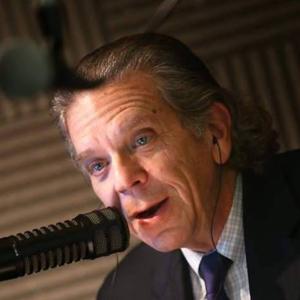
    31 min
  • The Killing of the Creative Class
    Long before radio, I spent years in Hollywood.  This was just as the Word Processor and the high volume copy machine were taking hold.  When those things came along, everyone joked that screenwriting software and easy access to copying machines would lower the quality of screenplays.  Little did those jokesters know, that was just the beginning.
    Not only did the medium become the message, it subsumed the message.  The medium, the technology, the process in fact became the creative endeavor.  Today it’s Apps and coding and creative destruction.  
    And yes, technology makes life better, cheaper, faster and sometimes does allow more time for creativity.  But is there something we have lost in the process?
    Without getting stuck in the tired morass of, "the old days were better," is there some objective thing we have lost in our culture, in our selves or  in our intellectual DNA?
    Former LA Times arts and culture reporter Scott Timberg takes up these issues and more in Culture Crash: The Killing of the Creative Class.
    My conversation with Scott Timberg:

    Get full access to Talk Cocktail Podcast at jeffschechtman.substack.com/subscribe
    29 min
  • The Medicalization of Ordinary Life
    When something goes wrong with a car or an appliance, or even the human body, the “instructions” for repair are often clear. However my guest argues that the manual that tries to define the parameters and terms of mental illness, is without that kind of scientific basis. He says that even an auto repair manual, much less a biology textbook, has more science than the DMS 5
    Yet with the fifth volume of the DSM, and the concurrent explosion in psychotropic drugs, Doctors are relying on it, more than ever. In fact, it may actually be detrimental to taking care of our mental health.
    Leading the criticism of DSM 5, is Dr. Allen Francis, a man who was one of the purveyors of the previous DSM 4.  Part of his criticism is that we are over diagnosing and sometimes making normal into something that needs to be treated. 
    His book, recently out in paperback is Saving Normal: An Insider's Revolt against Out-of-Control Psychiatric Diagnosis, DSM-5, Big Pharma, and the Medicalization of Ordinary Life.
    My conversation, from earlier this year, with Dr. Allen Francis:

    Get full access to Talk Cocktail Podcast at jeffschechtman.substack.com/subscribe
    28 min

About Talk Cocktail

From the publisher's feed

Jeff Schechtman talks with authors, journalists, newsmakers and opinion shapers, and sheds light on the issues of the day, from local stories to national and international headlines and ideas.…