Talk Cocktail

Talk Cocktail

By Jeff SchechtmanNews
Download on the App Store

Talk Cocktail episodes

  • Marriage today is not your parents marriage...but it just might be your grandparents
    It was Woody Allen who said that “marriage was the end of hope.”  We know from the behavior of millennials today that while they strongly favor equality of marriage, they are not to keen on the institution for themselves.
    Arguably marriage today, like so much in our society, is undergoing a transition and even disruption.  Marriage today is certainly not your parents marriage….but is it maybe your grandparents.
    Suppose we skip back not one, but two generations and look at marriage. Can we learn anything that is at all relevant to our 24/7 tech driven culture today?
    Karl Pillemer thinks so.  He has taken the time to talk to hundreds of older retirees about their relationships and their marriages, in the hope that age might provide a little wisdom on one of the oldest subjects. The results are in 30 Lessons for Loving: Advice from the Wisest Americans on Love, Relationships, and Marriage.
    My conversation with Karl Pillemer:

    Get full access to Talk Cocktail Podcast at jeffschechtman.substack.com/subscribe
    22 min
  • Is the perfect Battery the holy grail of the electronic age?
    If any one issue has dominated both our international and domestic dialogue it is the subject of energy.  A developed and developing world, with every increasing energy needs and, in spite of the current glut, not an endless supply of oil.
    Enter alternative energy...wind, solar and the battery.  If only we could prefect the later. With range anxiety for electric cars, computer anxiety on long flights, the need for a better battery might very well be the holy grail of the electronic and digital age.
    Steve Levine, who’s  written about and covered the energy sector for years, now in The Powerhouse: Inside the Invention of a Battery to Save the World, turns his attention to the struggle to build that perfect battery.
    My conversation with Steve Levine:

    Get full access to Talk Cocktail Podcast at jeffschechtman.substack.com/subscribe
    24 min
  • Fear, Hope and Dread
    It is often said that to name something is to understand it.  If that’s true, than Scott Stossel has a greater understanding of anxiety than anyone else.  In his book, My Age of Anxiety: Fear, Hope, Dread, and the Search for Peace of Mind, he takes us through the litany of his multiple anxieties and treatments.  In so doing, we come away with a far greater understanding of and sympathy for the anxieties, that for Scott and many others, (far more than we know) plaque everyday life.
    In a more connected, complex, speeded up world, are these individual anxieties worse, and do they in fact create a kind of feedback loop into our collective and societal anxiety?  A society in which we have the unique ability to turn even good news, into something to worry about.
    My conversation with Scott Stossel:

    Get full access to Talk Cocktail Podcast at jeffschechtman.substack.com/subscribe

    23 min
  • Three Unlikely Traits Explain the Rise and Fall of Cultural Groups in America
    Why is it that certain cultural and/or ethnic groups tend to have successes, far in excess of their percentage of the population?  Jews, Indians, Iranians, Chinese, Mormons, and a few others.
    These groups are simply more financially and academically successful than others in the US. And while hearing this, often sends powerful signals to our racial antenna, the fact is that if we can answer the question of why,  then perhaps we can find a formula to lift up others.  To truly find the holy grail of personal, economic and cultural fulfillment.
    Amy Chua and Jed Rubenfeld have been on this search.  And while what they found makes a lot of people uncomfortable, the fact is The Triple Package: How Three Unlikely Traits Explain the Rise and Fall of Cultural Groups in America, may be a key to rebirthing the spirit that made America great.
    My conversation with Amy Chua and Jed Rubenfeld:

    Get full access to Talk Cocktail Podcast at jeffschechtman.substack.com/subscribe
    25 min
  • Vidal
    Today we have talking heads and pundits.  But back in second half of the 20th century we had writers and public intellectuals, whose ideas, attitudes and personalities became a part of our public discourse.
    Gore Vidal was one of those.  He wrote about history, about sex, about politics and sometimes all at once.  He wrote non-fiction, novels, movies, and was the guest you wanted to have at a dinner party.
    But he was also one of the bad boys of American letter.  His rapier wit and insults pushed away as many people as admired him.  But like most complex figures, the public surfaces were only part of the story.
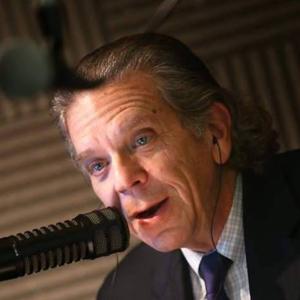
    To get deeper we have the work of my guest Michael Mewshaw .  A long time friend of Vidal, he's just written Sympathy for the Devil: Four Decades of Friendship with Gore Vidal.
    My conversation with Michael Mewshaw:

    Get full access to Talk Cocktail Podcast at jeffschechtman.substack.com/subscribe
    54 min
  • The paid dogs of war
    The world is a dangerous place.  We no longer have the moral clarity and security of the cold war, or of earlier wars where we knew precisely who our enemy were.  Today, as non state actors battle nations and each other, the asymmetry of conflict has created new opportunities for paid armies, and for mercenaries on all sides.
    Just as we outsource call centers and the delivery of packages, today we outsource war.  From the protection of the high seas to making our own national interests more palatable 
    But at what cost, and what might be the human and global consequence of unleashing the paid dogs of war.
    This is the world that Sean McFate knows well and writes about in The Modern Mercenary: Private Armies and What They Mean for World Order.
    My conversation with Sean McFate:

    Get full access to Talk Cocktail Podcast at jeffschechtman.substack.com/subscribe
    27 min
  • Alexandra Fuller
    It is one of the tragic ironies of the psychoanalytic age that we are attracted to people, particularly our partners, who often turn out to be the very ones that begin to repel us later in life.
    At first, its those once endearing and now annoying habits. And then, it becomes annoyance at their larger world view.
    Perhaps it's because in partnering, we seek to make up for those things that we are lacking.  Perhaps its because we buy into to the old adage that opposites attract. Even though, contemporary research shows us that that is simply not true, that partners that are similar tend to do better.  
    Today we seek and talk of authenticity, but is it possible  to be authentic, while trying to compromise with anyone that is the opposite from who we are at core?
    Those are some of the central ideas running through Alexandra Fuller's memoir, Leaving Before the Rains Come.
    My conversation with Alexandra Fuller:

    Get full access to Talk Cocktail Podcast at jeffschechtman.substack.com/subscribe
    19 min
  • The Brain's Way
    Imagine a machine that can rewire itself, finds its own way to work around non working circuits, heal its own bugs and viruses, find and adapt to new sources of energy and know when it needs repair and attention.
    No, it’s not the latest product from Silicon Valley, it is the human brain.  The recent discoveries about the brains ability to adapt,  its neuroplasticity, have truly redefined how we imagine the brain and how we treat it in the face of disease and trauma.
    Someday, it may also lead us full circle to better design and development of artificial intelligence and machines that might actually mimic the amazing abilities of the brain.
    At the cutting edge of all of this is the work of Dr. Norman Doidge, the author of The Brain's Way of Healing: Remarkable Discoveries and Recoveries from the Frontiers of Neuroplasticity
    My conversation with Dr. Norman Doidge:

    Get full access to Talk Cocktail Podcast at jeffschechtman.substack.com/subscribe
    24 min
  • A Biography of PTSD
    Sometimes the reality of war is just too complex and absurd to be understood in real time.  Perhaps that why books about war are so powerful and important.  That’s why novels like  Catch 22, Slaughterhouse 5, The Things they Carried, A Rumor of War, and The Yellow Birds, have been essential for our understating.
    Equally important to our understand is grasping the impact of PTSD on those who served or who, for whatever reasons, journeyed into the heart of darkness that is combat.  
    While embedded with troops in Iraq, journalist David Morris almost died when a Humvee he was riding in encountered an IED. His book, explores his own trauma from that event, as well as the history and science of post-traumatic stress disorder.The Evil Hours: A Biography of Post-Traumatic Stress Disorder.
    My conversation with David J. Morris:

    Get full access to Talk Cocktail Podcast at jeffschechtman.substack.com/subscribe
    30 min
  • The last time the music business died
    As music and the music business evolves today, the content of the music often plays second fiddle to the debate about economics.   About digital royalties, performance royalties, Pandora, Spotify, etc.  In many way the medium impacts the message, the songs we hear and what gets produced and what becomes popular.
    And why not?  After all, it is the music business!  In fact, it always has been a business, but one balanced precariously on the fulcrum of popular taste.
    Where those two ideas and trends intersect, is usually responsible for the kind of music we get.
    All of this went through a revolutionary shift in the post war years, another time of creative destruction in the business of music. The results of which, changed music forever.
    Professor and journalist Ben Yagoda examines this time in The B Side: The Death of Tin Pan Alley and the Rebirth of the Great American Song
    My conversation with Ben Yagoda:

    Get full access to Talk Cocktail Podcast at jeffschechtman.substack.com/subscribe
    22 min

About Talk Cocktail

From the publisher's feed

Jeff Schechtman talks with authors, journalists, newsmakers and opinion shapers, and sheds light on the issues of the day, from local stories to national and international headlines and ideas.…