
Sign up to save your podcasts
Or

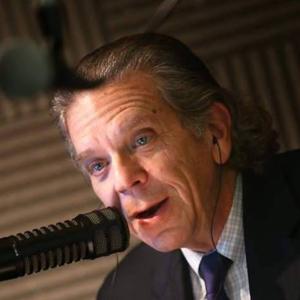


In an age when our smartphones have become extensions of ourselves, allowing us to summon a ride, order dinner, or transfer money with a few taps, why can’t we use the same technology to participate in the most fundamental act of democracy — voting?
In my latest WhoWhatWhy.org podcast, I talk with Bradley Tusk, a venture capitalist, philanthropist, and political strategist. He believes voters, using a smartphone app, could cast ballots securely from anywhere, potentially increasing turnout. He explains that by engaging more moderate voters — especially in primaries — mobile voting could reduce political polarization and encourage more centrist policies and could also lead to a more responsive democracy. He details exactly how mobile voting would work
After the shocking 2016 election, it was Arlie Hochschild in her book "Strangers in Their Own Land," not "Hillbilly Elegy," that truly explained the power of populist appeal in Appalachia.
In my recent conversation with Hochschild, about her new book “Stolen Pride: Loss, Shame, and the Rise of the Right,” the renowned sociologist continues this exploration, emphasizing the crucial need for what she calls cultural bilingualism to bridge America's political divide.
Hochschild argues that understanding today's politics requires examining the role of emotions, particularly pride and shame. She introduces the "pride paradox" and explains how Donald Trump has masterfully manipulated these emotions to gain support. By transforming "lost pride" into "stolen pride," Trump channels feelings of loss and shame into blame, creating a powerful emotional narrative.
Hochschild's work, based on deep, empathetic listening in Appalachia, reveals how economic decline and cultural shifts have reshaped political allegiances.
————————————————————————-
Thank you for listening to the Talk Cocktail Podcast. I count on word of mouth to grow the Podcast. Please share with a friend
AI’s rapid advancement comes with a hidden human cost. Not just the vast number of jobs that may be eliminated, but the little known digital sweatshops that are crucial to the ongoing development of AI itself.
In my recent WhoWhatWhy podcast, James Muldoon, associate professor of management at the University of Essex and co-author of Feeding the Machine, argues that the rapid advancement of AI technology comes with a significant human toll. Research by Muldoon and his colleagues exposes the often-overlooked exploitation of human capital in the Global South that lies behind the high-tech rollout of AI.
On this recent Californa Sun podcast I talk with Elizabeth Rosner about the importance and difficulty of deep listening in our noisy, information-saturated world. The Berkeley author’s new work “Third Ear: Reflections on the Art and Science of Listening” draws in part from her experience as a child of Holocaust survivors. Rosner weaves personal narratives with deep insights to illustrate how listening can enhance empathy and connection, and posits that listening is a transformative act with the potential to heal and bridge societal divides.
America’s sheriffs, often seen as small-town peacekeepers, are becoming a major threat to democracy. My latest WhoWhatWhy Podcast examines what’s happening.
In a country where 80 percent of counties are red, and 90 percent of sheriffs are white, a shadowy world exists where these elected officials wield unchecked power, often aligning with far-right militias and potentially influencing the 2024 presidential election.
Jessica Pishko, journalist, legal expert, and author of The Highest Law in the Land: How the Unchecked Power of Sheriffs Threatens Democracy, talks to me about the sheriffs group that believes their authority supersedes federal and state laws. It’s a movement gaining traction across rural America.
Immigrant labor, industry consolidation, and safety concerns have become focal points in the national debate on meatpacking. The recent Boar's Head plant closure due to listeria underscores these issues.
In our polarized political landscape, worker protections and food safety are increasingly part of the red/blue divide. Federal legislation often stalls due to lobbying and partisanship, while state approaches vary widely. Even meat consumption patterns differ between rural and urban America.
This plays out amid a complex, vulnerable global food supply chain, as highlighted by the COVID-19 pandemic.
Alice Driver's book, 'Life and Death of the American Worker,' exposes the challenges faced by workers in Tyson Foods plants, particularly in Arkansas and lays bare a picture that might turn all of us into vegetarians.
My guest on this week’s WhoWhatWhy podcast, David Daley, argues that the six weeks following Election Day 2024 could be more consequential than the entire campaign season.
At a rally in Pennsylvania recently, Donald Trump said, “You know, they do polls on this stuff, and I’m at like 93 percent. So why are we having an election? They didn’t have an election. Why are we having an election?’”
It’s a scary question when we consider that the next president of the United States might very well be decided by an unelected conservative supermajority on the Supreme Court.
Daley, author of the new book Antidemocratic: Inside the Far Right’s 50-Year Plot to Control American Elections, foresees a looming crisis that could dwarf the chaos of the 2000 election.
My guest on thisWhoWhatWhy podcast, David Daley, argues that the six weeks following Election Day 2024 could be more consequential than the entire campaign season.
At a rally in Pennsylvania recently, Donald Trump said, “You know, they do polls on this stuff, and I’m at like 93 percent. So why are we having an election? They didn’t have an election. Why are we having an election?’”
It’s a scary question when we consider that the next president of the United States might very well be decided by an unelected conservative supermajority on the Supreme Court.
Daley, author of the new book Antidemocratic: Inside the Far Right’s 50-Year Plot to Control American Elections, foresees a looming crisis that could dwarf the chaos of the 2000 election.
From the publisher's feed