
Sign up to save your podcasts
Or

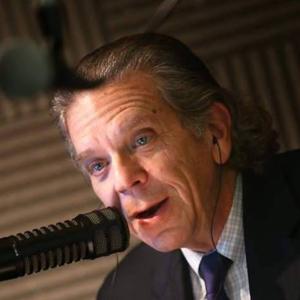


My conversation with Rachel Bergstein about the enduring political impact of Judy Blume. Her work, infused with feminist ideals, helped shape the progressive worldview that is currently under attack by conservative movements. As one of the most banned authors in America during the 1980s, Blume became a pioneer in fighting censorship, a battle that continues today.
We discuss Bergstein new book "The Genius of Judy: How Judy Blume Rewrote Childhood for All of Us," and how Blume's frank portrayal of adolescence and controversial topics like puberty, sexuality, and divorce revolutionized children's literature in the 1970s.
Bergstein argues that Blume's legacy extends beyond her books; she trained a generation of young feminists, ensuring the movement's longevity. Despite changing times, Blume remains a powerful symbol in the ongoing struggle for intellectual freedom and the right to read.
When people say their perception of the economy doesn’t match the numbers, are they just ill-informed?
It’s a familiar refrain: stock markets soar, GDP rises, unemployment falls, yet many Americans feel left behind, struggling to make ends meet.
So what’s causing this disconnect between the rosy numbers and people’s lived experiences?
Joining me for thisWhoWhatWhy podcast are two leading thinkers on reimagining how we measure economic health and well-being: Jacob Hacker, professor of political science at Yale, and Jonathan Cohen from the American Academy of Arts and Sciences.
In my latest Califonria Sun podcast Sara Fenske Bahat, the former interim chief executive of San Francisco’s Yerba Buena Center for the Arts, explores the interplay between art, politics, and institutional responsibility. Bahat explains the museum’s mission and history leading up to a crisis involving pro-Palestinian protests, questions of free speech, and accusations of antisemitism that ultimately led her to step down. She reflects on that decision, her concerns about safety within the museum, and the broader implications for arts institutions nationwide.
As passion runs high on the extremes, so does apathy about this election, about democracy, and about any kind of participation in our civic life. This raises the question: Whose responsibility is it to ensure our civic participation?
In this WhoWhatWhy podcast, I examine the reasons for diminished engagement in American democracy with Yale political scientist Kevin J. Elliott. Elliott argues in his book Democracy for Busy People that many well-intentioned reforms actually exclude and discourage potential voters, especially those struggling to make ends meet. He proposes a radically new approach, emphasizing accessibility, inclusivity, and flexibility, to ensure everyone has a voice in the political process.
In my latest Califonria Sun podcast Sara Fenske Bahat, the former interim chief executive of San Francisco’s Yerba Buena Center for the Arts, explores the interplay between art, politics, and institutional responsibility. Bahat explains the museum’s mission and history leading up to a crisis involving pro-Palestinian protests, questions of free speech, and accusations of antisemitism that ultimately led her to step down. She reflects on that decision, her concerns about safety within the museum, and the broader implications for arts institutions nationwide.
Markos Kounalakis, has written recently in Washington Monthly about what he sees as California's underrepresentation in key decision-making bodies in Congress. Kounalakis is a Visiting Fellow at Stanford University's Hoover Institution, a Senior Fellow at the Center on Media, Data, and Society at Central European University, and a nationally-syndicated foreign affairs columnist who also happens to be California's "Second Gentleman" as the husband of California's Lt. Governor.
He argues in my California Sun podcast that the state should have a larger role in shaping U.S. foreign policy, and stronger representation on key congressional committees because of its significant population, economic power, and strategic location, could have dire consequences for America's strategic future.
I count on word of mouth to grow the Talk Cocktail. Please consider sharing it with a friend. Send them here.
From the food we eat to the clothes we wear, everything today is an opportunity for battle in the nation's culture wars. But nowhere is that battle being more fiercely fought than in our public schools where the far right is fighting for control of school boards, as if it were the White House.
In his new book, "They Came for the Schools", investigative reporter Mike Hixenbaugh takes us to Southlake, Texas - a suburb that in many ways is a microcosm of the nation. Where rapidly changing demographics came into conflict with a conservative political revolt. Where a school board election became a referendum not just on diversity and inclusion efforts, but on the very purpose and future of public education.
I count on word of mouth to grow the Talk Cocktail. Please consider sharing it with a friend. Send them here.
When did giving the weather report become a political act worthy of death threats? For years, we got mad at TV weather forecasters if it rained on our picnic when they predicted a clear day. Today, just explaining the “why” behind the weather can get you fired — or even murdered.
In this recent WhoWhatWhy podcast I talk with Chris Gloninger, former chief meteorologist at KCCI-TV in Iowa, who faced this chilling reality when his climate change coverage sparked harassment and death threats. His story exposes a troubling trend: the erosion of respect for expertise and facts, even in realms as fundamental as weather reporting.
From the publisher's feed