
Sign up to save your podcasts
Or

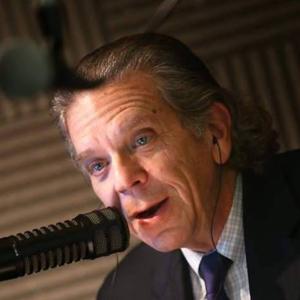


On this week’s WhoWhatWhy podcast, I sit down with the lead author of that report, military sociologist Marek N. Posard, to examine these alarming threats and what we can do to counter them.
Imagine a small, seemingly innocuous hack on a local water treatment plant. A carefully timed disinformation campaign, powered by the latest in artificial intelligence. The physical security of our voting machines compromised. Suddenly, we have the perfect storm that could bring down the integrity of the entire 2024 presidential election and our democracy along with it
This isn’t just a hypothetical scenario — it’s a very real possibility outlined in a chilling new report from the RAND Corporation, titled, The 2024 U.S. Election, Trust, and Technology: Preparing for a Perfect Storm of Threats to Democracy.
Climate change is not just threatening our planet, but also our minds. In my WhoWhatWhy podcast, I examine the hidden mental health crisis triggered by climate change with neuroscientist-turned-environmental-journalist Clayton Page Aldern.
Aldern takes us on an eye-opening journey through cutting-edge research, exposing the ways our changing environment is physically altering our brains and behavior. From cognitive impairment sparked by rising temperatures to the psychological aftermath of natural disasters, he paints a haunting portrait of a crisis that has been largely ignored.
A Rhodes scholar who holds advanced degrees in neuroscience and public policy from the University of Oxford, Aldern is a research affiliate at the Center for Studies in Demography and Ecology and the author of the new book The Weight of Nature: How a Changing Climate Changes Our Brains.
Max Podemski is an urban planner, writer, and illustrator who currently serves as a transportation planner for the city of Los Angeles. In his new book, “A Paradise of Small Houses,” he traces the evolution of American housing types, from the Philadelphia row house and Chicago workers cottage to the California bungalow. Podemski argues, in my recent California Sun podcast, that California’s rich history of desirable multifamily housing could hold a solution to the state’s housing crisis.
In today's digital era, the unseen threads of algorithms intricately weave through our daily lives. They significantly mold our preferences, decisions, and worldviews. At the core of our modern digital experiences, algorithms curate almost every aspect of our online existence—from the articles we read to the music that we listen to and even the social interactions we engage in. This pervasive influence has subtly streamlined cultural diversity and complexity, ushering us into a domain that my guest, Kyle Chayka, aptly terms "Filterworld."
In this realm, our experiences are increasingly filtered through algorithmic formulas, aiming not just to predict but to shape our desires. The result is an online landscape that often leads to a uniform culture, devoid of the chaos and ingenuity that fuel human creativity.
Between the shimmer of America’s coastlines an inferno of anger and disillusionment consumes the heartland. This week’s WhoWhatWhy podcast explores this social and political divide with Tom Schaller and Paul Waldman, guided by their book, White Rural Rage.
Armed with journalistic insight and scholarly acumen, Schaller and Waldman unpack the reality of white rural America’s turmoil. They argue that Trump’s MAGA movement transcends a mere campaign catchphrase to symbolize the deep-seated rage of communities ensnared by economic decay, technological neglect, and cultural isolation.
Much of today's climate change conversation centers on the future—on potential sea walls, climate refugees, economic shifts, and geopolitical changes. However, the reality is that the impacts of climate change are unfolding every single day, in every corner of America. The discussion shouldn't just be about the future; but about the present.
While many of us have faith in technology's ability to mitigate the long-term effects of climate change, it cannot reverse what's happening right now. Floods, fires, storms of the century, and shifting weather patterns have communities and even the insurance companies scrambling. Napa/Sonoma, Lahaina, and Texas. These are war zones of climate today.
To bring this into sharp relief, I'm joined by Jonathan Vigliotti, an Emmy and Edward R. Murrow Award-winning CBS News national correspondent. His newly released book, "Before It's Gone: Stories from the Front Lines of Climate Change in Small-Town America.
Eleven years ago today, the Boston Marathon bombing shocked America, leaving an indelible mark on the nation's history. However, this tragic event is not the only unsolved mystery connected to the Tsarnaev brothers, who were responsible for the bombing. On September 11, 2011, three men were brutally murdered in Waltham, Massachusetts, in a crime that remains unsolved to this day. The older Tsarnaev brother, Tamerlan, is suspected of being involved in these murders.
The Waltham murders and their potential connection to the Tsarnaev brothers highlight the complex nature of terrorism, radicalization, and the far-reaching impact of unresolved crimes on communities and individuals. Susan Zalkind, author of the new book "The Waltham Murders," has a deeply personal connection to one of the Waltham victims, which adds a poignant and emotionally charged perspective to the story. Her work emphasizes the human cost of violence and the importance of seeking justice for those who have been lost.
Thank you for listening to the Talk Cocktail Podcast. I count on word of mouth to grow the Podcast. Please share with a friend
Sports gambling is a multi-billion-dollar business, with 38 states legalizing sports betting. The story of Shohei Ohtani's interpreter reminds us that sports and betting can still be a dangerous mix. And yet, Las Vegas, the betting and sports capital, was the home of this year's Super Bowl. Against this backdrop, the story of Pete Rose becomes even more poignant.
Bestselling author Keith O'Brien's latest book, "Charlie Hustle," offers a captivating chronicle of Rose, one of baseball's most iconic and controversial figures. From a working-class kid to the pinnacle of baseball glory, Rose's journey and his dramatic fall from grace due to gambling scandals reflect a changing America and its beloved pastime. O'Brien's narrative delves deep into the complexities of Rose's character, exploring how he became the center of a storm that changed not only his life but also the fabric of the game of baseball.
In this WhoWhatWhy podcast, I’m joined by national security journalist Andrew Cockburn. He exposes the little- known links between the Pentagon’s military-technology complex at the dark heart of Silicon Valley.
Drawing from his recent cover story for Harper’s, entitled “The Pentagon’s Silicon Valley Problem,” Cockburn delves into the military’s controversial alliance with tech behemoths.
This collaboration ropes in some of Silicon Valley’s most contentious figures, such as Peter Thiel and Palmer Luckey, further complicating the moral implications of this union.
The Village Voice existed at a unique moment in journalistic history. My guest, journalist Tricia Romano, has penned 'The Freaks Came Out to Write,' the definitive oral history of The Village Voice. It was a publication that not only captured but also shaped the zeitgeist of New York City from the paper's inception in 1955 until its closure in 2018.
The Voice was more than a newspaper; it was a cultural beacon, a meeting point of news, culture, and lifestyle, embodying the ever-evolving spirit of the city. It's one of those rare instances where a city and a publication converge to capture something unique in the annals of journalism, akin to Playboy and Chicago in the '50s, Rolling Stone and San Francisco in the '60s, and Texas Monthly defining the so-called New South of the '70s.
From the publisher's feed