
Sign up to save your podcasts
Or

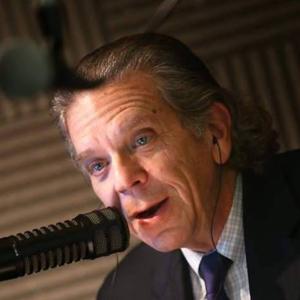


The Village Voice existed at a unique moment in journalistic history. My guest, journalist Tricia Romano, has penned 'The Freaks Came Out to Write,' the definitive oral history of The Village Voice. It was a publication that not only captured but also shaped the zeitgeist of New York City from the paper's inception in 1955 until its closure in 2018.
The Voice was more than a newspaper; it was a cultural beacon, a meeting point of news, culture, and lifestyle, embodying the ever-evolving spirit of the city. It's one of those rare instances where a city and a publication converge to capture something unique in the annals of journalism, akin to Playboy and Chicago in the '50s, Rolling Stone and San Francisco in the '60s, and Texas Monthly defining the so-called New South of the '70s.
What a mess! In this week’s WhoWhatWhy podcast, I’m joined by Amy Wilentz, a seasoned journalist and award-winning author who has been covering the dynamic but tragedy-ridden island of Haiti since the 1980s. We delve into the underreported and deeply troubling situation in this nation just 700 miles from US shores, now beset by tribal strife, failed governance, rapacious armed gangs, and a heartbreaking humanitarian crisis.
Wilentz explains how Haiti’s tumultuous history has been marked by a dependence on international aid and why this has impeded the development of effective self-government. The country teeters on the brink of collapse, she says, with violence, political instability, and deadly chaos unfolding at an alarming rate.
A recent suggestion for a bumper sticker reading “Trump First, Putin Second, America Last” is more than just a witty jab at current political dynamics; it encapsulates the historical depth of right-wing politics in the United States.
On thisWhoWhatWhy podcast I’m joined by Jacob Heilbrunn, editor of The National Interest, who offers a compelling analysis of the right wing’s enduring fascination with authoritarian figures.
Drawing on his latest work, America Last: The Right’s Century-Long Romance With Foreign Dictators, Heilbrunn helps us understand the conservative admiration for past autocrats like Mussolini, Franco, and Pinochet. He draws a direct line from these historical figures to today’s political landscape, where figures like Viktor Orban, Donald Trump, and Vladimir Putin are seen not just as authoritarian leaders but as exemplars in the fight against liberalism and progressivism.
In my latest WhoWhatWhy podcast I’m joined by Barbara Mcquade. Her sharp observations on the precarious state our country finds itself in are valuable, and insights from the conversation we had recently were enlightening.
Every Election Day, voters are inundated with information. Campaigns, both local and national, unleash a torrent of truths, half-truths, and outright fabrications. The essential challenge lies in distinguishing the factual from the fraudulent, a task increasingly complicated by the proliferation of misinformation on a national scale that McQuade talks about.
McQuade, a distinguished professor at the University of Michigan Law School, an analyst for NBC News and MSNBC, and a former US attorney for the Eastern District of Michigan, offers many original perceptions in her new book, Attack from Within: Unmasking the Authoritarian’s Playbook.
Professor Melissa Kearney, talks to me about the overlooked economic and social impacts of marriage and family structures and her book, "The Two-Parent Privilege." Kearney's research reveals the decline in marriage rates, particularly among non-college graduates, as an economic crisis with far-reaching consequences. She argues that the decrease in two-parent households, from 77% in 1980 to 63% today, affects children's behavior, education, and the class divide. Kearney emphasizes the economic imperatives of this issue, moving beyond the traditional cultural and political debates.
Matthias Gafni, an investigative reporter for the San Francisco Chronicle, delves into the darkest corners of the streets of San Francisco. For a recent project, he attempted to attribute names, faces, and families to 24 overdose deaths during a particularly harrowing week in 2023. They were not mere statistics but individuals with stories: a recent immigrant dreaming of a new life; a star student and athlete; a mechanic striving to escape his past, among others. Each narrative sheds light on the complex interplay of drug use, mental illness, and profound, systemic issues fueling the city’s drug crisis.
Not since the 1930s has the world stood at such a dangerous inflection point. On this week’s WhoWhatWhy podcast, I talk with, Shay Khatiri about the seismic shifts in global politics since his last appearance during the early days of Russia’s invasion of Ukraine. .
With his roots in Iran and a scholarly perspective, he offers a panoramic view of today’s geopolitical landscape amid the complex crises that are testing the resilience of democratic states..
The Berkeley Institute for Young Americans, part of the Goldman School of Public Policy at UC Berkeley, examines the evolving generational dynamics of millennials and Gen Z. The institute serves as a hub for exploring the aspirations and challenges of young people, offering unique perspectives on their impact in the workplace and across cultural and political landscapes. Joining us on the podcast are Sarah Swanbeck, the institute’s executive director, and Erin Heys, its policy director. Together, they delve into how today’s generational shifts are influencing everything from labor markets to climate change policies, emphasizing the pivotal role of these younger cohorts in crafting our future.
As we look at the global political landscape, we see a resurgence of movements labeled as populist. Propelled by rapid social and technological changes, economic upheavals, and complex migration patterns, people around the world are in search of simple solutions to increasingly complex problems. This week my guest on the WhoWhatWhy podcast Steve Babson, argues that this represents a serious misinterpretation of the concept of populism.
From the publisher's feed