
Sign up to save your podcasts
Or

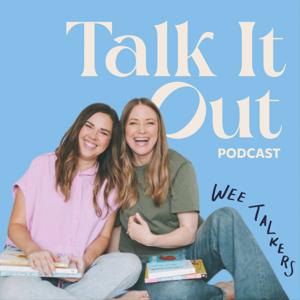


Season 2 Finale!
When babies start using their first words, parents get excited! And naturally, a lot of questions come up about what really counts as a word and how to support vocabulary growth.
In this episode, Katie and Carly, pediatric SLPs, break down everything parents should know about first words, early milestones, and how to help toddlers build vocabulary in simple, meaningful ways.
In this episode, we talk about: • When first words typically appear • What skills come before first words • What counts as a word (hint: animal sounds and exclamations count!) • Why imperfect pronunciation is expected • How to track your toddler's vocabulary • Doable ways to help your toddler learn more words • When to seek extra support or a speech/language evaluation
Resources Mentioned: • Free Toddler Milestone Checklist: www.weetalkers.com/toddler • Blog post: Should I Use Sign Language With My Toddler? www.weetalkers.com/blog • Our TalkToddler Course for boosting language in toddlers www.weetalkers.com/talktoddler
✨ If you found this episode helpful, we'd love it if you left a review! It helps more parents find these resources. And as we wrap up Season 2, send us your questions or topic ideas for Season 3 at [email protected] or on instagram @weetalkers
If you've ever wondered why your toddler's attention span seems so short (or why it feels impossible for them to sit still!), this episode is for you. Katie is joined by Dr. Lori Long and Katie Severson, SLP from The Childhood Collective—a team of child psychologists and a speech-language pathologist who help families of children with ADHD thrive at home and at school.
Together, they break down what healthy attention looks like in early childhood, how it develops naturally, and what parents can do to nurture it through play, routines, and relationships. They also discuss how today's fast-paced, tech-filled world is shaping kids' ability to focus (and how small, intentional changes can make a big difference).
You'll walk away with practical ideas for supporting your child's focus, emotional regulation, and resilience. Plus reassurance that attention is a skill that grows over time!
In this episode, we cover:Why attention matters in the toddler and preschool years
What "typical" attention looks like (and what parents shouldn't expect just yet)
How everyday play and routines naturally build focus
The impact of screens on developing attention spans
Doable ways to protect your child's focus without going "zero screen time"
How emotions and discomfort affect attention—for kids and parents
Strategies to help toddlers and preschoolers handle big feelings
When to wonder about ADHD—and what early support can look like
The Childhood Collective is a team of two child psychologists and a speech-language pathologist (who are also moms!) on a mission to help families of children with ADHD thrive. Through their courses, resources, and podcast Shining with ADHD, they share science-backed, practical tools that make parenting feel a little calmer and a whole lot more connected.
Follow them on Instagram @thechildhoodcollective and learn more at thechildhoodcollective.com.
Links & Resources Mentioned
The Childhood Collective: Shining with ADHD Podcast
Creating Calm (best for 4 years and older) thechildhoodcollective.com
This one is for your KIDS! We want to share little sample of what you'll find in our Songs+Stories membership! Songs+Stories is the go-to quality resource for parents who understand the value of these early years and are intentional about what their kids listen to. Led by speech therapists and moms who get it, we hope this podcast brings a little joy to your day.
Songs+Stories is actually on MAJOR sale right now for Black Friday! You can enjoy 6 months of storytime videos and podcast episodes (like this one) ad-free for $49 (regularly $102!).
Head to www.weetalkers.com to get the deal. Jingle, Jingle by Nicola Smee is a delightful, rhyming picture book about Mr. Horse taking his animal friends on a fun-filled winter sleigh ride through the snow.
🎧 Happy listening
Get Jingle Jingle on Amazon
When naps fade, quiet time can become a calm, valuable part of your toddler's day. Katie and Carly, pediatric SLPs and moms of 6 kids, share how to make it work—plus simple ideas for toys, activities, and rhythms that keep quiet time screen-free, independent, and enjoyable for everyone.
In this episode, we cover:Why quiet time matters—even after naps are gone
How to start small and build up consistency over time
How to use timers or toddler clocks to make quiet time easier
Simple screen-free quiet time ideas that actually keep kids engaged
How independent play supports attention and emotional regulation
Why audio players like the Toniebox or Yoto Player can make quiet time feel fun and calm
A reminder that quiet time doesn't have to be perfect to be worth it
Resources Mentioned
Yoto vs. Toniebox — Which Is Best for Toddlers and Preschoolers? weetalkers.com/blog
Songs+Stories Membership Like library story time, except led by SLPs (us!) and you can press play whenever it's convenient for your family. weetalkers.com/songandstories
Free Trial: Songs+Stories — Try it out and see what your little one thinks! You'll get a taste of the storytime videos + podcast episodes for toddlers and preschoolers weetalkers.com/trial
If this episode was helpful, please take a moment to give it a 5-star rating on your podcast app. Your support helps other families find us!
If you've ever wondered why some kids seem to kind of go with the flow while others melt down over seemingly small things and things feel harder? Parenting advice can feel confusing when what "works" for one child totally backfires with another.
This is something we wish we knew more about when our kids were little, so we are thrilled to share this episode with you.
In this episode, we're joined by Jess VanderWier, Registered Psychotherapist and founder of Nurtured First, to talk all about temperament—what it really means, why it matters, and how understanding your child's unique traits can bring more calm and confidence to daily life.
Here's what we're covering:
What temperament actually is and why it's such a key piece of early development
Real-life examples of how temperament shows up in things like sleep, transitions, and everyday interactions
Why advice that helps one child might not work for another
When to gently push kids outside their comfort zone and when to pull back and honor who they are
The power of adjusting expectations and avoiding comparisons between siblings or peers
Practical ways to lean into your child's strengths while still supporting growth
We hope you enjoy this conversation as much as we did. We hope it helps you feel more confident in recognizing and supporting your child's unique temperament.
We think you'll love Jess! Follow her on Instagram @nurturedfirst and at nurturedfirst.com
You can find Jess' podcast "Robot Unicorn" here: Apple Podcast | Spotify
Overwhelmed by the toy aisle (or your living room floor)? You're not alone. In this episode, Katie and Carly (pediatric speech language pathologists and moms of six) share how to choose toys that truly stand the test of time.
They'll walk you through what really matters when it comes to toys for babies, toddlers and preschoolers: choosing open-ended toys that encourage imagination, quality over quantity, and picking toys that meet your child where they are developmentally.
You'll also hear their favorite tried-and-true toys that spark language, connection, and creativity (and the ones that tend to just gather dust).
Whether you're shopping for the holidays or just ready to simplify playtime, this episode will help you feel confident choosing toys that actually support your child's language development.
💡 Mentioned in this episode:
Wee Talkers' 2025 Holiday Gift Guide at https://www.weetalkers.com/blog/gift-guide
15% off tubby todd tubbytodd.com/weetalkers
We absolutely love the library, but we know it can be overwhelming. Families often wonder: Should you pick the educational books? The fun, silly ones? Are some books "better" than others? What if they want to read the same book over and over?
In this episode, we're sharing simple tips to take the stress out of library trips and help you make the most of this incredible resource.
Here's what we're covering:
Why regular library visits are one of the easiest ways to support your child's language and literacy skills
Four simple things to look for when choosing books
What we think about reading the same books over and over
Practical library hacks to save you time (and keep things fresh for you and your child)
A free resource to help you skip the guesswork and head to the library our booklist
As pediatric speech-language pathologists and moms, we know firsthand how powerful regular, joyful reading can be (and how overwhelming the library can feel without a plan). We hope this episode leaves you feeling confident, equipped, and excited to make your next library trip a fun, stress-free part of your routine.
Thank you for listening! If you find this episode helpful, share it with a friend or leave a review. We'd love to reach more families who want to support their little one's communication and love of books.
Resources Mentioned in This Episode:
It's typical for toddlers and preschoolers not to be able to say all speech sounds correctly. It's a learning process. Maybe your child says "tar" for star or "nana" for banana. But how do you know if it's just a normal stage or something more?
In this episode, we're digging into the question: Should I be worried if my toddler says sounds "wrong"?
Here's what we're covering:
Why speech errors happen
How much of your toddler's speech you should be able to understand at different ages
The most common sound mistakes toddlers make and when they typically go away
Four simple, low pressure ways you can help your child at home
Sound-specific strategies for tricky ones like /s/ blends (think star or snake)
When to consider checking hearing or connecting with a speech-language pathologist
As pediatric speech therapists and moms, we want you to know: most of the time, these mistakes are a completely normal part of learning to talk. We hope this episode helps you you walk away with reassurance, a few simple ideas to try, and the confidence to trust your instincts if you feel something more is going on.
If you found this episode helpful, share it with a friend or leave a review. It's SO appreciated. Thanks for listening!
Resources mentioned in this episode:
Ep. 10: What to Do When You Don't Understand Your Toddler
Our blog: Common Speech Sound Patterns in Toddlers
Free Toddler Communication Checklist – weetalkers.com/toddler
More free resources + programs at weetalkers.com
Parenting little ones is full of trial and error. Some choices you look back on and think, I'm so glad we did that. Others? You wish you'd done a little differently.
In this episode, we're reflecting on those early years now that we have school-aged kids and sharing:
As speech language pathologists and moms, we bring both our professional lens and the honest, behind-the-scenes perspective of real parenthood. Our hope? That you walk away with a new idea to try or the reassurance that what you're already doing is enough.
👉 Don't forget to share this episode with a friend who could use a little encouragement.
Resources mentioned in this episode:
Is your 18-month-old not talking yet, but clearly understands so much of what you say? You're not alone. And the fact they understand so much is a very encouraging sign!
In this episode, Katie and Carly (speech-language pathologists and moms) break down:
The difference between receptive (understanding) and expressive (talking) language
What language milestones to expect around 18 months
What actually counts as a word (hint: more than you think!)
Three simple ways you can support your toddler's talking right now
When to seek extra support and why "wait and see" isn't always the best plan
If you've been feeling worried, this conversation will give you practical next steps and lots of reassurance.
👉 Download our free Toddler Communication Milestones checklist at weetalkers.com/toddler.
👉 Checkout our TalkToddler course--our course for parents who want to help their toddler talk and communciate more weetalkers.com/talktoddler.
From the publisher's feed

90,922 Listeners

111,876 Listeners

56,414 Listeners

9,704 Listeners
1,486 Listeners

57,625 Listeners

15,419 Listeners

4,507 Listeners