
Sign up to save your podcasts
Or

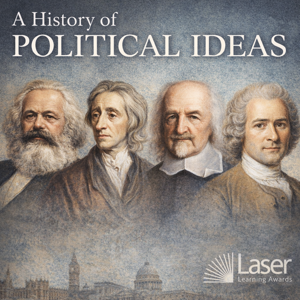


In this podcast LASER’s Ken Duckett and Dr. Iain Mackenzie from the University of Kent discuss the work of John Stuart Mill and Karl Marx to expose the fundamental tension between individual freedom and the need to live collectively within society. Areas covered include the notion of Utilitarianism, the Harm Principle and different concepts of Equality (Run time: 48.00).
In this podcast LASER’s Ken Duckett and Dr. Iain Mackenzie from the University of Kent discuss three key thinkers in relation to the state of nature debate: Thomas Hobbes, John Locke and Jean Jacques Rousseau. In the discussion they consider whether human nature can be seen to be innately good (as argued by Rousseau), bad (as argued by Hobbes) or blank slates (as argued by Locke). They also consider the extent to which these philosophers believe humans are individualistic and are capable of reason (Run time: 46.56).
The content relates specifically to the Laser Learning Awards unit: Politics and the State of Nature Debate, but may be generally useful for anyone with an interest in the subject area (whether studying for an Access to Higher Education Diploma or not).
In this podcast LASER’s Ken Duckett and Dr. Iain Mackenzie from the University of Kent discuss what we mean when we talk about the state of nature. They also discuss some of the key debates, exploring whether we are shaped by nature or nurture, whether we are good or bad, selfish individualists or co-operative communitarians (Run time: 43:12).
The content relates specifically to the Laser Learning Awards unit: Politics and the State of Nature Debate, but may be generally useful for anyone with an interest in the subject area (whether studying for an Access to Higher Education Diploma or not).
From the publisher's feed
What do we mean when we talk about the State of Nature debate? What are the differences between political thinkers such as Thomas Hobbes, John Locke and Jean Jacques Rousseau?We will also consider…
At their core, all ideologies will appeal to some philosophical notion of what a good society should look like (even if only to point out what is wrong with current society). In doing this they will always appeal to philosophical assumptions about ‘human nature’.
The goal of this suite of podcasts is to explore these assumptions and how they shape ideologies as well as the policies they advocate. It can be argued that a direct line can be drawn between concepts about the ‘State of Nature’ and policy decisions around key debates in relation to health, welfare and economics.
There are 3 Episodes:
Who Do You Think You Are? (covers debate about 'The State of Nature', Nature v Nurture)
The Good, The Bad and the Blank Slate (focuses on the ideas of Thomas Hobbes, John Locke and Jean Jacques Rousseau)
In Serving the Greater Good, are all Animals Equal? (focuses on the ideas of Karl Marx and John Stuart Mill as well as Utilitarianism, the Harm Principle and different concepts of Equality