
Sign up to save your podcasts
Or

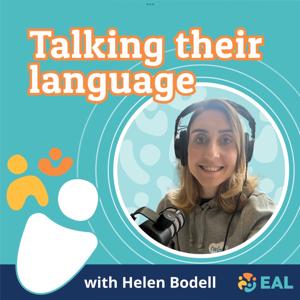


Welcome to Talking Their Language with Helen Bodell, the podcast for teachers, school leaders, EAL specialists, and educators who are passionate about supporting multilingual learners and helping every child develop confidence in the classroom.
In Episode 32, Helen Bodell is joined by Bethany Harris, Handwriting and English Intervention Product Owner at Twinkl, to explore how educators can support EAL learners with handwriting and writing development.
Together, Helen and Bethany discuss the challenges multilingual learners may experience when developing handwriting skills, and how teachers can provide effective support to help children become confident writers.
Handwriting is an important part of literacy development, and for pupils learning English as an Additional Language (EAL), developing writing skills involves building confidence with vocabulary, sentence formation, spelling, and the physical process of writing.
Bethany shares practical ideas and insights from her experience in primary English education, helping teachers understand how targeted support and engaging resources can help EAL learners succeed.
In this episode, you'll discover:Whether you are an EAL Lead, primary teacher, English Lead, teaching assistant, or school leader, this episode offers practical guidance for supporting multilingual learners as they develop essential literacy skills.
Meet Bethany HarrisBethany Harris is the Handwriting and English Intervention Product Owner at Twinkl. With a specialisation in Primary English and teaching experience across schools in the UK, Indonesia, Hong Kong, and Kuwait, Bethany brings a wealth of international education experience to her role.
Before joining Twinkl, Bethany worked as an English Lead for several years. She is passionate about creating high-quality resources that engage children, support teachers, and help make classroom practice more manageable and effective.
Explore more Twinkl EAL resourcesJoin Twinkl EAL:
https://www.twinkl.co.uk/l/72uh3
Browse the full Twinkl EAL resource collection:
https://www.twinkl.co.uk/l/1gx63t
Free EAL CPD sessionsBook your free online EAL CPD sessions:
https://www.eventbrite.co.uk/cc/the-twinkl-eal-collection-2587299
If you enjoyed this episode of Talking Their Language with Helen Bodell, subscribe to the podcast, leave a review, and share it with colleagues. Each episode explores practical strategies, expert insights, and classroom approaches that help educators support multilingual learners and develop inclusive learning environments.
Welcome to Talking Their Language with Helen Bodell, the podcast for teachers, school leaders, EAL specialists, and educators who are passionate about supporting multilingual learners and building inclusive school communities.
In Episode 31, Helen Bodell is joined by Susan Stewart, Director at Articulate Multilingual, to explore how schools can strengthen home-school connections with multilingual families and better support pupils learning English as an Additional Language (EAL).
Together, Helen and Susan discuss the importance of working in partnership with parents and carers to understand children’s language backgrounds, experiences, and identities. They explore how schools can create meaningful relationships with multilingual families, encourage home language use, and celebrate the cultural richness that families bring to the school community.
Susan shares her expertise in multilingual education, language policy, and bilingualism, offering practical ideas for educators who want to develop stronger connections with families and make multilingual learners feel valued and understood.
In this episode, you'll discover:Building relationships with multilingual families helps schools understand the whole child. When children’s languages, cultures, and identities are recognised, they are more likely to feel a sense of belonging and confidence in their learning.
Whether you are an EAL Lead, classroom teacher, teaching assistant, school leader, or family engagement lead, this episode provides practical guidance for creating stronger partnerships with multilingual communities.
Meet Susan StewartSusan Stewart is Director at Articulate Multilingual and has extensive experience in international education, multilingual language programmes, and developing research-informed language curricula.
Having lived and worked in South Africa, Thailand, the UAE, Belgium, Oman, Sweden, and the UK, Susan brings a global perspective to multilingual education. She has raised two bilingual children and is a lifelong learner of languages, speaking English, French, Dutch, German, Afrikaans, Swedish, Arabic, and British Sign Language (BSL) to varying degrees.
Susan regularly delivers parent workshops on raising bilingual children and has a particular interest in language policy as a tool for promoting multilingualism within families, schools, and wider communities.
Connect with SusanFind Susan Stewart on LinkedIn:
https://www.linkedin.com/in/susan-stewart-55064249/
Explore more Twinkl EAL resourcesJoin Twinkl EAL:
https://www.twinkl.co.uk/l/72uh3
Browse the full Twinkl EAL resource collection:
https://www.twinkl.co.uk/l/1gx63t
Free EAL CPD sessionsBook your free online EAL CPD sessions:
https://www.eventbrite.co.uk/cc/the-twinkl-eal-collection-2587299
If you enjoyed this episode of Talking Their Language with Helen Bodell, subscribe to the podcast, leave a review, and share it with colleagues. Each episode explores practical strategies, research, and real experiences that help educators support multilingual learners and create inclusive schools where every language is valued.
Welcome to Talking Their Language with Helen Bodell, the podcast for teachers, school leaders, EAL specialists, and educators who are passionate about supporting multilingual learners and creating inclusive, empowering classrooms.
This episode is part of our Why It Works series, where we explore evidence-informed approaches that support pupils learning English as an Additional Language (EAL).
In Episode 30, Helen Bodell is joined by Dr Robert Sharples, Lecturer in Language and Education at the University of Bristol and author of Teaching EAL: Evidence-Based Strategies for the Classroom and School, alongside Jo Thomson, Twinkl's EAL Content Writer and experienced primary teacher.
Together, they explore the importance of fostering independence in EAL learners and developing confidence across the whole school community.
This episode focuses on the question: “What do I need to do differently to make this year a success?”
Helen, Robert, and Jo discuss how building independence can support multilingual learners to take ownership of their learning, while also helping EAL Leads create sustainable approaches where responsibility for supporting pupils is shared across staff.
In this episode, you'll discover:Supporting EAL learners is most effective when pupils are empowered and staff across the school feel confident in their role. Developing independence helps learners build confidence, resilience, and the skills they need to succeed.
Whether you are an EAL Lead, classroom teacher, teaching assistant, or school leader, this episode provides practical ideas for creating a culture where multilingual learners and educators feel supported.
Explore more Twinkl EAL resourcesJoin Twinkl EAL:
https://www.twinkl.co.uk/l/72uh3
Browse the full Twinkl EAL resource collection:
https://www.twinkl.co.uk/l/1gx63t
Free EAL CPD sessionsBook your free online EAL CPD sessions:
https://www.eventbrite.co.uk/cc/the-twinkl-eal-collection-2587299
If you enjoyed this episode of Talking Their Language with Helen Bodell, subscribe to the podcast, leave a review, and share it with colleagues. The Why It Works series explores practical strategies and the research behind approaches that help multilingual learners thrive.
Welcome to Talking Their Language with Helen Bodell, the podcast for teachers, school leaders, EAL specialists, and educators who are passionate about supporting multilingual learners through effective, evidence-informed practice.
This episode is part of our Why It Works series, where we explore the research behind approaches that support pupils learning English as an Additional Language (EAL).
In Episode 29, Helen Bodell is joined by Dr Robert Sharples, Lecturer in Language and Education at the University of Bristol and author of Teaching EAL: Evidence-Based Strategies for the Classroom and School, alongside Jo Thomson, Twinkl's EAL Content Writer and experienced primary teacher.
Together, they explore the importance of pre-teaching, with a particular focus on pre-teaching vocabulary and how this strategy can help multilingual learners access lessons, build confidence, and make progress.
Helen, Robert, and Jo discuss the research behind vocabulary development, share practical classroom strategies, and explore how teachers can work with families to support language learning beyond the classroom.
In this episode, you'll discover:Pre-teaching vocabulary gives multilingual learners the opportunity to encounter new language before they meet it in a lesson, helping them develop confidence, participate more fully, and focus on learning new concepts.
Whether you are an EAL Lead, classroom teacher, teaching assistant, or school leader, this episode provides practical guidance and evidence-informed ideas to help you support vocabulary development for multilingual learners.
Explore more Twinkl EAL resourcesJoin Twinkl EAL:
https://www.twinkl.co.uk/l/72uh3
Browse the full Twinkl EAL resource collection:
https://www.twinkl.co.uk/l/1gx63t
If you enjoyed this episode of Talking Their Language with Helen Bodell, subscribe to the podcast, leave a review, and share it with colleagues. The Why It Works series explores the evidence behind effective teaching approaches, helping educators understand not only what works for multilingual learners, but why it works.
Welcome to Talking Their Language with Helen Bodell, the podcast for teachers, early years practitioners, EAL specialists, and educators who are passionate about supporting multilingual learners and creating inclusive learning environments.
In Episode 28, Helen Bodell is joined by Sabah Malik, Early Years leader and senior education professional, to explore the connection between outdoor learning, language development, and supporting children learning English as an Additional Language (EAL).
Together, Helen and Sabah discuss how outdoor environments can provide rich opportunities for communication, collaboration, curiosity, and language development, particularly for young multilingual learners in the Early Years Foundation Stage (EYFS).
Sabah shares her experience of leading early years provision in a large infant school, including a 120-place nursery, and explains how practitioners can use play-based learning and outdoor experiences to support children’s confidence, wellbeing, vocabulary, and relationships.
In this episode, you'll discover:Outdoor learning provides children with opportunities to communicate naturally, explore new experiences, and develop language through meaningful interactions. For children learning EAL, these experiences can help build confidence and create opportunities to use language in purposeful ways.
Meet Sabah MalikSabah Malik has worked in senior leadership roles across London for over 10 years. She currently leads Early Years provision at a large infant school in Hillingdon, including a 120-place nursery.
Sabah holds a Master’s degree in Leadership and Management, with her dissertation focusing on the important role parents play as early educators and how strong partnerships with families can support accelerated learning and progress.
Passionate about wellbeing, coaching, and staff development, Sabah leads bespoke CPD programmes for educators, including new teachers and those in initial teacher training. She has also worked collaboratively with schools to develop curriculum approaches as part of post-pandemic education recovery.
Whether you are an EYFS practitioner, EAL Lead, nursery teacher, teaching assistant, or school leader, this episode offers practical inspiration for creating language-rich environments where young multilingual learners can thrive.
Explore more Twinkl EAL resourcesJoin Twinkl EAL:
https://www.twinkl.co.uk/l/72uh3
Browse the full Twinkl EAL resource collection:
https://www.twinkl.co.uk/l/1gx63t
If you enjoyed this episode of Talking Their Language with Helen Bodell, subscribe to the podcast, leave a review, and share it with colleagues. Each episode explores practical strategies, expert insights, and inspiring approaches that help educators support multilingual learners from the earliest stages of their educational journey.
Welcome to Talking Their Language with Helen Bodell, the podcast for teachers, school leaders, EAL specialists, and educators who are passionate about supporting multilingual learners at every stage of their educational journey.
In Episode 27, Helen Bodell is joined by Yoshito Darmon-Shimamori, French and Spanish teacher, multilingual parent, and author of In Search of the Lost Words, to explore how we can better support multilingual teenagers at home and in the classroom.
While many conversations about EAL focus on younger learners, this episode shines a light on the experiences of multilingual adolescents and the importance of supporting their languages, identities, literacy skills, and sense of belonging.
Helen and Yoshito discuss how maintaining and developing home languages can support young people’s confidence, cultural identity, communication skills, and connection to their communities. They explore the importance of becoming multi-literate, and how schools and families can encourage multilingual teens to value all the languages they speak.
In this episode, you'll discover:Yoshito Darmon-Shimamori is a French and Spanish teacher in a secondary school in England. He is half-French and half-Japanese and was raised bilingually and bi-culturally in France.
As a multilingual parent raising his two sons to be multilingual, multicultural, and multi-literate, Yoshito has a deep personal and professional understanding of the challenges and opportunities that come with multilingualism.
Growing up, Yoshito experienced the importance of language as a bridge between cultures. His own experiences of developing literacy in different languages inspired him to explore how children and young people can be supported to maintain their languages and feel proud of their identities.
He is the author of In Search of the Lost Words and The Parents’ Guide to Raising Multi-literate Children. Through his work, including his multilingual parenting platform, Yoshito shares practical guidance with families and educators supporting multilingual children.
Whether you are a secondary teacher, EAL Lead, school leader, parent, or educator supporting multilingual young people, this episode offers valuable insight into helping teenagers develop confidence, identity, and literacy across languages.
Find out moreExplore Yoshito’s work and resources:
https://www.library4multilinguals.com/about-the-library-4-multilinguals
Explore more Twinkl EAL resourcesJoin Twinkl EAL:
https://www.twinkl.co.uk/l/72uh3
Browse the full Twinkl EAL resource collection:
https://www.twinkl.co.uk/l/1gx63t
If you enjoyed this episode of Talking Their Language with Helen Bodell, subscribe to the podcast, leave a review, and share it with colleagues. Each episode explores research, practical strategies, and inspiring experiences that help educators support multilingual learners and celebrate the languages that shape who they are.
Welcome to Talking Their Language with Helen Bodell, the podcast for teachers, school leaders, EAL specialists, and educators who are passionate about supporting multilingual learners and creating inclusive schools where every pupil feels valued and supported.
In Episode 26, Helen Bodell is joined by Dr Robert Sharples, Lecturer in Language and Education at the University of Bristol and author of Teaching EAL: Evidence-Based Strategies for the Classroom and School, alongside Jo Thomson, Twinkl's EAL Content Writer and experienced primary teacher, to explore how schools can build truly inclusive communities.
Together, they discuss practical ways schools can create environments where all pupils—including children learning English as an Additional Language (EAL)—feel welcomed, represented, and included.
Helen, Robert, and Jo explore the importance of whole-school approaches, the role of relationships and belonging, and how schools can work together to ensure multilingual learners are supported both academically and socially.
In this episode, you'll discover:Creating an inclusive school community is about more than supporting individual learners—it is about developing a culture where diversity is valued and every child has the opportunity to participate, achieve, and thrive.
Whether you are an EAL Lead, classroom teacher, teaching assistant, school leader, or education professional, this episode offers practical ideas for developing a more welcoming and inclusive school environment.
Explore more Twinkl EAL resourcesJoin Twinkl EAL:
https://www.twinkl.co.uk/l/72uh3
Browse the full Twinkl EAL resource collection:
https://www.twinkl.co.uk/l/1gx63t
If you enjoyed this episode of Talking Their Language with Helen Bodell, subscribe to the podcast, leave a review, and share it with colleagues. Each episode explores practical strategies, expert insights, and real experiences that help educators support multilingual learners and create inclusive classrooms and communities.
Welcome to Talking Their Language with Helen Bodell, the podcast for teachers, early years practitioners, EAL specialists, and educators who are passionate about supporting multilingual learners and creating inclusive, language-rich environments.
In Episode 25, Helen Bodell is joined by Denise Amankwah, Speech and Language Advisor at Speech and Language UK, to discuss supporting children learning English as an Additional Language (EAL) in the Early Years Foundation Stage (EYFS).
Together, Helen and Denise explore how early years practitioners can support multilingual children’s communication, language development, confidence, and sense of belonging. They discuss the importance of understanding children’s linguistic backgrounds and recognising the valuable role that home languages play in early learning.
Denise shares her expertise in language and literacy, drawing on her experience working in multilingual early years settings, research, and her current work supporting schools and settings through the London EAL project.
In this episode, you'll discover:Denise Amankwah has a passion for languages, communication, and early childhood education. She recently completed her Master's in Education, specialising in Language and Literacy, and also holds an undergraduate degree in Linguistics.
Denise currently works as a Speech and Language Advisor on the London EAL project at Speech and Language UK(formerly I CAN), supporting educators to better understand and support multilingual children.
Her professional background is rooted in the Early Years sector, including experience as a Senior Early Years Practitioner in a multilingual school and as a remote Early Years teacher. She has also worked in research roles focused on language and literacy development.
Denise is Ghanaian by heritage and is passionate about supporting education communities and sharing her expertise with schools in Ghana and beyond.
Whether you are an early years practitioner, EAL Lead, nursery teacher, reception teacher, teaching assistant, or school leader, this episode offers practical ideas for supporting young multilingual learners as they develop communication skills and confidence.
Explore more Twinkl EAL resourcesJoin Twinkl EAL:
https://www.twinkl.co.uk/l/72uh3
Browse the full Twinkl EAL resource collection:
https://www.twinkl.co.uk/l/1gx63t
If you enjoyed this episode of Talking Their Language with Helen Bodell, subscribe to the podcast, leave a review, and share it with colleagues. Each episode explores research, practical strategies, and inspiring experiences that help educators support multilingual learners from the earliest stages of their educational journey.
Welcome to Talking Their Language with Helen Bodell, the podcast for teachers, school leaders, EAL specialists, and educators who are passionate about supporting multilingual learners and creating inclusive, language-rich classrooms.
This episode is part of our Why It Works series, where we explore the evidence behind effective approaches for supporting pupils learning English as an Additional Language (EAL).
In Episode 24, Helen Bodell is joined by Dr Robert Sharples, Lecturer in Language and Education at the University of Bristol and author of Teaching EAL: Evidence-Based Strategies for the Classroom and School, alongside Jo Thomson, Twinkl's EAL Content Writer and experienced primary teacher.
Together, they explore the importance of creating effective multilingual classrooms and discuss how schools can recognise and celebrate the languages pupils bring with them.
In this episode, Helen, Robert, and Jo discuss the role of home languages, translanguaging, vocabulary development, and classroom practices that help multilingual learners access learning and develop confidence. They also answer educators’ questions about supporting pupils who are learning English as an Additional Language.
In this episode, you'll discover:A multilingual classroom is a learning environment where every language is recognised as a strength. By valuing pupils’ linguistic backgrounds, educators can support confidence, belonging, participation, and achievement.
Whether you are an EAL Lead, classroom teacher, teaching assistant, or school leader, this episode provides practical guidance and evidence-informed strategies to help you create a classroom where multilingual learners can thrive.
Further readingWhy It Works – Multilingual Classrooms
Read our accompanying blog for further guidance, strategies, and resources:
https://www.twinkl.co.uk/blog/eal
Explore more Twinkl EAL resourcesJoin Twinkl EAL:
https://www.twinkl.co.uk/l/72uh3
Browse the full Twinkl EAL resource collection:
https://www.twinkl.co.uk/l/1gx63t
If you enjoyed this episode of Talking Their Language with Helen Bodell, subscribe to the podcast, leave a review, and share it with colleagues. The Why It Works series explores the evidence behind effective teaching approaches, helping educators understand the strategies that support multilingual learners and why they work in real classrooms.
Welcome to Talking Their Language with Helen Bodell, the podcast for teachers, school leaders, EAL specialists, and educators who are passionate about supporting multilingual learners and creating inclusive, inspiring learning environments.
In Episode 23, Helen Bodell is joined by Marcelo Staricoff, author of The Joy of Not Knowing, former scientist, primary school headteacher, and Lecturer in Education at the University of Sussex, to explore the JONK approach and how curiosity, creativity, and critical thinking can transform learning.
The Joy of Not Knowing (JONK) approach encourages learners to embrace curiosity, ask questions, explore possibilities, and develop confidence in their own thinking. In this episode, Helen and Marcelo discuss how this approach can support all learners, including pupils learning English as an Additional Language (EAL), by creating classrooms where language, ideas, and experiences are valued.
Together, they explore how teachers can build inclusive learning environments where children feel empowered to participate, take risks, and develop their thinking through creativity, collaboration, and enquiry.
In this episode, you'll discover:Marcelo Staricoff is the author of The Joy of Not Knowing (Routledge, 2021), a former scientist and primary school headteacher, and a Lecturer in Education at the University of Sussex, where he is joint course leader of the BA Primary and Early Years Programme.
Marcelo has worked internationally with educators, policymakers, and organisations including UNICEF, supporting curriculum development and educational change. He also works with Coram, the children’s charity, advises schools and educational organisations, and regularly speaks at national and international education events.
His work focuses on creative, critical, multilingual, multicultural, and philosophical thinking in the classroom. Marcelo is a member of the All-Party Parliamentary Group on Education (APPG), a Trustee of the Laurel Trust, Chair of the Michael Aldrich Foundation, and a Fellow of both the Chartered College of Teaching and the Higher Education Academy.
Whether you are an EAL Lead, classroom teacher, school leader, or educator interested in inclusive teaching approaches, this episode offers inspiring ideas for creating classrooms where every learner can explore, question, and thrive.
Further readingRead our accompanying blog for further ideas, strategies, and resources:
https://www.twinkl.co.uk/blog/eal
Explore more Twinkl EAL resourcesJoin Twinkl EAL:
https://www.twinkl.co.uk/l/72uh3
Browse the full Twinkl EAL resource collection:
https://www.twinkl.co.uk/l/1gx63t
If you enjoyed this episode of Talking Their Language with Helen Bodell, subscribe to the podcast, leave a review, and share it with colleagues. Each episode explores practical strategies, expert insights, and innovative approaches that help educators create inclusive classrooms where multilingual learners and all pupils can flourish.
From the publisher's feed
Welcome to Talking Their Language with Helen Bodell, the…
Hosted by Helen Bodell from Twinkl EAL, an experienced educator and passionate advocate for inclusive, language-rich classrooms, this podcast explores the ideas, research, and practical strategies that help teachers support children from diverse linguistic and cultural backgrounds.
Each episode features conversations with leading voices in EAL education, multilingualism, language development, inclusion, and teaching practice. Together, Helen and her guests explore how schools can create environments where every learner feels valued, understood, and empowered to succeed.
From supporting children who are new to English, developing effective EAL provision, and celebrating home languages, to building stronger connections with families and communities, Talking Their Language provides practical advice and inspiration for educators at every stage of their journey.
Whether you are a classroom teacher, EAL Lead, school leader, teaching assistant, trainee teacher, or someone passionate about inclusive education, each episode offers evidence-informed ideas, expert insights, and real-world strategies to help you build stronger relationships with your learners.
Join Helen as she explores the power of language, identity, and belonging — and discover how we can ensure every child’s voice is heard.
Explore our EAL resources:
https://www.twinkl.co.uk/l/1f3rwa

3,041 Listeners