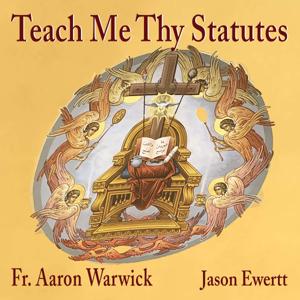
Teach Me Thy Statutes

Teach Me Thy Statutes

Download on the App Store

Teach Me Thy Statutes episodes

  • The Testing of Abraham
    Having received the promise of God to be the father of many nations, Abraham grew impatient and took it upon himself to have a child. Further illustrating his unbelief, Abraham laughed at God. Many years after the child of promise is born, God tests Abraham to see if he has learned to trust him. This time, Abraham passes the test and is told by God that, “In your seed all the nations of the earth shall be blessed, because you have obeyed My voice.” This promise is fulfilled in the life, ministry, teaching, and the death and resurrection of Jesus Christ. Father Aaron also provided an example of the striking similarities between Abraham’s restoration and that of St. Peter. After failing to trust God time after time during the life of Christ, Peter puts his trust in the word of the Lord and Christ restores him by his three-fold affirmation of his love for Jesus. We concluded with Fr Aaron explaining the significance of this testing of Abraham and how it relates to the death of Christ.
    18 min
  • Mary Takes Up Her Cross
    We addressed some of the common misconceptions regarding Mary and why she is paid such great honor and respect in the Orthodox Church. We call to remembrance her example—as well as all the saints--so that we might use them as a model. This is in no way meant to replace the perfect model, our Lord, and God and Savior Jesus Christ. We were then reminded of what is meant by, “Taking up your cross” and suffering for the Gospel. This is not a physical suffering, but a willingness to suffer shame for the sake of following God and doing His will. Mary provides us with a beautiful example of this. Unwed and facing the possibility of being abandoned by her betrothed, she faced not only great physical danger, but severe judgement and humiliation. But by her willingness to accept God’s will, she points the way to Christ by her actions so that He might come into the world to save us.
    17 min
  • The Lord is a Rock of Stumbling?
    Today’s episode provided an important clarification of how God can be both our fear and dread, and yet also become a sanctuary. Father Aaron stressed that we must first recognize God as Father in a biblical context, as the fearful Judge. He alone decides our fate, and we must respect and fear that judgement. And yet, God loves mankind and desires all men to be saved. With this understanding, we know that in God we have a fair judge. If we live our life by extending to others the mercy that God gave to us, he will be our sanctuary because we know that God is just. If, however, we reject God’s law and His commandments—as a fair judge—He has no choice but to condemn us. Thus, the same God, for the same reason, can either be a sanctuary or a stumbling block. The choice is with us.

    13 min
  • Lent & Covid-19: Special Episode
    Fr Aaron's sermon for Sunday, March 15, is being shared as a special episode. Father discusses how we have a unique and special opportunity to practice Lent this year. He argues that social distancing, self-quarantining, etc., requires an act of faith on our part because we do not see the results until the end. These practices by otherwise healthy people require us making real sacrifices, sacrifices that do not directly benefit us, but do benefit the most vulnerable in society. This opportunity allows those who are healthy and at low risk (most of us) to put into practice the lessons we learned from the life and death of Jesus Christ.
    16 min
  • The Great Cloud of Witnesses
    We began today’s episode by discussing who St. Paul was referencing as the “great cloud of witnesses.” Father Aaron explained that Paul’s specific reference here was to highlight the theme of faith. In discussing what it is to have biblical faith we were reminded that our faith is not based on an intellectual belief, but how we should behave. We concluded by focusing on Paul’s teaching about discipline. Just as parents discipline their children out of love, the Lord disciplines us because he loves us. St. Paul goes so far as to say that if we do not have struggles in our lives, then we are not a legitimate child of God. If we re-frame our struggles in this light, we will see that God is disciplining us so that we might be strengthened. We may even find that we welcome these struggles when they come, knowing that they are for our benefit.
    15 min
  • Adam Names Eve
    Today’s discussion focused on the reading of the book of Genesis during the first week of Lent. Fr Aaron began by clarifying that, while the Bible mentions many things we would condemn today—particularly in the Old Testament--this does not mean that the Bible is condoning this behavior. We then explored the critical importance of viewing Jesus “in the light of the Old Testament.” In other words, if we remove Jesus from the context of the Old Testament, we lose all sense of God’s plan of salvation for mankind. Next, we discussed the significance of Adam naming Eve. Finally, we discussed the first commandment given in Genesis and why it is significant that this was a commandment to fast.
    19 min
  • Why Do We Fast?
    In today’s episode we examined the various purposes of fasting; both what it is and what it is not. Father Aaron stressed that fasting is not meant to be a form of suffering or punishment. Instead, we should enter into periods of fasting with joy and gladness. As we were created in the image of God, we have the unique ability to override our carnal desires. Finally, and perhaps most importantly, we discussed how fasting offers us an opportunity to relieve the hunger of others.
    14 min
  • Beware of the Scribes
    We begin by correcting our understanding of God's desire towards piety. Father Aaron clarified for us that--contrary to what is commonly thought of today--the scribes and Pharisees were actually well respected in their time. And in our present time, we have people within the church who fit this same mold—who appear to be righteous and moral--but fail to show mercy and compassion to those who are struggling and in need. In our desire to be able to measure our own progress toward salvation, we often look for a “checklist” as a way for us to demonstrate that we are righteous. We ended the episode by stressing a biblical understanding of what Fr Aaron calls "hopeful giving." Our goal is to give from our first-fruits, trusting God will provide for our needs. In the end, if we are to follow the biblical teaching, we must follow the immeasurable and internal aspects of piety found in the Gospel, which in turn puts us in a position of requiring mercy before the Judgement Seat of Christ.
    16 min
  • Christian Suffering
    Today’s discussion began with recognizing that most of us have been taught to expect rewards for good behavior and punishment for bad behavior. This mindset often translates into our expectation that our life will go well if we trust in God and follow His commandments. However, we must stress--both in our own life and in teaching our children—that God’s ways are not our ways. We must recognize and teach that God is merciful to us when we fall short, but only if we show that same mercy to others. Failing to show mercy to others causes us to fall away. We then turned to the topic of suffering. Father Aaron explained that Scripture teaches us that true biblical suffering is the result of suffering shame. While we often think of suffering as something that is physical--and there can certainly be a benefit to this while also trusting in God--the emphasis in the New Testament is that in taking up our Cross we must be willing to be shamed by others for following the teachings of Christ.
    17 min
  • Jesus Christ, The True Emperor
    We begin by clarifying who it is that St. Paul refers to as the “principalities and powers in the heavenly places.” We make the case that Paul is not only referring to the angels, but also to the earthly rulers—and more specifically, the Roman Emperor. Paul is telling us that Jesus has been revealed both to mankind and to the angels, as the true emperor—the God above all gods. We were then reminded that as humanity was created in the image of God, we should not be surprised to learn that God’s plan was first revealed to us. We are the sole creation made in God’s image, which is both an honor and a high calling. The Bible teaches us that with honor comes responsibility. And that responsibility is that we must represent Christ to all of creation—to show the deep and all-encompassing love of Christ, which He first showed to us. In doing so, we are offered through Christ Jesus to be reconciled to God, and to one another.
    12 min

About Teach Me Thy Statutes

From the publisher's feed

Each week, Fr. Aaron Warwick and Jason Ewertt meet to discuss biblical readings from the Orthodox lectionary.