
Sign up to save your podcasts
Or

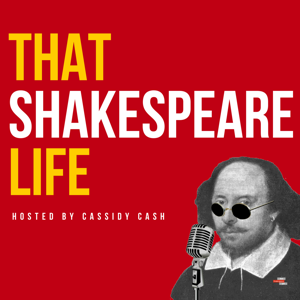


After a long, and tense back and forth of letters, threats, offers of sisterhood, and ultimately betrayal, Elizabeth I ordered Mary Queen of Scots to be executed in 1587, when William Shakespeare was 24 years old, right in the middle of what is called Shakespeare’s Lost Years, because historical records leave a gap here in the timeline of the bard about exactly what he was doing in these years of his life, but looking at broader history, it turns out much of England was confused about what, precisely, was happening for anyone.
Mary’s death was polarizing for England as it was a culmination of tensions between Catholics vs Protestants, and a strong statement about the reign of Queen Elizabeth. Mary Queen of Scots had a strong claim to the throne of England, and she exerted her might forcefully to try and achieve that role. Famously known for her swift and decisive action against any action, or person, who hinted at treason or a threat to her throne, Elizabeth I was not only surprisingly tolerant of Mary, inviting her to England on terms of peace, but Elizabeth would go on to appoint James I as her successor after Elizabeth died. As the son of Mary Queen of Scots, James I took the throne in 1603, was it ultimately a victory for Mary? Our guest David Schajer is the author of a series of books on the intersection between Mary Queen of Scots, Elizabeth I, and James I, the lives of which contained so much real life drama that their impact spilled over onto the stage of William Shakespeare, where many moments in his plays like Hamlet, Titus Andronicus, and Merchant of Venice which seem to belie the the thoughts of the moment, like time capsules offering a glimpse into what it was like to live through this pivotal moment in history.
As William Shakespeare sat down to write Coriolanus, the Corn Famine of 1608 was in full swing. While the King, James I, took actions to combat the shortage of corn in England, theater seems to have played a role in communicating the citizens unrest and unhappiness over the famine. Not only was Shakespeare writing Coriolanus, where Roman citizens face a similar fate to the Londoners viewing the story at The Globe, but Church pastors all over England were writing, and in some cases performing, dramatic sermons imploring the people to share their corn, and admonishing those who hoarded grain as being evil, or possibly risking their souls. From the pulpits to the stage, theatrical presentations took aim at the poor conditions, loudly protesting the leadership of King James, and in many cases coming dangerously close to treason. Shakespeare's Coriolanus is famous today for being a great Roman play. The battles, and as well as the pride, bravery, yet ultimate downfall of the glorious warrior Coriolanus, captivate audiences throughout the centuries. Yet, as our guest this week is here to share, the play was likely not purely a Roman tale for William Shakespeare, as it appears he wrote it intentionally as a direct response to an event which occured in real life.
Lauren Shook is here this week to help us explore this part of Shakespeare's history, and explain how the corn famine started, what James did specifically to try and combat it, how the Bible played a role in combating the famine, and why Shakespeare wasn't tried for treason for writing such a direct political commentary in 1608.
As William Shakespeare sat down to write Coriolanus, the Corn Famine of 1608 was in full swing. While the King, James I, took actions to combat the shortage of corn in England, theater seems to have played a role in communicating the citizens unrest and unhappiness over the famine. Not only was Shakespeare writing Coriolanus, where Roman citizens face a similar fate to the Londoners viewing the story at The Globe, but Church pastors all over England were writing, and in some cases performing, dramatic sermons imploring the people to share their corn, and admonishing those who hoarded grain as being evil, or possibly risking their souls. From the pulpits to the stage, theatrical presentations took aim at the poor conditions, loudly protesting the leadership of King James, and in many cases coming dangerously close to treason.
Shakespeare’s Coriolanus is famous today for being a great Roman play. The battles, and as well as the pride, bravery, yet ultimate downfall of the glorious warrior Coriolanus, captivate audiences throughout the centuries. Yet, as our guest this week is here to share, the play was likely not purely a Roman tale for William Shakespeare, as it appears he wrote it intentionally as a direct response to an event which occured in real life.
Lauren Shook is here this week to help us explore this part of Shakespeare’s history, and explain how the corn famine started, what James did specifically to try and combat it, how the Bible played a role in combating the famine, and why Shakespeare wasn’t tried for treason for writing such a direct political commentary in 1608.
When you study Hamlet, especially in school or when you read or watch a commentary on the play, it is not surprising to have someone point out to you that the flowers Ophelia carries in her bouquet as she sings her sad song after the loss of her Father, Polonius, hold powerful 16th century historical significance. It's so important that I even included a nod to the flowers specifically in my 3 Minute Animated version of Hamlet that just published on Amazon Prime but even when I included them, that part of the play implores the viewer to "get thee to a library!" to learn more about the history. This lack of explanation presents a problem since not many commentaries or even animated versions of the play, will go beyond saying the flowers are important, to really take you behind the curtain and into the 16th century history of herbals, flowers, and Ophelia's song specifically. To solve this problem, we invited our guest Dr. Richard Miller to sit down with us today. Richard has quite extensively put together Ophelia's Bouquet, an article that illuminates the history of William Shakespeare that is found in Ophelia's Flowers. Richard is here today to share the history of 16th century plants with you, and finally explain why these flowers are so important, and what you need to understand about the life of William Shakespeare when you discover Ophelia's bouquet in Shakespeare's Hamlet.
When you study Hamlet, especially in school or when you read or watch a commentary on the play, it is not surprising to have someone point out to you that the flowers Ophelia carries in her bouquet as she sings her sad song after the loss of her Father, Polonius, hold powerful 16th century historical significance. It’s so important that I even included a nod to the flowers specifically in my 3 Minute Animated version of Hamlet that just published on Amazon Prime but even when I included them, that part of the play implores the viewer to “get thee to a library!” to learn more about the history. This lack of explanation presents a problem since not many commentaries or even animated versions of the play, will go beyond saying the flowers are important, to really take you behind the curtain and into the 16th century history of herbals, flowers, and Ophelia’s song specifically. To solve this problem, we invited our guest Dr. Richard Miller to sit down with us today. Richard has quite extensively put together Ophelia’s Bouquet, an article that illuminates the history of William Shakespeare that is found in Ophelia’s Flowers. Richard is here today to share the history of 16th century plants with you, and finally explain why these flowers are so important, and what you need to understand about the life of William Shakespeare when you discover Ophelia’s bouquet in Shakespeare’s Hamlet.
The term "hand-and-a-half sword" is often used in reference to long-swords but is not considered a historical description of the weapon. There is no evidence of the term "hand-and-a-half" having been used during the Middle Ages when the sword saw its heyday in popularity and there's no reference to hand and a half sword either in English or other languages before the 16th century. But the term does show up during the life of William Shakespeare. Why is that term appearing at this moment to describe a weapon that never went by that name when the weapon was popular? It seems that fencing language, and indeed the English language's description of weapons overall, was influenced heavily by a man whose greatness is often eclipsed by that of Shakespeare and Jonson--that man is John Florio.
Words like "hand and a half sword" are just one example of the power Florio's contributions are to both the English language, and it seems, to early modern plays themselves. Credited in print by Jonson personally, as well as praised and sponsored by by people like Salviolo, Henry Wriothesley, Philip Sydney, and other prominent figures from the 16th century, John Florio operated at the highest levels of English society.
Here this week to share with us the unique and often overlooked life of John Florio, how he came to be in England, and the unlikely friendship he seems to have had with Ben Jonson and William Shakespeare, is our guest Marianna Iannaconne.
The term "hand-and-a-half sword" is often used in reference to long-swords but is not considered a historical description of the weapon. There is no evidence of the term “hand-and-a-half” having been used during the Middle Ages when the sword saw its heyday in popularity and there’s no reference to hand and a half sword either in English or other languages before the 16th century. But the term does show up during the life of William Shakespeare. Why is that term appearing at this moment to describe a weapon that never went by that name when the weapon was popular? It seems that fencing language, and indeed the English language’s description of weapons overall, was influenced heavily by a man whose greatness is often eclipsed by that of Shakespeare and Jonson--that man is John Florio.
Words like “hand and a half sword” are just one example of the power Florio’s contributions are to both the English language, and it seems, to early modern plays themselves. Credited in print by Jonson personally, as well as praised and sponsored by by people like Salviolo, Henry Wriothesley, Philip Sydney, and other prominent figures from the 16th century, John Florio operated at the highest levels of English society.
Here this week to share with us the unique and often overlooked life of John Florio, how he came to be in England, and the unlikely friendship he seems to have had with Ben Jonson and William Shakespeare, is our guest Marianna Iannaconne.
During the 16th century, William Shakespeare had his own way of pronouncing words as well, and exploring how to define what that pronunciation was, and how it impacts our understanding of the plays, is a special field of historical linguistics called Original Pronunciation. Our guest this week, Dr. David Crystal is the leading expert in the field of Original Pronunciation and he joins us this week to talk about how an experiment he lead at The Globe theater in London taught everyone involved how important understanding the spoken language is to understanding Shakespeare's plays.
During the 16th century, William Shakespeare had his own way of pronouncing words as well, and exploring how to define what that pronunciation was, and how it impacts our understanding of the plays, is a special field of historical linguistics called Original Pronunciation. Our guest this week, Dr. David Crystal is the leading expert in the field of Original Pronunciation and he joins us this week to talk about how an experiment he lead at The Globe theater in London taught everyone involved how important understanding the spoken language is to understanding Shakespeare’s plays.
Shakespeare mentions kites seven times in his plays, often using the term to reference specific attributes of the bird to describe someone in the story. He'll refer to someone as "a kite" as if that's bad, or other times, he'll use the bird (or 16th century reputation of the bird) to suggest attributes like suspicion:
Although the kite soar with unbloodiebeak? (Henry VI Part II)
In the late 15th century, the King of Scotland decreed kites should be killed whenever possible, and that perspective on kites contrasted starkly with the later role of this unique bird in England, when kites were protected as an asset to London because they ate the vermin. This protection was short lived, however, and by the Tudor period Kites were again regarded as a nuisance to rural farm communities in England and Scotland. There are even surviving records showing that bounties were paid for the carcasses of red kites, as many people sought their extermination as pests. We can see this negative perspective on kites show up in Shakespeare's plays, as every reference to kites in the works of William Shakespeare are derogatory. As we explore the role--on stage and in life--of the persistent red kite, our guest this week is Lynn Bowser, co-owner at Argaty Red Kites, which is Central Scotland's only red kite feeding station.
From the publisher's feed

3,175 Listeners

102 Listeners

823 Listeners

2,230 Listeners
229 Listeners
748 Listeners
470 Listeners

3,348 Listeners

15,571 Listeners

1,892 Listeners

2,047 Listeners

577 Listeners
2,834 Listeners
1,385 Listeners
215 Listeners