
Sign up to save your podcasts
Or

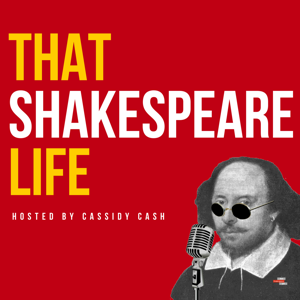


One of the biggest and grandest events occurring in London every year was the elaborate Bartholomew Fair. Celebrated in conjunction with St. Bartholomew's Day, this fair took over the city in Shakespeare's lifetime for three whole days of merriment that included the selling of wares, drinks and food vendors, as well as performances from stilt walkers, jugglers, puppeteers, and more. Here this week to share with us the history of Bartholomew Fair in Shakespeare's lifetime, as well as how this festive carnival was born from pious means, is our guest, Alicja Zelazko.
One of the biggest and grandest events occurring in London every year was the elaborate Bartholomew Fair. Celebrated in conjunction with St. Bartholomew’s Day, this fair took over the city in Shakespeare’s lifetime for three whole days of merriment that included the selling of wares, drinks and food vendors, as well as performances from stilt walkers, jugglers, puppeteers, and more. Here this week to share with us the history of Bartholomew Fair in Shakespeare’s lifetime, as well as how this festive carnival was born from pious means, is our guest, Alicja Zelazko.
The development and use of metered and rhyming lines in theater is unique to the time period when Shakespeare was writing and our guest this week, Shane Ann Younts, professional voice coach and trainer for some of Broadway's most celebrated performers, is here to walk us through the history and application of Shakespeare's iambic pentameter.
The Renaissance in England brought with it the exploration of new lands as well as the invention of new technology. For William Shakespeare, the concept of using something as ordinary as a wrist watch was a brand new thought that most people had never seen before. In fact, one of the ways we even know there were wrist watches in Shakespeare's lifetime comes from a single reference to an "arm watch" given to Queen Elizabeth I by Robert Dudley. For the regular guy on the street or in the theater, in our case, they had a different idea of what it meant to tell time, as the 16th century marked the first time anyone was trying to do it using mechanical clocks. Our guest this week is Wendy Beth Hyman, (professor of/author of} Wendy is an expert on not just how Elizabethans like William Shakespeare kept track of the hours during the day, but on specific mechanisms of those clocks, like jaquemarts, which were part of these newly invented timekeeping devices being created in Shakespeare's lifetime. Today Wendy is here to share with us a piece of the history of time-keeping as well as to let us in on what a jacquemart is, by using references that we find in Shakespeare's plays. It turns out that some of the words and phrases Shakespeare uses reveal some of what it was like to live in a time when the creation something ordinary, like a wrist watch or wall clock, was a completely revolutionary idea.
The superstitions surrounding the ideas of ghosts, death, and what happened to your soul as your body approached it's demise were all inspiring topics for the plays of William Shakespeare. It turns out that these superstitions were not only fuel for dramatic presentations on the stage, but formed the foundation of pretty creepy tales about the real life of one of England's most famous monarchs, Queen Elizabeth I.
According to tales from her handmaiden, Elizabeth was paranoid to a fault, scared of dying, and left specific orders in her will for how her body was to be handled that defied the traditions of the land, and left a set of at least 6 individuals doing work that was scarier than grave digger in Shakespeare's Hamlet.
Here this week to share with us the real life history of the three weeks after the death of Elizabeth I and the surprising, often macabre, realities of what those weeks entailed by order of the Queen is the man who wrote his PhD thesis on the Living Death of Elizabeth I, Dr. James Alsop.
In Elizabethan England, one very popular art form was that of the woodcut. This art form is an intricate design, taking great skill and talent to produce, and was a huge innovation in the printing industry for the Renaissance time period. Here today to explain for us how woodcuts were made, where Shakespeare might have seen them in print, and where you and I can explore the ones which survive today is our guest Dr. James Knapp.
From the publisher's feed

3,175 Listeners

102 Listeners

823 Listeners

2,230 Listeners

229 Listeners

748 Listeners
470 Listeners

3,348 Listeners

15,571 Listeners

1,892 Listeners

2,047 Listeners

577 Listeners

2,834 Listeners
1,385 Listeners
215 Listeners