
Sign up to save your podcasts
Or

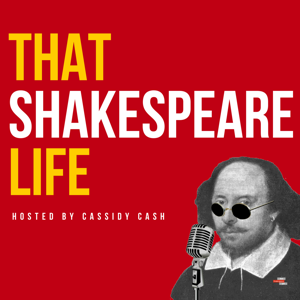


One of my absolute favorite quotes from Shakespeare comes from Henry IV Part 1 when Henry V says
Unless hours were cups of sack and minutes
capons and clocks the tongues of bawds and dials the
signs of leaping-houses and the blessed sun himself
a fair hot wench in flame-coloured taffeta, I see no
reason why thou shouldst be so superfluous to demand
the time of the day.
It’s hilarious today, particularly to consider Falstaff parading around in flame coloured taffeta, but the history buried in the hilarity is the question of time. Obviously, Henry V seems to think asking about the time of day is superfluous. In a 21st century world where things arrive on time, and we keep our time in our pockets or on our wrists, what was William Shakespeare’s understanding of keeping of time? It is William Shakespeare who is credited with being the first to pen the phrase “watch the clock”, but did he have a clock?
Here to take us back to the world of sundials, hourglasses, pocket watches, and clock towers all of which were in motion and taking part in a flourish of clockmaking that took off in europe in the 15th adn 16th century is our very special guest, William Massena.
William Massena is the Founder and CEO of Massena LAB, a collaboration with independent watchmakers to make unique timepieces. He is the Managing Director of TimeZone.com, the world’s largest watch discussion forum on the Internet. William, who has been with TimeZone.com since its founding in 1995, has been a passionate collector of watches from an early age and an active participant in the world of horology as a collector, consultant and auctioneer. Previously, he was the Chief Operating Officer and Managing Director of Antiquorum SA, a leading Horological Auction House. William Massena holds a BS and master’s degree from New York University Stern School of Business. He is a jury member of the GPHG since 2013, a member of the cultural council of the Foundation of Haute Horology and a Freeman of the Worshipful Company of Clockmakers. In addition, William Massena is a Trustee of the Horological Society of New York.
While Shakespeare is name is the most well known of the playwrights from Renaissance England, he was hardly the only famous artist working during that time period. Christopher Marlowe, Ben Jonson, John Fletcher, and John Lyly are just a few of the names we can mention of excellent theater practitioners working alongside the bard, and it turns out, William Shakespeare apparently had at least a high professional respect for these gentlemen personally, as he is known to have collaborated with several of them on plays like Pericles, Henry VIII, and Timon of Athens.
But knowing that Shakespeare collaborated with fellow playwrights, even with members of rival playing companies, brings up some questions about the practicality of collaborating in the Renaissance. Who owned the plays that they wrote? Why weren't the collaborative plays published with all of the contributing authors? There are so many questions about what collaboration looked like for William Shakespeare, and this week we have the man who literally wrote the book on Shakespeare's Collaborative Works, Dr. Eric Rasmussen, here to walk us through 16th century playhouses and the world of collaborative Renaissance theater.
Robert Greene's A Groatsworth of Wit was written as a small pamphlet, and told a moralistic tale which was partly autobiographical. The story includes many characters, songs, fables, and perhaps most famously--sharply barbed criticism that takes aim at his contemporary playwrights and actors. The most famous criticism for which Greene's work is most remembered is that this document is where Shakespeare is called and Upstart Crow. Here to help us take a detailed look at Robert Greene, the history of A Groatsworth of Wit, and what these famous insults tell us about the life of William Shakespeare is our guest, Dr. Lois Potter.
Robert Greene’s A Groatsworth of Wit was written as a small pamphlet, and told a moralistic tale which was partly autobiographical. The story includes many characters, songs, fables, and perhaps most famously--sharply barbed criticism that takes aim at his contemporary playwrights and actors. The most famous criticism for which Greene’s work is most remembered is that this document is where Shakespeare is called and Upstart Crow. Here to help us take a detailed look at Robert Greene, the history of A Groatsworth of Wit, and what these famous insults tell us about the life of William Shakespeare is our guest, Dr. Lois Potter.
When William Shakespeare died in Stratford Upon Avon England in 1616, the world lost an incredible soul that would far outlast his 52 years. But how did the greatest playwright die? And why was he not buried alongside other great playwrights of his stature at Westminster Abbey? Here to take us back to 1616 and walk us through the myths, the legend and the facts about Shakespeare's death is our guest Darren Freebury Jones.
William Shakespeare grew up functioning as the oldest of his five siblings, with his parents losing two children before William was born. The stories of his brothers and sisters are brief, but as you might expect from the life of William Shakespeare, they are full of intrigue, mystery, and mirth. Here today to share with us the stories of Shakespeare siblings is our guest, David Kathman.
William Shakespeare grew up functioning as the oldest of his five siblings, with his parents losing two children before William was born. The stories of his brothers and sisters are brief, but as you might expect from the life of William Shakespeare, they are full of intrigue, mystery, and mirth. Here today to share with us the stories of Shakespeare siblings is our guest, David Kathman.
When it comes to Food in Shakespeare's England, there were superstitions, recipes, kitchens, and even cooking methods attached to the metaphors Shakespeare intended when he used food references in his works.
All of this effusive history behind food in early modern England is at the heart of the Folger Shakespeare Library's latest project caled Before Farm to Table. Our guest this week Elisa Tersigni, the Digital Research Fellow for "Before 'Farm to Table': Early Modern Foodways and Cultures", and she joins us today to share what's going on at The Folger with this new project, and how we can better understand Shakespeare as a result of what they discovered.
From the publisher's feed

3,175 Listeners

102 Listeners

823 Listeners

2,230 Listeners

229 Listeners
748 Listeners
470 Listeners

3,348 Listeners

15,571 Listeners

1,892 Listeners
2,047 Listeners

577 Listeners
2,834 Listeners
1,385 Listeners
215 Listeners