
Sign up to save your podcasts
Or

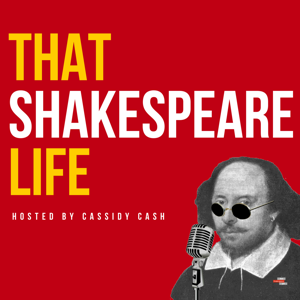


If the saying is true that you are the sum of your five closest friends, then one great way to get to know William Shakespeare is to take a look at the lives of his closest friends. John Heminges and Henry Condell helped form the foundation of the shareholder agreement Shakespeare made at The Globe and the Lord Chamberlain’s Men. They would remain loyal to Shakespeare from Elizabethan England into Jacobean England as the company became the King’s Men under James I. Acting in plays together, writing plays, surviving the Globe’s famous fire, and watching each other get married, have children, and grow old together is a stronger definition of friendship than many people ever get to experience, and by all historical accounts, Heminges and Condell were just such strong friends for William Shakespeare not just until his death in 1616, but through the publication of the 1623 First Folio, and continuing ever after.
As our guest this week, we are delighted to have Paul Edmondson, the Head of Research at Shakespeare Birthplace Trust, and the author of one chapter about Heminges and Condell that appeared in the recent book he edited called The Shakespeare Circle. We welcome Paul today to discuss his chapter on Heminges and Condell and help us get to know Shakespeare’s extraordinary friends.
William Shakespeare started out the son of a glove maker in a small town in England, and went on to become the greatest playwright the world has ever seen. How does one person accomplish so much? What did it take, exactly, for Shakespeare to become a genius? Was he born with particular gifts and talents no one else has seen or heard of again in the last 400 years? Or has our love of Shakespeare inflated his reputation beyond what it deserves?One man who has argued in the public arena specifically for Shakespeare, the man, is our guest this week, Sir Andrew Jonathan Bate. Knighted in 2015 for services to literary scholarship and higher education, Jonathan Bate is also a British academic, biographer, critic, and scholar. He specialises in Shakespeare, Romanticism, and Ecocriticism as the Professor of English Literature at the University of Oxford, Provost of Worcester College, Oxford, Gresham Professor of Rhetoric, and Honorary Fellow of Creativity at Warwick Business School. His most recent book is the subject of our interview today, and that is titled The Genius of Shakespeare. In his book, Sir Jonathan examines the life of William Shakespeare, the man from Stratford, to outline how one man becomes a genius. We are delighted to have Sir Jonathan here with us today to discuss some of the answers he discovered in writing his book.
William Shakespeare started out the son of a glove maker in a small town in England, and went on to become the greatest playwright the world has ever seen. How does one person accomplish so much? What did it take, exactly, for Shakespeare to become a genius? Was he born with particular gifts and talents no one else has seen or heard of again in the last 400 years? Or has our love of Shakespeare inflated his reputation beyond what it deserves?
One man who has argued in the public arena specifically for Shakespeare, the man, is our guest this week, Sir Andrew Jonathan Bate. Knighted in 2015 for services to literary scholarship and higher education, Jonathan Bate is also a British academic, biographer, critic, and scholar. He specialises in Shakespeare, Romanticism, and Ecocriticism as the Professor of English Literature at the University of Oxford, Provost of Worcester College, Oxford, Gresham Professor of Rhetoric, and Honorary Fellow of Creativity at Warwick Business School. His most recent book is the subject of our interview today, and that is titled The Genius of Shakespeare. In his book, Sir Jonathan examines the life of William Shakespeare, the man from Stratford, to outline how one man becomes a genius. We are delighted to have Sir Jonathan here with us today to discuss some of the answers he discovered in writing his book.
Even Shakespeare had to eat. We laud Shakespeare as a man who helped reinvent the theater industry, and someone who would pen some of the greatest lines in all of antiquity, and establish a reputation that lasted at the top of his game for over 400 years. But what did someone like that eat for breakfast? It certainly wasn't Wheaties powering that legacy, so what kind of foods did Shakespeare enjoy? Here to help us explore the daily eating habits of the Tudor period, including people like William Shakespeare, is a guest who knows more than most about the daily lives of Tudors since she leads an exploratory experience at her beautiful Tudor home. Brigitte Webster is the owner and founder at Tudor and 17th Century Experience, a unique living history centre with authentic accommodations that let visitors step back in history to experience life in England's 17th century. Offering designated open days, "taster days ", weekends and custom-made holidays, Brigitte's unique home lets guests travel back in time to fall in love with 17th century English history.
Even Shakespeare had to eat. We laud Shakespeare as a man who helped reinvent the theater industry, and someone who would pen some of the greatest lines in all of antiquity, and establish a reputation that lasted at the top of his game for over 400 years. But what did someone like that eat for breakfast? It certainly wasn’t Wheaties powering that legacy, so what kind of foods did Shakespeare enjoy?
Here to help us explore the daily eating habits of the Tudor period, including people like William Shakespeare, is a guest who knows more than most about the daily lives of Tudors since she leads an exploratory experience at her beautiful Tudor home.
Brigitte Webster is the owner and founder at Tudor and 17th Century Experience, a unique living history centre with authentic accommodations that let visitors step back in history to experience life in England’s 17th century. Offering designated open days, “taster days “, weekends and custom-made holidays, Brigitte’s unique home lets guests travel back in time to fall in love with 17th century English history.
Elizabeth I issued several proclamations during her reign concerning property, renting, and housing in England. London proper would see it's population more than double over the course of Shakespeare's lifetime, and there was very little in the way of any government concerning who could rent the limited available space owned in the city, what they could charge, or even basic safety regulations. Historical documents tell us that William Shakespeare himself rented property in London, with the landlord and tenant documents being some of the few tangible paper records we have at all of William Shakespeare's life. So why was the world's leading playwright renting a room in London not unlike a poor college student, instead of owning property outright? And what can the history of landlords in England help us learn about the life of William Shakespeare? Here to help us explore the history of tenants and renting property in 16th century England is Callan Davies, a Research Fellow on the "Before Shakespeare" project, based at the University of Roehampton.
From Merry Wives of Windsor, to Measure for Measure, Alls Well That Ends Well, and others, the role of marriage plays a big role in Shakespeare's plays, determines the action, defining the characters, and living on several assumptions about the marriage institution. But what are those assumptions, exactly? As a modern audience member, what do we need to know about marriage in Shakespeare's lifetime, and how has it changed over the last 400 years? Will these changes impact how we receive Shakespeare's stories?Here to help us find the answers to these questions and explore the history of marriage, Shakespeare's own marriage to Anne Hathaway, and what we can take away from the displays of marriage in Shakespeare's plays, is our guest Frances Dolan. Frances is a Distinguished Professor English at UC Davis, Her work focuses on Shakespeare and his contemporaries. In 2004-5, she served as the President of the Shakespeare Association of America. She has held fellowships from the John Simon Guggenheim Memorial Foundation, the National Endowment for the Humanities (at the Newberry Library and the Folger Library), and the Monticello College Foundation. In November of 2018, she led a Folger Weekend Seminar on Agriculture in the 16th century, and she is the author of the article, "Shakespeare and Marriage" for UCDavis that we have invited her here to speak with us about today.
When we talk about Shakespeare's theaters, most often we mean The Globe, with it's iconic "O' shape, we sometimes forget that Shakespeare's plays were actually performed in a variety of venues, and that William was involved in starting the first indoor theater anywhere in the world when he, and his longtime business partner Richard Burbage, established the then-risky venue, The Blackfriars.
With the only accurate replica of The Blackfriars in the world, no one knows the history of this theater better than The American Shakespeare Center, which is why we've asked Sarah Enloe, the Director of Education at The ASC to visit with us today and take us behind the curtain to look at the history of Shakespeare's lesser known, but equally as innovative, indoor theater, The Blackfriars.
From the publisher's feed

3,175 Listeners

102 Listeners

823 Listeners

2,230 Listeners

229 Listeners

748 Listeners
470 Listeners

3,348 Listeners

15,571 Listeners

1,892 Listeners

2,047 Listeners

577 Listeners

2,834 Listeners

1,385 Listeners
215 Listeners