
Sign up to save your podcasts
Or

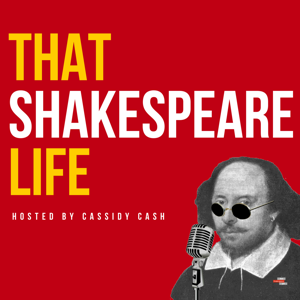


For years, historians have ruminated on the state of William Shakespeare’s father, John Shakespeare, and the financial troubles that were speculated to have caused the bard to leave Grammar School before graduation around age 14. Without any real substantial evidence to confirm or deny what actually happened to John Shakespeare, we have been left to wonder what, if any impact, these troubles had on the budding young playwright.
Wondering, that is, until now. Dr. Glyn Parry has uncovered new documents that shed light on William Shakespeare’s early life and help us understand how some of Shakespeare’s political views might have formed.
Glyn Parry is a professor of humanities at the University of Roehampton, a fellow of Royal Historical Society, a Member of the American Historical Association, and Member of the History of Science Society. His work focuses on Early modern magic, Shakespeare and his environment, and Tudor government in action.
Glyn joins us today to explore the discovery of these new documents and explain how this new discovery offers an exciting glimpse into how young Shakespeare became the fiery political dramatist we know him as today.
One of the most referenced sports in the plays of William Shakespeare is that of falconry. From hoodwinked to wrapped around your little finger, many of the colloquialisms we use to describe human relationships today can be attributed to Shakespeare, who learned them from the sport of falconry.
Falconry is the sport that takes large birds of prey, like falcons or hawks, and catches food which is kept on the table. It was not only a popular sport among nobles during Shakespeare's lifetime, but it was also a strategic way to hunt and make sure food was provided for families that ate what the hawk would catch.
Falconry is still practiced today and our guide into the famous Elizabethan sport is the Join Director of the British Archives of Falconry, David Horobin.
David has had a lifelong passion for falconry and it's cultural heritage.His back ground in literature and history helped him complete an undergraduate dissertation on the symbolism of falconry in late and medieval English literature, published as Falconry in Literature. Since then he has researched and published numerous titles on Shakespeare, Simon Latham, and contributed to or edited articles on many aspects of falconry and it's English national heritage.
He joins us today to help us get to know falconry as a sport and exactly how the bard knew so much about it when he wrote about the sport in his plays.
Many British historians will recognize the Essex Rebellion as a famous event, but less well known is the almost pivotal role in that uprising that was played by William Shakespeare. Robert Devereux was the 2nd Earl of Essex and was, in addition to being the Queen's favorite, also one of Shakespeare's most notable patrons. After a ghastly display of disrespect to the Queen in public, along with many grievances Essex felt towards Elizabeth I, he found himself appointed Lord Lieutenant of Ireland which marked the beginning of what would become the famous Essex Rebellion of 1601. As a patron of Shakespeare and a friend of Shakespeare's other famous patron, Henry Wriothesly, The Earl of Southampton, Essex used the theater and Shakespeare in particular as a weapon in his quest against the government. To help us explore what life was like for William Shakespeare during this time, as well as how the bard managed to escape his own execution for his involvement in the rebellion, our guest today is Clare Asquith, author of Shakespeare and the Resistance. Clare joins us this week to explore the involvement of William Shakespeare and his theater performances in the Essex Rebellion.
When we see a Shakespeare play, we take for granted just how much work, and history, goes into staging the fight scenes. Whether it's Hamlet and Laertes dueling it out, or the legions of armies storming the stage in the Battle of Agincourt, the fights that Shakespeare put on stage are the secret sauce that helps seal the deal on Shakespeare's plays. Our guide this week into the real life of William Shakespeare is Joseph David Martinez. Joseph is a founding member and past president of the Society of American Fight Directors (SAFD). He has trained actors and Shakespeareans all over the world, with numerous books and publications on the swords of Shakespeare to his credit. He joins us today to discuss fight scenes in Shakespeare's plays, and just what the history of stage directions can tell us about William Shakespeare.
When we see a Shakespeare play, we take for granted just how much work, and history, goes into staging the fight scenes. Whether it’s Hamlet and Laertes dueling it out, or the legions of armies storming the stage in the Battle of Agincourt, the fights that Shakespeare put on stage are the secret sauce that helps seal the deal on Shakespeare’s plays. Our guide this week into the real life of William Shakespeare is Joseph David Martinez. Joseph is a founding member and past president of the Society of American Fight Directors (SAFD). He has trained actors and Shakespeareans all over the world, with numerous books and publications on the swords of Shakespeare to his credit. He joins us today to discuss fight scenes in Shakespeare's plays, and just what the history of stage directions can tell us about William Shakespeare.
Whether it was beer, ale, tobacco, or other plant based stimulants, almost every man and woman in 16th century London from the brothel to the royal court had an opinion on, and often tried, intoxicants. Substances like tobacco, ale, beer, and even chocolate were being brought to England for the first time by explorers who were travelling to new worlds and returning with samples of new and exciting crops that grabbed hold of England's collective attention, impact the economy and business innovation of a vibrant trade industry in London. In today's episode, Phil Withington is here to talk about intoxicants of early modern England, the title subject of an article he wrote in 2011 and published in The Historical Journal. Phil Withington is an author, professor, and Head of History at University of Sheffield. He trained as a historian in Cambridge, and is the former editor of 'The Historical Journal' and Principal Investigator of the joint professional project 'Intoxicants and Early Modernity'. Phil joins us today to explain the everyday role of intoxicants in Shakespeare's lifetime, as well as what we can tell about the use of alcohol and tobacco in Shakespeare's plays when we understand what kind of reputation these new intoxicants held in the 16th century.
Whether it was beer, ale, tobacco, or other plant based stimulants, almost every man and woman in 16th century London from the brothel to the royal court had an opinion on, and often tried, intoxicants. Substances like tobacco, ale, beer, and even chocolate were being brought to England for the first time by explorers who were travelling to new worlds and returning with samples of new and exciting crops that grabbed hold of England’s collective attention, impact the economy and business innovation of a vibrant trade industry in London. In today’s episode, Phil Withington is here to talk about intoxicants of early modern England, the title subject of an article he wrote in 2011 and published in The Historical Journal. Phil Withington is an author, professor, and Head of History at University of Sheffield. He trained as a historian in Cambridge, and is the former editor of 'The Historical Journal' and Principal Investigator of the joint professional project 'Intoxicants and Early Modernity'. Phil joins us today to explain the everyday role of intoxicants in Shakespeare’s lifetime, as well as what we can tell about the use of alcohol and tobacco in Shakespeare’s plays when we understand what kind of reputation these new intoxicants held in the 16th century.
Rivals in life,and in legacy, Ben Jonson is a playwright who gave Shakespeare a run for his money. Some of Ben Jonson's extravagancy on the stage and creativity as an artist is even said to have influenced how Shakespeare chose to stage some of his own plays, with the two men being linked in anecdote after anecdote when you study history. Obviously aquaintances, colleagues, and contemporaries, but was Ben Jonson friends with William Shakespeare? And what can we learn about the bard from our study of Jonson? Today, our guide into the life of William Shakespeare is Helen Ostovich. Helen has been studying William Shakespeare, and Jonson in particular, for many years and would likely agree that Ben Jonson has become a friend to her for how much she knows about him. Helen is professor emerita if McMasters University and author of several publications that focus on the life of work of Ben Jonson. We are very glad to have her here today to talk with us about the life of Shakespeare's closest contemporary: Ben Jonson.
In this episode, I'll be asking Helen about :
From the publisher's feed

3,175 Listeners

102 Listeners

823 Listeners

2,230 Listeners
229 Listeners
748 Listeners
470 Listeners

3,348 Listeners

15,571 Listeners

1,892 Listeners

2,047 Listeners

577 Listeners
2,834 Listeners
1,385 Listeners
215 Listeners