That's So Cincinnati

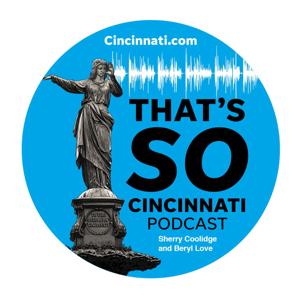
That's So Cincinnati

Download on the App Store

That's So Cincinnati episodes

  • S2 Ep46: That's So Cincinnati: Ex-mayor takes aim at Reds and Bengals on The Banks project
    Former Cincinnati Mayor Charlie Luken has emerged as a leading critic on the city and county's embattled riverfront development project, also known as The Banks. 

    And the former Congressman and local TV anchor didn't hold back in his criticism of The Banks on That's So Cincinnati this week, calling for new leadership on the project. Luken is a member of the city-county Joint Banks Steering Committee, which is supposed to provide oversight and decision-making power on the project. 

    But the committee rarely meets. 

    Here's just a sampling of what Luken said on That's So Cincinnati:

    "We've lost our way," Luken said of the committee. "And I think we've lost our way for so long that we have ceased to be effective. I do not believe that group can be repaired. There needs to be a new approach, and that falls to the elected people to lead on. I hope that they do. I don’t think it’s going to change much as long as (county attorney) Tom Gabelman and (Reds owner Bob) Castellini view this as their little project. As long as that happens, I see more fighting and more difficulty in the future."
    54 min
  • S2 Ep45: That's So Cincinnati: Attorney Chris Finney talks Larry Householder scandal, COVID-19 orders, ballot initiatives
    Cincinnati Attorney Chris Finney talks about his challenges of going against energy company-led efforts to reject a ballot initiative last year on Larry Householder's House Bill 6. Finney also discusses his legal battles against Gov. Mike DeWine's coronavirus-related orders. 

    Also this week: Co-hosts Jason Williams and Sharon Coolidge breakdown the scandal in Columbus and discuss a leisure trip on the Ohio River. 


    1 hr 1 min
  • S2 Ep43: That's So Cincinnati: Whatever happened to Downtown marina project?
    It's been four years since Cincinnati Parks leaders announced that the long-awaited riverfront marina was finally going to be built.

    Nothing has happened since, though. What happened? 

    New Cincinnati Parks Director Kara Kish told The Enquirer's That's So Cincinnati Podcast that the Parks Board earlier this year requested and got an extension until 2023 for the $1.5 million state grant being used to help get the project going. 

    "I am optimistic about (the marina)," Kish said. "I think it's in the future of the city."

    Learn more about Kish, the parks and the marina plan on this week's episode. 

    Also this week: Co-hosts Jason Williams and Sharon Coolidge breakdown the 2021 Cincinnati mayor's race in the wake of P.G. Sittenfeld's official campaign launch. 
    51 min
  • S2 Ep42: That's So Cincinnati: GOP candidate explains his idea for selling Paul Brown Stadium
    The burden of paying for future maintenance and upgrades to Paul Brown Stadium continues to loom large for Hamilton County taxpayers. 

    As the bill is coming due in a few years on deferred costs, Republican commissioner candidate Andy Black is proposing a solution: 

    Sell the stadium. 

    It's not a new idea, but Black is well-intentioned and has gathered a team of experts to work on a plan. 

    The former Mariemont vice mayor talks in-depth about his idea on That's So Cincinnati. Black's interview begins at the 13:40 mark in the episode.

    Also this week: 

    -- What the mask-wearing mandate means in Cincinnati

    -- Adventures in kayaking around Greater Cincinnati
    1 hr 11 min
  • S2 Ep41: That's So Cincinnati: Dusty Rhodes makes no apologies, doubles down on 'Black Lives Matter' comments
    Dusty Rhodes says Democrats can censure him "until the cows come home," but the long-time Hamilton County auditor isn't going to apologize for his recent tweet asking why Black Lives Matter isn't also focusing on children lost to abortions and shootings.

    Instead, Rhodes is doubling down on his comments and hopes it drives a conversation about emphasizing that "all black lives matter," he told The Enquirer's That's So Cincinnati podcast his week. 

    A anti-abortion Catholic and conservative-leaning Democrat, Rhodes said:

    "This whole Black Lives Matter thing has gotten in my craw real good. I appreciate the sentiment, but not the organization, which is a Marxist outfit hellbent on destroying our country as it stands right now. ...

    "They're killing more black babies in abortions than white as a ratio. And I think those black lives matter just as much as the three little kids who were killed (by gun violence) in Chicago this weekend. And nobody's talking about that. ...  

    "Black lives matter in the womb as well as in life outside the womb. I think it's a valid point and it ought to be discussed."

    To listen to the full podcast episode for free, click the Audioboom link at the top of the article. That's So Cincinnati can also be found for free on most podcast listening platforms, including Apple Podcasts and Spotify. Rhodes' interview begins at the 13:50 mark in the episode.

    Rhodes enraged some members of the Hamilton County Democratic Party on June 19, when he tweeted: "Just wondering when they are going to paint 'Black Lives Matter' on Auburn Avenue, you know, in front of that building where they terminate black lives and white ones, too, almost every day of the week."

    Planned Parenthood, the city's only abortion clinic, is located on Auburn Avenue in Mount Auburn. 

    Democratic Party Chairwoman Gwen McFarlin issued a statement three days later calling Rhodes' tweet "racist" and sexist," adding that she would begin the process of censuring the 30-year county auditor. 

    Rhodes said McFarlin contacted him before she released the statement. He called McFarlin a "good person" whom he's known for 30 years, but she caved to the party's progressives.

    "I like Gwen personally, but she couldn't stand up to them and she buckled," Rhodes said.

    Former local party chairman "Tim Burke would have never allowed this to happen," Rhodes said. "Tim Burke believed in a big tent and brought us all together. His only thing was do your job well and don't reflect badly on the party. That's what I've done consistently. I've never brought scandal to the party, and they can't say that about some of their favorites in City Hall."

    Rhodes said he'll continue to criticize Black Lives Matter for pushing a narrowly focused political agenda and ignoring taking up the cause of the importance of all Black lives. 

    "I'm going to say what I think, because I'm not going to let the party do my thinking for me," Rhodes said. "It's a horrible thing (George Floyd's death). But to use that as an excuse to destroy buildings and blocks and take over cities and everything else, I think that's a bridge too far. But everybody (politicians and media) is scared to say it. I can't believe it. They're hiding under their desks. It's time to step up." 

    Rhodes was first elected auditor in 1990, and he's always consistently held pro-life views. He's also been outspoken about those beliefs, often tweeting about it. Rhodes was asked if he thought the party issued the public rebuke now to put pressure on him to retire.

    "I'm not going to hide my opinion under a bushel basket," Rhodes said. "I've been pro-life from the start. They knew I was pro-life when I first ran for Delhi trustee. I was pro-life when they asked me to run for auditor. I was pro-life when they endorsed me two years ago. To expect that I'm going to keep quiet about that (is) ridiculous."

    He added: "The Democratic Party is not going to save my soul. My church comes before my party and that's the way I am."

    Rhodes, 80, reiterated that he'd already been thinking about retiring after his term expires in 2022. If he does decide to run again, however, Rhodes didn't definitively say whether he'd remain loyal to the Democrats or switch parties. 

    "I'd rather fight than switch," Rhodes said.
    53 min
  • S2 Ep40: That's So Cincinnati: Local TV veteran Courtis Fuller on 40 years of covering protests and the idea of possibly running for mayor again
    It's moments like this in our history when a journalist's experience, perspective and credibility are critical for viewers and readers. 

    WLWT-TV anchor and reporter Courtis Fuller has been a trusted voice for Greater Cincinnati for nearly four decades, and his institutional knowledge really pays off in major news events like the recent racial inequality protests. 

    He was on the streets covering the protests the past few weeks, just like he was in 2001 during the civil unrest in Cincinnati. And even then, Fuller had experience covering such an event, having started his career as a radio reporter in Milwaukee in the early 1980s.

    In a wide-ranging interview with The Enquirer's That's So Cincinnati podcast this week, Fuller recalled covering protests in Milwaukee after 22-year-old Earnest Lacy died while in police custody.

    "He died because a police officer put his knee on the back of his neck," Fuller said. "That's 1981. Up until now, it was the largest protest I had seen. People flooded the streets." The experience of covering "that is something I've carried with me over the years." 

    Fuller detailed the process of him going from covering the 2001 civil unrest for Channel 5 to running for mayor against Charlie Luken later that year.

    "I'm doing great in my career," Fuller recalled. "I was the main anchor. I had just gotten married. Life is going pretty good."

    He added: "I just didn't feel like I was doing enough personally." 

    Fuller won the primary, but lost in the general election. Will he consider running for mayor again in 2021?

    Local political watchers have been wondering whether an African American candidate will get into the race against David Mann and P.G. Sittenfeld, who hasn't officially announced yet. Fuller has been mentioned as a potential candidate.

    Fuller said "it's not something on the radar," but the Pittsburgh native didn't completely rule out the possibility of running again.

    "It's an interesting question," Fuller said. "I love David Mann. I love P.G. I think they are good servants for the city. David knows the ends and outs of this town as well as anyone and is committed to all communities. Both of them are very, very good candidates. But you do wonder if now is that time. It was the same way in 2001. I believe that there probably will be an African American candidate that emerges."

    Also on That's So Cincinnati, Fuller discussed the progress of the Cincinnati police department over the past 19 years and how he views the idea of "defund the police."  

    On the police progress:

    "Fortunately for our department, when you step back and try to be as objective as possible, we are doing an amazing job compared to where we were in 2001. And when I hear what other departments are doing, I think, wow, Cincinnati really has made tremendous strides, thanks to the Collaborative Agreement. Could more be done? Oh, absolutely. I think the chief is sincere and folks working in the department are sincere that they want to be the best department they can be. They're willing to listen; willing to work with the community."

    On "defund the police:"

    "As soon as I heard the term 'defund' floated, you immediately think that's probably not the best choice of words to use. I believe people want reform. But to use the term 'defund,' that just shifts the conversation to ... are you going to get rid of the police department? I don't believe that is the overall goal. I do believe people want changes. And they want things very similar to what we've attempted to do here in Cincinnati."

    1 hr 28 min
  • S2 Ep39: That's So Cincinnati: Police leader details his takeaways after crossing barrier, listening to protesters
    It'd be hard to find a law enforcement officer anywhere who understands police-community relations better than Cincinnati assistant police chief Paul Neudigate.

    The 30-year policeman last week climbed over a barrier during a racial equality protest and took the opportunity to talk with and listen to peaceful protesters. And he quickly realized: There's work to be done to bridge the relationship between police officers and a younger generation of Cincinnatians. 

    What protesters were saying "it hurt a little bit," Neudigate told The Enquirer's That's So Cincinnati podcast, because the police department has greatly improved its relationship with the community since the 2001 riots.

    "We have always said we have to work on our relationships with the community every single day," Neudigate said. "We had thought that we were getting close. That if something bad went down, the community knew that we're a new police department. We were much more responsive. We were much more transparent. We were much more engaging. And I think what we saw is we're just not there yet."

    Neudigate on June 2 crossed a barrier and began having conversations with protesters, a moment captured on video. He exchanged phone numbers with some of the protesters and has remained in touch with some of them, helping to answer their questions.

    He's been a leader in helping the department improve its relationships and reputation in neighborhoods across the city. It was part of the Collaborative Agreement that came out of the 2001 unrest, and Cincinnati police have been nationally recognized for its relationships in the community. 

    But Neudigate acknowledged that many younger citizens don't remember what happened 19 years ago, and some weren't born yet. The department needs to improve its public relations efforts, said Neudigate, who does a good job sharing news and positive stories on his Twitter feed. 

    "What I'm finding out from those conversations is a lot of the things that (protesters) want, a lot of the things that they think that we should be doing, we're already doing," Neudigate said. "We're just not doing a good enough job of making sure that the community is aware of all the different pieces that we've got moving."

    Neudigate's podcast interview offers candid insight into the Cincinnati police, including how the department's response compared to 2001.

    Neudigate's interview begins at the 21:15 mark in the episode.
    51 min
  • S2 Ep38: That's So Cincinnati: Top Cincinnati restaurateur worries about Over-the-Rhine's future
    Cincinnati chef and restaurateur Jose Salazar chuckles about a conversation he had with his wife in early March.  

    "Everything was just starting to click," Jose Salazar said about his three restaurants, the most popular being Salazar in Over-the-Rhine. "My wife about two weeks before the shutdown said, 'I feel great. I feel like for the first time in years I'm not worried whether I'm going to make payroll next week.' "

    Some 10 weeks later, Jose Salazar is fighting to stay in business.

    He talks in-depth about the challenges of reopening Salazar, Goose & Elder at Findlay Market and Mita's in Downtown on The Enquirer's That's So Cincinnati podcast.

    Salazar also worries about his peers as the restaurant industry tries to recover from the two-month pandemic shutdown. He has been part of Over-the-Rhine's renaissance in the past decade, and he worries what this pandemic will do to all the small businesses who've gone all in on the neighborhood. 

    "God, if all these restaurants don't survive, what's it going to look like again? It'd be hard to imagine it going back to a bunch of boarded up storefronts again. But I don't know. It's kind of scary. It's kind of scary to think that a good portion of our retail and restaurants might not survive all of this." 

    Will Salazar's restaurants make it? And what does he think about Gov. Mike DeWine's decisions to shutdown restaurants for two months?

    Find out on this week's That's So Cincinnati episode. Click the Audioboom link at the top to listen for free. Or listen to the episode for free on Apple Podcasts, Spotify, iHeart Radio and other listening platforms. 

    Salazar's interview begins at the 13:40 mark in the episode.

    1 hr
  • S2 Ep37: That's So Cincinnati: Councilman Chris Seelbach talks streetcar, text message scandal and FC Cincinnati
    Before the streetcar was shut down to passengers to prevent the spread of the coronavirus, there was a plan on the table to make it fare-free.

    Yes, free. Finally. Supporters have long said such a move would bolster weak ridership.

    Cincinnati City Councilman Chris Seelbach told The Enquirer’s That’s So Cincinnati podcast that the Cincinnati Bell Connector was going to be free to ride starting July 1. (Click the Audioboom link at the top of the article to listen to the podcast episode for free.) 

    It would have been free even sooner than that, Seelbach said, but there was concern about any discussion of the streetcar interfering with Cincinnati Metro’s levy.

    Now – with the streetcar still closed to passengers and the city facing gaping budget deficits – no one knows what will happen, Seelbach said.

    If Cincinnati doesn’t get some federal aid, he said, the streetcar may never open back up at all, let alone without fares.

    It was a shocking statement from one of the streetcar's biggest proponents.

    “That’s just the reality,” he said. “In addition to it not reopening, we will likely be shutting down all parks, all health centers, rec centers, your garbage is only getting pick-up once a month. I mean, that’s the dire situation we’re looking at if we don’t get assistance from the federal government. And so far we haven’t.”

    The streetcar launched in September 2016. It had a successful start – with more than 133,000 riders that first month – but it has been plagued by troubles since. Ridership quickly dropped, falling well below projections, and the streetcar has struggled to gain revenue from advertising and fares.

    With the breakout of COVID-19, under the orders of the Cincinnati health commissioner and Mayor John Cranley, the streetcar has been closed since April 1.

    Rather than shutting down completely, though, the streetcar has been running without passengers. Officials said it would cost between $300,000 and $1 million to bring the streetcar back into service after a complete shutdown. Running it empty, save for a skeleton crew, costs roughly $138,000 a month.

    Travis Jeric, interim deputy director of the streetcar, did not return a message seeking comment about a potential plan to make the streetcar far-free.

    David Mann, city council’s budget and finance committee chair, said he’s not sure where the July 1 date came from.

    Mann has long advocated for a fare-free streetcar but said he was unaware of any concrete plans.

    “I had not heard a definite date, and I haven’t heard anything about it since the stay at home orders and the temporary closing,” he said. “It’s pretty obvious, I think, that we’re going to have a heated debate about what to do about the streetcar, ranging from close it to bring it back the way it was to free service.”

    Mann is worried now about the city’s overall budget, which has a projected $15 million deficit this fiscal year and a projected $90 million deficit next fiscal year, recently upped from an earlier $80 million projection.

    He thinks city council needs to tackle that budget first – “which is going to be misery” – and then it can take up the streetcar issue.

    The streetcar's operating budget is $5 million a year, but it's set up to be self-sustaining. The money is to come from fares, advertising naming rights and developers who benefit from proximity to it. But it was falling short even before the pandemic.

    Last year, Cincinnati City Council had to cover a $1.4 shortfall in that budget with operating budget money. The same struggles this fiscal year, coupled with the pandemic shutdown mean that amount will likely climb.

    Also on this week's That's So Cincinnati episode, Seelbach discussed: 

    • City Council's Gang of 5 text message scandal
    • FC Cincinnati's new West End stadium 
    • Gentrification of Over-the-Rhine 
    • 1 hr 2 min

    About That's So Cincinnati

    From the publisher's feed

    This podcast is about you: The Cincinnatian. Let The Enquirer's Beryl Love and guest hosts make the complicated local issues affecting your daily life easy to understand – and have some fun in the process. Our guest list is a who's who of Greater Cincinnati, and we celebrate the quirky awesomeness that defines this place we call home. Why? Because that's SO Cincinnati.

    More shows like That's So Cincinnati

    Fresh Air by NPR

    Fresh Air

    37,829 Listeners

    NPR Music by NPR

    NPR Music

    3,152 Listeners

    Travel with Rick Steves by Rick Steves

    Travel with Rick Steves

    2,496 Listeners

    Code Switch by NPR

    Code Switch

    14,640 Listeners

    Cincinnati Edition by Cincinnati Public Radio

    Cincinnati Edition

    66 Listeners

    1A by NPR

    1A

    4,692 Listeners

    Pod Save America by Pod Save America

    Pod Save America

    87,783 Listeners

    The Daily by The New York Times

    The Daily

    112,171 Listeners

    Up First from NPR by NPR

    Up First from NPR

    56,559 Listeners

    Sunday Sitdown with Willie Geist by Willie Geist, Sunday TODAY

    Sunday Sitdown with Willie Geist

    4,309 Listeners

    Hysteria by Hysteria

    Hysteria

    7,282 Listeners

    What A Day by What A Day

    What A Day

    12,364 Listeners

    The Weekly Show with Jon Stewart by Comedy Central

    The Weekly Show with Jon Stewart

    10,791 Listeners

    The Headlines by The New York Times

    The Headlines

    739 Listeners

    The Opinions by The New York Times Opinion

    The Opinions

    608 Listeners