
Sign up to save your podcasts
Or

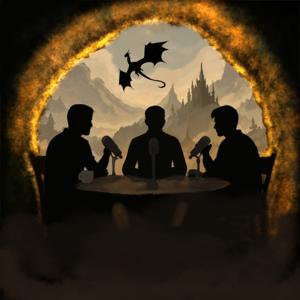


We dig into what separates a great plot twist from a cheap one. The setups that pay off, the reveals that cheat the audience, and the moments that stick with you long after the credits roll. Along the way we get into the Star Wars sequel pile-on, whether the Snape reveal held up at the character level, and how films like The Sixth Sense, The Prestige, and Shutter Island define the form. Plus recent reads and shows we've been catching up on, and why a satisfying twist beats a shocking one every time.
In this episode, we dig into the craft of building fantasy worlds and the trap of building so much that the story never starts. We debate where the line sits between rich worldbuilding and self-indulgent lore-dumping, how to teach readers the rules of a world without lecturing them, and whether magic systems need to be fully defined (Sanderson-style) or can stay mysterious (Tolkien-style). Along the way: worldbuilding paralysis, Patrick Rothfuss's prose and why book three still isn't out, a pitch for a gloriously unhinged mash-up world, and a brief detour into Reacher and the problem of contrived storytelling.
The crew talks all about dragons, and the reading habits that surround them. We start with a quick detour through Middle-earth creature taxonomy (are Fell Beasts dragons? do orcs and goblins count as the same thing?) before landing on our favorite dragons on screen, from Reign of Fire to the nostalgic picks that shaped us. From there we move to the page: our favorite literary dragons, the fantasy books still on our wish lists, and a wider conversation about audiobooks, prose style, and pacing... why some writers pull us in and others don't. We close with the etiquette of spoilers and how to make a book recommendation that actually lands, before Dungeon Crawler Carl takes the crown and we share what's next on our reading stacks.
The Ocarina of Time trailer finally dropped — is the remake adding meaningful gameplay or just polishing nostalgia? We dig into what Nintendo showed at the Zelda Direct, and whether they can win back skeptical fans. From there the conversation widens: Nintendo's aggressive legal culture, Sony frustrations, why physical media still matters, and whether Nintendo is creatively stagnant — should they even stay in the hardware business, or would stepping back lead to stronger new IPs? Plus a preorder tip on the way out.
Why are some villains genuinely terrifying while others just wear the costume? In this episode we dig into what makes a character intimidating on the page — starting with what we've been reading lately, then working through the mechanics of fear itself. We look at the examples that prove the rule, the moment intimidation stops working, and why the Nazgûl land harder than Sauron ever does. We close on the bigger question: what kind of fear actually sticks with a reader?
Chapters: 00:00 What We've Been Into Lately
06:30 What Makes a Character Intimidating?
11:23 Examples That Prove the Rule
17:25 When Intimidation Stops Working
24:22 Why the Nazgûl Work Better Than Sauron
30:23 What Kind of Fear Works Best?
Alec, Josh, and Ryan kick things off with what they've been reading and watching lately... including Josh bailing on a fantasy series and championing the wild manga Fire Punch... before diving into the episode's main question: what exactly is plot armor? We break down the concept, walk through examples of plot armor done badly (and why it feels so contrived), and debate whether it's an all-encompassing storytelling flaw or something more situational that depends on tone and reader perception. From there, the conversation turns to whether plot armor can actually be used well in stories audiences love, wrapping up with a look at prophecy, chosen ones, and a final verdict on when plot armor earns its keep.
In this episode of The 4th Draft, each host takes a turn pitching a book they love and trying to convince the others to pick it up. Josh makes the case for UnOrdinary, a webcomic with a rough opening stretch but standout character conflict once it hits its stride. Ryan pitches The Demon Accords as fast-paced urban fantasy — and the crew debates whether it shares a vibe with Supernatural. Alec takes on the tallest order of the night: selling everyone on The Silmarillion, arguing that Tolkien's deep lore adds real emotional weight to Middle-earth (and defending why you should actually read it instead of skimming Wikipedia). Plus: a weekly catch-up on what we've been reading, listening to, and playing, and a verdict on whose pitch landed hardest.
Zelda had a rock-solid identity for decades... so what happened? Alec, Ryan, and Josh trace the DNA of the Zelda formula from the original NES game through A Link to the Past, argue about whether Breath of the Wild and Tears of the Kingdom still count as "real" Zelda games, and rank their favorites (spoiler: the darker entries win).
Josh makes the case for Outer Wilds as the greatest video game of all time! A game he says everyone he's recommended it to has thanked him for... and the guys debate whether it's worth pushing through its brutal early hours. Plus: a Smash Bros callout, a childhood N64-game confession round, and a heated fight over whether the Ocarina of Time remake (and its "Pixar-ified" great fairy) can ever live up to nostalgia.
Games discussed: The Legend of Zelda, Zelda II, A Link to the Past, Ocarina of Time, Majora's Mask, Wind Waker, Twilight Princess, Breath of the Wild, Tears of the Kingdom, A Link Between Worlds, Outer Wilds, Donkey Kong 64, Diddy Kong Racing, Elden Ring
Welcome to The 4th Draft Podcast! Alec, Ryan, and Josh kick things off with the books they can't put down right now, including Ironbound by Andrew Givler (progression fantasy meets Roman legion), Dungeon Crawler Carl, He Who Fights with Monsters, and a certain debut novel called A Shroud Undone by Alec himself.
Then the guys go back to the beginning: the exact books that turned them into lifelong fantasy readers, from David Eddings' Belgariad to a dad reading The Hobbit at bedtime. Along the way: a heated Wheel of Time vs. lit RPG debate, an Egwene hot take, and an honest conversation about separating art from problematic artists.
Grab a drink and settle in! This is the start of a weekly deep dive into everything fantasy and sci-fi, where we'll be discussing mostly books, movies, and video games.
Books mentioned: Ironbound (Andrew Givler), Dungeon Crawler Carl, A Shroud Undone (A.M. Woodbury), He Who Fights with Monsters (Shirtaloon), The Belgariad & The Malloreon (David Eddings), Wheel of Time (Robert Jordan), Stormlight Archive (Brandon Sanderson), Kingkiller Chronicles (Patrick Rothfuss), and The Hobbit (J.R.R. Tolkien)
From the publisher's feed