
Sign up to save your podcasts
Or

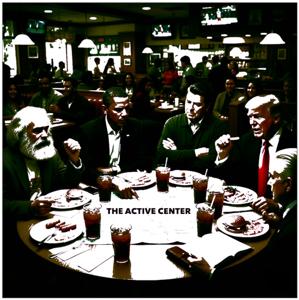


President Donald Trump is a political phenomenon. I can truly say from my own personal experiences from my early days of simply understanding that there was a President of the United States, from Jimmy Carter to Donald Trump, President Donald Trump without any doubt has been the most dynamic subject to observe and study from an academic political science point of view.
The 2026 fiscal year and recent diplomatic breakthroughs offer a real-time laboratory for seeing Donald Trump’s syncretic political identity in action. By examining his 2026 Budget Proposal, the November 2025 Trade Arrangement with China, and his direct equity investments in the tech sector, we can see how his conservative, liberal, populist, opportunist, and even socialist traits are currently shaping the American landscape.
The administration’s 2026 budget request, titled with "America First" branding, is a study in ideological contrast.
The budget reflects deep-seated conservative desires to dismantle the "Administrative State." It proposes an 83.7% cut to the State Department and USAID, shifting foreign policy from "handouts to investments." Additionally, the proposed 15.3% reduction in Department of Education funding serves the long-held conservative goal of "shutting down" the department and returning control to the states.
A central pillar of this conservative agenda is the "Restoring Biological Truth" initiative. Under Executive Order 14168, the administration established a government-wide policy defining "sex" as an immutable biological classification determined at birth based on reproductive biology and genetics. This was further solidified by Executive Order 14201 ("Keeping Men Out of Women's Sports"), which mandates that any educational institution receiving federal funding must reserve female athletic categories and private spaces, such as locker rooms, exclusively for biological females. The Department of Education has been directed to aggressively enforce these standards under Title IX, framing the policy as a defense of "fairness, safety, and the rights of women" against "gender ideology extremism."
While cutting traditional agencies, the budget carves out $500 million for the "Make America Healthy Again" (MAHA) initiative. This program, influenced by Robert F. Kennedy Jr., targets the "corrupt" food and pharmaceutical industries—a populist pivot away from traditional corporate-friendly GOP stances. Meanwhile, a massive $175 billion for Homeland Security frames the border as an "invasion," a core populist rhetorical pillar.
The recent trade deal struck with President Xi Jinping in late 2025 illustrates the "transactional" nature of the Trump presidency.
In early 2025, the administration imposed staggering tariffs that pushed effective rates to their highest levels since the 1940s. This level of government intervention in the free market is a radical departure from traditional "small government" conservatism, utilizing state power to force manufacturing back to the U.S. In a classical sense, this protectionism aligns more with 20th-century pro-labor liberalism than free-market Reaganism.
Furthermore, Trump’s social platform contains "liberal" elements that distinguish him from the religious right. He was the first Republican nominee to wave the Pride Flag on a campaign stage (Greeley, 2016) and has consistently stated that he is "fine" with same-sex marriage, viewing it as settled law. Most significantly, his 2025-2026 stance on reproductive rights has been a major point of contention with his conservative base; he has repeatedly rejected a national abortion ban, instead promoting a policy where the "will of the people" in each state determines the legality of abortion through local voting and legislation—a stance that allows for more liberal reproductive access in "blue" and "purple" states.
By November 2025, however, Trump pivoted. After using "triple-digit" tariff threats to rattle global markets, he signed an agreement in the Republic of Korea to suspend heightened reciprocal tariffs until late 2026. In exchange, he secured immediate, high-visibility wins: China agreed to purchase 25 million metric tons of soybeans annually through 2028 and halt fentanyl precursor exports. This shift from "total trade war" to a "stabilizing deal" demonstrates an opportunist's willingness to prioritize a "win" for his electoral base (farmers) over a rigid, permanent decoupling.
Perhaps the most startling evolution in the Trump administration is its embrace of "Republican Socialism"—the direct ownership of private industry by the federal government.
In August 2025, the administration converted roughly $8.9 billion in previously authorized CHIPS Act grants into a 9.9% equity stake in Intel Corporation. Under this arrangement, the U.S. government became the company's largest shareholder. The deal also included a "golden share" provision, granting the government a non-equity stake with specific veto powers over major corporate decisions, such as leadership changes or the relocation of manufacturing facilities.
Critics, including some within the GOP like Senator Rand Paul, have described this as a step toward a socialist command economy. In such systems, the state—rather than the market—directs the "means of production" toward national goals.
Trait
Application in 2025-2026 Policy
Conservative
Defining sex as an immutable biological binary; Banning biological males from female athletics; Cutting the Dept. of Education.
Liberal
Wielding tariffs; Supporting same-sex marriage; Deferring abortion rights to state-by-state voting.
Populist
The MAHA initiative; Reclassifying the federal workforce (Schedule F) to increase presidential control.
Opportunist
Suspending tariffs on China to secure soybean deals; Shifting trade focus from "structural reform" to "technical wins."
Socialist
Taking a 9.9% equity stake in Intel; Using "Golden Shares" to influence private corporate management.
In early 2026, the administration appears less interested in following the 20th-century definitions of "left" or "right" and more focused on Nationalist Pragmatism. The budget, the China deal, and the nationalization of chip-sector equity suggest a President who is conservative in his view of biology and bureaucracy, liberal in his social views and market intervention, populist in his choice of enemies, and a socialist-style command leader in his view of critical national industry.
Giovanni Gentile (1875–1944) was an Italian idealist philosopher and educator, widely regarded as the intellectual architect and "philosopher of Fascism." Working closely with Benito Mussolini, Gentile formalized the ideological basis of the movement, notably through his contributions to the 1932 essay The Doctrine of Fascism.
Gentile's philosophy was rooted in Hegelian neo-idealism, which he termed "Actual Idealism." This system prioritized the State as the highest expression of the national will and spirit—the "Ethical State"—where the individual finds true liberty only through complete submission to the community, as expressed by the State.
The notion that Fascism is a variant of socialism is rooted in the early history of the movement and the radical rhetoric of its founders, particularly Gentile. This perspective defines "socialism" not by the Marxist concept of international working-class solidarity and the abolition of private property, but by the principle of collectivism and the complete subordination of private interests to the collective will.
In this context, Gentile is recorded as stating:
“Fascism is a form of socialism, in fact, it is its most viable form.”
This quote highlights the Fascist self-conception as a "Third Way" that rejected both the materialism and internationalism of Marxist socialism, and the individualism and laissez-faire economics of liberal capitalism. The Fascist economic system, known as Corporatism, aimed to organize all sectors of society (workers and employers) into state-controlled guilds that eliminated class conflict by forcing cooperation for the benefit of the nation-state. This state domination of the economy, planning, and control over production is the key feature Fascists used to draw a parallel to certain collectivist aspects of socialism.
Gentile's divergence from Marx was fundamental, resting primarily on the rejection of materialism in favor of spiritual idealism:
Feature
Marxist Socialism (Historical Materialism)
Fascist Doctrine (Actual Idealism)
View of History
Materialist: History is driven by objective economic forces and the struggle between classes.
Idealist/Spiritual: History is driven by the subjective will, spirit, and moral development of the nation.
Core Conflict
Class Struggle: The ultimate conflict is between the bourgeoisie and the proletariat.
National Struggle: The ultimate conflict is between nations; internal classes must be harmonized and unified within the state.
The Dialectic
Objective: The dialectic is an external, material process (historical laws) that can be scientifically observed.
Subjective/Active: The dialectic is an internal, active, and immediate process of the human mind and the State's constant creation of reality.
The Individual
Individual interests are dissolved into the collective proletariat, aiming for a stateless, classless society (Communism).
The individual is inseparable from the State; all personal action must serve the spiritual, permanent Nation.
For Gentile, Marx’s focus on economic structure and class conflict was insufficient because it ignored the supreme importance of the collective spiritual and moral life embodied in the Nation. Fascism sought to replace the horizontal division of class struggle with the vertical unity of the national community.
The Fascist critique of representative democracy, often called "Liberal Democracy," stemmed directly from Gentile's philosophy that prioritized the State's ethical unity over individual rights. Fascists claimed that their system represented a "True Democracy" or "Organic Democracy," which was superior.
Feature
Representative (Liberal) Democracy
Fascist ("True") Democracy
Core Principle
Individualism & Pluralism: Government by the consent of the governed; protection of minority rights; institutionalized political competition and compromise.
Unity & Totalitarianism: The collective will of the people is expressed by the State; political competition is forbidden as "divisiveness."
Mechanism
Representation: Citizens elect representatives (parliament) to debate and decide on their behalf, often leading to slow, fragmented action.
Organic Unity: The leader (Duce) is the direct embodiment of the Nation's will, acting decisively and without friction, making all citizens part of a single, living organism (the State).
View of the People
The people are a collection of individuals with conflicting, atomized interests.
The people are a single, unified, spiritual entity whose sole existence and value are found in submission to the State.
Role of the State
Limited, restrained by constitutional checks and balances (e.g., courts, parliament).
Absolute and unlimited (Totalitarian). The State creates and defines reality and morality.
While Fascism is classified as a far-right ideology, it represents a revolutionary and totalitarian form of nationalism that required the subversion or elimination of the traditional, reactionary far-right institutions, such as the Monarchy and the old aristocratic elites. These traditional groups, which prized duty and heritage over the totalitarian cult of the individual leader, represented a competing source of loyalty and authority that was incompatible with the Fascist demand for absolute state unity.
Benito Mussolini, though fundamentally a republican, maintained the Italian monarchy under King Victor Emmanuel III for pragmatic reasons. This created a dyarchy (rule by two centers of power) where the King remained the formal Head of State, lending Fascism the legitimacy it needed to win over conservative and military elites.
Adolf Hitler faced the institutional power of the conservative military and aristocratic elite, personified by President Paul von Hindenburg, a venerated military leader. Hitler ruthlessly eliminated these competing centers of authority to achieve totalitarian control:
Monarchy and the aristocracy are considered far-right because the political spectrum originated in the French Revolution of 1789, where:
The far-right is defined by its embrace of hierarchy, tradition, authority, and anti-egalitarianism. Absolute Monarchy is the ultimate embodiment of this principle, as it:
While Fascist intellectuals like Gentile presented their movement as a superior form of socialism and collectivism that transcended the left/right divide (a "Third Way"), the most popular or mainstream consensus in political science classifies Fascism as a far-right ideology. Although there is a school of thought which chooses to label fascism as a far-left ideology based on a deep research into the complexities of Gentile’s philosophy.
This classification is based on the following non-negotiable differences from traditional socialism:
Fascism's self-perception as a revolutionary movement transcending the old left-right axis leads some analysts to classify it as a form of "radical left" or "revolutionary centrist" collectivism based on specific “non-negotiable” policies and actions:
Since the 1979 Islamic Revolution, Iran has been governed by a "Velayat-e Faqih" (Guardianship of the Jurist) system. This far-right theocratic structure places absolute power in the hands of a Supreme Leader. This leadership operates on a bigoted, narrow perception of life that prioritizes religious dogma over individual liberty, viewing Western influence ("Westoxification") as a moral plague. The regime's worldview is defined by an uncompromising "us vs. them" mentality that seeks to export its radical ideology across the Middle East.
The regime's "vision" for Iran is enforced through the brutal suppression of marginalized groups, often resulting in state-sanctioned murder.
Iran is the world's leading state sponsor of terrorism, utilizing the Islamic Revolutionary Guard Corps (IRGC) to fund and direct proxies.
Significant concerns have been raised regarding the infiltration of Iranian agents and terrorists through the U.S. southern border:
Iran’s role in the 10/7 massacre was pivotal and characterized by direct high-level coordination. While the regime publicly maintains "deniability," intelligence reports and captured documents have identified the specific Iranian officials who greenlit and oversaw the operation.
The Iranian-backed invasion resulted in the most horrific atrocities committed against Jewish people since the Holocaust, including:
Under President Trump, the U.S. moved from "Maximum Pressure" to direct kinetic action. The decision to remove the far-right religious and IRGC leadership—building on the precedent of the 2020 Soleimani strike—has created a new geopolitical reality.
Social: The removal of these architects of repression offers a generational opportunity for the Iranian people to reclaim their country and move toward a secular, free society.
Niccolò Machiavelli, in his 1513 treatise The Prince, argued that a ruler (the Prince) must be prepared to "enter into evil when necessity commands" to ensure the stability and security of the state. While Machiavelli never used the exact phrase "the end justifies the means," the concept permeates his work: the ultimate goal—the preservation of the state and the removal of existential threats, is so paramount that it overrides conventional moral or legal constraints.
In the context of President Trump’s decision to launch Operation Epic Fury on February 28, 2026, the administration has adopted a starkly Machiavellian posture. The "End" is the absolute prevention of an Iranian nuclear weapon and the neutralization of a regime that has targeted U.S. interests for nearly half a century. The "Means"—a massive, unprovoked opening strike targeting the Supreme Leader’s compound and nuclear infrastructure—represents a departure from traditional "proportional" responses in favor of a decisive, amoral application of power intended to shock the system into collapse.
The United States and Iran have been in a state of "Cold War" since the 1979 Islamic Revolution. The philosophical differences are foundational:
Since the 1979 Hostage Crisis, the U.S. has viewed Iran not just as a competitor, but as a "rogue state" that uses asymmetric warfare (proxies like Hezbollah and the Houthis) to undermine the American-led order.
President Trump has signaled that his "End Game" is not merely a better nuclear deal, but the total dismantling of the current theocratic structure.
Can this be done in weeks? While the military destruction of static targets (nuclear sites, naval bases) can be achieved in days, regime change is rarely a weekly event. Historical precedents (Iraq, Libya) suggest that while the "top" of a regime can be decapitated quickly, the resulting power vacuum often leads to prolonged civil strife. However, the Trump administration appears to be betting that the Iranian public is at a "breaking point" and will do the work of regime change themselves if the IRGC is sufficiently weakened.
President Trump must navigate a fractured Iranian political landscape:
Today's opening attack involved significant coordination and support from regional allies who view Iran as an existential threat:
President Trump’s strategy is a high-stakes gamble on Political Realism. By prioritizing the "End" (security through regime collapse), he has discarded the "Means" of traditional diplomacy. The coming weeks will determine if this Machiavellian stroke leads to a "liberated" Iran or a region-wide conflagration.
On February 23, 2026, President Donald J. Trump issued a proclamation designating February 22 as National Angel Family Day. The text serves as both a memorial for victims of crimes committed by illegal aliens and a progress report on the administration's aggressive immigration and border security overhaul. The proclamation emphasizes that such tragedies are "100 percent preventable" and outlines the legislative and executive actions taken during the first year of the term to address these issues.
The primary purpose of the text is to honor "Angel Families"—those who have lost loved ones to crimes or drug trafficking involving individuals in the country illegally. The proclamation seeks to provide these families with the public recognition and justice the President claims they were previously denied.
Key Quote (President Trump): "We stand with the Angel Families, many of whom continue to be left without justice... we renew our duty to uphold the rule of law, secure our borders, and deliver accountability for every American killed."
The report highlights specific victims to personify the consequences of border security failures. By naming individuals like Laken Riley, Jocelyn Nungaray, and Rachel Morin, the text argues that immigration policy is not merely a political issue but a matter of life and death.
Key Quote (President Trump): "The human cost of the migrant crime crisis is written in the lives of Americans like Laken Riley... each of these lives and countless others were stolen by criminal illegal aliens who should have never been in our country."
At today's White House event, the administration highlighted the specific details of high-profile cases and provided a platform for the parents of the victims.
Laken Riley, a 22-year-old nursing student, was murdered on February 22, 2024, while jogging at the University of Georgia. Her killer, Jose Ibarra, a Venezuelan national who had entered the country illegally in 2022, was convicted of felony murder after DNA evidence was found under Riley's fingernails from her struggle to fight him off.
Jocelyn Nungaray, aged 12, was lured under a bridge in Houston on June 16, 2024, where she was tied up, sexually assaulted, and strangled by two Venezuelan nationals. The suspects had been apprehended by Border Patrol and released into the interior just weeks before the murder.
Rachel Morin, a 37-year-old mother of five, was ambushed, raped, and murdered in August 2023 while running on the Ma & Pa Trail in Bel Air, Maryland. Her killer, Victor Antonio Martinez-Hernandez, was an illegal immigrant from El Salvador who was also linked by DNA to a home invasion and assault on a 9-year-old girl in Los Angeles.
The text identifies several key actions taken to address the concerns of Angel Families:
The proclamation cites specific metrics to demonstrate the effectiveness of the administration's "ferocious energy" in border enforcement:
The text concludes by framing border security as the foundation of statehood. It positions the "National Angel Family Day" not just as a day of mourning, but as a day of national resolve to ensure "a people without justice can never be fully free."
Final Proclamation Instruction: President Trump calls on Americans to "assemble in their respective places of worship to pay homage to the victims... and lift up the Angel Families and families devastated by drug overdoses."
The observation that marital status is a primary driver of homeownership is supported by significant demographic data. While the overall homeownership gap between Black and White households remains a persistent 28–30 percentage points, the gap narrows significantly when comparing married couples.
To understand the full impact of the homeownership gap, one must examine the "Marriage Gap." Because marriage provides such a significant boost to homeownership, the lower prevalence of marriage in certain communities directly correlates to lower aggregate homeownership rates.
According to 2025 demographic projections based on American Community Survey (ACS) trends:
Demographic Group
Estimated Marriage Rate (Adults 18+)
White
53.5%
Asian
58.2%
Middle Eastern
51.0%
Latino/Hispanic
44.8%
Black
29.4%
Recent data from the U.S. Census Bureau and the National Association of Realtors (NAR) (2023-2025 snapshots) reveals a stark contrast in homeownership rates when adjusted for marital status.
Demographic Group
Overall Homeownership Rate
Married Homeownership Rate (Estimated)
White Households
72.4%
82% – 84%
Black Households
44.7%
65% – 67%
The Gap
27.7 Points
15 – 18 Points
The following table expands the scope to include Asian, Latino, and Middle Eastern/North African (MENA) demographic data, showing how marital status elevates homeownership across different backgrounds.
Demographic Group
Overall Homeownership
Married Homeownership
Percentage Point Increase
White
72%
83%
+11%
Asian
63%
74%
+11%
Middle Eastern
58%
69%
+11%
Latino/Hispanic
49%
62%
+13%
Black
45%
66%
+21%
Note: Black households see the single largest statistical "leap" in homeownership status upon marriage compared to any other demographic group.
The surge in homeownership for married couples isn't just social; it is rooted in financial logistics and risk mitigation:
Despite the "Marriage Equalizer," a significant gap remains even for married couples. Experts point to several factors that marriage alone cannot solve:
White married couples are statistically more likely to receive substantial down payment assistance from parents or grandparents. Because of the historical inability of previous Black generations to build equity (due to redlining and GI Bill exclusions), Black married couples are more likely to be "first-generation homeowners" starting from zero.
Data from 2024–2025 shows that Black mortgage applicants are still denied at nearly double the rate of White applicants, even when adjusting for similar income levels.
The valuation of homes in majority-Black neighborhoods is affected by a complex intersection of bias and environmental factors. Research from The Brookings Institution indicates that homes in Black neighborhoods are undervalued by an average of $48,000 per home, amounting to $156 billion in cumulative lost equity.
The "Marriage Gap" isn't uniform across the U.S. Some regions show much higher rates of Black homeownership:
Homeownership rates have fluctuated significantly over the last two decades, influenced by broad economic cycles and administration-specific policies.
The Obama era was defined by the long-term recovery from the 2008 Financial Crisis. Black households were disproportionately hit by subprime lending and subsequent foreclosures.
The Trump administration saw a period of low interest rates and a pre-pandemic economic boom that began to stabilize homeownership rates.
This era was marked by high market volatility, record home price appreciation, and significant fluctuations in minority homeownership.
Marriage is perhaps the single most effective demographic "lever" for increasing Black homeownership. However, it cannot fully compensate for the lack of intergenerational wealth, lending complexities, or the economic impact of neighborhood crime and insurance costs which devalues black owned property and equity rates, policy-focused solutions remain necessary to close the final 15% of the gap.
Hearing Title: An Inside Job: How NGOs Facilitated the Biden Border Crisis
Date: July 16-17, 2025
Committee: House Committee on Homeland Security
Subcommittee Chair: Josh Brecheen (R-OK)
The House Committee on Homeland Security held a series of hearings investigating the role of Non-Governmental Organizations (NGOs) in the ongoing border crisis. The central thesis of the report is that a multi-billion dollar "Border Industrial Complex" has emerged, where NGOs act as a "pipeline" to facilitate mass illegal immigration and, in many cases, inadvertently or negligently assist human trafficking operations.
Key allegations include:
"It was a pipeline, man. We fed a pipeline of tender-aged children into sex trafficking and slave labor into our country. We’re finding these kids—we’re tracking these fraudulent documents." — Rep. Clay Higgins
"What we've uncovered is essentially an assembly line of exploitation: children moved through cartel-controlled smuggling routes... handed to Border Patrol, processed by HHS, passed to NGOs... and ultimately delivered to cartel networks." — Ali Hopper
"The Biden administration turned the Border Patrol into nothing more than a welcome center—a day care—and glorified Uber drivers that ferried illegal aliens to open-borders organizations." — Mike Howell
"In 2020, Endeavors reported $52 million in revenue. In 2022, they reported a record $1.18 billion... the compensation for the CEO doubled." — Rep. Michael Guest
"One shelter in El Paso told me in 2023 around 80 percent of the women who came to them had been raped, sometimes in front of their children... their 'help' ends up harming the people who used their services." — Julio Rosas
"From August 2023 to January of 2025, 65,000 calls [to the safety hotline] went unanswered. Those calls spanned from complaints about stale bread all the way to being abused." — Ali Hopper
Cherokee Federal: Allegations included a gang member employed under a false identity being put in charge of child placements.
On February 20, 2026, the Supreme Court delivered a major blow to the administration’s trade policy, ruling that the President cannot use emergency powers (specifically IEEPA) to bypass Congress’s constitutional authority to levy taxes and tariffs.
Writing for the majority, Chief Justice John Roberts clarified the fundamental nature of trade duties. He rejected the administration's argument that "regulating importation" under emergency law includes the power to set tariff rates.
"The Constitution very clearly assigns the authority to levy taxes—including tariffs—to Congress. The Framers did not vest any part of the taxing power in the Executive Branch. A tariff is a tax, and in our system, the power of the purse belongs to the people’s representatives."
— Chief Justice John Roberts
This quote reinforces the idea that tariffs are not merely tools of foreign policy or "regulations" of trade, but are domestic taxes paid by American importers and consumers.
The SCOTUS ruling specifically targeted the use of IEEPA. The President still has other, more targeted tools, though they require longer processes:
This ruling is a modern validation of Justice Antonin Scalia’s philosophy on why the United States is "exceptional." Scalia famously argued that the Bill of Rights is not what makes America unique—many "banana republics" have bills of rights that look better on paper.
Scalia maintained that American Exceptionalism lies in the Structure of Government. He argued that the Separation of Powers and the system of Checks and Balances are the "chains" that bind the "mischief" of government.
In this case, the Supreme Court fulfilled its "exceptional" role: ensuring that even the most powerful executive cannot seize the "Power of the Purse" without a clear mandate from the people's representatives in Congress.
Artist: The Phylum Chordata (David Sepe)
Release Date: 2026
Genre: Ethereal Dream Pop / Ambient Electronic
Twenty years is a lifetime in the music industry, but for David Sepe, the mastermind behind the moniker The Phylum Chordata, it seems the hiatus since 2005 was merely a period of deep observation and personal growth. His return single, "Eternity of Peace," is a profound, technological, and spiritual meditation that bridges the gap between the digital and the divine.
The genesis of the track is as modern as its themes are ancient. Sepe reportedly built the foundation of the song from a choir sample discovered within the libraries of Final Cut Pro. What began as a utilitarian video editing asset was transformed into a "vibrating space" pad synth line, creating a wide, atmospheric stage.
The sonic landscape is anchored by a "pingy," ethereal timbre that sits somewhere between a dulcimer and a felt piano. It provides a tactile, organic counterpoint to the swirling synthesizers, mimicking the "fleeting time" Sepe describes in his lyrics.
However, the most intriguing element is the vocal performance. Embracing the cutting edge of music production, Sepe utilized AI tools (Sepe uses “Ai” because “AI” looks like the name Al…it drives him nuts) to create a persona he calls Josephine Bodean. Bodean’s performance is hauntingly perfect for the genre; her voice possesses a crystalline, "otherworldly" quality that feels detached from the physical world, yet deeply emotive.
At its heart, "Eternity of Peace" is a love letter to fatherhood. Sepe explores the "transient and impermanent thought" of current existence, juxtaposed against a firm belief in a conscious afterlife.
The lyrics move through several key emotional phases:
"Eternity of Peace" is a stunning return for The Phylum Chordata. It manages to make high-concept Ai production feel intensely human and intimate. By focusing on the specific joy of watching his children grow, David Sepe has created a universal anthem for anyone who has ever looked at a loved one and wished that a single moment could last forever.
In this track, Sepe convinces us that perhaps it can.
I’m ready
I’ve lived the dream
True Love found in our fleeting time together
Everything happens for a reason, for some reason, that I don’t understand
I’m so blessed to have made the choices that led to this very transient and impermanent thought
I won’t always exist in the here and now, but I will exist in you and your existence
I’m ready
I’ve lived the dream
Our seconds, moments, hours, and other measures of time will nourish my other worldly existence
Heaven does exist
I will live forever with you in the eternity of Peace
The late Civil Rights icon John Lewis often spoke of "Good Trouble,” the moral necessity of disrupting unjust systems to precipitate progress. While this phrase is frequently associated with the voting booths and lunch counters of the American South, its spirit found a powerful, albeit unexpected, champion on the baseball diamond. Curt Flood, an elite center fielder for the St. Louis Cardinals, transformed a personal grievance into a seminal moment in labor history. By challenging Major League Baseball’s (MLB) reserve clause, Flood bridged the gap between the Civil Rights Movement and economic justice, ultimately sacrificing his career to pave the way for the era of the Black millionaire athlete.
To understand Flood’s impact, one must first recognize the stature of the man himself. By 1969, Curt Flood was a cornerstone of the St. Louis Cardinals, a three-time All-Star, and a seven-time Gold Glove winner. However, his identity was not confined to the outfield. Having marched for civil rights alongside Jackie Robinson and witnessed the vitriol of segregation in the minor leagues, Flood possessed a social conscience that refused to separate the game of baseball from the broader struggle for human dignity. This conscience was put to the test when the Cardinals traded him to the Philadelphia Phillies without his consent, a move that triggered a rebellion against the sport’s foundational labor structure.
At the center of the dispute was the "reserve clause," a contractual provision that effectively bound a player to a single team for the duration of their career. Under this system, players were treated as assets rather than employees; they had no right to negotiate with other teams or seek their true market value. To Flood, the language of the clause was a relic of a darker American past. In a defiant letter to Commissioner Bowie Kuhn, he asserted, "I do not feel that I am a piece of property to be bought and sold irrespective of my wishes." With the support of the MLB Players Association and Marvin Miller, Flood filed an antitrust lawsuit that reached the U.S. Supreme Court. Though he lost the legal battle in 1972 due to a historical exemption for baseball, his willingness to endure professional exile and public scrutiny shattered the perceived invincibility of the team owners.
The ripples of Flood's "Good Trouble" were felt just three years after his court defeat. The momentum he generated led to the 1975 Peter Seitz arbitration ruling, which granted free agency to pitchers Andy Messersmith and Dave McNally. This decision was the direct descendant of Flood’s defiance; he had provided the ideological and public framework necessary for the reserve clause to finally collapse. By dismantling this system, Flood fundamentally altered the economic landscape of professional sports, shifting the power dynamic from the owners’ suites to the players' locker rooms.
The evolution of the market since that victory has created a level of wealth that was once unimaginable. Today, the fruit of Flood’s labor is visible in the astronomical contracts of Black stars who command their market value on a global stage. Aaron Judge’s nine-year, $360 million contract, earning him $40 million annually, and Mookie Betts’ massive 12-year, $365 million deal are the modern standard-bearers of this economic freedom. They are joined by a cohort of highly compensated athletes including Marcus Semien ($175M total), Giancarlo Stanton ($325M total), and George Springer ($150M total). From veterans like Marcus Stroman and Byron Buxton to established stars like Michael Brantley and Luis Robert, the spectrum of million-dollar salaries—ranging from multi-year blockbusters to significant single-year deals for players like Josh Bell, Andrew McCutchen, and Tim Anderson—highlights a labor market that finally recognizes individual worth. Even the arbitration system, which provided Cedric Mullins with nearly $5 million in 2024, operates on the foundational principle that players are not "property," but skilled professionals entitled to fair compensation.
In conclusion, Curt Flood’s legacy is a testament to the power of a single voice raised against a systemic injustice. Though he was criticized at the time for "biting the hand that fed him," history has vindicated his struggle. He did not merely change the rules of a game; he asserted the fundamental right of a worker to control their own destiny. By choosing to make "Good Trouble," Curt Flood ensured that the modern athlete would no longer be a piece of property, but a partner in the prosperity of the American pastime.