
Sign up to save your podcasts
Or



Most real estate operations are still painfully manual.
Maor Cohen, CEO of PickSpace, explains how AI-driven property management is replacing outdated workflows, reducing operational costs, and transforming how real estate is managed at scale.
Property management is undergoing a massive transformation, and AI is at the center of it.
In this episode of The AI Edge Podcast, Louis Fernandes sits down with Maor Cohen, CEO and Co-Founder of PickSpace, to discuss how full-stack AI property management platforms are reshaping commercial, residential, and self-storage operations worldwide.
Maor shares the journey from marketplace startup to AI-powered operations company, the real operational bottlenecks property managers face, and why the next generation of real estate operators will rely heavily on automation, intelligent workflows, and data-driven execution.
You’ll learn:
• How AI is replacing up to 80% of traditional property management workflows
• The biggest operational inefficiencies still holding real estate back
• Why many operators resist automation, and what happens next
• Lessons from building a global PropTech marketplace
• Where AI-driven property operations are heading in the next decade
If you are a commercial real estate operator, investor, property manager, or PropTech founder, this conversation delivers real execution-level insights you can apply immediately.
Subscribe to The AI Edge Podcast for operator-level conversations on real estate, capital, and technology.
GuestMaor Cohen
CEO & Co-Founder, PickSpace
AI-Driven Property Management & PropTech Marketplace
Website: https://pickspace.com
Most new investors chase cashflow, Neil Henderson breaks down why appreciation creates wealth, why self storage is a transition driven business, and what responsible capital raising looks like when markets get noisy.
Description
In this episode of The AI Edge Podcast, I sit down with Neil Henderson, General Partner at Nomad Capital, to unpack what a real pivot looks like, from nearly two decades in defense contracting to building a commercial real estate career in self storage syndications.
Neil shares the truth most beginners miss, cashflow keeps you alive, appreciation builds wealth. We go deep on self storage as a recession resilient asset, the real risks operators overlook, why conversions can win on cost and time, and what separates responsible investor communication from hype.
We also talk systems, CRM discipline, using AI as leverage for investor relations, and what freedom actually means when you are building a portfolio for the long game.
If you are a GP, LP, or operator thinking about self storage, capital raising, or making your own pivot, this one is for you.
About the guest
Neil Henderson is a General Partner at Nomad Capital. After 18 years supporting the U.S. Air Force as a defense contractor, he transitioned into real estate, built experience across rentals, and ultimately moved into commercial syndications with a focus on self storage.
At Nomad Capital, Neil has helped raise over $11 million in equity from passive investors and supports the growth of a multi state portfolio of stabilized storage assets.
Most commercial real estate professionals think deals happen through cold outreach or luck.
In reality, the largest deal pipelines are built through deliberate relationship systems, curated mastermind networks, and distribution engines that accelerate opportunities before they ever hit the market.
In this episode, Rick Lackey reveals how curated CRE networks have helped accelerate more than $10B in transactions, how operators can stay “three calls away” from any global resource, and why relationship infrastructure is one of the most underrated competitive advantages in commercial real estate today.
Episode DescriptionWhat actually drives deal flow in commercial real estate?
Not just contacts. Not just capital. Structured relationship systems.
In this episode of The AI Edge Podcast, Louis Fernandes sits down with Rick Lackey, commercial real estate broker, entrepreneur, and founder of CRE Network USA and Real Professionals Network, to break down how curated mastermind groups, distribution platforms, and disciplined relationship management can accelerate deals, capital connections, and operator growth.
Rick shares the playbook behind deliberate networking, how curated CRE communities generate real transactions, why most operators misunderstand capital relationships, and how AI-driven distribution is beginning to reshape how CRE professionals nurture relationships at scale.
If you are a CRE operator, GP, LP, broker, investor, or capital partner, this episode provides a practical blueprint for building relationship leverage, referral pipelines, and long-term deal velocity.
About the GuestRick Lackey is a commercial real estate broker, entrepreneur, and founder of Real Professionals Network and CRE Network USA, relationship-driven platforms designed to accelerate deal flow through curated mastermind communities and strategic industry connections.
Over his career, Rick has led national brokerage teams, worked on large-scale tenant representation assignments, and built networking systems that have contributed to the acceleration of billions of dollars in commercial real estate transactions.
His work focuses on helping CRE operators, investors, and professionals build meaningful connections that convert into real opportunities.
If you are building deals, raising capital, or scaling your CRE platform, subscribe to The AI Edge Podcast for weekly conversations with operators and innovators shaping the future of commercial real estate and AI-driven systems.
Multifamily operators are losing hours every week stitching together reports across multiple systems, but what if all your performance data lived in one real-time dashboard that actually told you what to do next?
Description
In this episode of The AI Edge Podcast, Louis Fernandes sits down with Rob Presbrey, Co-Founder and President of KPIs, a business intelligence platform built specifically for the multifamily industry.
After more than two decades operating multifamily portfolios, Rob experienced firsthand the frustration of fragmented reporting, manual Excel work, and delayed decision-making. That experience led him to build a platform designed to aggregate property, leasing, maintenance, and operational data into a single real-time intelligence system, helping ownership groups, asset managers, and operators shift from building reports to executing strategy.
Rob shares how integrated data visibility can return hours of productivity each week, improve retention forecasting, uncover hidden revenue opportunities, and help operators make faster, smarter decisions across large portfolios. The conversation also explores how AI, integrations, and smarter KPI design are reshaping the future of multifamily operations.
If you are an owner, operator, asset manager, or multifamily leader looking to move from reporting overload to operational clarity, this episode delivers practical insight you can apply immediately.
About the Guest
Rob Presbrey is the Co-Founder and President of KPIs, a multifamily-focused business intelligence platform that transforms fragmented operational data into actionable performance insights. With more than 25 years of experience in multifamily operations, including regional and director-level leadership roles overseeing large portfolios, Rob brings an operator’s lens to data, performance management, and technology adoption across the industry.
Most landlords spend big money finding tenants, but almost nothing on “greasing the wheels” once the LOI is signed. Josh Feinberg, CEO and Co-Founder of Otso, breaks down how institutional owners are cutting underwriting time from weeks to days, reducing defaults, and making tenant financial diligence faster, cleaner, and more secure.
Episode Description
Commercial real estate leasing still runs on slow, risky workflows, emailed tax returns, messy PDFs, and manual review that drags deals out for weeks. In this episode of The AI Edge Podcast, Louis Fernandes sits down with Josh Feinberg, CEO and Co-Founder of Otso, an AI powered underwriting as a service platform helping landlords make better tenant decisions, faster.
Josh spent over a decade as a broker, owner, and investor with more than $1B in transaction experience before building the platform he wished existed as an operator. We dig into why “credit” is the leg most landlords don’t truly have nailed, how Otso modernizes tenant financial collection and compliance, and why the real win is not just speed, it’s fewer defaults and stronger asset value.
What you’ll learn in this episode:
Today’s guest sits at the intersection of commercial real estate and practical AI. Josh Feinberg is the CEO and Co-Founder of Otso, an AI powered underwriting as a service platform that helps institutional owners and leasing teams execute better tenant financial due diligence, close leases faster, and protect asset value.
Before building Otso, Josh spent more than a decade as a commercial broker, owner, and investor with over one billion dollars in transactions, so he has lived the pain of slow tenant screening, messy diligence, and risk decisions made with incomplete data.
In this conversation we talk leasing operations, why credit is still the broken leg in underwriting, what modern tenant diligence should look like, and how AI can speed up decisions without compromising security.
Josh, welcome to the show.
Most investors chase the flashy 300 unit deals. Ray explains why the real opportunity is hiding in the 2 to 200 unit space, where operational discipline creates a moat, and where stabilizing at high yields can still be realistic in the right Midwest markets.
In this episode of The AI Edge Podcast, Louis Fernandes sits down with Ray, Managing Director at Terra Capital, to break down one of the most overlooked opportunities in real estate, sub-institutional value add multifamily.
Ray shares why the 2 to 200 unit space is so underserved, how Terra targets properties where the work scares everyone else off, and why their strategy centers on operational execution, not hype. They dig into what it means to “institutionalize” small multifamily, why Pittsburgh, Columbus, and Indianapolis can still offer strong value add margins, and the deal signals that separate real opportunity from a future headache.
You will also hear Ray’s blunt take on the biggest GP mistakes, what actually builds trust with LPs, and how Terra is approaching AI, not as a replacement for humans, but as leverage for operations, tenant communication, and off market sourcing.
If you are an operator, LP, or rising GP trying to build a durable investing business, this one is a masterclass in discipline, systems, and picking markets that do not break when the cycle shifts.
Introduce the GuestToday’s guest is Ray, Managing Director at Terra Capital, a private equity firm focused on sub-institutional, value add multifamily across Midwest markets like Pittsburgh, Columbus, and Indianapolis.
Before Terra, Ray built a foundation in the institutional world, working in real estate and macro analysis, then carrying that discipline into the smaller asset space where execution and systems matter even more. At Terra, he is focused on a long-term mission, bringing institutional quality to the overlooked 2 to 200 unit segment by combining deep renovations, vertical integration, and portfolio scale.
This conversation is about how to win where most people are not looking, and how to build a real moat in multifamily.
Most people think property management is leasing and renewals. Brandy Tomlinson will change that in the first five minutes. She breaks down what LIHTC actually is, why one missing document can impact an entire property, and why affordable housing is both compliance heavy and deeply human, because at the end of the day, it is about giving people a safe place to lay their head.
In this episode of The AI Edge, I sit down with Brandy Tomlinson, Multi Site Community Director at Evergreen Real Estate, to unpack what affordable housing operations really look like behind the scenes.
Brandy shares how property management found her, why she knew from day one LIHTC was her lane, and how affordable housing differs from conventional communities. We dive into the reality of compliance, audits, staffing challenges, and the manual processes that still eat up time, plus where tech is finally catching up, including online applications, resident communication, and integrated property management systems.
We also cover the biggest misunderstandings people have about affordable housing, the difference between income restricted and income based housing, and why the human connection matters, even as AI starts entering property management.
If you work in multifamily, operations, community development, or you want to understand how housing stability changes lives, this episode will hit home.
Guest IntroductionToday’s guest is a strong operator and an even stronger mission driven leader in affordable housing. Brandy Tomlinson is a Multi Site Community Director at Evergreen Real Estate with deep expertise in LIHTC, compliance, lease ups, resident services, and building partnerships with homeless services across Greater Nashville.
She’s in the work every day, leading teams, managing complex systems, and helping families find stability through housing.
Episode
Most investors fall in love with the story. Jeff Koenig falls in love with execution. In this episode, Jeff breaks down why the team matters more than the idea in startups, why real estate is “painfully simple” when you know what to look for, and what GPs must fix right now to keep LP trust, especially around capital calls and overly complex deal structures.
Jeff Koenig has one of those careers that only makes sense when you hear the throughline. He’s owned and sold multiple small businesses, spent nearly two decades as a fractional CEO and CFO, became a seasoned angel investor, and quietly built a major LP real estate portfolio across roughly 16,000 doors in multiple states.
In this conversation, Jeff explains how he evaluates risk across asset classes, why most founders and operators underestimate the capital plan, and why the best investors are actually risk averse. We also get into what separates venture backable companies from lifestyle businesses, how Jeff screens real estate deals fast, and the biggest GP mistakes that cause LPs to lose trust, including capital call misalignment and deal structures that get too complicated to understand.
If you’re an LP, a GP, a founder, or an operator building your next chapter, this episode will sharpen how you think.
Guest IntroductionToday’s guest brings a rare mix of perspectives, small business owner, fractional CEO and CFO, angel investor, and LP in institutional real estate across multiple markets. He’s the Chair of the Board at Desert Angels, co founder of Startup Ecosystem, and the owner of Open For Business, where he helps businesses with strategic planning and financial discipline from early stage to exit.
He describes his career journey in one word, unpredictable.
Chapters (copy/paste starter):
0:00 It’s not the idea, it’s the team
2:00 “Unpredictable” career path and relationships
4:00 Risk discipline and why great investors are risk averse
7:30 What angel investing is, explained simply
9:10 What makes a startup venture backable
13:30 What Jeff looks at first as a fractional CEO/CFO
16:20 Why real estate is “painfully simple”
18:20 How Jeff became an LP and scaled to 16,000 doors
23:00 How he evaluates a real estate deal fast
30:20 Biggest lesson from angel investing
33:00 GP mistakes that lose LP trust, capital calls
35:15 Deal structures that get too complex
39:00 Jeff’s view on AI, what it will and won’t replace
42:30 Advice to new LPs, apprentice first
45:30 How GPs build real investor trust
47:20 Where to find Jeff
Most GP due diligence content is written by GPs. Pat built the opposite, verified LP reviews that reveal what actually happens after you invest, especially when deals go sideways.
Private real estate is massive, but it’s still an imbalanced market. LPs usually see what’s in the deck, and when things go wrong, the number one complaint is simple, communication.
EPISODE DESCRIPTION:
In this episode, I sit down with Pat Zingarella, CEO of Invest Clearly, a platform bringing transparency to private real estate by collecting verified LP reviews and sponsor track records, think Yelp, but for real estate operators.
We break down what LPs are reporting right now, what separates great operators from the rest, why negative reviews follow predictable patterns, and how verified reviews could change incentives across private markets.
In this conversation, you’ll learn:
• Why private real estate is still an inefficient market, and how information asymmetry creates distrust
• The number one reason LPs leave negative reviews, even more than returns
• The biggest gap between pre investment and post investment communication
• What smart LP due diligence looks like in 2025, and how to ask second and third level questions
• Why Invest Clearly does not take a piece of any deal, and why neutrality is the moat
Guest: Pat Zingarella, CEO of Invest Clearly
Learn more: investclearly.com
If you got value from this episode, share it with an LP, GP, or operator who cares about trust and transparency in private real estate.
GuestToday’s guest is Pat Zingarella, CEO of Invest Clearly. He’s building what you could call the Yelp for private real estate, a platform where limited partners can leave verified reviews of sponsors, so investors can see what actually happens after the wire, not just what’s promised in the deck. If you care about trust, transparency, and protecting LP capital, this episode is for you.
If your team takes longer than 5 minutes to respond to a lead, your close rate can collapse, and your competitors are happy to take that deal.
In this episode, Sasha Deneux breaks down how real estate teams are building AI-driven deal flow systems, connecting CRM, inbox, forms, enrichment, and follow up so leads get captured, qualified, and worked automatically.
AI in real estate is not about shiny tools, it is about building an automated backbone so your pipeline runs fast, clean, and consistent.
In this episode, Sasha Deneux, Co-Founder of Next Automation, explains what “90 percent automated deal flow” looks like in practice, and how real estate teams are connecting lead capture, CRM, enrichment, outreach, and follow up into one system.
We cover the real automation stack, including Zapier, Make, n8n, and Clay, why speed to lead matters, how to qualify and enrich leads automatically, and how to scale without adding headcount. If you are overwhelmed by AI, this episode gives you the framework to start with process clarity first, then automate what repeats.
Sasha Deneux is the Co-Founder of Next Automation, a company that installs done-for-you automation systems that turn outreach, onboarding, and reporting into scalable growth engines. His team helps real estate firms connect CRM, communication, and lead flow so every inquiry is captured, qualified, enriched, and followed up automatically, reducing manual work and increasing conversion speed. Sasha also runs an AI community and shares practical templates and guides for real estate operators who want real systems, not hype.
From the publisher's feed
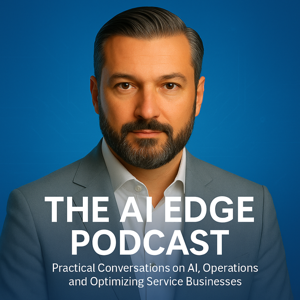
Real conversations with founders, operators, clinicians, and service-based business leaders who scale through systems, innovation, and practical execution.
Hosted by Louis…
This is not a “tech for tech’s sake” podcast.
This is real-world AI & operations for real operators.
Each conversation is a deep dive into:
• The true drivers of scale (systems, processes, execution)
• How founders and operators navigate uncertainty
• The workflows, habits, and business mechanics behind growth
• What’s breaking down inside today’s service businesses — and how to fix it
• The practical role AI now plays in intake, reception, scheduling, operations, and customer experience
• How leaders think, decide, hire, implement, adapt, and stay ahead
Whether you run a dental practice, medical office, behavioral health clinic, med spa, home services company, or any business that relies on consistent operations and customer experience — these conversations will give you clarity, strategy, and an unfair advantage.
🧠 The Edge PhilosophyBusiness gets easier when:
• Intake is automatic
• Communication is consistent
• Customers never slip through the cracks
• Teams aren’t drowning in admin
• Owners have systems that run 24/7
• The business finally stops depending on YOU
This show explores how leaders build that reality through:
• AI receptionist systems
• Workflow automation
• Modern operations strategies
• Scalable processes
• Team efficiency
• Customer experience design
• Intelligent decision frameworks
The goal is simple:
Give you the “edge” you need to grow without burning out.
Guests include:
• Founders who built multi-location practices
• Healthcare & wellness leaders improving patient experience
• Home service owners scaling through systems
• Behavioral health executives rethinking intake & operations
• Med spa operators growing without chaos
• Real estate + business leaders building for the long-term
• Innovators using AI to remove bottlenecks, not jobs
• CEOs & operators known for execution, not talk
They share:
What worked. What failed. What changed everything.
And exactly how you can implement the same principles.
This podcast is for you if you’re the kind of leader who:
• Wants fewer bottlenecks and more freedom
• Hates wasted motion and broken operations
• Believes in systems over chaos
• Knows AI can help but wants someone who speaks plainly
• Wants to scale without adding more stress
• Values real conversations over theory
Every episode gives you a new lens, a new tactic, or a new way forward.
👑 About the HostLouis Fernandes is a founder, operator, and systems strategist who helps service-based businesses automate intake, reception, and operations using practical AI systems through Edge Partners AI.
He brings a sharp, grounded, conversational approach — keeping the show relatable, tactical, and anchored in real experience.
No jargon.
No hype.
No sales pitch.
Just wisdom, strategy, and the truth about what it takes to grow a business today.