
Sign up to save your podcasts
Or

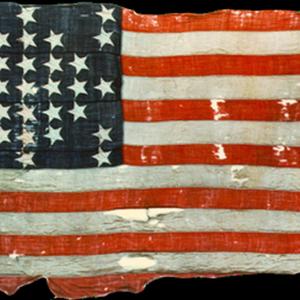


The appointment of John Pope led to small, but crucial policy changes in how the Union would fight, with deep implication on the purpose of the war itself. The response to this, north and south alike, show how the war was fast becoming a clash of rival ideals, not armies or even states. At a small field called Cedar Mountain, a clash between Banks and Jackson set the stage for another campaign. But the consequences of the decisions of August 1862 would go on much farther than John Pope’s career in Virginia.
Also, McClellan did nothing, and he did nothing badly at that.
The summer of 1862 shattered the belief in a quick victory. But the war policies were already being restructured, and with a new America was waiting to be born. But the push for liberty brought reactionary forces to the fore.
I know this is really delayed, but it’s also three or four episodes in one.
Robert E. Lee came, in time, to become the arch-nemesis of the Union. Yet from his family history and life until that point, you would never have believed it. What drove this man, and why did he make the choices he made? What shaped him, and how?
Three weeks into command of the Army of Northern Virginia, General Robert E. Lee embarked on a daring, do-or-die assault on the Army of the Potomac. Though not without failure and mistakes, he successfully drove his foe away from the very gates of Richmond in a brutal seven-day struggle of nearly-constant battle. By the end, he proved he might very well be the champion the Confederacy sorely needed - and McClellan was not the man the Union required.
After routing Banks at Winchester, Confederate General Thomas J. Jackson found himself exposed and vulnerable to total destruction - and Abraham Lincoln most certainly intended just that. Fortunately for him, Jackson had assistance in form of Union General John C. Fremont’s complete failure.
By the end of May, 1862, Confederate Gen. Joe Johnson knew he must attack. A crucial Union strategic choice gave him room to pick his preferred point. But a key failure sent the entire battle spinning out of control.
As a side note, Union sources at the time called the battle “Fair Oaks”. However, most of the fighting was around the crossroads of “Seven Pines”. The two locations are not far distant, and either name is correct.
McClellan’s advance upon Richmond proved an uneven, start-stop affair instead of a Napoleonic stride. Nonetheless, he managed to finally get himself to the gates of Richmond. Once there, however, he proved curiously unwilling to fight a battle, always waiting for reinforcements that never quite arrived.
Starting May 19th, General Thomas J. Jackson launched a campaign turned the entire union strategy in the Shenandoah Valley on its head. Within seven days he fought three battles and cleared the Union from nearly the entire Valley, undoing six months of northern effort.
Today we approach a question regarding the slave economy. Was it profitable? Was it economically efficient? How did slavery affect the US economy? And if slavery wasn’t good for the country, why did slaveholders keep it?
The tiny Battle of McDowell represented only a skirmish in the larger Civil War, but it represented a key step in allowing General Thomas J. “Stonewall” Jackson to unite all the Confederate forces in the region. To do this, he rapidly marched all over the place. For once, however, he met his match in aggression in the person of Brigadier Robert H. Millroy.
Side note: I didn’t describe Brigadier Robert C. Shenck very closely. He was however a interesting man who previous served as Ambassador to Brazil, would later serve as such in Britain, and literally wrote the book on poker (well, one form of it anyhow).
From the publisher's feed