
Sign up to save your podcasts
Or

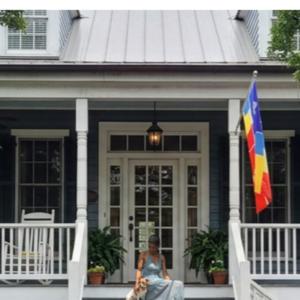


I thought I was building an archive, but somewhere along the journey, I realized I was building an arrival.
One day, a family member I will never meet will open this collection. They will access a document, hear a story, or discover a photograph. Maybe they will even find this porch. In that quiet moment, my greatest hope is that they do not simply discover our family. I hope they feel welcomed. I hope they can see that every page, every photograph, and every story was preserved with them in mind.
Every page we transcribe, every photograph we identify, and every lesson we share is another way of saying, "We've been waiting for you." That is why I keep building, archiving, and listening. It is not about holding on to the past. It is about leaving the porch light on.
So that someday, someone searching for home will know exactly where to find it.
After all, I thought I was building an archive. Somewhere along the way, I realized I was building an arrival.
Remember our ancestral mantra:
Love them as a descendant.
Preserve them as an archivist.
Let the evidence lead us.
Build a collection worthy of being inherited. When we first explore our family history, it is natural to search for proof that our ancestors were good and that our story deserves to be remembered. But to face the true depth of our history, we must make a strict promise to ourselves: I will not ask the records to serve my feelings. I will ask my feelings to wait while I listen to the records.
An archive does not exist to persuade or win a courtroom case; a collection exists to preserve. When we try to build an argument with history, we are tempted to hide, over-explain, or protect the uncomfortable pieces. True archiving means stripping away the urge to defend and leaving the raw evidence exactly as it was so future seekers can encounter the raw truth for themselves. Truth that your history is vast enough to hold the complete humanity of your ancestors, step out of the lawyer’s chair, and focus on building an inheritance that stands on its own.
In this Session, We Explore:
• The Record: Referencing baptisms, deeds, letters, marriage certificates, and succession records for archival reflection.
• The Observation: Recognizing the temptation to clean up history or over-explain records to fit modern comfort.
• The Revelation: Realizing that true archival discipline means leaving a pure, unmanipulated trail of evidence for future generations to discover on their own.
Remember our ancestral mantra
Love them as a descendant.
Preserve them as an archivist.
Let the evidence lead us.
Pull up a chair. Take a deep, quiet breath and sit with me on the porch swing tonight. This Friday, we are reflecting on the moments when the records hurt, when history refuses to be simple, and when the truth asks more of us than we expected. Learning the full scope of my third great-grandfather’s life broke my heart, but the archive ultimately taught me a deeper lesson about love: true love does not require us to deny the truth. It takes honesty to look at the whole record.
Preserving someone’s humanity never requires hiding their history. It requires courage: to keep reading, to keep listening, and to let the raw evidence lead.
Tonight is a personal thank you to Papa OG, for the records, the heavy questions, the lessons, and for showing me that love can remain even where certainty cannot. Because I chose to stay at the table instead of walking away, I finally met the real person behind the paperwork. Join me for a brief reflection on what happens when we let the whole story walk into the sun.
See you on the porch swing.
Remember our ancestral mantra
Love them as a descendant.
Preserve them as an archivist.
Let the evidence lead us.
What do you do when the records hurt? In this deeply honest episode of Archivist’s Table, we confront one of the hardest truths in archival and genealogical work: our ancestors were fully human, and that means refusing to flatten them into either heroes or villains. As I sit with the records of my third-great-grandfather, Gilbert Daigre, Papa OG, the archive reveals two truths that must stand together. He was a father, husband, landowner, and protector. The records also show that he enslaved human beings and sponsored baptisms for enslaved children at St. Joseph’s Cathedral.
As a Louisiana Acadian-Creole descendant, confronting this reality also means looking at my own skin. Because of my café au lait hue, I cannot separate this history from my body or my inheritance. Under different laws, in a different place, or in another moment of the same history, that could have been me standing on that auction block. Two hundred years of shifting laws, blurred lines, and multicultural inheritance live in that recognition, and facing it requires absolute transparency.
True archiving does not allow us to fix history, hide the painful chapters, or look for an easier story. Our responsibility is to trust the evidence, preserve the whole record, and remain at the table long enough to witness the complete truth. When we stop trying to litigate or sanitize the past, our commitment to history becomes stronger than our desire to walk away. So let your ancestors be human. Preserve the whole record. Trust the evidence. And trust yourself to remain at the table long enough to hear the whole story.
In This Session, We Explore:
• The Record: Relying on historical baptismal and church records as a foundation for reference.
• The Observation: Facing the dual, complex realities of an ancestor’s life without hiding or apologizing for the data.
• The Revelation: Realizing that true archival integrity means holding space for the painful parts of history so the whole story can survive.
Remember our ancestral mantra:
Love them as a descendant.
Preserve them as an archivist.
Let the evidence lead us.
Pull up a chair and rest a while. This Friday evening on the porch swing, we are following up on our session about Papa OG to reflect on the habit that drains so much of our daily energy. One of the greatest gifts this project has given me is balancing the objective eye of the archivist with the warm heart of preservation.
When I stopped trying to defend my ancestors, I finally became quiet enough to hear them. Tonight is your personal invitation to do the same. Lay your defense briefcase down at the porch steps. Someone has been waiting patiently right here to tell you their story. See you then.
Remember our ancestral mantra
Love them as a descendant.
Preserve them as an archivist.
Let the evidence lead us.
Do you feel a constant need to defend your family's history? In this working-room session at the Archivist’s Table, we dismantle a heavy emotional habit: trying to act as a lawyer for the past. Sitting with the baptismal, property, and estate records of my third great-grandfather, Gilbert Daigre, our Papa OG, I realized I was treating the documents like a defense brief. But active archiving asks us to step out of the courtroom. While preservation keeps the physical records safe, archiving forces us to remain completely objective and let the documents speak for themselves.
True archiving is beautifully simple. Read it, transcribe it, identify the people and places, and understand why the document exists. You don't add your voice, rewrite history, or argue with the record. Our responsibility is not to litigate their lives, but to make sure the evidence survives. Check your defense briefcase at the door, let go of the emotional burden of proving their worth, and finally create enough quiet to hear what they have been trying to teach you all along.
In This Session, We Explore:
Remember our ancestral mantra
Love them as a descendant.
Preserve them as an archivist.
Let the evidence lead us.
Pull up a blue chair and rest for a moment. This Friday on the porch swing, we are leaning into the beautiful, unwritten pieces of the people we love. Not long ago, while laughing with friends about the little things we still say around our families, a sudden truth struck me: some of the most precious parts of a human life are never written down in the official records.
The census can preserve a name, a photograph can preserve a smile, and a marriage certificate can preserve a date. But the documents can never capture the ordinary phrases that instantly bring a person back into the room. They can't preserve the daily humor, the specific inside jokes, or the unique rhythms of a voice that filled a home.
If we only preserve the documents, we preserve history. But if we preserve their voice, we preserve the person. Join me for a quick five-minute reflection on finding the living spirits hidden between the lines of your paperwork and remembering the love that a small circle can hold.
See you then.
Remember our ancestral mantra
Love them as a descendant.
Preserve them as an archivist.
Let the evidence lead us.
What happens when we bring modern judgment into historical spaces? In this working-room session at the Archivist's Table, we confront the hardest boundary you will ever have to build on your journey: Do not let your ending write their beginning. It is so easy to try to force the complex choices of our ancestors into neat, present-day boxes. But the greatest act of love an archivist can offer is to release that judgment completely. You cannot measure the rugged paths they had to walk using the smooth pavement you stand on today.
When we step back and let the raw evidence lead, we stop trying to fix history or litigate the past. Looking back at lines shaped by extreme survival, from Melungeon families isolated in the mountains to Free People of Color navigating hostile laws and Acadian families protecting their land, we see that every messy, calculated decision was made under the pressure of their time, not ours.
Our job is not to advocate for what they should have done; our job is to witness what they did. When you check your modern mind at the door, you finally free them to tell their own story, and you give yourself permission to simply be their descendant.
In Each Session, We Explore:
•The Record: Tracking generations through courthouse ledgers, church registries, and census columns.
•The Observation: Recognizing when we are forcing modern expectations onto historical survival choices.
•The Revelation: Realizing that every complex, messy historical outcome is the exact blueprint of how your line survived.
Remember our ancestral mantra:
Love them as a descendant.
Preserve them as an archivist.
Let the evidence lead us.
Pull up a chair and pour yourself a cold drink. Tonight, on the porch swing, underneath the ceiling fans with a slice of homemade peach pie, I am reflecting on the men who shaped my life. While grilling blackened fish on Father’s Day, a sudden realization brought me to tears—not from grief, but from a profound sense of connection. For years, I thought honoring my ancestors meant carrying their heavy burdens. But sitting beneath the trees in my blue chair, while grilling, I learned a deeper truth.
Join me for a quick reflection on ancestral grace, freedom, and the love that keeps showing up through the lives we inherit. See you then.
Remember our ancestral mantra
Love them as a descendant.
Preserve them as an archivist.
Let the evidence lead us.
What record begins your story? When we first start researching our ancestry, it is so easy to fall into the trap of treating names like mere data points on a checklist or branches on a flat tree. In this premier episode of the Archivist Porch, we sit down at the Archivist Table to look past the ink on the page and uncover the invisible relationships of the in-between.
A name is not an empty vessel; it is the sacred container of a human life, a presence, and a reality. When you bring in the essence of geography, choice, and survival, you stop researching for text files and finally begin to witness living spirits.
Today, we untangle the threads of a massive, sacred collaboration of survival. By letting the evidence lead, we look at how isolated fragments scattered across history, a West Virginia Melungeon line, a North Carolina Free Person of Color line, an exiled Acadian line in the Louisiana bayous, a Brazilian maritime line, and an indigenous Taino warrior line, all move with the exact same intention. They all fled oppression into isolated sanctuaries, protecting their freedom through fiercely loyal kinship networks that often led to pedigree collapses without judgment.
They didn’t touch shoulders by accident. They recognized the same resilient spirit in one another. Join me as we challenge the way you view your records today, stop researching, and begin to witness the blueprint of your own survival.
Remember our ancestral mantra
Love them as a descendant.
Preserve them as an archivist.
Let the evidence lead us.
From the publisher's feed