
Sign up to save your podcasts
Or

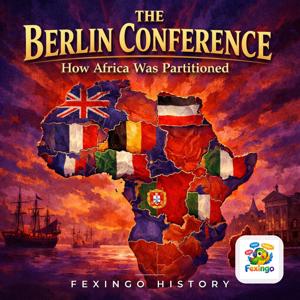


This episode of the Fexingo History podcast picks up a thread that runs through the Berlin Conference but has never been our main focus: the fate of the Swahili Sultanate of Zanzibar. We trace how Sultan Barghash bin Said maneuvered between European powers, how the Heligoland-Zanzibar Treaty of 1890 traded the sultanate to Britain in exchange for the North Sea island of Heligoland, and what that meant for the Swahili coast, the slave trade, and the Omani diaspora. We also explore the architectural legacy of Stone Town and the cultural resilience of the Swahili people as their homeland was carved up. Expect names like Barghash, Khalīfa bin Harub, and the Mwinyi Mkuu, alongside the obscure 1889 Moresby Treaty and the 1873 Frere Treaty that tried to suppress the slave trade. This is a story of diplomacy, betrayal, and survival on the margins of the scramble.
#BerlinConference #Zanzibar #SwahiliCoast #HeligolandZanzibarTreaty #BarghashBinSaid #StoneTown #SlaveTrade #OmaniEmpire #EastAfrica #ScrambleForAfrica #KhalifaBinHarub #MwinyiMkuu #MoresbyTreaty #FrereTreaty #BritishEmpire #GermanEmpire #History #FexingoHistory
Keep every episode free: buymeacoffee.com/fexingo
Episode 80 of The Berlin Conference series explores the overlooked story of the Witu Sultanate, a small Swahili state on the coast of modern-day Kenya that resisted German colonial rule in the late 1880s and early 1890s. When the Berlin Conference of 1884–85 formalized the Scramble for Africa, Sultan Ahmed bin Fumo Bakari of Witu sought British protection against German encroachment. But after the 1890 Heligoland–Zanzibar Treaty traded German claims in Zanzibar for British recognition of German East Africa, Witu was left exposed. Lucas and Luna discuss the Witu Rebellion of 1890–93, the German blockade of the Tana River delta, the burning of the sultan's capital, and the fate of the Bakari dynasty. They also touch on the broader dynamics of the 'effective occupation' doctrine and how small African polities were erased by European map-making. This episode brings to light a lesser-known but emblematic episode of resistance and colonial violence.
#BerlinConference #WituSultanate #AhmedbinFumoBakari #GermanEastAfrica #HeligolandZanzibarTreaty #SwahiliCoast #ScrambleForAfrica #ColonialResistance #TanaRiver #WituRebellion #AbaThuwain #BakariDynasty #EffectiveOccupation #1890s #LamuArchipelago #Zanzibar #History #FexingoHistory
Keep every episode free: buymeacoffee.com/fexingo
Episode 79 of The Berlin Conference series turns to Madagascar, an island kingdom that European powers had largely bypassed during the early scramble. Lucas and Luna explore how the Merina monarchy under Ranavalona III and Prime Minister Rainilaiarivony attempted to modernise and resist French encroachment. They examine the Treaty of Tamatave in 1885, which ceded Diego-Suarez to France and forced a crippling indemnity, and the subsequent Franco-Hova Wars. Lucas explains the role of the Merina army's British-trained officers and the strategic calculation behind French colonisation—how Madagascar became a protectorate in 1895 after the fall of Antananarivo. The conversation highlights the hypocrisy of the Berlin Conference's 'effective occupation' principle, as France claimed sovereignty over an island with a functioning state. Along the way, they touch on the impact of the slave trade on Malagasy society, the island's unique language and culture, and the fate of Queen Ranavalona. A little-known chapter of the scramble that challenges the narrative of empty land waiting to be claimed.
#Madagascar #BerlinConference #RanavalonaIII #Rainilaiarivony #FrancoHovaWars #MerinaKingdom #Antananarivo #DiegoSuarez #TamataveTreaty #ScrambleForAfrica #FrenchEmpire #EffectiveOccupation #Malagasy #Indemnity #Protectorate #ColonialHistory #AfricanHistory #FexingoHistory
Keep every episode free: buymeacoffee.com/fexingo
In this episode, Lucas and Luna explore the aftermath of the Berlin Conference through the lens of the First Italo-Ethiopian War and the Battle of Adwa in 1896. They discuss how Emperor Menelik II of Ethiopia, having skillfully played European powers against each other and acquired modern weaponry, decisively defeated the Italian colonial army. The conversation covers the Treaty of Wuchale, its translation dispute, the role of Ras Alula and other Ethiopian generals, and how the victory preserved Ethiopian independence and became a symbol of African resistance. They also touch on the legacy of Adwa for pan-Africanism and its impact on European colonial ambitions.
#BerlinConference #BattleofAdwa #MenelikII #RasAlula #FirstItaloEthiopianWar #TreatyofWuchale #Ethiopia #Italy #Colonialism #ScrambleForAfrica #Adwa1896 #AfricanHistory #PanAfricanism #Resistance #EuropeanImperialism #OresteBaratieri #EthiopianEmpire #FexingoHistory
Keep every episode free: buymeacoffee.com/fexingo
In this episode, Lucas and Luna examine how a single cartoon in the British magazine Punch helped turn public opinion against King Leopold II's brutal regime in the Congo Free State. They explore the role of satirical artist Edward Linley Sambourne, whose 1906 drawing 'The Phantom' depicted Leopold as a vampire bat hovering over the Congo, and trace the broader impact of visual propaganda in the anti-Congo reform movement. The conversation covers the context of the Congo Reform Association's campaign, E.D. Morel's writings, and the way cartoonists and journalists collaborated to expose the atrocities. Lucas also shares the story of Alice Seeley Harris, whose photographs of mutilated Congolese children were shown at lantern-slide lectures across Britain and America. The episode reveals how these images and cartoons, combined with the testimony of Roger Casement and others, finally forced the Belgian parliament to annex the Congo in 1908, ending Leopold's personal rule.
#BerlinConference #CongoFreeState #KingLeopoldII #PunchMagazine #EdwardLinleySambourne #CongoReformAssociation #EDMorel #RogerCasement #AliceSeeleyHarris #ThePhantom #VisualPropaganda #SatiricalCartoon #CongoAtrocities #BelgianColonialism #1908Annexation #History #FexingoHistory #ColonialAfrica
Keep every episode free: buymeacoffee.com/fexingo
This episode explores how the Berlin Conference of 1884–1885 set the stage for one of the most ambitious and contentious infrastructure projects of the early 20th century: the Berlin-to-Baghdad Railway. We trace the railway's origins from Ottoman concessions to German imperial ambition, examining its role in deepening European rivalries in the Middle East. We discuss the Baghdad Railway's financing by Deutsche Bank, its construction through the Taurus Mountains, and the diplomatic crisis it sparked with Britain and Russia. Key figures include Sultan Abdul Hamid II, Kaiser Wilhelm II, and the railway engineer Heinrich August Meißner Pasha. The episode also covers the railway's impact on local populations, the Armenian labor camps, and its ultimate completion during World War I. A fresh angle that connects the scramble for Africa to the scramble for the Ottoman Empire.
#BerlinConference #BaghdadRailway #OttomanEmpire #KaiserWilhelmII #SultanAbdulHamidII #DeutscheBank #HeinrichAugustMeissner #TaurusMountains #WorldWarI #GermanImperialism #MiddleEastHistory #RailwayHistory #GreatGame #ArmenianLaborCamps #BerlinToBaghdad #FexingoHistory #History #Colonialism
Keep every episode free: buymeacoffee.com/fexingo
The Berlin Conference of 1884–85 is often framed as the moment Europe carved up Africa, but its roots go deeper than a single meeting. In this episode, Lucas and Luna explore the 1882 Bombardment of Alexandria — the British naval attack on Egypt that set the stage for the Scramble. They trace how the 'Urabi Revolt, led by Egyptian nationalist Ahmed Urabi, challenged European financial control over the Suez Canal and Egypt's debts, prompting Prime Minister William Gladstone to order Admiral Beauchamp Seymour's fleet to open fire on Alexandria's forts. The bombardment sparked fires that destroyed parts of the city, including the ancient library of Alexandria's remnants, and led to the British occupation of Egypt that lasted until 1952. Lucas and Luna discuss the role of the Suez Canal shares purchased by Benjamin Disraeli, the Dual Control of France and Britain over Egyptian finances, and the Khedive Tewfik Pasha's collaboration with the British. They also examine how the bombardment prefigured the Berlin Conference's principle of effective occupation, with Britain acting first and justifying later. This episode connects military history, economic imperialism, and the human cost of colonial violence, offering a fresh angle on the Scramble for Africa that begins not in Berlin but on the Mediterranean coast.
#BombardmentOfAlexandria #AhmedUrabi #SuezCanal #BritishEmpire #Egypt #KhediveTewfik #WilliamGladstone #BeauchampSeymour #BenjaminDisraeli #ScrambleForAfrica #1882 #EffectiveOccupation #Imperialism #Colonialism #MilitaryHistory #19thCentury #History #FexingoHistory
Keep every episode free: buymeacoffee.com/fexingo
In 1896, a British column marched on Kumasi, the capital of the Asante Empire, and arrested its king. This episode follows the Asante-British wars through the lens of the Berlin Conference's 'effective occupation' clause. We trace how the Asante Confederation, one of West Africa's most formidable states, resisted British expansion through decades of diplomacy and warfare. Key figures include Asantehene Prempeh I, whose refusal to pay tribute triggered the invasion; Yaa Asantewaa, the queen mother who led a rebellion in 1900; and British governor Sir William Maxwell, who invoked the Berlin Act to justify conquest. We discuss the sacred Golden Stool, the role of the Maxim gun at the Battle of Amoaful, and the British 'policy of spheres' that turned Asante into a protectorate. The episode also covers the British exile of Prempeh to the Seychelles and the enduring symbolism of the Golden Stool in modern Ghana. No prior knowledge of Asante is required, but familiarity with the Berlin Conference's General Act will enrich the experience.
#AsanteEmpire #PrempehI #YaaAsantewaa #GoldenStool #Kumasi #BritishEmpire #ScrambleForAfrica #BerlinConference #EffectiveOccupation #MaximGun #SirWilliamMaxwell #BattleOfAmoaful #GhanaHistory #WestAfrica #ColonialResistance #AntiColonialism #History #FexingoHistory
Keep every episode free: buymeacoffee.com/fexingo
In this episode, Lucas and Luna explore the British Punitive Expedition of 1897 against the Kingdom of Benin, a direct consequence of the Berlin Conference's partition of Africa. They discuss Oba Ovonramwen Nogbaisi, the ambush at Ughoton that killed Acting Consul General James Phillips, the subsequent sack of Benin City, and the looting of the famed Benin Bronzes. The conversation examines how the conference's principle of 'effective occupation' justified the attack, the role of trade tensions with the Royal Niger Company, and the cultural devastation that still echoes today in debates over repatriation. Lucas also touches on the wider context of colonial violence in the Niger Coast Protectorate and the parallels with King Leopold's Congo. This episode offers a fresh angle on the Berlin Conference's legacy, focusing on a specific, lesser-covered event that illustrates the human cost of the scramble for Africa.
#BerlinConference #BeninExpedition #Ovonramwen #BeninBronzes #BeninKingdom #ScrambleForAfrica #JamesPhillips #Ughoton #BeninCity #RoyalNigerCompany #Colonialism #Looting #Repatriation #Nigeria #AfricaHistory #FexingoHistory #History #BritishEmpire
Keep every episode free: buymeacoffee.com/fexingo
Episode 72 of our Berlin Conference series examines the Herero and Nama genocide in German South West Africa, a brutal consequence of colonial partition. We follow the story of Samuel Maharero and Hendrik Witbooi, the 1904 uprisings, General Lothar von Trotha's extermination order, the Battle of Waterberg, and the concentration camps on Shark Island. We explore how the Berlin Conference's principles of 'effective occupation' set the stage for this catastrophe, the disputed casualty figures, and the 2021 German recognition of genocide. This episode covers the specific policies, battles, and individuals that shaped one of the 20th century's first genocides.
#Herero #Nama #Genocide #GermanSouthWestAfrica #SamuelMaharero #HendrikWitbooi #LotharVonTrotha #Waterberg #SharkIsland #1904Uprising #EffectiveOccupation #BerlinConference #Namibia #ColonialAtrocity #GermanHistory #20thCenturyGenocide #History #FexingoHistory
Keep every episode free: buymeacoffee.com/fexingo
From the publisher's feed