
Sign up to save your podcasts
Or

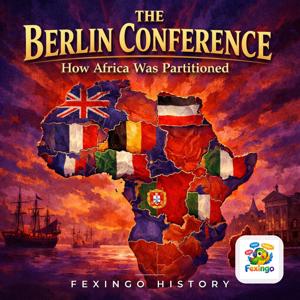


The Berlin Conference of 1884-85 set the rules for Africa's partition, but its aftermath brought catastrophe to the continent's indigenous peoples. In this episode, Lucas and Luna explore the often-overlooked genocide of the Khoisan peoples—the Khoikhoi and San—in German South West Africa, decades before the more well-known Herero and Nama genocide. Drawing on oral traditions, colonial records, and archaeological evidence, they discuss how European diseases, deliberate starvation, forced labor, and cultural erasure reduced a once-thriving population from perhaps 200,000 in the 1600s to a few thousand by the early 1900s. They examine the role of early Dutch settlers at the Cape, the expansion of German colonial rule after the Berlin Conference, and the specific policies that targeted Khoisan communities—including the infamous 'Hottentot Ordinance' of 1841 and the brutal suppression of the 1904-1908 uprisings. The episode also touches on the erasure of Khoisan history in colonial narratives and the modern struggle for recognition and land rights. A sobering look at a tragedy that the Berlin Conference set in motion.
#BerlinConference #Khoisan #Genocide #GermanSouthWestAfrica #Khoikhoi #San #HereroNamaGenocide #HottentotOrdinance #CapeColony #DutchEastIndiaCompany #Colonialism #Africa #History #FexingoHistory #Namibia #SouthAfrica #OralHistory #CulturalErasure
Keep every episode free: buymeacoffee.com/fexingo
In this episode, Lucas and Luna explore the origins and impact of the Congo Reform Association, the first major international human rights movement. They discuss how E.D. Morel, a former shipping clerk, uncovered the brutal labor system in King Leopold II's Congo Free State, where Congolese were forced to harvest rubber under threat of mutilation and death. Morel's partnership with Roger Casement, a British consul who reported on the atrocities, sparked a global campaign that eventually forced Leopold to relinquish control of the Congo. The episode also covers the role of African testimony, the use of photography and lantern slides in advocacy, and how the movement influenced later humanitarian campaigns.
#BerlinConference #CongoFreeState #CongoReformAssociation #EDMorel #RogerCasement #KingLeopoldII #RubberAtrocities #ForcePublique #HumanRights #ColonialHistory #Africa #19thCentury #Imperialism #Activism #HenryMortonStanley #HeartOfDarkness #History #FexingoHistory
Keep every episode free: buymeacoffee.com/fexingo
In Episode 59, Lucas and Luna explore a lesser-known dimension of the Berlin Conference: the European 'discovery' of the Luba and Lunda kingdoms in Central Africa. They trace how Portuguese, Belgian, and German explorers, including Henrique de Carvalho and Paul Pogge, encountered complex states like the Luba Empire under Ilunga Kabale and the Lunda Empire under Mwata Yamvo. The conversation examines how these ancient kingdoms were absorbed into the Congo Free State and Angola, the role of the Luso-African pombeiros, and the impact of the slave and ivory trades. Lucas also discusses the diplomatic strategies of Lunda rulers like Mwata Yamvo Mbumba and the tragic fate of the Luba king, Kasongo Kalombo. Along the way, the hosts reflect on the legacy of these encounters and the erasure of African political history in the colonial narrative.
#LubaEmpire #LundaEmpire #MwataYamvo #IlungaKabale #KasongoKalombo #HenriqueDeCarvalho #PaulPogge #CongoFreeState #BerlinConference #Pombeiros #SlaveTrade #IvoryTrade #CentralAfrica #19thCentury #Colonialism #AfricanHistory #History #FexingoHistory
Keep every episode free: buymeacoffee.com/fexingo
In this episode, Lucas and Luna explore the Berlin Congo Act of 1885 — the treaty framework that emerged from the Berlin Conference. They discuss how the Act's principles of free trade, freedom of navigation on the Niger and Congo rivers, and the 'effective occupation' clause shaped the Scramble for Africa. The conversation highlights the role of key figures like Otto von Bismarck, who chaired the conference, and King Leopold II of Belgium, who manipulated the Act to secure his Congo Free State. They examine the Act's humanitarian clauses against the slave trade and its long-term impact on African sovereignty. Specific terms like 'basin of the Congo', 'sphere of influence', and 'uti possidetis' are explained in context. The episode also touches on the conference's omission of African voices and the legacy of partition lines drawn on maps in Berlin.
#BerlinConference #BerlinCongoAct #ScrambleForAfrica #OttoVonBismarck #KingLeopoldII #CongoFreeState #EffectiveOccupation #GeneralActOfBerlin #FreeTrade #NavigationRights #SlaveTrade #UtiPossidetis #SpheresOfInfluence #ColonialHistory #19thCentury #Africa #EuropeanImperialism #FexingoHistory
Keep every episode free: buymeacoffee.com/fexingo
In this episode of Fexingo History, Lucas and Luna explore the Congo Reform Movement, the international outcry against King Leopold II's brutal regime in the Congo Free State. They delve into the roles of E.D. Morel, a shipping clerk who noticed suspicious cargoes, and Roger Casement, whose 1904 report exposed atrocities including mutilation and forced labor. The conversation covers the founding of the Congo Reform Association, the use of photography and missionary testimonies, and the eventual handover of the Congo to Belgium in 1908. Lucas explains how the Berlin Conference's 'effective occupation' clause enabled Leopold's private fiefdom and how activists used humanitarian rhetoric to pressure governments. The episode also touches on the debate over whether this constituted genocide and the movement's legacy in shaping modern human rights advocacy.
#CongoReformMovement #EDMorel #RogerCasement #KingLeopoldII #CongoFreeState #BerlinConference #ForcePublique #BrusselsConference1890 #HenryMortonStanley #GeorgeWashingtonWilliams #MarkTwain #JosephConrad #HeartOfDarkness #HumanitarianIntervention #ColonialAtrocities #19thCentury #History #FexingoHistory
Keep every episode free: buymeacoffee.com/fexingo
In this episode, Lucas and Luna explore the aftermath of the Berlin Conference in the Congo Free State, focusing on King Leopold II's personal rule and the system of exploitation that followed. They discuss the Force Publique, the rubber quotas, the brutality against Congolese workers, and the evidence of severed hands as punishment. The episode also covers the role of Leopold's agents like Charles Lemaire and Léon Fiévez, the international outrage led by E.D. Morel and Roger Casement, and the eventual annexation by Belgium in 1908. A fresh angle on the Berlin Conference's legacy beyond the partition maps.
#CongoFreeState #LeopoldII #ForcePublique #rubberquotas #severedhands #CharlesLemaire #LeonFievez #EDMorel #RogerCasement #Belgium #Congo #BerlinConference #colonialbrutality #19thcentury #Africa #Imperialism #History #FexingoHistory
Keep every episode free: buymeacoffee.com/fexingo
Episode 55 of The Berlin Conference series unpacks the General Act of Berlin's most consequential clause: Article 35's requirement of 'effective occupation.' Lucas and Luna trace how this vague legal standard—intended to prevent colonial disputes among European powers—became a brutal bureaucratic engine driving the Scramble for Africa. They examine the concept's origins in 19th-century international law, its application in the Congo Basin and East Africa, and how African polities like the Sokoto Caliphate and the Merina Kingdom were dismantled by its logic. Along the way, they discuss the roles of key figures like King Leopold II, Carl Peters, and the 1890 Brussels Conference that tightened the screws. The episode also explores the hypocrisy of 'effective occupation' when European powers could not effectively occupy the vast territories they claimed, leading to rubber atrocities, punitive expeditions, and the Herero and Nama genocide. This is a deep dive into the legal fiction that reshaped a continent.
#BerlinConference #EffectiveOccupation #ScrambleForAfrica #Article35 #GeneralActOfBerlin #KingLeopoldII #CarlPeters #BrusselsConference1890 #CongoFreeState #SokotoCaliphate #MerinaKingdom #InternationalLaw #Colonialism #Africa #19thCentury #TreatyLoophole #History #FexingoHistory
Keep every episode free: buymeacoffee.com/fexingo
Episode 54 of The Berlin Conference podcast shifts focus to the Suez Canal, a crucial artery that shaped European ambitions during the Scramble for Africa. Lucas and Luna unpack how the canal's construction and British takeover influenced the Berlin Conference's decisions. They explore Ferdinand de Lesseps's vision, the Compagnie Universelle du Canal Maritime de Suez, the Egyptian financial crisis that led to British occupation in 1882, and the canal's role in accelerating the partition. The episode contrasts the canal's strategic importance for Britain's route to India with its symbolic value for French prestige, revealing how this waterway became a flashpoint for imperial rivalry. Listeners learn about the khedive Ismail Pasha's lavish spending, the dual control system, and the 1888 Constantinople Convention that guaranteed free passage. This conversation connects the Suez story to the broader themes of power, debt, and diplomacy that defined the Berlin era.
#SuezCanal #FerdinanddeLesseps #IsmailPasha #BritishOccupation #ConstantinopleConvention #ScrambleForAfrica #BerlinConference #Egypt #Imperialism #19thCenturyHistory #Geopolitics #ColonialHistory #EuropeanExpansion #WorldHistory #HistoryPodcast #FexingoHistory #PodcastEpisode #Suez
Keep every episode free: buymeacoffee.com/fexingo
Before the Berlin Conference carved up Africa, the Zulu Kingdom stunned the British Empire at Isandlwana in 1879. In this episode, Lucas and Luna explore how this crushing defeat — where over 1,300 British and allied troops fell to Zulu iklwa spears and cow-horn formations — shaped European policy during the Scramble for Africa. They discuss King Cetshwayo's diplomatic efforts, the flaws in Lord Chelmsford's strategy, the role of the Martini-Henry rifle versus Zulu tactics, and how the battle's aftermath accelerated the colonization of southern Africa. The episode also touches on the Nandi resistance, the Anglo-Zulu War's connection to the Confederation scheme of Sir Henry Bartle Frere, and how the British public's shock influenced subsequent colonial engagements. A nuanced look at a pivotal moment that proved African military power could challenge European empires.
#BattleOfIsandlwana #AngloZuluWar #ZuluKingdom #Cetshwayo #LordChelmsford #ScrambleForAfrica #BritishEmpire #MartiniHenry #ColonialHistory #AfricanResistance #Nandi #SirHenryBartleFrere #1879 #SouthernAfrica #MilitaryHistory #History #FexingoHistory #Podcast
Keep every episode free: buymeacoffee.com/fexingo
In Episode 52, Lucas and Luna explore the Voulet-Chanoine Mission, a brutal French military expedition during the Scramble for Africa. They delve into the personalities of Captains Paul Voulet and Julien Chanoine, their violent march through West Africa, and the shocking atrocities committed against local populations. The episode covers the mission's original goal to reach Lake Chad, the defiance of French authorities, and the eventual mutiny by French officers. Listen as they discuss the Congo-Nile Mission, the role of Senegalese tirailleurs, and the cover-up that followed. This episode sheds light on a dark chapter of colonial history that remains little-known.
#VouletChanoine #ScrambleForAfrica #FrenchColonialEmpire #PaulVoulet #JulienChanoine #LakeChad #CongoNileMission #WestAfrica #ColonialAtrocities #Senegal #Tirailleurs #Mutiny #JoallandMeynierMission #FrenchForeignLegion #19thCentury #ColonialHistory #History #FexingoHistory
Keep every episode free: buymeacoffee.com/fexingo
From the publisher's feed