
Sign up to save your podcasts
Or

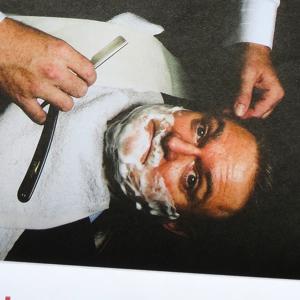


When I asked Margaret Atwood to do this podcast she said 'okay, but I don't want to talk about me, me, me. You come up with something to discuss.'
"Okay" I said:
"Over the past 20 years, in an effort to understand "the book" and, just as importantly, my fascination with it/them, I've interviewed hundreds of "book people" about what they do, how they do it, why they do it, and why it matters. Over the past 70 years, you have played many of the roles these people play, and have worked closely with many more who have filled many others. You have done this incredibly successfully.
Who better to talk with about what the book means then, than you? How its various parts connect; how the whole dynamic process of making them works; why they're important; why they matter? Who better than you to provide me with an understanding of what I love, and an answer to why?
Since she didn't want to go on about her, her, herself, here's a quick thumbnail gleaned in part from a bio I read by Rosemary Sullivan.
It just serendipitously popped up in a used bookstore about a week prior to our encounter:
Atwood comes from Atter wode (P.G.?) which means 'pearl of the wood.' Margaret's person is tiny, endowed with a 'taut, electric intensity.' She's a magpie, interested in everything, with a capacious understanding of the world. A formidable challenger of assumptions and conventions, she's a woman who has, unusually, managed to take control of both her artistry and her life. Not a role model, she possesses a 'high jinks' brand of humour (whatever that is), and a mysterious artistic confidence - a total belief in herself as a writer (it comes from childhood); she speaks in a slightly imperious monotone. Delivery is deadpan.
Her voice strikes deep resonant chords in her readers. From years of training and willed attention she has wrapped long, gnarly mythological roots around, across and into her writing. She's someone who exhibits an implicit, sometimes explicit, pleasure in provocation, who didn't attend a full year of school until she was in grade eight, who has an ancestor who was a witch, and who has a skeptical, laconic style that overlays a generosity and helpfulness that comes out only after it becomes clear that you aren't malevolent, or an idiot.
She's against wasting things, time, talent, and human life - and believes in using one's wits. She's a woman whose interest in metamorphosis began with her father's passion for moths. He loved chopping wood, fww, plus he kept his daughter from being squimish. He seemed to know every bird and most animals by their calls, and could mimic them all. He taught 'Peggy' about plants too. This kind of training in naming, and in precise and disciplined attention, is invaluable for a writer, says biographer Rosemary Sullivan. Peggy's mother valued cheerfulness and productivity.
Margaret read a lot of comics, and was shy as a kid. She fell in love with the idea of the book early on. At five she created one of her own, remembering it as a totally satisfying object. Books became essential companions for her in childhood, notably Grimm's Fairy Tales, the unexpergated version. Her favourite was the Bluebeard story. She liked the most gruesome stuff.
She adopted a stance of needing to be strong enough to protect others - her 'girl scout' persona. She recognized that fiction writing is a celebration of the physical world, partly elegiac, partly an attempt to stop or bring back time. She has a precise knowledge of woodlore. Big into natural edibles.
Confidence, Margaret explains, depends upon whether the child is appreciated as a human being. The more familiar parental architype is hyper-critical. She was not trained to please. She once said, if you aren't annoying someone, you're not really alive.
So, let's start living, and listening - to what MA has to say about 'best' practitioners she's worked with over the years, and, to start off with, some thoughts she has on the Steven Galloway atrocity.
Reading this on Library and Archives Canada's website:
Amid the threats to Canada's nationhood in recent months and in the global context of social division and eroding democracy, Library and Archives Canada (LAC) has a unique and critical role to play in asserting Canada's identity, promoting national unity and championing democratic principles.
then seeing this further down the page:
LAC is planning the following spending reductions:
2026-27: $11.1 million
2027-28: $14.7 million
2028-29: $22.1 million
It is anticipated that these spending reductions will involve a decrease of approximately 161 full-time equivalents by 2028-29. (my italics)
put me in mind of this
Dr. Dolittle's pushmi-pullyuHow can you assert, promote, or champion anything when your budget is being slashed? How can Canadians - historians, bibliophiles, citizens - understand, learn and write about their own country when they can't access the historial record in a timely fashion?
If these cuts are for real, then the Carney government is talking out of both sides of its mouth, happier when Canadians don't look at their own history. This, in fact, is exactly what some of Canada's top historians are saying.
To get to some kind of truth, I figured the time was right to go back in and talk with Leslie Weir, Canada's national Librarian and Archivist, in hopes she could set me in the right direction.
Leslie was appointed head of LAC in 2019 (we first talked shortly after her appointment. Listen to that conversation here). Prior to this she was Librarian at the University of Ottawa, from 2003 to 2018.
A past president of the Canadian Association of Research Libraries, Leslie is, in addition to her currently duties in Canada, President of the International Federation of Library Associations and Institutions (IFLA), until 2027.
We met at her offices in Ottawa at 395 Wellington Street.
I reference Voltaire briefly during our conversation. Voltaire revelled in pointing out gaps between rhetoric and reality. How, for example, could a church that preached love and forgiveness, at the same time condemn innocent people to be torn limb from limb in the public squares?
I end off the interview with three quotes from him:
"It's dangerous to be right in matters on which the established authorities are wrong"
" To the living we owe respect, but to the dead we owe only the truth."
"Doubt is not a pleasant condition, but certainty is absurd."
Here's another to end off this introduction:
"Those who can make you believe absurdities can make you commit atrocities."
Bloomsbury Publishing has been in business for almost forty years. Last year it earned £361.0 million. Over the past five years it's taken in more than £1.4 Billion. It's one of, if not the most successful publishing ventures of the past century. How does this work? I asked Founder and Chief Executive Nigel Newton.
Here we talk about, among other things, Frank Newton — Nigel's prospecting, race car-driving grandfather; about Peter, his wine-making father; about book publishing and stock picking; the acquisition A&C Black; The Garrick Club; 'romantasy' and Sarah J. Maas; Liz Calder; floatation in 1994; aspiring to be mid-sized; Christopher Little; J.K. Rowling and Harry Potter being a fluke; Amazon observing territorial copyright; AI licensing agreements as unforeseen backlist windfalls; suing AI companies; ideal publishing companies; surviving medically; Emotional Intelligence; The History of Bloomsbury Publishing coming out in April, 2027 to celebrate 40th years in business; Anthony Blonde's book - not The Truth about Publishing. It's either The Publishing Game (1971) or The Book Book (1983) (for sure I own at least one of these, and I'm going to say, almost 100%, it's signed); foreign rights; and how to lead a happy, fulfilling life.
Some years ago I interviewed David McKnight about a collection of Canadian "little magazines" he'd hunted down and later donated to the University of Alberta's Bruce Peel Library. It was very easy to get caught up in David's enthusiasm, and I was really impressed by the catalogue he'd produced. Shortly after our conversation I learned that he didn't just collect Canadian poetry, he was also a serious Beatles collector.
We stayed in touch. I drove down to Philadelphia where David hosted me at his home for a weekend. We got a lot done. Took the train into New York for the opening of a film about a bookseller; went on a tour of the rare book and manuscript library at the University of Pennsylvania where David worked at the time as director; attended the Allentown Paper Fair where I picked up some old Fortune and New York Times magazines. It was great. A non-stop exchanging of excited thoughts about books, collecting, and cool periodicals.
Share
I've been wanting to interview David about The Fab Four ever since I learned of his passion. He's a real expert on the band. I was particularly keen to find out about his personal relationship to the music, and of course, about his experience collecting and documenting its impact on print culture, internationally, high and low. Finally, after years of talking about it, we got down to business. The albums, the books - from limited editions to paperbacks - the magazines, the fan zines, the ephemera, the scrap-books, the puzzles. Liverpool. It's all here.
Michael Erdman is Head of Middle East and Central Asian Collections at The British Library with overall responsibility for all manuscript holdings in Arabic, Armenian, Azerbaijani, Chagatai, Coptic, Hebrew, Kurdish, Ottoman Turkish, Persian, and Syriac.
I talked with him about my recent magazine hunting exploits in Istanbul, and how what we found fits into the overall history of magazine publishing in Turkey. Esoteric, I know, but hey, this is where passion takes you.
I first came across Andrés Mario Zervigón's (Cuban) name while researching a magazine that filled me with awe the first time I saw it.
AIZ, the Arbeiter-Illustrierte-Zeitung (Workers Illustrated Magazine) is an illustrated, mass circulation German periodical that was published in Berlin during the 1920s and 1930s (in Prague after 1933). It contains some of the most emotionally charged imagery I've ever seen. The best work was by John Heartfield.
Zervigón is professor of the history of photography at Rutgers University in New Jersey. He obtained his PhD from Harvard University in 2000 and concentrates his scholarship "on the interaction between photographs, film, and fine art." His first book, John Heartfield and the Agitated Image: Photography, Persuasion, and the Rise of Avant-Garde Photomontage (University of Chicago Press, 2012), proposes that "photography's sudden ubiquity in illustrated magazines, postcards, and posters produced an unsettling transformation of visual culture that artists felt compelled to address."
Zervigón's work, says the Rutger's website, "generally focuses upon moments in history when these media [film, photography, fine art] prove inadequate to their presumed task of representing the visual."
We start our conversation by unpacking this passage, and then move on to a short history of illustrated, mass circulation magazines, (including VU magazine), then to the life of John Heartfield, and finally to AIZ.
Background here
From the publisher's feed