
Sign up to save your podcasts
Or

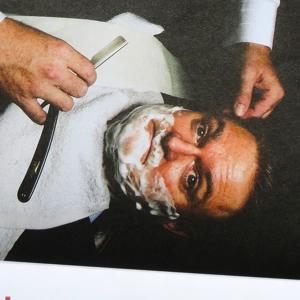


"After working in computer systems analysis for a decade, John Burnside became a full-time writer in 1994. John has published 14 books of poetry, and has won the Geoffrey Faber Prize, the Whitbread Poetry Prize, the Petrarca Preis and, most recently, the Forward and T.S. Eliot Prizes for his poetry. He has also published eight novels and a memoir. He is Professor of English at the University of St Andrews."
We met to talk about the what, how and why of poetry as described in his book of criticism The Music of Time. Topics discussed include poetry making nothing happen, poetry making lots happen, paying attention, listening, lightening rods, the sound of the earth, everyday life, elitism, the questions that dog humans, the human name not meaning shit to a tree, connections, LSD and the continuum, dams, killing lawyers, understanding systems and not understanding them, Facebook, the "n" word, compost heaps, Leopardi, Montale, and more...
Jaleen Grove is a Canadian artist and art historian whose area of focus is the history of illustration in the US and Canada. She teaches at the Rhode Island School of Design, has written monographs on illustrators Oscar Cahén and Walter Haskell Hinton and has served as associate editor for the Journal of Illustration.
She is associate editor of the 592-page History of Illustration (Bloomsbury, 2018), and author of a chapter in it entitled 'Avant Garde Illustration 1900-1950' which is the topic of our conversation here, one that incorporates modernism, livres d'artiste, Cubism, Bauhaus; the importance of collecting, preserving and studying ephemera, and more.
Rand was a professor of graphic design at Yale University from 1956 to 1985. He once said that of all of his work, he was proudest of his magazine and book covers. Book covers!
Daniel Mendelsohn "is an internationally bestselling author, critic, essayist, and translator. Born in New York City in 1960, he received degrees in Classics from the University of Virginia and Princeton. After completing his Ph.D. he moved to New York City, where he began freelance writing full time; since 1991 he has been a prolific contributor of essays, reviews, and articles to many publications, most frequently The New Yorker and The New York Review of Books."
We met via Zoom to discuss the role of the literary critic and how Daniel performs it. We talk about who he is {okay, just part of who he is), what he does, how he does it, and why it's important; about how the critic, by looking behind our reactions, helps us to better understand and appreciate the meaning and significance of a work of art; about critics expressing the intangible and ineffable; the distinction between criticism and opinion; criticism as a service industry; disagreeing with critics; criticism as metaphor; criticism as storytelling; communities of intelligent people; and how really mind-blowing it is that we're all kicking stones around here on a planet that's spinning at some incredible speed moving through a gigantic space that seems devoid of meaning, and we don't know why. Which is why, of course, narrative is so important. It stops us from being scared shitless all of the time. Criticism helps us to figure out how narrative does this. This, and much more.
Fifteen years ago I interviewed Michael Cader at Book Expo in Toronto. The advice he had for publishers at the time remains remarkably fresh and valuable. Michael is the founder of Publisher's Lunch, the largest book publishing industry publication in the world. Each day it's e-mailed out to more than 45,000 people.
We talk about process, and transparency, extras, the role of a creative person, finding audiences while you're alive, the satisfaction of engaging with an audience, bringing work to the public, enabling public discussion, and more.
From the publisher's feed