
Sign up to save your podcasts
Or

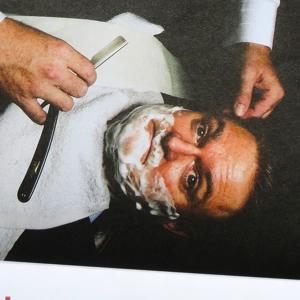


Roger Chartier was born in 1945 in Lyon, France. He is a giant in the field of book history and the study of publishing and reading. He teaches at the École des Hautes Études en Sciences Sociales in Paris, the Collège de France, and the University of Pennsylvania.
I interviewed Roger via Zoom in hopes of determining exactly why he's a giant, who's shoulders he stands on, and what he has contributed to the study of book history. Among other things we talk about Roger's book of essays The Author's Hand and the Printer's Mind; Shakespeare and Cervantes; the importance of material texts to history; forms of reading; the codex; translation; intermediaries between the reader and the writer; the commonplace technique; Roland Barthes; reader appropriation; author intention; Marshall McLuhan; D.F. McKenzie's Bibliography and the Sociology of Texts; Robert Darnton; The History of the Book in France; IMEC; maps in fiction; "Sprezzatura;" and literature and the consecration of the life and manuscripts of the writer.
Powell's Books is a chain of bookstores located in and around Portland, Oregon. It claims to be the largest independent new and used bookstore in the world. Powell's 'City of Books' store is located on the edge of downtown and occupies a full city block. It covers some 68,000 square feet or 1.6 acres of retail floor space. Emily Powell is a third generation owner of the bookstore. She made headlines this past August for dumping Amazon as a sales partner. To mark "Independent Bookstore Day" she announced that "we will no longer sell our books on Amazon's marketplace. For too long, we have watched the detrimental impact of Amazon's business on our communities and the independent bookselling world." "The vitality of our neighbors and neighborhoods depends on the ability of local businesses to thrive," she continued. "We will not participate in undermining that vitality."
I talked to her recently, via Zoom, about her stand against Amazon, her storied bookstore and the reasons for its successes and longevity.
Tiphaine Guillermou is an editor with Graphéine, a design agency with offices in Paris and Lyon.
While researching 20th century French book design - so that I'd have some books to hunt down while visiting bookstores in France - I came across a terrific article Tiphaine had written for Graphéine's blog, here. It was exactly what I was looking for - filled with all sorts of great book collecting leads. I was so impressed with the article I decided to interview Tiphaine about it. Listen as we talk about Pierre Faucheux, Robert Massin, Gallimard, Stock, Whites and Yellows, Scorpion, the French Book Club, Le Livre de Poche, Folio, Monsieur Toussaint Louverture, Cent Pages editions,David Pearson, Zulma and much more.
Benoit Forgeot is one of France's leading antiquarian book dealers. We met in his office, in the Odeon district of Paris to talk about what differentiates French collectors from American; French book binders; secrets; coffee; the manuscript market ( good time to buy); Paul Bonet, coffee again; business in Paris versus the provinces; the crucial knowledge that American curators impart, and much more, (includes Parisian street sounds).
Anne-Solange Noble has been International Rights Manager at Gallimard since 1992. She was born and raised in Montreal, Canada and graduated from McGill University in Hispanic Literature. After spending two years in Mexico she went to Paris where she studied International Relations at the Institut d'Études Politiques de Paris. In 1985 she landed a job in rights negotiations with Flammarion. Seven years later she moved to Gallimard to do the same thing, and has been there ever since. Recently her focus has been on licensing English-language rights for Gallimard fiction and non-fiction to American and British publishers. We met at her offices in the Rive Gauche district of Paris to talk about her role, and the obstacles she's faced selling into these English markets over the past three decades.
Lifted from Bill Samuel's website:
Itinerant one-time chartered accountant who has lived in Denmark, East Africa, the Gulf (Arabian/Persian, not Texan) and the Caribbean with shorter stints in Eastern Europe and various rather nice small islands. Born in England into a family with an international outlook, an interest in people and a feeling for the cultural side of life. William Foyle, one of the greatest booksellers, and book collectors, of the twentieth century was his grandfather. Bill inherited a passion for books and his life has largely been shaped by those he read as a child, which gave him a desire to see as much of this wonderful world of ours as he could. As for what he's done: more or less chronologically: auditing in London and Copenhagen, tourism stuff in Kenya, house building in Portugal, financial consultancy in the UK and the Gulf, Executive Director of an investment bank in Bahrain, Director of Tourism and Superintendent of Offshore Finance in the Turks and Caicos Islands, commercial advisor to the government of St. Helena and Vice Chairman of his family business, Foyles bookshop, which he wrote about in An Accidental Bookseller, A Personal Memoir of Foyles, and which we talk about in this episode of The Biblio File podcast. We met in the garden of a villa near the town of Condom, in southern France. The weather was perfect.Kenneth White is the founder of Sutherland House Books. He is the former editor-in-chief of Saturday Night Magazine, the founding editor of The National Post, and the former editor and publisher of Maclean's magazine. He was president of Rogers Publishing, Canada's largest magazine company, and the founding president of Next Issue Canada (now Texture), in partnership with Conde Nast, Meredith, Hearst, and Time Inc. Mr. Whyte is the author of The Uncrowned King: The Sensational Rise of William Randolph Hearst (2008, Random House), In 2017, he published Hoover: An Extraordinary Life in Extraordinary Times (Knopf), a finalist for the National Book Critics Circle Award.
Last month he launched a suicidal assault on libraries in a 3500-word article in The Globe and Mail newspaper. In it he posits, among other things, that: there are three times as many books borrowed as bought in the United States every year, and four times as many in Canada; that libraries don't passively lend books, they compete with booksellers by advertising how much people can save by borrowing rather than buying books, and they compete among themselves to lend the most books possible; and that most public library lending is of books read for entertainment, not edification, by people who can afford to pay for books.
We talked about his article via Zoom.
From the publisher's feed